
Every Chinese household makes ABC soup (Tomato Carrot Potato Soup 蕃茄薯仔紅蘿蔔湯). It's the soup moms turn to when the weather shifts, when someone feels rundown, or when dinner needs to be easy but nourishing. This Chinese ABC soup recipe uses three simple vegetables: tomatoes, carrots, and potatoes. Some families add corn for sweetness. Others toss in celery for depth. The base stays the same.
Here's what makes this soup different from the hundreds of recipes online. You can skip the pork completely and use cashews instead. They break down during cooking and create that silky, rich texture you'd normally get from hours of simmering bones. The result is a vegan ABC soup that satisfies without feeling light or lacking.

In This Post: Everything You Need To Know Why This Chinese ABC Soup Instant Pot Works
My grandmother never wrote down recipes. She'd eyeball ingredients, taste as she went, and somehow produce the same perfect Chinese ABC soup every single time. The secret wasn't mystical kitchen intuition. It was technique honed over decades.
When she got her first pressure cooker in the 1980s, she was skeptical. "How can metal and steam replace slow fire and patience?" she'd ask. But eventually, she adapted. The soup tasted nearly identical. The vegetables were just as tender. And she reclaimed three hours of her Sunday afternoon.
That's what this Chinese ABC soup Instant Pot method delivers. Traditional results with modern convenience.
Traditional Chinese Medicine doesn't rank cooking methods as good or bad. What matters is the outcome. Does the soup nourish spleen Qi? Does it support blood building after menstruation? Does it provide the vitamins your body needs without depleting digestive fire?
Instant Pot Chinese ABC soup accomplishes all of this. The pressurized environment forces tomatoes to release lycopene, helps carrots maintain their beta-carotene content, and allows potatoes to soften without turning to mush. The sealed container traps steam, which means you're not losing precious nutrients to evaporation.
This isn't about shortcuts. It's about efficiency. Forty-five minutes under pressure extracts similar medicinal compounds as two hours of simmering. The texture differs slightly (pressure cooking creates firmer vegetables), but the therapeutic value remains intact.
The vegan cashew version works even better in the Instant Pot. The nuts soften completely, breaking down into that creamy, silky texture that mimics bone broth. No soaking required. Just toss them in with everything else.
You'll learn exactly how to adapt traditional Cantonese soup technique to pressure cooking, when to use quick release versus natural release, and how to troubleshoot common Instant Pot soup problems. Plus, you'll understand the TCM principles that make this soup more than just vegetables in water.
Check out this quick story summary of our recipe!
Jump to:
- In This Post: Everything You Need To Know Why This Chinese ABC Soup Instant Pot Works
- What Is Chinese ABC Soup Good For?
- What Makes Chinese ABC soup Perfect for Instant Pot
- The Story Behind Chinese ABC Soup
- What Makes This Recipe Special:
- ABC Soup for Weight Loss: How It Works
- Ingredients and Substitutes
- How to Make ABC Soup Without Meat
- Instructions - Step-by-Step Cooking Method
- Storage and Reheating Tips
- Frequently Asked Questions (FAQs)
- Other Delicious Recipes
- Other Easy Chinese Soup Recipes
- > Recipe Card
- Chinese ABC Soup Recipe (Tomato Carrot Potato)
- More Chinese Recipes
What Is Chinese ABC Soup Good For?
Chinese ABC soup is considered food therapy (食療) in Traditional Chinese Medicine, using everyday ingredients to prevent illness and maintain health rather than treating acute conditions. The soup's balanced thermal nature (neither heating nor cooling) makes it suitable year-round and safe for most people, from children to elderly.
Tomatoes clear heat and generate fluids, helping with irritability, thirst, and feelings of being overheated, while their natural acidity gently aids digestion. Carrots strengthen the spleen (which governs digestion and blood production in TCM) and benefit eye health through abundant beta-carotene. Potatoes tonify Qi (energy) and nourish the stomach with their neutral thermal nature, making them safe and nourishing for almost everyone.
This Cantonese soup excels at supporting digestive health, rebuilding energy after illness or exhaustion, providing easily absorbed vitamins and minerals without taxing digestion, and maintaining general wellness through consistent consumption. Chinese mothers make ABC soup when kids are recovering from colds, during exam season when studying depletes energy, when the weather changes and immunity needs support, or simply when the family needs wholesome, gentle nourishment.
Chinese ABC soup for weight loss works because it provides 306 calories per serving with 5 grams of fibre that creates lasting satiety, making it perfect for healthy weight management without deprivation. The high water content from vegetables fills you up while delivering nutrients, not empty calories.
What Makes Chinese ABC soup Perfect for Instant Pot
Not every Chinese soup translates well to pressure cooking. Some need gentle, prolonged simmering to extract delicate flavours. Others rely on reduction and concentration that pressure cooking can't achieve.
Chinese ABC soup is different. The hearty root vegetables hold up beautifully under pressure. Tomatoes break down just enough to flavour the broth without turning to mush. Carrots maintain their structure while releasing sweetness. Potatoes become tender but not gluey.
The simple ingredient list means there's nothing competing for extraction. You're not balancing ten different herbs with varying thermal properties. Just vegetables, optional protein, and water.
The Cantonese cooking philosophy behind ABC soup emphasizes nourishment and digestibility over complex flavour layering. Pressure cooking aligns perfectly with this approach. Fast heat, trapped steam, complete nutrient retention.
Chinese home cooks have used pressure cookers for decades, particularly in Hong Kong where kitchen space and time are both precious. This isn't a Western adaptation. It's an evolution of traditional technique using modern tools.
The Story Behind Chinese ABC Soup
My mother learned to make ABC soup from her neighbour in Hong Kong, who learned it from a Malaysian auntie who moved to the building in 1972. That's how Chinese recipes travel. Not through cookbooks or cooking shows, but through kitchen conversations, tasted broths, and scribbled notes on the backs of grocery receipts.
Nobody agrees on where ABC soup actually started. Some claim it originated in Malaysia during the 1950s. Others insist Singapore. A few stubborn Cantonese families swear they've been making it for generations, long before it had a name.
What everyone agrees on is this: ABC soup belongs to the Chinese diaspora. It's the soup of immigrants, of mothers working two jobs, of families adapting to new countries with limited ingredients and even less time.
The Name Nobody Can Explain
Ask ten Chinese families why it's called ABC soup and you'll get ten different answers.
The most popular story is the vitamin theory. Vitamin A from carrots (beta-carotene), vitamin B from potatoes (specifically B6), and vitamin C from tomatoes. It's neat. It's memorable. It also doesn't quite hold up because potatoes are actually richer in vitamin C than B vitamins.
The second theory is simpler. The soup is as easy to make as reciting your ABCs. No complicated technique. No expensive ingredients. No chance of failure. You throw everything in a pot and walk away.
Some Malaysian families insist ABC stands for the three main vegetables in any order: A for "apple" (tomato, they call it 番茄 which sounds like "foreign eggplant"), B for "bak choy" or root vegetables generally, and C for carrots or corn.
The real answer? Nobody knows. And honestly, it doesn't matter.
What matters is that every Chinese mother, grandmother, and auntie has a version. Some add pork bones. Others use chicken. Some keep it vegetarian. A few throw in dried scallops for umami. The base stays consistent: tomatoes, carrots, potatoes, and love.
Why Chinese Families Swear By This Soup
In Traditional Chinese Medicine, there's a concept called 食療 (shí liáo), food therapy. It means using everyday ingredients to prevent illness and maintain health. Not medicine disguised as food, but food that functions as medicine.
Chinese ABC soup fits this philosophy perfectly.
- Tomatoes clear heat and generate fluids. Good for people who feel irritable, thirsty, or overheated. The natural acidity aids digestion without being harsh.
- Carrots strengthen the spleen and benefit the eyes. In TCM, the spleen governs digestion and blood production. Weak spleen means poor appetite, fatigue, and bloating. Carrots address this gently.
- Potatoes tonify Qi (energy) and nourish the stomach. They're neutral in thermal nature, meaning they won't make you too hot or too cold. Safe for almost everyone.
- Together, they create a balanced soup. Not too heating (which causes inflammation). Not too cooling (which impairs digestion). Neutral, nourishing, and suitable for all seasons.
This is why Chinese mothers make ABC soup when their kids are recovering from illness. When someone's been studying too hard and feels depleted. When the weather changes and everyone's getting sick. When the family just needs something simple and wholesome.
It's maintenance medicine. Prevention through daily practice.
The Immigrant Kitchen Reality
My mother made ABC soup at least twice a month when I was growing up in Vancouver. Not because she loved cooking (she didn't), but because it checked every box for a working immigrant parent.
- Cheap. Three vegetables, some bones from the Chinese butcher, and water. Total cost: maybe $5 for a pot that fed us for two days.
- Fast. Fifteen minutes of prep, then it cooks itself. She could start the soup, help me with homework, do laundry, and still have dinner ready.
- Nutritious. Every Chinese mother worries her kids aren't eating enough vegetables. ABC soup solved this. Drink the broth, you get the nutrients. Can't force kids to eat the vegetables? The vitamins are in the liquid.
- Foolproof. You can't really mess up ABC soup. Underseasoned? Add salt. Overcooked? The vegetables are supposed to be soft. Forgot about it for an extra hour? Even better, the flavours have deepened.
- Adaptable. She'd add whatever needed using up. Celery going soft? Throw it in. Corn on sale? Add it. No bones this week? Fine, make it vegetarian.
This wasn't gourmet cooking. This was survival cooking. The kind that keeps families fed, healthy, and connected to something that feels like home even when home is 7,000 miles away.
How Chinese ABC soup Spread
Chinese grocery stores in Toronto, Vancouver, Sydney, London, and San Francisco all sell the same thing: pre-packaged "ABC soup kits." A clear plastic bag containing tomatoes, carrots, potatoes, and corn, sometimes with a small sachet of dried goji berries or red dates.
This tells you everything. Chinese ABC soup has become so standardized, so universally understood in overseas Chinese communities, that businesses package it like instant noodles.
You see young Chinese-Canadian couples buying these kits on Sunday afternoons. Hong Kong students living abroad for the first time. Elderly Chinese immigrants who can barely speak English but recognize the familiar vegetables through the plastic.
It's not about nostalgia. It's about continuity. Making the same soup your grandmother made, in a different country, in a different century, with different challenges. But the soup tastes the same. That matters more than people realize.
The Modern Evolution
ABC soup has evolved with each generation. My generation (millennials) turned it vegan with cashews or added trendy superfoods like kale. Gen Z makes it in Instant Pots and posts TikToks about it. Some add miso paste for umami. Others throw in a Parmesan rind Italian-style.
The purists complain. "That's not real ABC soup." But that's exactly what ABC soup has always been. Adaptation. Making do. Using what's available to create nourishment.
The Malaysian auntie who taught my mother probably got the recipe from someone else who adapted it from something even older. Maybe it started as a simple Cantonese vegetable soup that gained tomatoes (a New World ingredient) sometime in the 20th century.
Chinese food history is never clean or linear. It's layers of migration, colonization, trade, and survival. ABC soup contains all of that.
What Chinese ABC Soup Represents
This soup is bigger than three vegetables in a pot. It represents the Chinese diaspora's ability to create community and care with minimal resources. To maintain cultural identity through food when everything else feels foreign.
Every Chinese family gathering I've been to, someone mentions ABC soup. "My mom made it every Sunday." "I survived university on ABC soup and rice." "When I had my first baby, my mother-in-law brought me ABC soup." Cantonese families in Hong Kong often make this tomato, potato, carrot soup.
It's the soup of ordinary life. Not banquet food or special occasion food. Daily nourishment food. The kind that makes you feel cared for even when nobody's fussing over you.
My grandmother used to say the best soups don't taste like much. They taste like nothing in particular, which means they taste like everything you need. ABC soup is exactly that. Not exciting. Not memorable. Just reliable, comforting, and always there when you need it.
That's the story. Not about vitamins or acronyms, but about generations of Chinese families doing their best to stay healthy, connected, and fed. One simple soup at a time.
What Makes This Recipe Special:
- Traditional Cantonese method adapted for Instant Pot (not generic vegetable soup)
- Fresh tomatoes, carrots, and potatoes for authentic sweetness and texture
- Vegan cashew option that creates restaurant-quality creaminess without dairy
- Flexible protein choices: pork bones, chicken, or completely plant-based
- TCM food therapy principles for genuine health benefits, not just nutrition buzzwords
- Instant Pot instructions that deliver 2-hour stovetop results in 45 minutes
- Ingredient substitutions for dietary restrictions (low-carb, nut-free, vegetarian)
- Meal prep friendly: makes 4-6 servings that freeze beautifully for busy weeknights
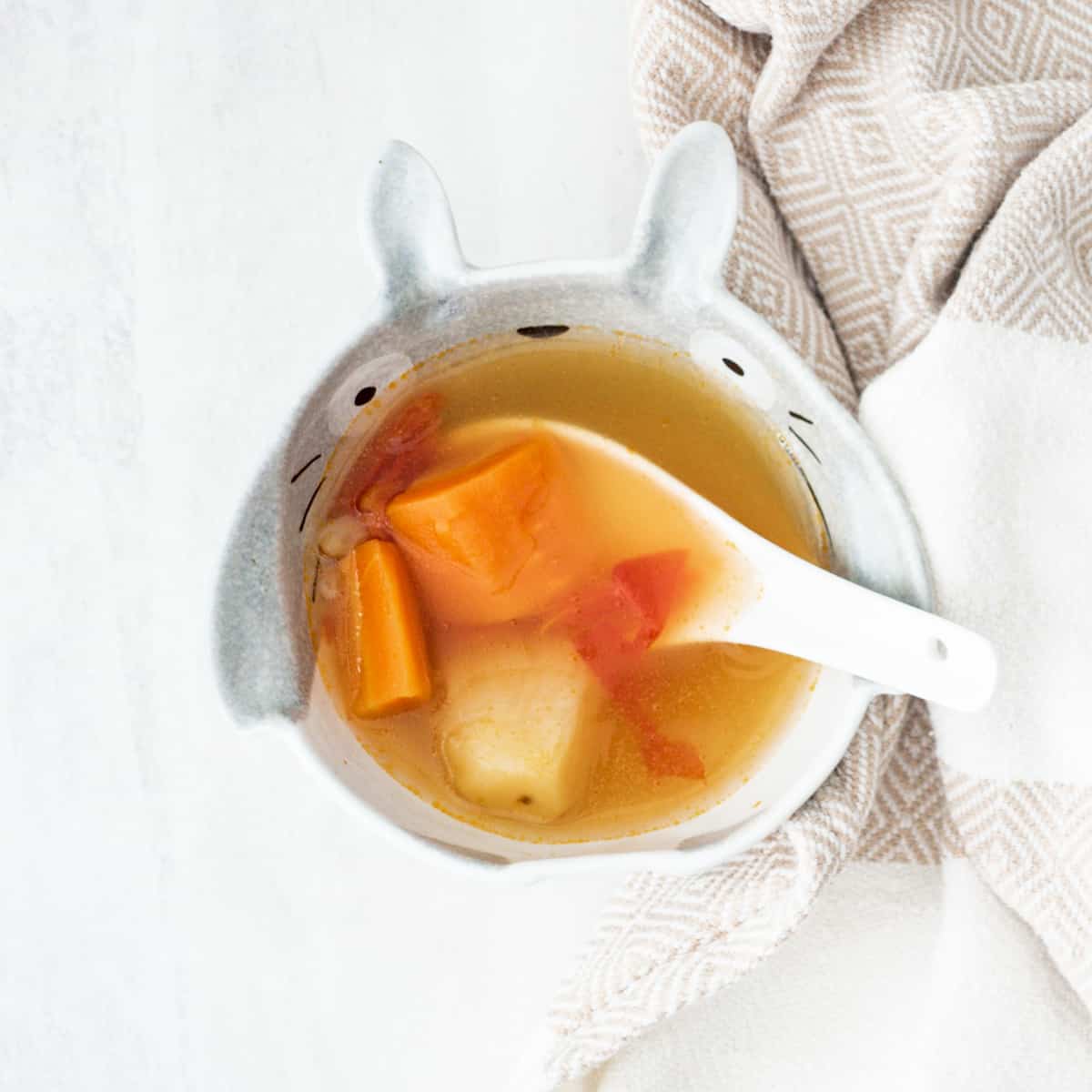
ABC Soup for Weight Loss: How It Works
Chinese ABC soup supports healthy weight management through volume and nutrient density rather than deprivation. Each 1.5-cup serving delivers just 306 calories with 5 grams of fibre, creating lasting satiety that prevents snacking between meals. The high water content from simmered vegetables fills your stomach and triggers fullness signals, while the soup's natural sweetness satisfies cravings without added sugars. Make a large batch on Sunday, portion into individual containers, and you'll have ready-made lunches that keep you satisfied for 3-4 hours without the energy crash that follows processed foods.
Ingredients and Substitutes
This Chinese ABC soup looks almost too simple on paper. Three vegetables, some water, maybe bones. How could this possibly qualify as medicinal food?
The magic isn't in exotic ingredients or complex technique. It's in understanding how these everyday vegetables work together to create something more nourishing than the sum of their parts. Chinese grandmothers have known this for generations. Science is just now catching up.
Here's what you need to know about choosing, preparing, and customizing your ingredients for the best possible Chinese ABC soup. Plus, smart substitutions that maintain the soup's therapeutic properties when you can't find (or don't like) the traditional options.
Why These Three Ingredients Work Together
There's actual food science behind why tomatoes, carrots, and potatoes create such a naturally sweet, satisfying broth. Cantonese cooks figured this out through generations of trial and error, long before anyone understood the chemistry.
Tomatoes - Fresh tomatoes are packed with glutamic acid, the same umami compound found in aged Parmesan and mushrooms. When you simmer tomatoes, their cell walls break down and release this savoury depth into the broth. The natural acidity brightens the soup without needing lemon juice or vinegar. You're not tasting "tomato soup" but rather a gentle, rounded sweetness with subtle tang.
In Traditional Chinese Medicine, tomatoes are cooling and generate fluids. They're perfect for clearing heat (think: irritability, thirst, feeling overheated) while supporting digestion. Their red colour also signals their blood-nourishing properties in TCM colour theory.
Use vine-ripened tomatoes when possible. Underripe or mealy tomatoes create a flat, watery broth. If fresh tomatoes are terrible (winter in most places), canned whole peeled tomatoes work brilliantly. Use 1 can (28 oz) to replace 3-4 fresh tomatoes.
For other tomato-based TCM soups, try Keto Tomato Tofu Soup which uses similar principles with added protein and lower carbs.
Carrots - These sweet root vegetables bring beta-carotene (which your body converts to vitamin A) plus natural sugars that balance the tomatoes' acidity. Unlike other vegetables that turn mushy or bitter when overcooked, carrots develop deeper sweetness the longer they simmer. The fibre breaks down just enough to make them tender while maintaining structure.
Carrots strengthen the spleen in TCM, which governs digestion and transforms food into Qi (energy) and blood. This is why Chinese mothers add carrots to nearly every nourishing soup. They're doing the metabolic heavy lifting, ensuring your body can actually use the nutrients you're eating.
The orange pigment isn't just pretty. Carotenoids are fat-soluble, which is why adding a small amount of fat (from pork bones, cashews, or a drizzle of oil) helps your body absorb them. Cut carrots into large 1-inch rounds so they don't disintegrate during long cooking.
Potatoes - Here's where Western and Chinese nutritional wisdom diverge interestingly. Americans think of potatoes as pure starch, something to avoid. Chinese medicine sees them as Qi tonics that strengthen the stomach and support energy production.
Potatoes contain more vitamin C than you'd expect (one medium potato has about 27mg, nearly half of what tomatoes provide) plus vitamin B6, potassium, and resistant starch that feeds beneficial gut bacteria. When you simmer potatoes in soup, they release starch that gives the broth body without needing cream or flour-based thickeners.
The key is cutting them larger than the other vegetables (1.5-inch chunks versus 1-inch for carrots). Potatoes break down faster and can turn gluey if they're too small or cooked too long. You want them tender but intact, not dissolved into the broth.
For a lower-carb version, replace half the potatoes with daikon radish or cauliflower florets. Daikon adds a peppery note and stays firm, while cauliflower mimics potato's starchy texture without the carbs.
Together, these three vegetables hit different taste notes and nutritional bases. Tomatoes provide umami and acidity. Carrots bring sweetness and colour. Potatoes offer substance and body. The thermal properties in TCM balance perfectly: tomatoes are cooling, carrots are neutral, potatoes are neutral. Nobody gets overheated or chilled. Everybody gets nourished.
The Cashew Secret (For Vegan Versions)
Raw cashews transform plant-based Chinese ABC soup from "light vegetable broth" to "rich, satisfying meal." Here's why they work so well.
Cashews are about 46% fat, most of it heart-healthy monounsaturated oleic acid (the same fat in olive oil). When you simmer cashews in hot liquid, they soften and release these oils, creating natural creaminess without any dairy. The proteins in cashews also contribute to that full-bodied mouthfeel that food scientists call "kokumi," the sensation that makes soups taste more complex and satisfying.
Unlike almonds or walnuts, cashews have a very mild, slightly sweet flavour that doesn't compete with the vegetables. They disappear into the background, enriching without announcing themselves.
You don't need to soak cashews first if you're cooking for 45+ minutes (whether stovetop or Instant Pot). The heat does the work. Just rinse them and toss them in with everything else. They'll break down enough to thicken the broth without fully disintegrating unless you blend them, which some people prefer for extra creaminess.
Most dry goods ingredients, tools, and supplies can be purchased at local Asian markets, Chinese grocery stores, or Amazon Online. Amazon Prime members receive free shipping and faster delivery times.
How to Make ABC Soup Without Meat
Vegan Chinese ABC soup achieves rich, satisfying flavour through cashews and longer vegetable simmering instead of relying on bone broth. Use 1 cup raw unsalted cashews (no soaking needed) which release natural oils and create a creamy, almost dairy-like texture as they break down during cooking. For deeper umami without meat, add dried shiitake mushrooms (3-4 pieces) or a small piece of kombu seaweed, both of which contribute savoury depth that mimics the complexity of bone broth. The vegetables themselves become your flavour base, so choose vine-ripened tomatoes in summer or quality canned tomatoes in winter, and simmer the full 90 minutes to extract maximum sweetness from carrots and natural starch from potatoes.
Optional Additions That Actually Matter
Corn on the cob - Cut into thirds, corn adds natural sweetness that makes kids (and adults) actually want to eat this soup. It's not traditional in all versions, but Malaysian and Singaporean families almost always include it. Corn is neutral in thermal nature and strengthens spleen Qi, making it a perfect complement to the other vegetables.
Fresh corn is ideal, but frozen corn on the cob works fine. Avoid loose frozen kernels, they turn mushy and don't provide that satisfying "gnaw the cob" element that makes this soup fun.
Celery - One stalk adds aromatic depth without overwhelming the gentle vegetable sweetness. Celery is cooling and helps drain dampness (TCM speak for bloating, water retention, sluggish digestion). If you tend toward pre-menstrual bloating or feel heavy after eating, celery makes this soup more therapeutic.
Pork bones or spare ribs - The traditional protein choice. Pork bones provide collagen (good for joints and skin), minerals, and that savoury richness plant-based versions can only approximate. Spare ribs with some meat attached make the soup more substantial, essentially a complete meal.
Always blanch bones first: boil them separately for 5 minutes, drain, rinse thoroughly. This removes impurities and prevents cloudy, off-tasting broth. It's a 5-minute step that makes a huge difference.
Can't do pork? Use chicken drumsticks or chicken bones (same blanching process). For a richer, more gelatinous broth, try oxtail or beef bones, though this shifts the soup's thermal nature slightly warmer.
Fresh ginger - 3-4 thin slices warm the digestion and help your body process the nourishing ingredients. Ginger prevents bloating and nausea, common issues when eating very nutritious soups if your digestion is weak.
However, if you're very hot-natured (night sweats, feeling overheated, irritability), reduce ginger to 2 slices or omit entirely. The soup is cooling enough on its own from the tomatoes.
Dried ingredients for TCM boost - Want to increase the medicinal properties? Add coix seeds (Job's tears, 薏米) for reducing water retention and strengthening the spleen. Use ¼ cup, rinsed. These tiny grains have a subtle sweet, nutty flavor and turn tender when cooked.
Important: Coix seeds are contraindicated during pregnancy as they can stimulate uterine contractions.
Other options: goji berries (add in last 20 minutes, blood-nourishing), red dates (2-3 whole, pitted, for gentle Qi support), dried tangerine peel (1 small piece, prevents bloating from rich soup).
What About Onions?
Some families add a whole onion, peeled and left whole or halved. Onions provide additional sweetness and minerals. In TCM, onions move Qi gently and support the respiratory system.
I find onions optional rather than essential. They add another layer of flavour, but ABC soup's charm is its simplicity. The three main vegetables shine without competition. Add onions if you like them or have one that needs using. Skip them if you don't.
Pro tip: If using onions, leave them whole or in large chunks. Finely diced onions dissolve into mush and cloud the broth.
Ingredient Quality Matters More Than You Think
- Tomatoes: Vine-ripened > regular supermarket > canned whole peeled > tomato sauce. The riper the tomato, the more glutamates and natural sugars. In winter, canned is often better than fresh.
- Carrots: Regular orange carrots are fine. Rainbow or purple carrots work but taste slightly earthier. Baby carrots (the pre-peeled kind) are convenient but less flavourful since they're just regular carrots shaved down and often older.
- Potatoes: Yukon gold or yellow potatoes have the best flavour and hold their shape well. Russet potatoes work but become fluffier and can fall apart. Red potatoes stay very firm, almost too firm for this soup. Avoid waxy new potatoes; they taste bland in soup.
- Cashews: Raw, unsalted only. Roasted cashews have a toasted flavour that doesn't belong in delicate Chinese soup. Salted cashews will throw off your seasoning completely.
Storage and Prep Shortcuts
All vegetables can be prepped and stored together in an airtight container in the fridge for up to 2 days. This makes soup day incredibly fast. Cashews can be measured and stored separately or with the vegetables (they won't absorb moisture).
Blanched bones can be done a day ahead, refrigerated, and added directly to the soup pot the next day. This is actually beneficial; any remaining impurities will have settled to the bottom of the container, making them easy to discard.
The beauty of Chinese ABC soup is its forgiveness. Unlike delicate French consommé or precise Japanese dashi, you can adjust quantities, swap vegetables, change proteins, and still end up with nourishing, delicious soup. The foundation is solid enough to handle variation.
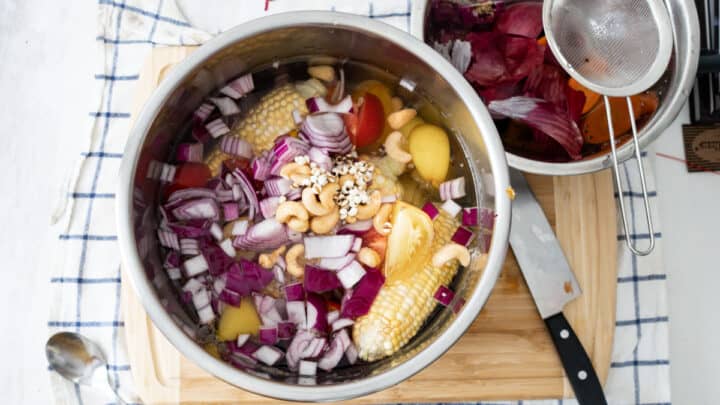
airy, cashews are an excellent choice!
Instructions - Step-by-Step Cooking Method
Making Chinese ABC soup isn't complicated, but attention to a few key details ensures you get that perfectly clear, naturally sweet broth with tender vegetables that hold their shape. This is the difference between soup that tastes like nourishment and soup that tastes like boiled water with vegetables floating in it.
Traditional Stovetop Method
Step 1: Prepare the Vegetables
Wash all vegetables thoroughly under cold running water. Tomatoes often have pesticide residue, so give them a good scrub or consider using organic.
Cut tomatoes into quarters. If they're very large, cut into sixths. You want substantial chunks that will break down during cooking but won't disappear completely.
Peel carrots (the skin can taste bitter in long-simmered soups) and slice into thick rounds, about 1 inch thick. Thin slices overcook and turn mushy. Thick rounds maintain texture and release sweetness gradually.
Peel potatoes and cut into 1.5-inch chunks. Cut them noticeably larger than the carrots. Potatoes break down faster and smaller pieces will disintegrate into the broth. You want them tender but intact.
If using corn, cut the cob into thirds with a heavy knife or cleaver. Leave the kernels on the cob, they'll release their sweetness into the broth while giving you something satisfying to gnaw on later.
Celery (if using) should be cut into 2-inch pieces. Too small and it vanishes. Too large and it's awkward to eat.
Step 2: Blanch the Bones (If Using Meat)
This step is non-negotiable if you want clear, clean-tasting broth. Skip it and you'll have cloudy, slightly off-putting soup.
Bring a separate pot of water to a rolling boil. Add pork bones, spare ribs, or chicken pieces. Let them boil hard for 5 minutes. You'll see gray foam rise to the surface. This is blood, bone fragments, and impurities you absolutely want to remove.
Drain the bones completely in a colander. Run each piece under cold water, scrubbing off any remaining gray bits. The water should run clear. Set aside.
Pro tip: Save yourself cleanup by doing this step first, before chopping vegetables. Use a small pot that's easy to wash.
Step 3: Build the Soup
In a large soup pot (at least 4-quart capacity for a family-sized batch), add ingredients in this order:
- Blanched bones at the bottom (if using)
- Potato chunks
- Carrot rounds
- Tomato quarters
- Corn pieces
- Celery pieces
- Cashews (if making vegan version, 1 cup unsalted raw)
- Ginger slices (3-4 thin slices)
- Whole onion (if using, peeled but left whole)
Pour in 2 liters (8 cups) of cold filtered water. The water should cover everything by about 1 inch. Too much water dilutes the flavour. Too little and you'll need to add more partway through, which disrupts the extraction process.
Starting with cold water is crucial. It allows the vegetables and bones to release their essence gradually as the temperature rises. Adding ingredients to boiling water shocks them and seals in flavours rather than releasing them.
Step 4: The Initial Boil
Place the pot over high heat, uncovered. Bring to a vigorous rolling boil. You want big bubbles breaking the surface aggressively. This initial high heat activates the ingredients and begins extracting their compounds.
Once it reaches a full boil, you'll see foam rise to the surface (even if you blanched bones properly, vegetables release some foam too). Use a ladle or fine-mesh skimmer to remove this foam. Skim for 3-5 minutes until the foam subsides and the liquid looks clearer.
This skimming step isn't optional. Foam left in the soup creates an unpleasant film and slightly bitter aftertaste.
Step 5: The Long, Gentle Simmer
Here's where patience matters. Reduce heat to the absolute lowest setting your stove allows. You want tiny bubbles barely breaking the surface, not a rolling boil. The Chinese call this 文火 (wén huǒ), gentle fire.
Cover the pot but leave the lid slightly ajar (about 1 inch crack). This allows gentle evaporation that concentrates flavours while preventing the soup from boiling over.
Simmer for 1.5 to 2 hours minimum. Longer is fine, up to 3 hours. The soup is forgiving.
Check occasionally to ensure the heat isn't too high (reduce if you see rapid bubbling) or too low (increase slightly if there's barely any movement). The liquid should reduce by about one-quarter, from 8 cups to approximately 6 cups.
What's happening during this time: Tomatoes are breaking down and releasing glutamates (umami). Carrots are releasing sugars and beta-carotene. Potatoes are releasing starch that gives body to the broth. Bones (if used) are releasing collagen and minerals. Everything is slowly transforming into something greater than its parts.
Step 6: Check for Doneness
The soup is ready when:
- Tomatoes have mostly broken down but you can still see some large pieces
- Carrots are fork-tender (a fork slides in easily but they're not falling apart)
- Potatoes are very soft but still holding their shape, not disintegrating
- Broth has changed from clear to a pale golden-orange colour with slight viscosity
- Taste is naturally sweet with subtle savoury depth, not watery or bland
Pierce a carrot with a fork. It should offer almost no resistance but shouldn't fall off the fork. That's perfect texture.
Step 7: Season Minimally
Turn off the heat. Let the soup rest for 5 minutes. This allows flavours to settle and the temperature to drop slightly for safer tasting.
Taste the broth. It should already taste naturally sweet and satisfying from the vegetables. ABC soup is meant to taste clean and gentle, not heavily seasoned.
Add only a small pinch of sea salt to enhance flavours. Start with ¼ teaspoon, stir well, taste again. You can always add more, but you can't remove it.
Traditional Cantonese ABC soup uses minimal to no salt. The natural sweetness from vegetables is the point. However, Western palates often prefer a bit more seasoning. Find your balance.
Avoid: Soy sauce (too strong and salty), chicken bouillon (defeats the purpose of clean, gentle nourishment), white pepper (competes with natural vegetable flavours), or MSG (completely unnecessary, the tomatoes provide natural glutamates).
Step 8: Serve Properly
Ladle into bowls while still warm (not scalding hot). Each serving should include broth plus solids: pieces of potato, carrot, tomato, corn, and any meat from bones.
Serving size: 1.5 to 2 cups per person. This is nourishing soup, not just a starter. It should feel like a meal component, not an afterthought.
Chinese families typically serve ABC soup alongside rice and 2-3 other dishes. The soup aids digestion and provides hydration to balance richer foods.
Best time to drink: With lunch or dinner, or as a mid-afternoon snack (3-4pm) when energy dips. Avoid large servings right before bed if you're prone to nighttime urination.
How to consume: Sip the broth slowly. Chew the vegetables thoroughly (yes, even soup vegetables should be chewed, not just swallowed). This aids digestion and signals satiety to your brain.
Instant Pot Method (ABC Soup Instant Pot)
The ABC soup Instant Pot method delivers results comparable to 2 hours of stovetop simmering in just 45 minutes of hands-off time. Perfect for busy weeknights or when you forget to start dinner early.
Step 1: Prepare Ingredients (same as stovetop method above)
Chop all vegetables. If using bones, you can skip the separate blanching step. The Instant Pot's pressure cooking will handle impurities, though the broth won't be quite as clear as the traditional method.
For clearer broth even in Instant Pot, do the quick blanch: use the Instant Pot's "Sauté" function, boil bones for 5 minutes, then drain, rinse, and wipe out the pot before proceeding.
Step 2: Load the Instant Pot
Add ingredients directly to the Instant Pot inner pot in this order:
- Blanched bones (if using, optional blanching as noted above)
- Potatoes (1.5-inch chunks)
- Carrots (1-inch rounds)
- Tomatoes (quarters)
- Corn (thirds)
- Celery (if using)
- Cashews (if vegan version)
- Ginger slices (3-4)
- Onion (whole, if using)
Pour in 7 cups water (less than stovetop because there's minimal evaporation in pressure cooking). The liquid should reach about two-thirds full in the pot. Don't exceed the max fill line.
Step 3: Pressure Cook
Secure the Instant Pot lid. Make sure the pressure valve is set to "Sealing" position (not "Venting"). This is crucial; if it's on venting, you won't build pressure.
Select "Pressure Cook" or "Manual" setting. Set to High Pressure for 45 minutes.
The Instant Pot will take about 10-15 minutes to come to pressure (this is normal, don't open it). You'll hear hissing and see steam from the valve. Eventually, the float valve will pop up, indicating pressure has been reached. The 45-minute timer starts automatically once pressure is reached.
What's happening: The sealed environment and high pressure (about 250°F/121°C versus 212°F/100°C for regular boiling) accelerates the breakdown of vegetable cell walls and extraction of nutrients. It's not exactly the same as slow simmering but achieves similar nutrient extraction and flavour development.
Step 4: Natural Pressure Release
When the timer beeps, do NOT quick release. This is important for ABC soup.
Let the pressure release naturally for 15 minutes. The float valve will drop on its own as pressure decreases. This gradual pressure reduction prevents vegetables from exploding into mush and allows flavours to settle.
After 15 minutes of natural release, carefully turn the valve to "Venting" to release any remaining pressure (there will be a hissing sound and steam). Wait until the float valve drops completely before opening the lid.
Step 5: Check and Season
Open the lid away from your face (steam is hot). The soup should have a clear to slightly cloudy golden broth. Vegetables should be tender. If potatoes or carrots seem underdone (rare, but possible with very large chunks), you can use the "Sauté" function to simmer for another 5-10 minutes with the lid off.
Taste the broth. Season with a pinch of salt as needed, starting with ¼ teaspoon.
Step 6: Serve
Ladle into bowls immediately. The Instant Pot keeps soup warm on "Keep Warm" mode, but prolonged warming can overcook vegetables. Serve what you'll eat now and refrigerate the rest within 2 hours.
Instant Pot Tips:
- Vegetables may be firmer than stovetop version. Some people prefer this texture. If you want softer vegetables, increase pressure cook time to 50-55 minutes.
- Broth may be slightly less concentrated due to minimal evaporation. If it tastes watery, use the "Sauté" function to simmer uncovered for 10 minutes to reduce.
- Frozen vegetables? Add 5 minutes to cooking time if using frozen corn or if you didn't thaw frozen ingredients.
- Doubling the recipe? Keep cooking time the same (45 minutes high pressure). Just use the 8-quart Instant Pot and increase water to 10-12 cups.
Slow Cooker Alternative
For ultimate hands-off convenience, ABC soup adapts beautifully to slow cookers.
Method: After blanching bones (if using), add all ingredients to slow cooker. Use 8 cups water (slow cookers don't lose much liquid to evaporation).
Cook on LOW for 6-8 hours or HIGH for 3-4 hours.
The low, steady heat creates the most tender vegetables and richly flavoured broth. This is actually closest to the traditional Chinese method of cooking soup over charcoal that barely glows.
Best for: Meal prep (start it in the morning, come home to soup), cooking for a crowd (make a double batch), or when you want maximum flavour extraction with zero effort.
Vegan Cashew Version: Special Notes
Cashews don't need pre-soaking for any of these methods (stovetop, Instant Pot, or slow cooker) as long as you're cooking for 45+ minutes. The heat does the softening.
However, if you want extra creamy soup, try this:
- After cooking is complete, remove 1 cup of broth and ½ cup of the softened cashews
- Blend in a high-speed blender until completely smooth (about 1 minute)
- Pour back into the soup and stir well
- This creates an ultra-silky, almost dairy-like creaminess
Nut-free alternative: Replace cashews with 1 can (400ml) full-fat coconut milk. Add it in the last 10 minutes of cooking for any method. The flavour becomes slightly tropical but still delicious.
Perfect Soup Indicators
No matter which method you use, you'll know your ABC soup is perfectly cooked when:
✓ Visual: Clear to slightly cloudy golden-orange broth with visible vegetable pieces
✓ Texture: Carrots are fork-tender but not mushy; potatoes are very soft but holding shape
✓ Taste: Natural sweetness without added sugar; gentle savoury depth; no watery or bland notes
✓ Aroma: Sweet, slightly earthy, inviting (not sharp, bitter, or overly tomatoey)
✓ Mouthfeel: Slight viscosity from potato starch and tomato pulp (or cashew oils if vegan)
✓ Colour: Warm orange-gold from carrots and tomatoes, not pale or muddy
Common mistakes:
- Too watery: Reduce liquid next time or simmer uncovered for 15 minutes to concentrate
- Bland: Vegetables weren't fresh enough, or you need a tiny pinch more salt
- Cloudy/gray: Bones weren't blanched properly, or you didn't skim foam
- Mushy vegetables: Heat too high or vegetables cut too small
- Bitter aftertaste: Left foam in soup or used old, sprouting potatoes
This soup forgives most errors. Even "mistakes" usually result in perfectly edible, nourishing soup. That's the beauty of traditional Cantonese soup recipes - they're designed for real life, not culinary perfection.
Storage and Reheating Tips
Chinese ABC soup stores beautifully and actually tastes better the next day as flavours meld together. Let the soup cool to room temperature, then transfer to airtight glass containers and refrigerate for up to 4 days. The broth will become slightly gelatinous when cold (if made with bones) or thicker (if made with cashews), which is excellent and indicates successful collagen or oil extraction.
For freezing, portion into individual servings (1.5-2 cups each) in freezer-safe containers, leaving 1 inch of headspace since liquids expand. The soup freezes perfectly for up to 3 months without losing nutritional value, though vegetables will soften slightly after thawing.
To reheat, thaw frozen soup overnight in the fridge, then warm gently on the stovetop over medium-low heat until steaming but not boiling. Never bring reheated soup to a rolling boil, as high heat degrades the nutrients you spent hours extracting. Reheat only the portion you plan to eat immediately, as repeated reheating affects vegetable texture and flavour.
Meal prep strategy: Make a large batch on Sunday, portion into containers, and you'll have ready-made nourishing soup for busy weeknights. Add freshly cooked noodles or rice when serving to keep them from getting soggy during storage.
Frequently Asked Questions (FAQs)
Traditional Chinese ABC soup requires three essential vegetables: tomatoes, carrots, and potatoes. These form the base that gives the soup its naturally sweet flavour and nourishing properties. Optional additions include corn (for extra sweetness), celery (for aromatic depth), onions (for umami), and daikon radish (for a lower-carb option). Some families add winter melon or lotus root depending on the season. The core three vegetables should always be present, but you can customize the rest based on what's in your fridge or your specific health needs.
Use 1 cup raw unsalted cashews for creaminess, or substitute vegetable broth for water. Cashews create the same silky texture as bone broth without any animal products.
Chinese ABC soup supports healthy weight management naturally. Each serving contains only 306 calories while providing 5 grams of fibre that keeps you full for hours. The high water content from vegetables creates satiety without empty calories. Unlike cream-based soups, Chinese ABC soup gets its body from vegetables and optional cashews, making it nutrient-dense rather than calorie-dense. The soup helps stabilize blood sugar thanks to its balance of complex carbs from potatoes and fibre from carrots. It's particularly effective when eaten before your main meal, as it reduces overall calorie intake by filling you up with nourishing vegetables first.
Making ABC soup in an Instant Pot is simple. Add all ingredients (vegetables, optional blanched bones, water) directly to the inner pot. Use 7 cups of water instead of 8 (less evaporation than stovetop). Secure the lid, set to high pressure for 45 minutes, then allow 15 minutes of natural pressure release before venting. The Instant Pot delivers results comparable to 2 hours of stovetop simmering in about one hour total, including the time it takes to come to pressure. It's perfect for busy weeknights when you want nourishing homemade soup without standing over the stove.
Making vegan ABC soup is incredibly easy. Replace pork bones with 1 cup of raw unsalted cashews, which create the same creamy, rich texture as bone broth when simmered. The cashews soften during cooking and release healthy fats that give the soup body and satisfaction. For extra flavour, use vegetable broth instead of plain water. You can also add dried shiitake mushrooms (8-10 pieces) for umami depth and B vitamins. The vegan version is just as nourishing as the meat-based original, though slightly less blood-building. Consider pairing it with iron-rich foods throughout your week if you're vegetarian.
Yes, ABC soup freezes beautifully for up to 3 months. Let the soup cool completely to room temperature, then portion into individual servings (1.5-2 cups each) in freezer-safe containers. Leave about 1 inch of headspace because liquids expand when frozen. The vegetables will soften slightly after freezing and thawing, but the nutritional value and flavour remain intact. To reheat, thaw overnight in the fridge, then warm gently on the stovetop over medium-low heat. Never bring reheated soup to a rolling boil, as this degrades the nutrients you worked hard to extract.
Watery tomato carrot potato soup usually means too much water or not enough simmering time. Use exactly 2 litres (8 cups) of water for stovetop cooking, or 7 cups for Instant Pot. The soup should reduce by about one-quarter during cooking, concentrating the flavours. If your soup is already made and tastes watery, simmer it uncovered for 15-20 minutes to evaporate excess liquid. Make sure you're using ripe, flavourful tomatoes (not mealy or underripe), as they provide most of the soup's savoury depth. Fresh, high-quality vegetables make a massive difference in flavour concentration.
ABC soup stands out from other traditional Cantonese soup recipes because of its simplicity and speed. Most Chinese medicinal soups simmer for 2-4 hours with multiple herbs and dried ingredients. ABC soup achieves nourishment in just 45 minutes to 1.5 hours using everyday vegetables you already have. It's also more neutral in thermal nature (neither heating nor cooling), making it suitable year-round and for most constitutions. Other Chinese soups target specific health conditions, while ABC soup provides general wellness support, digestive health, and blood building. Think of it as your daily maintenance soup rather than targeted medicine.
Absolutely. Many families add cooked rice noodles, udon, or glass noodles directly to their bowl of ABC soup to make it a complete meal. Cook the noodles separately according to package directions, drain, and add to individual serving bowls before ladling soup on top. Don't cook noodles directly in the soup pot, as they'll absorb too much liquid and turn mushy. Some people also serve ABC soup over steamed rice, treating it like a sauce or stew. This transforms light vegetable soup into something more substantial and satisfying, perfect for lunch or dinner.
Store Chinese ABC soup in an airtight container in the refrigerator for up to 4 days. The soup actually tastes better on day two as the flavours meld and deepen overnight. You'll notice the soup becomes slightly gelatinous when cold (if made with bones) due to collagen, or thicker (if made with cashews) from the natural oils. This is excellent and indicates successful nutrient extraction. Reheat only the portion you plan to eat, warming it gently over medium-low heat until steaming but not boiling. Repeated reheating degrades nutrients and affects vegetable texture.
BC soup is generally safe for babies 10-12 months and older, but introduce it carefully. The acidity from tomatoes can upset very young babies' stomachs, so wait until they're established on solids. For babies, blend the soup smooth and remove any bones or large vegetable chunks that pose choking hazards. Toddlers can eat the soup as-is, though you might want to cut vegetables into smaller pieces. The naturally sweet flavour appeals to kids, making it one of the easiest ways to get vegetables into young children. Skip added salt entirely for babies under 1 year. Use minimal salt for toddlers.
Traditional Cantonese soup recipes like ABC soup follow specific principles that differ from Western vegetable soups. Chinese soups use minimal seasoning to let the natural sweetness shine through, simmer for longer periods to extract medicinal properties, include the whole vegetable (not just small dice) so you eat the solids along with broth, and balance thermal properties according to Traditional Chinese Medicine. Western vegetable soups often use heavy cream, butter, or flour for richness. ABC soup achieves body through long simmering and optional cashews, making it lighter yet more nourishing. The focus is therapy through food, not just taste.
Yes, the slow cooker method works brilliantly for traditional ABC soup. After blanching bones (if using), add all ingredients to your slow cooker with 8 cups of water. Cook on low for 6-8 hours or high for 3-4 hours. The slow, steady heat creates incredibly tender vegetables and deeply flavoured broth. This method is actually closest to traditional Chinese soup-making over gentle charcoal heat. It's perfect for meal prep since you can start it in the morning and come home to ready soup. The hands-off convenience makes it ideal when cooking for a crowd or when you want maximum flavour with zero effort.
Other Delicious Recipes
Find the harmony you miss with this delicious, immune-boosting, nutritious soup menu. Take back control of your mood and recharge energy levels by balancing your hormones and minerals. A bowl of nourishing soup is the quintessential embodiment of easily digestible southern Chinese cooking.
- Chinese Spring Soup (Carrots Corn and Yam) 紅蘿蔔淮山粟米豬骨湯
- Ba Wong Fa Soup for Cough and Phlegm 霸王花無花果瘦肉響螺湯
- Wild Matsutake Morel and Cordyceps Mushroom Soup 松茸菇羊肚菌石斛養生湯
- Chinese Apple and Snow Pear Soup 蘋果雪梨無花果瘦肉湯
- Moisturizing Chinese Apple Sea Coconut Soup 雪梨蘋果海底椰玉竹無花果湯
- Chinese Papaya Dessert with Snow Fungus 木瓜雪耳糖水
Other Easy Chinese Soup Recipes
If this Chinese ABC soup hits the spot, explore the rest of the Traditional Chinese Medicine soup lineup. Winter Melon Soup clears summer heat and reduces water retention with cooling properties perfect for hot weather, while Ching Bo Leung removes dampness and strengthens the spleen with a balanced herbal blend.
Kabocha Pork Ribs Soup moistens the lungs and invigorates qi with the natural sweetness of Japanese pumpkin. For something targeting respiratory issues specifically, try Ba Wong Fa Soup, which soothes dry coughs and clears phlegm naturally.
These Cantonese soups follow the same principle: simple ingredients simmered low and slow to extract therapeutic benefits without complicated techniques. Your family will appreciate the gentle nourishment and comforting warmth in every bowl.
For more traditional Chinese medicine recipes and seasonal health tips, subscribe to our newsletter and never miss a post!
I'd love to see how you went with my recipes! Leave a comment below or tag me on Instagram @INSTANOMSS #INSTANOMSS.
> Recipe Card
PrintChinese ABC Soup Recipe (Tomato Carrot Potato)

Every Chinese household makes ABC soup(Tomato Carrot Potato Soup 蕃茄薯仔紅蘿蔔湯). It's the soup moms turn to when the weather shifts, when someone feels rundown, or when dinner needs to be easy but nourishing. This Chinese ABC soup recipe uses three simple vegetables: tomatoes, carrots, and potatoes. Some families add corn for sweetness. Others toss in celery for depth. The base stays the same.
Here's what makes this soup different from the hundreds of recipes online. You can skip the pork completely and use cashews instead. They break down during cooking and create that silky, rich texture you'd normally get from hours of simmering bones. The result is a vegan ABC soup that satisfies without feeling light or lacking.
- Prep Time: 15 mins
- Cook Time: 45 mins
- Total Time: 1 hour
- Yield: 2-4 persons 1x
- Category: Soup
- Method: Boil
- Cuisine: Chinese
Ingredients
Main Vegetables:
- 3-4 tomatoes, quartered (about 1 lb)
- 2 large carrots, peeled and cut into 1-inch rounds
- 1 large potato, peeled and cut into 1.5-inch chunks (Yukon gold or yellow potato)
- 1 ear of corn, cut into thirds (optional but recommended)
- 1 stalk celery, cut into 2-inch pieces (optional)
For Vegan Version:
- 1 cup raw unsalted cashews
For Meat Version:
- 1 lb pork spare ribs or soup bones (blanched)
- OR 1 lb chicken drumsticks (blanched)
Aromatics & Seasonings:
- 2 L (8 cups) filtered cold water (use 7 cups for Instant Pot)
- 3-4 thin slices fresh ginger
- 1 whole onion, peeled (optional)
- Sea salt to taste (start with ¼ tsp)
Optional TCM Additions:
- ¼ cup raw coix seeds / Job's tears (do not use if pregnant)
- 2-3 red dates, pitted
- 2 tbsp goji berries (add last 20 minutes)
- 1 small piece dried tangerine peel
Instructions
-
Stovetop Method:
- Prep vegetables: Wash and cut tomatoes into quarters, carrots into 1-inch rounds, potatoes into 1.5-inch chunks, and corn into thirds.
- Blanch bones (if using): Bring a separate pot of water to boil. Add pork bones or chicken and boil for 5 minutes. Drain completely, rinse under cold water, scrubbing off gray foam. Set aside.
- Build the soup: In a large soup pot (4-quart minimum), add blanched bones (if using), potatoes, carrots, tomatoes, corn, celery, cashews (if vegan), ginger, and onion. Pour in 2 liters cold filtered water.
- Initial boil: Bring to a vigorous rolling boil over high heat, uncovered. Skim foam from surface for 3-5 minutes until liquid looks clearer.
- Long simmer: Reduce heat to lowest setting. Cover pot with lid slightly ajar (1-inch crack). Simmer gently for 1.5 to 2 hours. Liquid should reduce by about one-quarter.
- Add goji berries: If using, add goji berries in the last 20 minutes of cooking.
- Season: Turn off heat. Let rest 5 minutes. Taste and add sea salt to preference (start with ¼ tsp). The soup should taste naturally sweet, not heavily salted.
- Serve: Ladle into bowls while warm. Include broth and solids (vegetables and meat). Serve 1.5-2 cups per person.
Instant Pot Method:
- Prep ingredients: Same as stovetop method above.
- Optional blanching: For clearer broth, use "Sauté" function to blanch bones for 5 minutes, then drain, rinse pot, and proceed.
- Load Instant Pot: Add all ingredients (bones, vegetables, cashews, ginger, onion) to inner pot. Pour in 7 cups water (not 8, less evaporation).
- Pressure cook: Secure lid, valve to "Sealing." Set to High Pressure for 45 minutes.
- Natural release: When timer beeps, let pressure release naturally for 15 minutes. Then turn valve to "Venting" to release remaining pressure.
- Season and serve: Open lid carefully. Taste broth, add salt as needed. Serve immediately.
Slow Cooker Method:
After blanching bones, add all ingredients to slow cooker with 8 cups water. Cook on LOW for 6-8 hours or HIGH for 3-4 hours.


Notes
Nutrition
- Serving Size: 1 pot
- Calories: 306
- Sugar: 11.3 g
- Sodium: 649.8 mg
- Fat: 16.8 g
- Carbohydrates: 35.7 g
- Protein: 8.9 g
- Cholesterol: 0 mg

Pin the above image to your Chinese TCM Recipe Pinterest Board to bookmark this page. We are so excited to share our recipes with you!
More Chinese Recipes
Silkie Chicken Cordyceps Soup with Fish Maw and Conch 蟲草花花膠响螺煲烏雞湯
Hokkigai Arctic Surf Clams Cold Appetizer 薑蔥北極貝冷盤
Instant Pot Braised Chinese Mushrooms 髮菜炆冬菇食譜
Nourishing Squab Soup 桂圆枸杞蓮子淮山炖乳鸽汤
Red Bean Soup (Instant Pot) 蓮子百合紅豆沙
Braised Beef Brisket & Tendon 柱侯蘿蔔炆牛筋腩
Fried Garlic Seafood Fried Rice 金蒜海鮮炒飯
Double Steamed Snow Pear with Fritillaria Bulb 川貝燉雪梨
Best Postpartum Pig Trotter Black Vinegar and Ginger 豬腳薑醋


This post contains affiliate links and/or products submitted to Nomss for editorial consideration. To find out more, please visit our About/Disclaimer page.
Remove Ad-Block to view shopping guide!



Sam says
I love these simple, healthy ingredients. Such a delicious soup! Thanks!
Nancy says
Enjoy soup season!
Crystal says
This looks so comforting, and I love the addition of cashews! Thanks so much for sharing!
Nancy says
cashews is a great hack!
Mary says
The vegan version of this hearty soup is amazing, super flavorful, and easy to make!
Nancy says
the vegan version is just as delicious if not better than with meat!
Katie says
Such a lovely soup recipe! Packed full of healthy vegetables and flavor!
Nancy says
All the healthy nutrients!
Emily says
This tomato carrot potato soup is so tasty and creamy with the cashews! Thanks for sharing the recipe!
Nancy says
You're very welcome Emily!
Ana says
I love that this is full of clean, wholesome ingredients. So nutritious for you!
Nancy says
so easy to digest and still get all the benefits!
Andrea White says
Love this soup! So cozy and warmed me up perfectly!
Nancy says
Enjoy all the cozy vibes!
Tavo says
The first time I added cashews to a soup and loved it! The texture and flavor were fantastic! thanks!
Nancy says
We love using cashews to sub for meat! it makes it super creamy!
Freya says
Such a delicious and unusual recipe, really yummy!
Nancy says
It's actually super popular and in every Chinese household!
Amy says
Yum! Love these healthy and traditional Chinese soups!
Nancy says
I could never live without Chinese soups!
Cosette says
This soup sounds comforting, perfect for the cold weather we're having right now.
Julia says
I absolutely love all soups in the winter. This one looks and sounds delicious!
Vijitha says
Perfect for the winter! And it's so simple to prepare, and a great way to get those nutrient into our bodies!
Vanessa says
What a comforting way to eat more veggies in the winter!
Nancy says
i find turning the veggies to soup makes it so much easy to consume the nutrients!
Bernice says
How wonderful. Love that clear broth and large vegetable chunks. Sounds like a soup I'll be enjoying in January!
Nancy says
Hi Bernice!! why wait until Janauary when you can start now?
Julia says
So, simple and delicious. This is a perfect winter warming soup.
Nancy says
Soup is always a good idea!
Meryl says
Yum! So simple and healthy!
Nancy says
I'm always up for easy nutrition!
Tavo says
I love how simple this soup is. I skipped the pork tenderloin, and it didn't lack any flavor. It was so yummy!
Nancy says
That's wonderful! I skip meat a lot too!
Shilpa says
Looks delicious and comforting
Nancy says
yummy!
Jacqui says
Delicious, healthy and so easy to make. (Btw, I love that totoro Bowl you used as a prop. It’s super cute!)
Nancy says
I'm so glad you like it!! Doesn't a cute bowl just makes it that much more enjoyable?!
Marinela says
This tomato carrot potato soup is so hearty and comforting even without pork. Super delicious and nourishing!
Nancy says
I agree, it can be such a comforting bowl even without meat!
Kayla DiMaggio says
Yum! This tomato carrot and potato soup was so delicious and filling! Perfect and healthy!
Nancy says
Right?! just add some noodles or pasta and it really becomes a nutritious meal!
Andrea White says
Such a delicious soup! I love the combo of tomatoes and carrots. So good!
Nancy says
the combo is super appetizing!
Chris says
Such a perfectly warming soup with a bunch of vegetables! I love it! It was so flavorful and easy to follow! Thank you!
Nancy says
this soup is just too easy to make!
Mihaela | https://theworldisanoyster.com/ says
I would gladly have this soup without pork! It sounds so comforting!
Nancy says
it is like a nice warm hugs!
Toni says
I love how comforting this is!!
Nancy says
It is perfect for cold rainy days!
Pam Greer says
So simple and delicious!
Nancy says
yes it is! so happy you like it!
Anaiah says
I love the simplicity of the soup. I opted for the vegan version and it was delicious!
Nancy says
Yes I love soups that are easy to make and can be ready in no time too!
Michele says
Very delicious and easy to make!
Nancy says
yay for easy soups!
Jessica says
So comforting and delicious!
Nancy says
yes yes yes!
Anna says
This is such a delicious soup! Thanks for the recipe!
Nancy says
you're welcome anna!
Sue says
Delicious and healthy - the best kind of soup!
Nancy says
soups are the bests!
Luke Ratford says
A great winter warmer 🙂
Nancy says
add some pasta and you've got yourself a meal!