
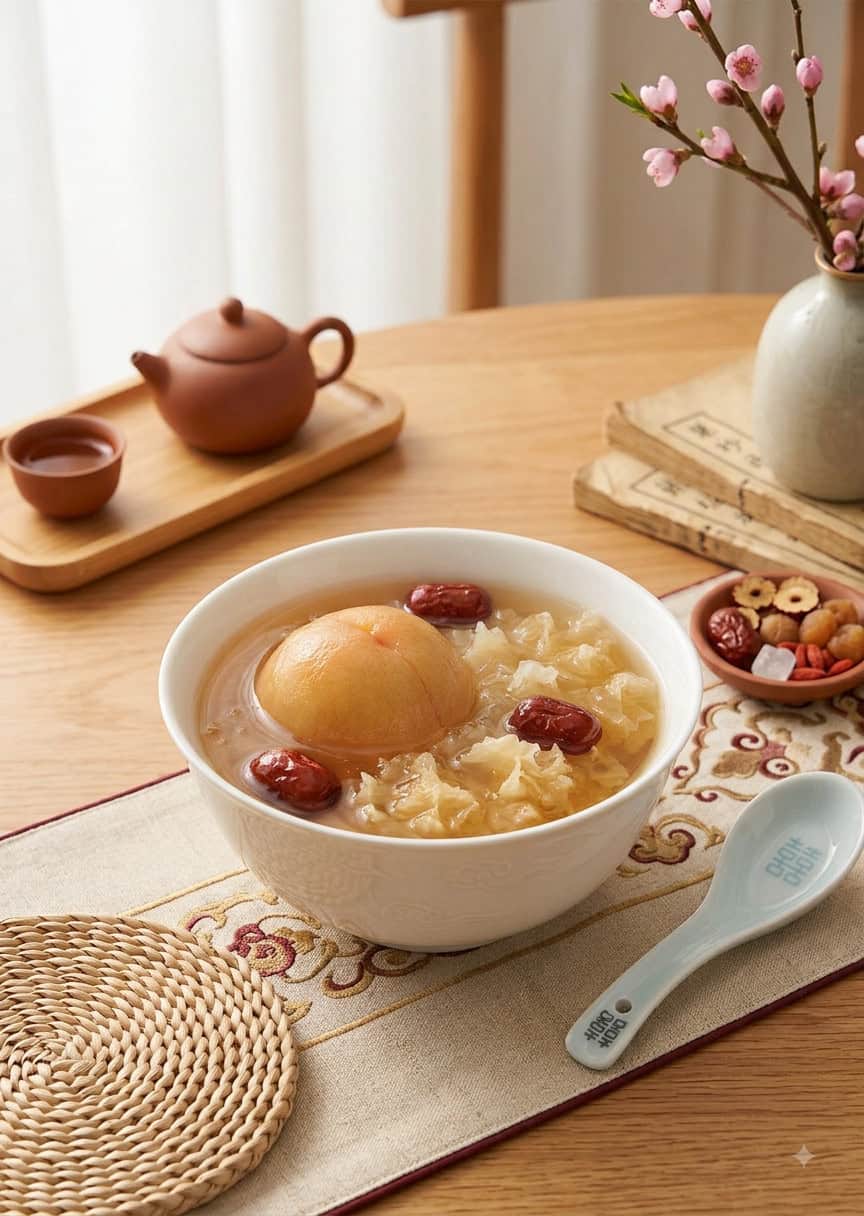
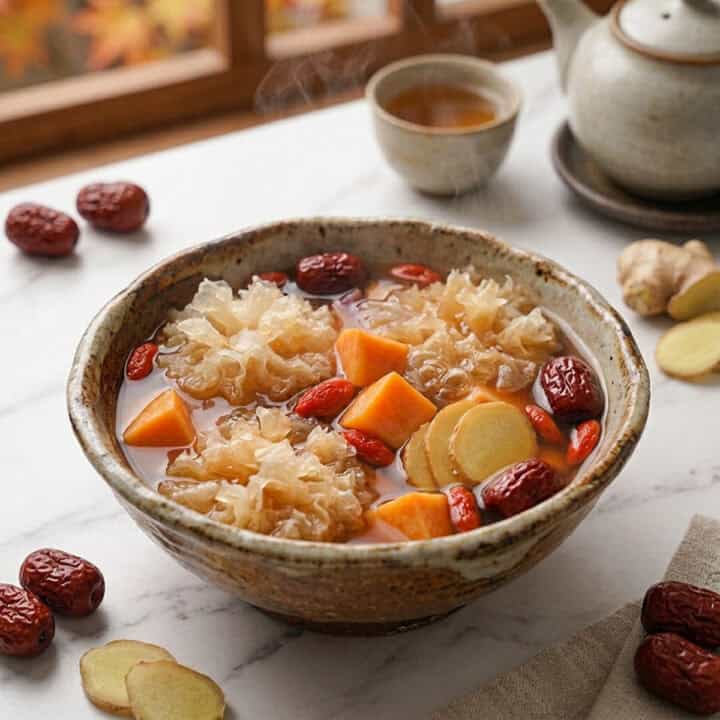
Okanagan peaches arrive in August and vanish by early October, which is roughly the lifespan of my enthusiasm for stone fruit. This Stewed Peach, Snow Fungus Tremella and Red Dates Dessert 养生桃子银耳羹 catches them at the top of that curve.
Tremella does most of the work, turning from brittle dried petals into soft glossy ribbons. The peaches go in late so they hold their shape instead of collapsing into jam. It's warm, silky, faintly floral, and it makes you feel like you've done something responsible with your evening.
> In This Post: Everything You Need to Know About Chinese Peach Dessert Soup
This one covers more than the pot on the stove. You'll learn why snow fungus needs a full hour to turn silky and how to spot the bleached stuff before you waste an afternoon on it, plus why the peaches go in last instead of at the start. We'll work through the TCM reasoning for pairing peach with tremella and red dates, which season this bowl actually belongs to, and when to skip it entirely.
There's a sourcing section for T&T and Costco with real numbers on bulk dried goods and freezer prep, an Instant Pot method for weeknights, and variations for when peach season ends. By the end you'll know how to build this from a flat of August peaches and keep eating it through December.
Jump to:
- > In This Post: Everything You Need to Know About Chinese Peach Dessert Soup
- Why Peach, Tremella and Red Dates Work Together
- Ingredients and Chinese Herbal Benefits and TCM Properties
- Ingredient Notes and What to Look For
- Is This Recipe Better for San Fu or Autumn Tiger?
- Instructions - Step-by-Step Cooking Method For Peach Snow Fungus Dessert Recipe
- Storage and Make-Ahead
- Variations
- Peach vs Asian Pear vs Papaya Snow Fungus Soup
- Snow Fungus Peach Soup Frequently Asked Questions (FAQs)
- Other Yin Nourishing Recipes
- > Recipe Card
- Stewed Peach, Snow Fungus and Red Dates Dessert 养生桃子银耳羹
Why Peach, Tremella and Red Dates Work Together
Late summer into autumn is when dryness starts pulling at the Lung in Traditional Chinese Medicine. Skin tightens, throats scratch, and coughs turn dry and unproductive. The classic answer isn't more water. It's food that generates and holds fluids.
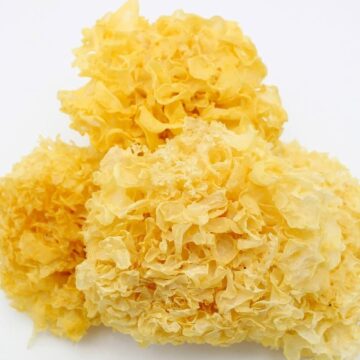
Snow fungus (银耳, yín ěr) is sweet and bland, neutral in nature, and enters the Lung, Stomach and Kidney meridians. It nourishes yin and moistens dryness, and its gelatinous texture is the visible version of that idea. Cantonese kitchens have called it the poor cook's bird's nest for generations, which is either humility or excellent marketing.
Peach (桃) sits on the warm side, sweet and slightly sour, and traditionally generates fluids and eases thirst. Classical Chinese materia medica describes the peach as the fruit of the Lung.
Red dates (红枣) are sweet and warm, tonify Qi and Blood, and stop the formula from tipping cool. Together they moisten without chilling the digestion, which matters if your spleen already runs weak.
This is food therapy, not medical treatment. Anything persistent belongs in front of a doctor or a registered TCM practitioner.

Ingredients and Chinese Herbal Benefits and TCM Properties
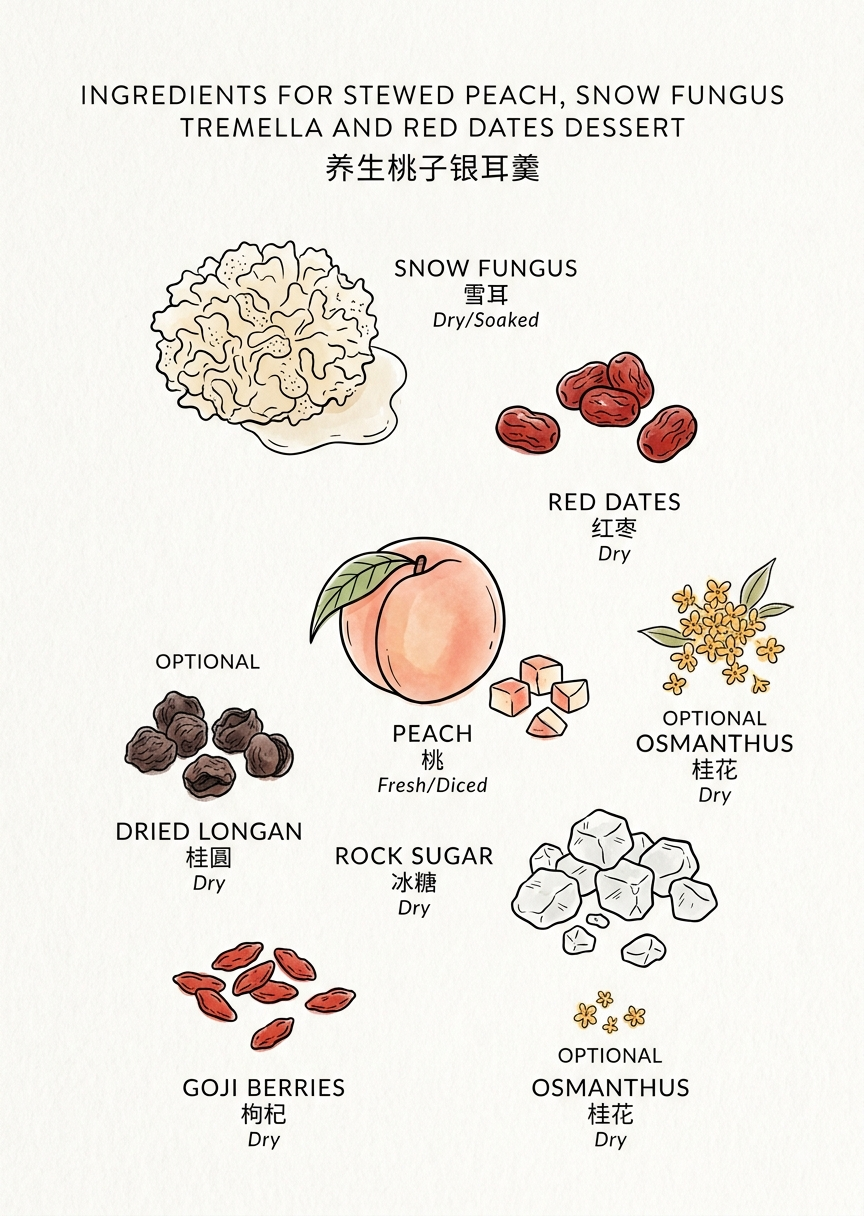
The peach and red date soup TCM benefits in this six-ingredient dessert come from the combination, nourishing Yin, moistening the Lung, generating fluids, and warming the middle just enough that a bowl this moistening still sits well on a weak spleen.
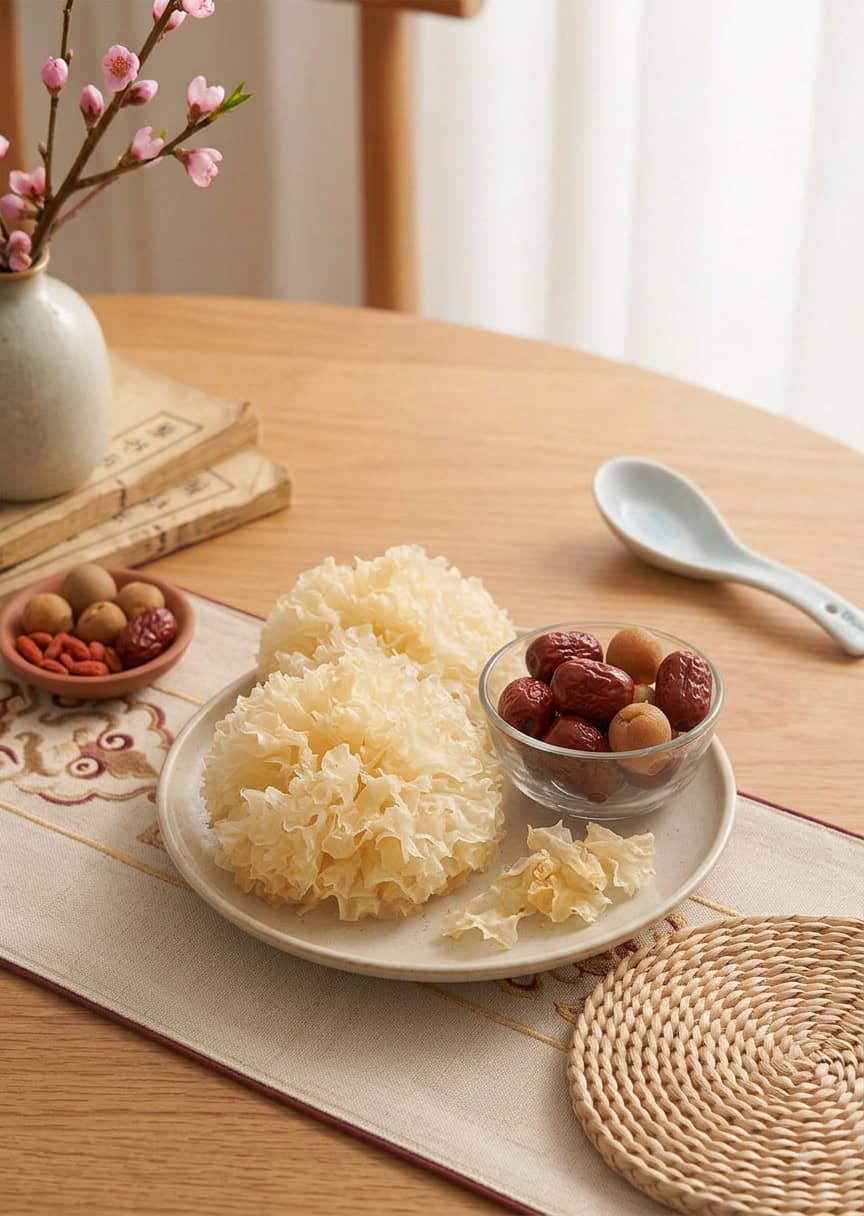
Snow Fungus (雪耳) is the anchor. In TCM, tremella is neutral in thermal nature, sweet and bland, and targets the Lung, Stomach, and Kidney meridians. It nourishes Yin, moistens dryness, and generates body fluids, which is why the broth turns glossy and clinging after a full hour rather than staying watery.
The Fluid Generators
Peach (桃) is warm and slightly sour with a sweet finish, working on the Lung, Stomach, and Large Intestine meridians. It generates fluids, eases thirst, and moistens the intestines. Paired with rock sugar it demonstrates 酸甘化陰, the principle that sour and sweet together transform into Yin.
Rock Sugar (冰糖) is neutral and sweet, entering the Spleen and Lung meridians. It moistens the Lung, generates fluids, and calms cough. Unlike white sugar, it does this without stoking internal heat, which is the whole reason Cantonese tong sui reaches for it.
The Warmers and Tonics
Red Dates (红枣) are warm and sweet, targeting the Spleen and Stomach meridians. They tonify Qi, nourish Blood, and harmonize the formula. This is the ingredient stopping a bowl of pure moisture from tipping cold on digestion. Small ingredient, real job.
Goji Berries (枸杞) are neutral and sweet, working on the Liver, Kidney, and Lung meridians. They nourish Liver and Kidney Yin, benefit essence, and brighten the eyes. They reach the deeper reservoir the Lung draws on when autumn dryness drags past a few weeks.
Most dry goods ingredients, tools, and supplies can be purchased at local Asian markets, Chinese grocery stores, or Amazon Online. Amazon Prime members receive free shipping and faster delivery times.
Disclosure: some links below are Amazon Associates links for Amazon.ca and Amazon.com. If you buy through them I earn a small commission, and your price doesn't change.
Ingredient Notes and What to Look For
Buy dried snow fungus (Tremella fuciformis, 雪耳) in pale ivory or faint yellow heads, never bright white. Bleached tremella smells faintly of sulphur and turns slimy instead of springy. Whole heads beat pre-torn bags, since you can see the base and judge quality before soaking.
Choose freestone yellow peaches that give slightly at the shoulder. Rock-hard fruit never sweetens in the pot, and overripe fruit dissolves into pulp. Canned halves work in February, though drain the syrup and cut the rock sugar by half.
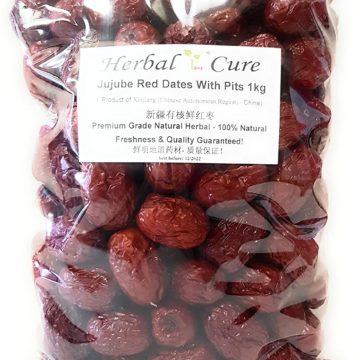
Red dates should be plump, glossy and pitted before they hit the water. The pit adds a heating quality some people find drying, and it's a nuisance in the bowl. Yellow rock sugar (黃冰糖) gives a rounder caramel note than white, but either does the job. Red dates do similar work in three reds digestive tea, where they tonify Qi and Blood in a drink rather than a dessert.
Goji berries go in during the last five minutes. Cook them longer and they turn bitter and beige, which is a sad outcome for something that costs what it costs.

Is This Recipe Better for San Fu or Autumn Tiger?
Autumn Tiger (秋老虎), and it isn't close. Timing matters more than most people expect. San Fu (三伏天) is damp-heat, where the problem is heavy, sticky and waterlogged, and the traditional answer drains rather than moistens. A yin tonic like this one adds fluid to a body already struggling to move it, which is why Cantonese kitchens hold off on tremella desserts until the humidity breaks. If you're still in the muggy stretch, the San Fu adzuki, Job's tears and poria soup is the correct bowl.
Autumn Tiger is the opposite pattern wearing similar weather. The heat hangs on after Liqiu (立秋, the Beginning of Autumn), but the humidity drops out from under it and dryness moves in, bringing scratchy throats, tight skin and the dry unproductive cough that no amount of cold water fixes. That's exactly the gap peach, snow fungus and rock sugar fill, following the 滋陰潤燥 principle laid out in my complete Autumn Tiger and Chushu guide.
The handover in 2026 has no gap at all. San Fu's final day is August 23 and Chushu begins that same morning, so damp heat and dryness swap places inside twenty-four hours. Most people keep eating summer food for another three weeks and then wonder why their throat hurts, so mark the date and let the peaches take over.
Peaches finish around the same time the nights turn. Once White Dew arrives on September 7, swap to sweet potato tong sui with tremella and ginger, which moistens the same dryness without leaving your stomach cold.
One caveat worth keeping. Skip this bowl if you're carrying dampness right now, meaning heavy limbs, bloating after meals, or a thick greasy tongue coating. Clear that first, then come back once dryness is the bigger complaint.
Instructions - Step-by-Step Cooking Method For Peach Snow Fungus Dessert Recipe
How to Make Tremella Peach Dessert Soup At Home
There's almost nothing to this Cantonese tong sui with fresh peaches beyond patience and correct order. Soak, simmer, add fruit, sweeten. The prep takes fifteen minutes and the stove handles the rest while you do something else entirely.
Two things separate a silky bowl from a watery one. The tremella needs a genuine hour at a low simmer to release its gel, and there's no shortcut that gets you there faster. The peaches go in near the end, because fifteen minutes softens them through while eighty minutes turns them into pulp.
Get the tremella soaking in the morning and you'll have dessert by dinner without thinking about it again.
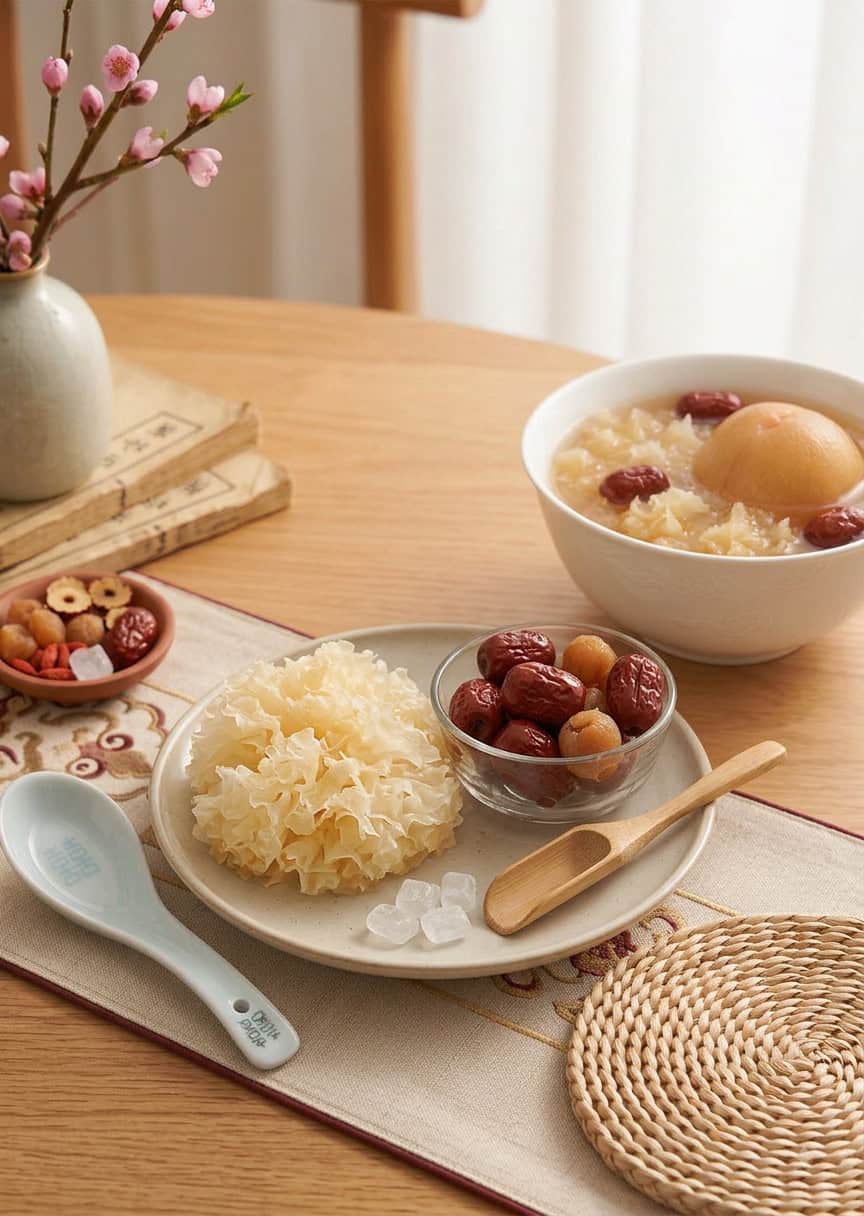
Soak the tremella in cold water for two to three hours, or overnight if you plan ahead. It expands to about six times its dry size, so use a bowl bigger than seems reasonable. Snip off the hard yellow base with scissors and tear the rest into bite-sized florets.
Put the tremella, red dates and 1.5 litres of cold filtered water into a ceramic or enamelled pot. Bring it to a boil, then drop the heat to a bare simmer. Cover partially and leave it alone for sixty minutes.
What you're waiting for is broth that turns faintly viscous and clings to the spoon. That gelatin is the entire reason you soaked anything. Stainless steel works, though ceramic holds a gentler heat and gives a better texture.
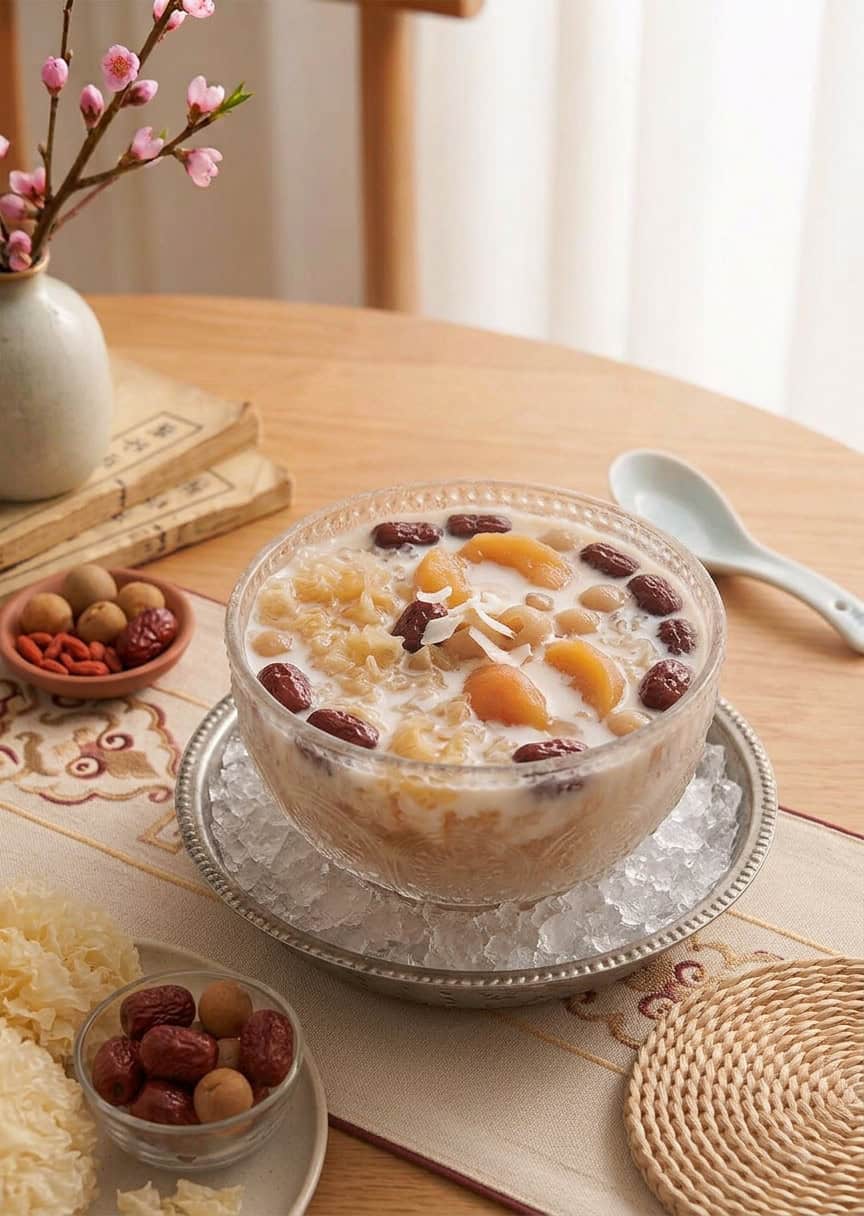
Add the peach wedges and rock sugar at the sixty-minute mark, then simmer another fifteen. That window softens the fruit through while leaving the edges intact. Toss in the goji berries for the final five, taste, and adjust the sugar.
Serve it hot in September and chilled in August, which is the kind of flexibility a Vancouver summer demands.
Storage and Make-Ahead
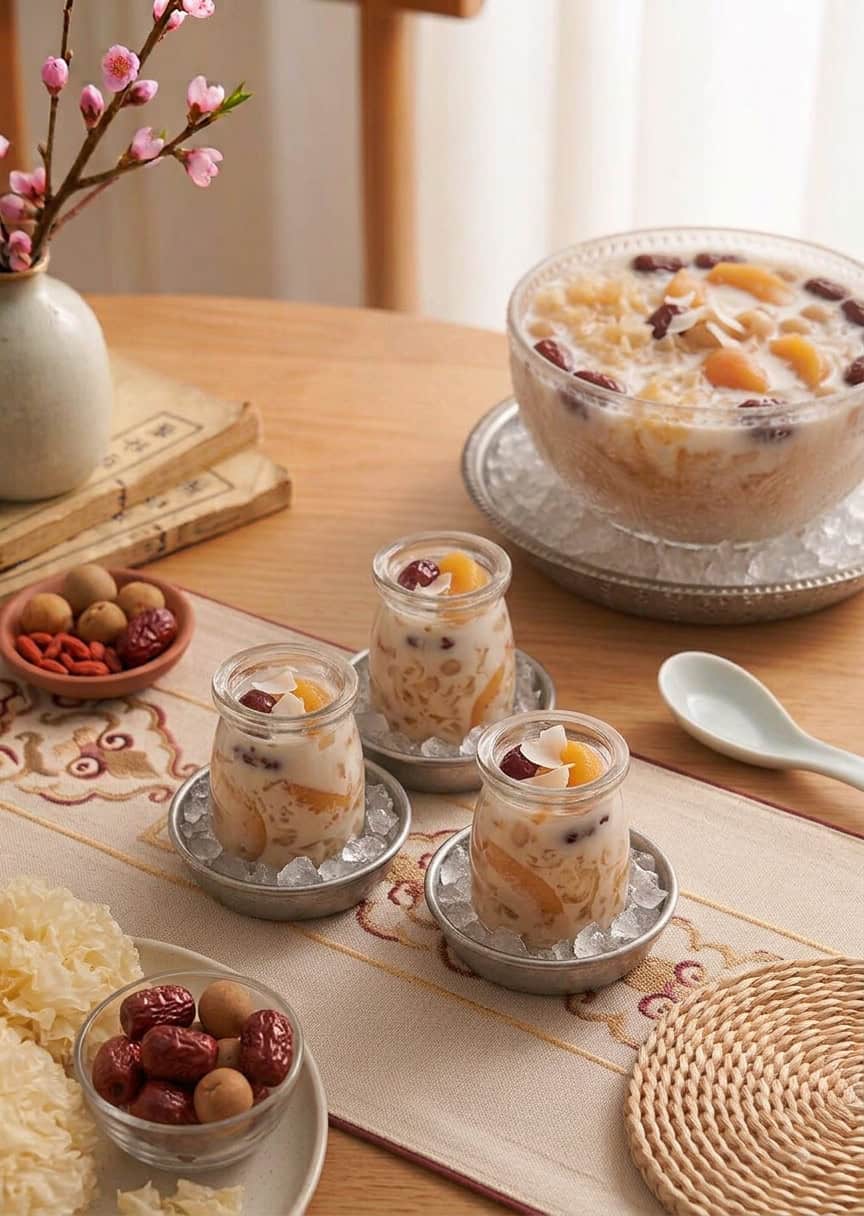
The finished dessert keeps four days in the fridge in a sealed glass container. It thickens considerably when cold, so loosen it with a splash of hot water as you reheat.
Freeze single portions for up to two months. Tremella survives freezing better than most things, though the peaches soften noticeably, so I add fresh fruit after reheating when texture matters.
You can also cook the tremella base ahead, refrigerate it for three days, and finish with peaches and sugar in ten minutes on a weeknight. That's the version that actually gets made.
If Autumn Tiger heat is also giving you red eyes and a scratchy throat, pair the week's dessert with chrysanthemum honeysuckle tea. The soup moistens from below while the tea clears heat from above.
Variations
Swap in Asian pear once peaches disappear and autumn dryness gets serious. Pear runs cooler, so add three slices of ginger to keep the bowl balanced.
A handful of dried longan (桂圓) turns the whole thing warmer and more caramelly, and pairs naturally with red dates for anyone building Blood and Qi. Add it at the start with the tremella so it has time to soften. If you like that direction, the same pairing drives my cooling longan and red date tea, which balances longan's heat with chrysanthemum.
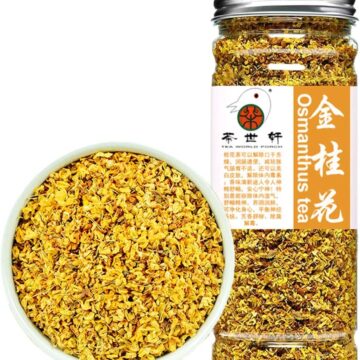
Dried lily bulb and lotus seeds push this toward the classic autumn formula. Osmanthus (桂花), stirred in off the heat, gives the kitchen a perfume that smells more expensive than the ingredient list.
For a richer bowl, add 100ml of coconut milk in the last five minutes. Less traditional, considerably harder to stop eating.
Peach vs Asian Pear vs Papaya Snow Fungus Soup
Same tremella base, three different fruits, three different jobs. Which one belongs in your pot depends on the season and how your digestion handles cooling foods.
| Peach 桃 | Asian Pear 雪梨 | Papaya 木瓜 | |
|---|---|---|---|
| Best season | Late summer, Liqiu through September | Mid autumn through winter | Year-round, peaks late summer |
| TCM nature | Warm, sweet and slightly sour | Cool, sweet and slightly sour | Neutral, sweet |
| Primary action | Generates fluids, moistens Lung and intestines | Clears heat, moistens Lung, transforms phlegm | Harmonizes Stomach, moistens Lung, aids digestion |
| Best for | Autumn Tiger dryness with lingering heat | Dry cough with heat signs, deep autumn dryness | Weak digestion, anyone who runs cold |
| Watch out for | Excess peach generates internal heat | Too cooling for a weak spleen, add ginger | Under-ripe fruit stays firm and bland |
| Simmer time | 60 min base, fruit in for final 15 | 60 min base, fruit in for final 20 | 60 min base, fruit in for final 10 |
| Serve | Hot in September, chilled in August | Hot, always | Warm or chilled |
| Recipe | You're reading it | Snow pear with chuan bei mu | Papaya snow fungus dessert |
Pear is the one to graduate to once October arrives and the dryness stops being seasonal. Papaya is the safest bet if cooling foods usually leave you bloated.
Snow Fungus Peach Soup Frequently Asked Questions (FAQs)
Yes. Drain them, rinse off the syrup, and halve the rock sugar. Add them in the final five minutes rather than fifteen, since they arrive already soft.
Usually undercooking, occasionally bleached product. Sixty minutes at a real simmer is the floor, and cheap sulphur-treated tremella never quite gets there no matter how long you wait.
Tremella, peach and red dates are gentle foods eaten routinely through pregnancy in Cantonese households. Keep the sugar modest, and check with your care provider if you're managing gestational diabetes.
Two or three times a week through late summer and autumn is plenty. Daily works if your skin and throat run genuinely dry, though the sugar does add up.
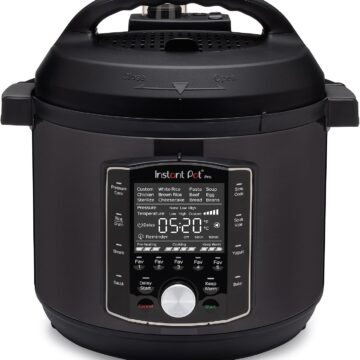
Yes. High pressure for twenty minutes with natural release, then add peaches and sugar on sauté for five. The texture lands slightly less silky than a slow stovetop simmer, which is a fair trade on a Tuesday.
Semi-ripe is actually the better choice. Firm fruit with a little give at the shoulder holds its wedge shape through fifteen minutes of simmering, while fully ripe peaches slump into pulp and cloud the broth. Rock-hard supermarket fruit is the one to avoid, since it never develops sweetness in the pot no matter how long you cook it. If your peaches are already soft, cut them thicker and add them in the last eight minutes instead.
No, and the skin does useful work. It holds the wedges together and lends the broth a faint blush that looks lovely in the bowl. Peel them if the fuzz bothers you or if you're serving small kids, though a good scrub under running water usually settles it.
Three usual suspects. The tremella didn't get a full hour at a real simmer, the head was bleached and sulphur-treated so it never had much gel to give, or you used too much water for the amount of fungus. Stick to 15g dried tremella per 1.5 litres and give it the time.
Yes, though it won't be the same dish. Red dates and ripe peaches carry real sweetness on their own, so a sugar-free version tastes gentle rather than flat. Monk fruit and stevia work if you need them, added off the heat. Fair warning that rock sugar isn't only sweetener here, since TCM credits it with moistening the Lung, so you do lose a small piece of the formula.
It's a good one for kids. Cut the rock sugar by half, chop the peaches and tremella smaller, and pit the red dates carefully. Most children take to the texture faster than adults do, which is either a compliment to tremella or a comment on adults.
Other Yin Nourishing Recipes
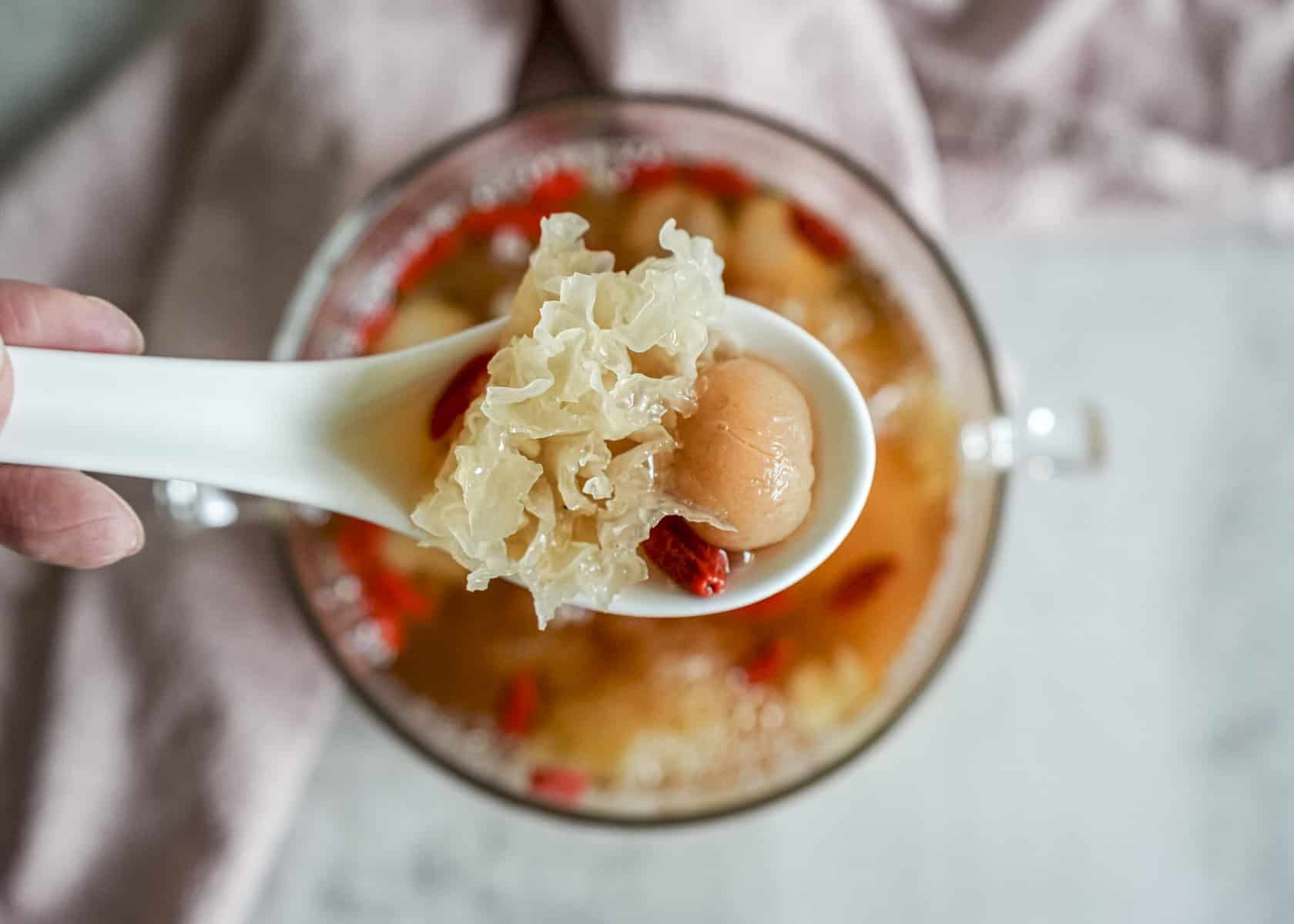
If the tremella and rock sugar are already out, the easiest next batch is the autumn version of this same idea. Autumn Dryness Relief TCM Lotus Snow Fungus Dessert 蓮子百合雪耳红枣枸杞糖水 swaps the peaches for lotus seeds and lily bulbs, which pushes the formula from fluid-generating toward spirit-calming. It's the one to make once peach season ends and the dryness gets serious rather than seasonal.
More yin-nourishing recipes worth having in rotation:
Chinese Papaya Dessert with Snow Fungus 木瓜雪耳糖水 - the same tremella base with semi-ripe papaya and south-north apricot kernels, which adds a cough-easing element this recipe doesn't have. Papaya runs neutral rather than warm, so it's the better pick if peaches leave you feeling heated.
Double-Steamed Snow Pear with Fritillaria Bulb 川貝燉雪梨 - the one to reach for when a dry cough has actually taken hold. Chuan bei mu is a proper herb rather than a fruit, so this sits closer to the medicine end of the spectrum than the dessert end.
Snow Nest Dessert Soup with Coconut Milk and Peach Gum 椰汁雪燕桃胶糖水 - two tree resins and full-fat coconut milk, aimed squarely at skin hydration. Richer and considerably more indulgent than a peach bowl, though it needs an overnight soak, so plan a day ahead.
Moisturizing Chinese Apple Sea Coconut Soup 雪梨蘋果海底椰玉竹無花果湯 - the savoury counterpart, for when you want lung-moistening properties in a soup course instead of after dinner. Sea coconut and yu zhu do the yin work here, and it scales well for a family.
For delicious Chinese comfort food recipes and TCM food therapy that actually work, subscribe to our newsletter and never miss a wellness post!
I'd love to see how you went with my recipes! Leave a comment below or tag me on Instagram @INSTANOMSS #INSTANOMSS.
> Recipe Card
PrintStewed Peach, Snow Fungus and Red Dates Dessert 养生桃子银耳羹
A Cantonese tong sui that stews fresh peaches with snow fungus, red dates and goji berries into a silky, lightly sweet dessert soup. Nourishes yin, moistens the Lung, and works hot or chilled.
- Prep Time: 15 mins
- Cook Time: 80 mins
- Total Time: 1 hour 35 minutes
- Yield: 4 persons 1x
- Category: Dessert
- Method: Boil
- Cuisine: Chinese, TCM
- Diet: Vegan
Ingredients
- 15g dried snow fungus (雪耳), 1 medium head, soaked
- 2 firm-ripe yellow freestone peaches (about 400g), pitted and cut into wedges
- 8 red dates (红枣), pitted
- 1 tbsp goji berries (枸杞)
- 40 to 50g yellow rock sugar (黃冰糖), to taste
- 1.5 L cold filtered water
Optional
- 20g dried longan (桂圓)
- 3 slices fresh ginger
- 20g dried lily bulb (百合)
- 1 tsp dried osmanthus (桂花)
- 100ml full-fat coconut milk
Instructions
- Soak the snow fungus in cold water for 2 to 3 hours until fully expanded. Snip off the hard yellow base and tear into bite-sized florets.
- Rinse the red dates. Add the tremella, red dates and 1.5L cold filtered water to a ceramic or enamelled pot.
- Bring to a boil, then reduce to a gentle simmer. Cover partially and cook 60 minutes, until the broth turns slightly viscous.
- Add the peach wedges and rock sugar. Simmer 15 minutes, until the peaches soften but hold their shape.
- Add the goji berries in the final 5 minutes. Taste and adjust sweetness.
- Serve hot, or cool to room temperature and refrigerate at least 4 hours to serve chilled.



Notes
-
- Instant Pot: high pressure 20 minutes, natural release, then sauté 5 minutes with peaches and sugar.
- Canned peaches: drain, rinse, halve the sugar, add in the last 5 minutes.
- Store 4 days refrigerated, or freeze portions up to 2 months.
- Avoid bright white tremella. Bleached product won't gel properly.
- Not suitable for anyone in an active cold with heavy phlegm.
Nutrition
- Serving Size: 1 bowl
- Calories: 132
- Sugar: 24.1g
- Sodium: 8mg
- Fat: 0.3g
- Carbohydrates: 33.4g
- Fiber: 3.1g
- Protein: 1.2g
- Cholesterol: 0


Pin the above image to your Chinese Medicinal Food Therapy TCM Recipe Pinterest Board to bookmark this page. We are so excited to share our recipes with you!
More Chinese Recipes
Chinese Steamed Chicken With Shiitake Mushroom 冬菇蒸雞
Air Fryer BBQ Pork Char Siu 氣炸鍋蜜汁叉燒
Red Bean Soup (Instant Pot) 蓮子百合紅豆沙











Comment Below