
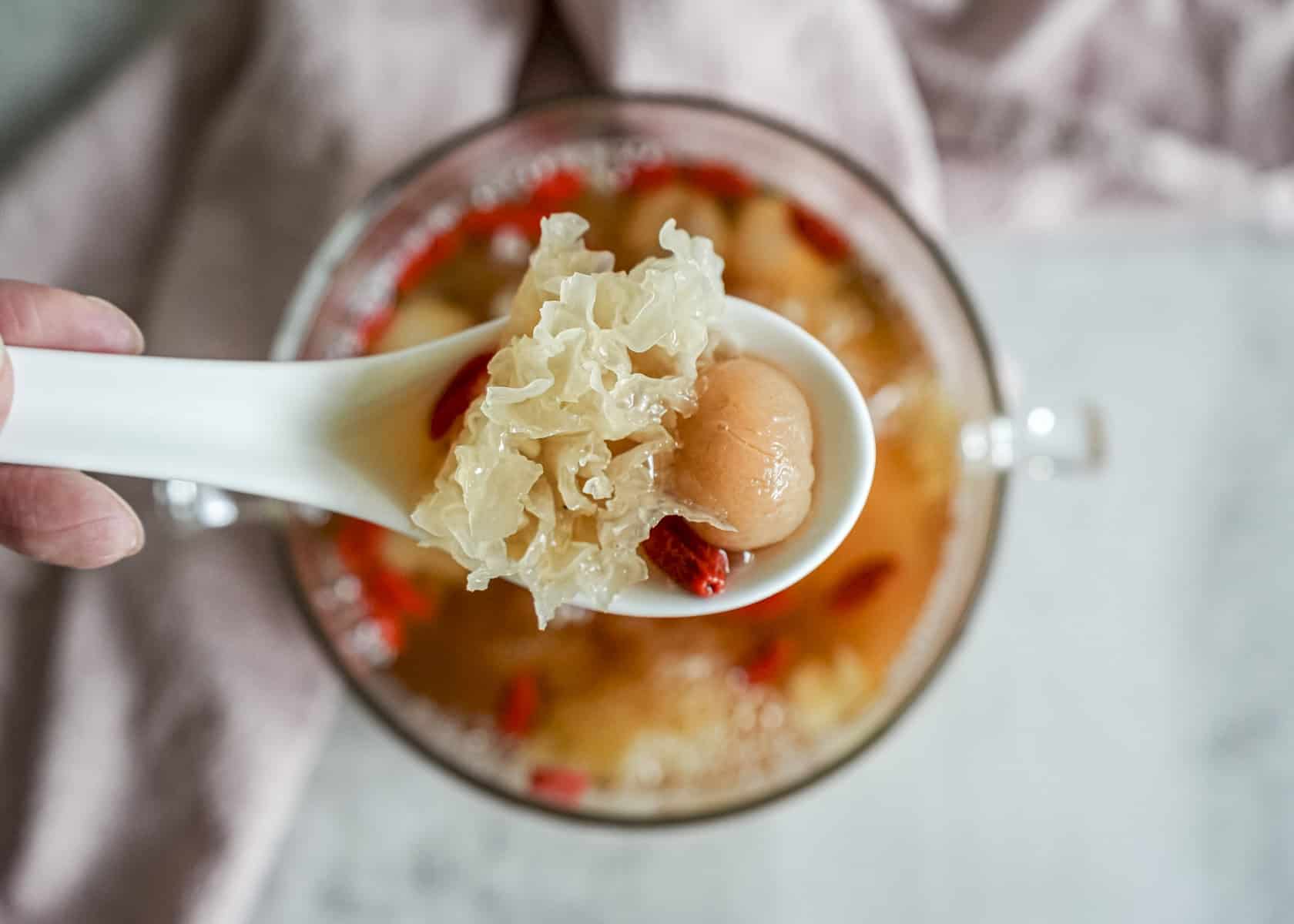
When autumn tiger season brings relentless dryness, this traditional autumn dryness relief dessert provides the perfect therapeutic solution. Combining lotus seeds, snow fungus, lily bulbs, red dates, and wolfberries, this TCM recipe targets seasonal wellness through ancient healing wisdom.
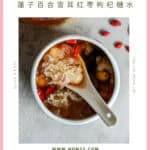
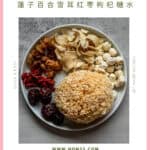
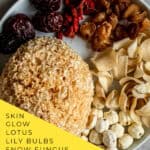
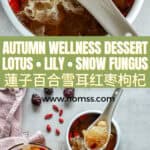
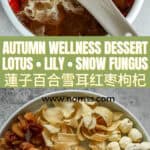
This traditional autumn dryness relief dessert, Lotus Seed Lily Bulbs Snow Fungus Sweet Soup 蓮子百合雪耳红枣枸杞糖水, carries the quiet elegance of Cantonese tong sui while delivering powerful seasonal healing. A bowl of TCM lotus snow fungus dessert featuring lotus seeds, lily bulbs, and red dates turns tender yet nutty, with snow fungus blooming into a cloudlike texture while goji berries lend ruby warmth. This TCM-inspired dessert nourishes Yin, moistens dryness, and soothes the spirit with every spoonful.
Additions shift the mood of this seasonal wellness dessert: dried longan deepens the aroma with caramel sweetness, while a gently whisked egg turns the broth into silky strands of protein. Whether you're stocking up on dried herbs, craving a restorative Autumn Tiger relief recipe for the Fall season, or simply curious about everyday TCM cooking, this recipe balances wellness with ease. Complete this easy sweet soup TCM recipe with stovetop and Instant Pot methods, ingredient swaps, and direct links to shop essentials.
> In This Post: Everything You'll Need For The Best Traditional Chinese Lotus Seed Lily Bulbs Snow Fungus TCM Dessert Recipe
As late summer yields to the lingering heat of Autumn Tiger (秋老虎), dryness creeps in even as the air still feels heavy. Traditional Chinese Medicine reminds us that this is a vulnerable moment for the Lungs and skin. That's why Autumn dryness relief dessert filled with lotus seeds, lily bulbs, and snow fungus sweet soup is more than dessert; it is seasonal nourishment crafted as Chinese medicine dessert Autumn remedy. The snow fungus and lily bulbs moisten Yin, while lotus seeds and red dates gently replenish Qi and blood.
If you've read our Autumn Tiger Weather Guide, you'll know how this transition stresses the balance between clearing out leftover summer heat and hydrating against the dryness of fall. This sweet soup fits seamlessly into that approach, offering comfort, hydration, and an easy way to keep your wellness kitchen aligned with the season.
Jump to:
- > In This Post: Everything You'll Need For The Best Traditional Chinese Lotus Seed Lily Bulbs Snow Fungus TCM Dessert Recipe
- Why These Ingredients Work Together
- Ingredients and Chinese Herbal Benefits and TCM Properties
- How Should Eggs Be Added?
- Customization Guide: How To Adapt to Your Constitution
- Instructions
- Pro Tips for Perfect Snow Fungus Sweet Soup Every Time
- Frequently Asked Questions (FAQs)
- Other Fall Soups & TCM Moisturizing Recipes
- > Recipe
- Autumn Dryness Relief TCM Lotus Snow Fungus Dessert
Why These Ingredients Work Together
The genius of this Chinese lotus seed and snow fungus dessert soup lies not just in its gentle sweetness, but in how each ingredient complements the others in Traditional Chinese Medicine (TCM). This isn't a random mix of pantry staples. It's a deliberate seasonal wellness dessert that balances Yin and Yang, moisture and warmth, calm and energy.

Ingredients and Chinese Herbal Benefits and TCM Properties
Let's explore what makes this nourishing dessert soup so extraordinary. What makes this Autumn dryness relief dessert so remarkably effective isn't just the individual ingredients.
This sophisticated TCM lotus snow fungus dessert creates herbal synergy that amplifies the healing properties of each component, making it the perfect Autumn Tiger relief recipe for seasonal transitions.
In Traditional Chinese Medicine, every ingredient carries specific energetic qualities and therapeutic actions that interact with your body's meridian system. This herbal benefits breakdown reveals exactly why lotus seeds calm the spirit, how snow fungus quenches dryness, and why red dates and goji berries rebuild Qi and Blood. This is particularly vital during Autumn Tiger's lingering heat and dryness.
Understanding these TCM ingredient properties enables you to move from simply following a tong sui recipe to becoming an active participant in your own healing journey.
What you'll discover:
- The specific cooling, warming, or neutral properties of each herb
- How modern scientific research validates ancient TCM wisdom
- Which organ systems does each ingredient support most effectively
- Why does this particular five-herb combination create therapeutic harmony.
- Dosage guidelines and safety considerations for optimal benefits
Together, these ingredients form a balanced TCM Autumn dryness relief dessert: moistening yet not overly heavy and sickly sweet, restorative yet light, grounding yet spirit-calming. This harmony of flavours and functions is why Cantonese kitchens treasure this seasonal wellness dessert recipe as both comfort food and medicine, especially during Autumn Tiger weather when dryness and lingering heat collide.

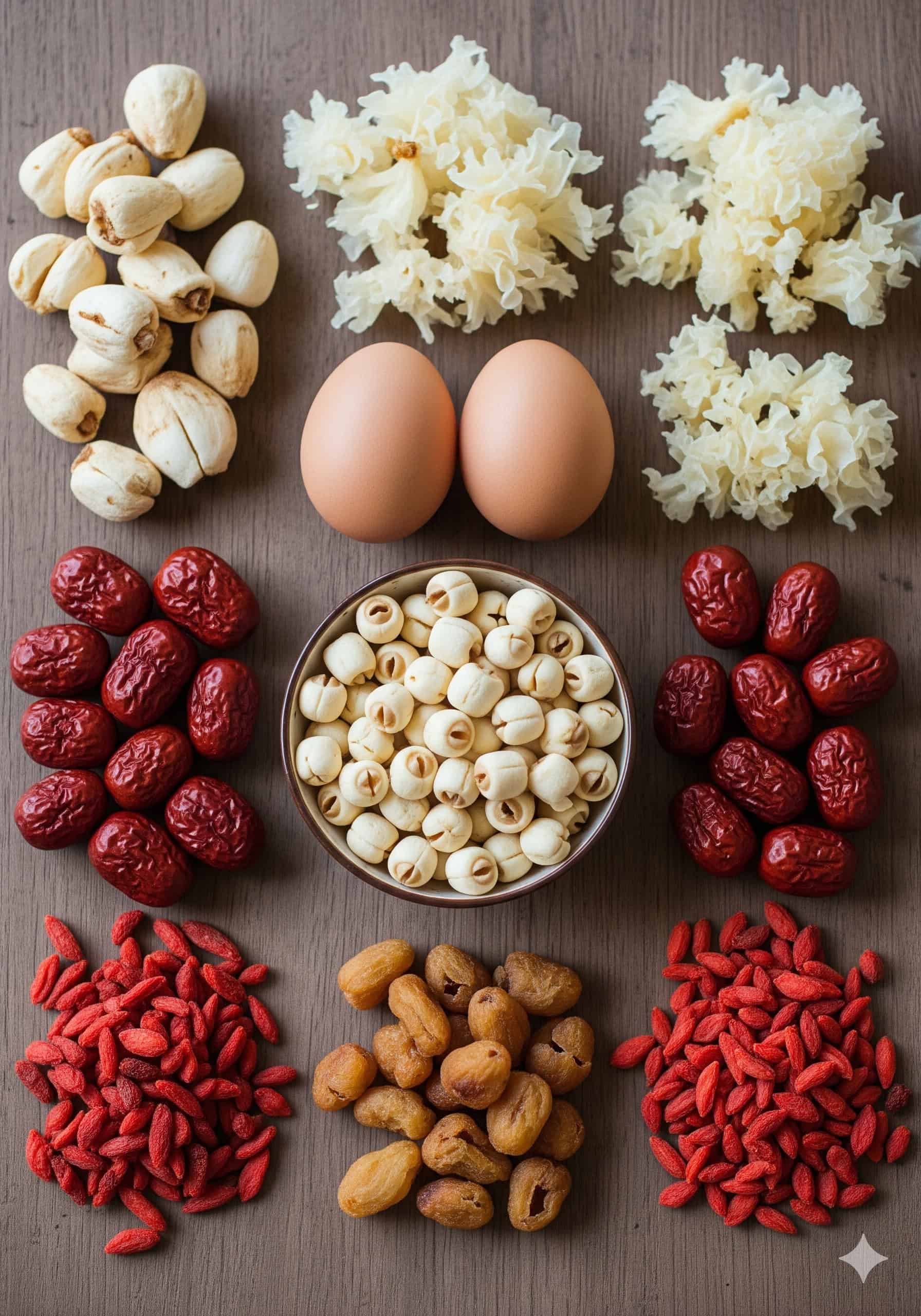
Lotus Seeds (蓮子, Liánzǐ) - The Spirit Calmer
Anchor of the formula. Sweet tasting and Neutral in nature, Lotus Seeds support the Spleen and Kidney while calming the Shen (spirit). Their slight firmness after simmering gives the soup body.
- Nature: Neutral; slightly sweet and astringent
- Meridians: Spleen, Kidney, Heart
- TCM Functions: Strengthens Spleen Qi to improve digestion, nourishes Kidney essence, calms the Heart and Shen (spirit). Helpful for loose stool, insomnia, and restlessness.
- Modern Validation: Rich in magnesium and phosphorus, lotus seeds support sleep quality and cognitive function. Polysaccharides in lotus seeds show antioxidant and anti-inflammatory effects.
- Dosage/Safety: Remove the green core (蓮心) to avoid bitterness and excessive cooling. Safe for regular use.
Lotus seeds and lily bulbs also shine in peach gum dessert soup with snow fungus, a beauty-focused sweet soup that emphasizes skin hydration and collagen support.
Lily Bulb (百合, Bǎihé) - The Lung Moistener
Lily Bulbs add softness and a cooling, moistening quality that pairs beautifully with the grounding lotus. Together, they address restlessness, dry cough, and insomnia. Sweet, slightly bitter, slightly cold TCM properties. Lily bulbs enter the Heart and Lung meridians.
- Nature: Slightly cool; sweet and bitter
- Meridians: Lung, Heart
- TCM Functions: Clears heat, moistens the Lungs, calms the mind. Used traditionally for dry cough, anxiety, and insomnia.
- Modern Validation: Contains steroidal saponins and polysaccharides that show sedative and expectorant effects. Early studies support anti-tumor and immune-modulating actions.
- Dosage/Safety: Dry lily bulb (20-30 g per recipe) is considered safe. Avoid excessive intake if you have very weak digestion or cold stomach.
Snow Fungus / Tremella (雪耳, Xuě'ěr) - The Yin-Nourisher
White Wood Ear is the harmonizer. Its gelatinous texture carries moisture through the broth, amplifying the yin-nourishing and skin-hydrating effects of the lily bulbs. Sweet and bland in taste and neutral in nature. It is a delicious Yin moisturizer for beautiful glass skin!
- Nature: Neutral; sweet and bland
- Meridians: Lung, Stomach, Kidney
- TCM Functions: Nourishes yin, moistens dryness, strengthens body fluids, promotes youthful skin and elasticity. Known as the "poor man's bird's nest" for its beauty benefits.
- Modern Validation: Tremella polysaccharides improve skin hydration, boost immunity, and show antioxidant activity in lab studies.
- Dosage/Safety: 10-20 g dried snow fungus is sufficient per soup. Avoid if you have severe damp-phlegm conditions (heaviness, excess mucus).
Red Dates / Jujube (紅棗, Hóngzǎo) - The Qi & Blood Tonic
Sweet and warm in nature. Red Dates prevent the formula from becoming too cooling, support digestion, and add a comforting depth.
- Nature: Warm; sweet
- Meridians: Spleen, Stomach
- TCM Functions: Tonifies Qi, nourishes Blood, harmonizes formulas. Prevents the soup from being too cooling, stabilizes digestion.
- Modern Validation: High in vitamin C, flavonoids, and iron; supports red blood cell production and reduces oxidative stress.
- Dosage/Safety: 5-10 dates per recipe. Excess may cause bloating or dampness in sensitive individuals.
Goji Berries / Wolfberry (枸杞子, Gǒuqǐzǐ) - The Eye & Essence Nourisher
Goji Berries bridge the gap in ingredients. Its sweet, neutral-nourishing nature lifts the Liver and Kidney while brightening the eyes. They punctuate the soup with both colour and tonic value.
- Nature: Neutral; sweet
- Meridians: Liver, Kidney, Lung
- TCM Functions: Nourishes Liver Yin and Kidney essence, benefits the eyes, improves vision and energy. Used for fatigue, blurred vision, and Yin deficiency.
- Modern Validation: Rich in carotenoids (zeaxanthin), goji berries protect the retina. Clinical trials suggest improved sleep quality, immunity, and glucose regulation.
- Dosage/Safety: 6-12 g daily is common. Avoid if on warfarin or blood thinners due to interaction.
Optional Additions
Dried Longan (桂圓, Guìyuánròu) - The Heart Tonic
Guiyuan leans warm and grounding. When pairing longan meat with red dates, it intensifies the Qi- and blood-building effect, ideal for cool, damp autumn evenings.
- Nature: Warm; sweet
- Meridians: Heart, Spleen
- TCM Functions: Tonifies Heart and Spleen Qi, nourishes Blood, calms the spirit. Adds caramel depth and warmth to the formula.
- Modern Validation: Contains polyphenols that support blood circulation and reduce fatigue.
- Safety: Avoid during fever, inflammation, or excessive internal heat.
Egg (雞蛋, Jīdàn) - The Yin & Blood Builder
Egg drop rounds the soup with protein and silkiness. In TCM terms, eggs nourish Yin and blood, making them a natural extension of the recipe when the body feels depleted.
- Nature - Neutral to slightly cool
- Meridians - Heart, Kidney
- TCM Functions - Nourishes Yin and Blood, gently moistens dryness, provides grounding energy.
- Modern Validation - High-quality protein, choline for brain function, lutein for eye health.
- Safety - Best consumed fresh, avoid excess if phlegm-dampness is an issue.
Together, these ingredients create a balanced tonic: moistening without cloying, restorative without heaviness, comforting yet light enough for daily enjoyment. That harmony is why this dessert soup remains a Cantonese classic and a trusted ally in TCM kitchens, especially in the Autumn Tiger season.
Most dry goods ingredients, tools, and supplies can be purchased at local Asian markets, Chinese grocery stores, or Amazon Online. Amazon Prime members receive free shipping and faster delivery times.
How Should Eggs Be Added?
Adding Egg: Silky or Whole, Your Choice
A gently beaten egg transforms this sweet soup into delicate ribbons that float like soft clouds in amber broth. Slowly drizzled into a simmering pot, the egg creates a light, silky texture that melds perfectly with lotus seeds, snow fungus, and lily bulbs-enhancing nourishment without weighing down the body.
In TCM terms, this egg-drop method gently boosts Yin and Blood, keeping the soup restorative and easy to digest, ideal for Autumn Tiger dryness. I prefer the egg-drop method because it keeps the soup light, silky, and easy to digest while still enhancing its nourishing effect.
For those seeking a heartier experience, poaching the eggs whole adds a velvety richness to each spoonful. The intact yolk offers deeper Yin and Blood nourishment, making the dessert feel more grounding while still harmonizing with the cooling and moistening herbs.
Whether you choose silky ribbons or soft poached eggs, both methods honour the seasonal wisdom of TCM, letting this dessert serve as comfort, tonic, and sensory pleasure all at once.
Egg Drop (蛋花, Dàn Huā) - Silky Ribbons
- Method: Beat the egg lightly and slowly drizzle it into the simmering soup while stirring gently. The egg forms delicate, ribbon-like strands.
- Texture: Light, silky, well-integrated into the broth.
- TCM Perspective: Provides gentle Yin and Blood nourishment without adding heaviness, keeping the soup hydrating and easy to digest.
- Best For: When you want the dessert to remain light, delicate, and restorative-perfect for Autumn Tiger dryness or everyday tonic use.
2. Whole Poached Egg
- Method: Crack the egg into the gently simmering soup and poach for 4-5 minutes until whites are set and yolk slightly soft.
- Texture: Soft, velvety, and more substantial.
- TCM Perspective: Offers stronger Blood and Yin nourishment due to the intact yolk, slightly more grounding.
- Best For: When you want a heartier, more sustaining version of the dessert, or if you're using it as a light meal replacement rather than a pure dessert.
TCM Pro Tip - Egg-drop keeps the soup light and Yin-nourishing, ideal for Autumn Tiger dryness. Whole eggs add more grounding Blood and Yin support for a heartier tonic.

Scientifically Proven Health Benefits
Immune System Support
- Snow fungus contains beta-glucans that enhance immune function
- Wolfberries provide high levels of vitamin C and antioxidants
- Red dates offer natural prebiotics for gut health
Skin Health and Anti-Aging
- Snow fungus natural hyaluronic acid promotes skin hydration
- Lily bulbs contain compounds that support collagen production
- Antioxidants from wolfberries protect against free radical damage
Respiratory Health
- Traditional lung-moistening properties supported by modern research
- Particularly beneficial during dry seasons or air pollution exposure
- May help with chronic cough and throat irritation
TCM-Specific Therapeutic Applications
For Women's Health
- Regulates menstrual cycle through blood nourishment
- Supports healthy pregnancy when eggs are included
- Addresses postpartum recovery needs
For Sleep and Stress
- Lotus seeds contain natural compounds that promote calm
- Lily bulbs traditionally used for anxiety and restlessness
- Overall yin nourishment helps with modern stress patterns
For Digestive Health
- Gentle on stomach, easy to digest
- Supports spleen function in TCM terms
- Natural prebiotics from multiple ingredients

Customization Guide: How To Adapt to Your Constitution
For Different TCM Body Types
Yang Deficiency (Cold Constitution)
- Always include longan flesh
- Add 3-4 slices fresh ginger
- Use brown sugar instead of rock sugar
- Serve hot, never cold
Yin Deficiency (Heat Constitution)
- Emphasize snow fungus and lily bulbs
- Reduce or omit longan flesh
- Add extra wolfberries
- Can be served at room temperature
Qi Deficiency (Weak Digestion)
- Include eggs for extra protein
- Cook longer for easier digestion
- Add a pinch of salt to aid absorption
- Consume in smaller, frequent portions
Blood Stasis (Poor Circulation)
- Include longan flesh and extra red dates
- Add a few pieces dried tangerine peel
- Consider adding small amount of rice wine during cooking
Seasonal Adaptations
- Spring - Add fresh lotus root for extra fiber.
- Summer - Serve at room temperature, increase lily bulbs.
- Autumn - Perfect as-is for dryness prevention.
- Winter - Add ginger and serve piping hot.
This dessert suits the stretch after the Autumn Equinox, when dryness turns serious. For the two weeks before that, the White Dew 白露 TCM food guide covers what changes on September 7 and why ginger comes back into the pot.

Instructions
Combat autumn tiger's relentless dryness with this time-tested TCM autumn dryness dessert, masterfully combining lotus seeds, lily bulbs, snow fungus, red dates, and wolfberries for powerful seasonal relief from internal heat and moisture depletion. Perfect for late summer's deceptive warmth, this lotus snow fungus TCM dessert restores your body's natural hydration while satisfying your sweet tooth.
Ready to master this nourishing autumn dryness relief recipe? Let's dive in with our fool proof step by step instructions!
Gather your healing ingredients and start creating the ultimate autumn tiger relief dessert that'll have your skin glowing and your throat singing by tomorrow morning!
Ingredient Prep (Essential for Best Results)
- Soak snow fungus in cold water for 2-3 hours until fully expanded. Overnight preferred.
- Soak lotus seeds for 1 hour, remove green germs for better taste. The lotus plumule has a very bitter taste.
- Soak lily bulbs for 30 minutes in cool water
- Rinse wolfberries and red dates thoroughly
- Optional: Soak longan flesh for 15 minutes if using
To make a lotus snow fungus TCM dessert for Autumn dryness relief recipe, add all the herbal ingredients to a clean soup pot that is not made of stainless steel. We love using THIS Perfect Pot or this Buydeem Health Beverage Maker.

Traditional Slow-Cooking Method
Add long-cooking ingredients (lotus seed, lily bulbs, red dates, longan and snow fungus) and 2L of cold filtered water to a ceramic cooking pot.
Bring to a boil, then reduce to a gentle simmer.
Cook for 75 minutes, until a gelatinous texture develops, the lily bulbs are translucent, and the lotus seeds are tender.
Maintain gentle heat to preserve medicinal properties
Add wolfberries (also known as goji berries) in the final 5 minutes to preserve Vitamin C.
Optional Egg Addition
Egg Drop (蛋花, Dàn Huā) - Silky Ribbons
- Beat 1-2 eggs lightly in a small bowl.
- Reduce the soup to a gentle simmer.
- Slowly drizzle the beaten egg into the soup while stirring gently in one direction. Creates beautiful silky egg ribbons throughout.
- Cook 1-2 minutes until the ribbons form and set.
- Serve immediately; the texture will be delicate and silky.
Whole Poached Egg
- Reduce the soup to a gentle simmer.
- Crack 1-2 eggs directly into the simmering soup.
- Cover partially and poach for 4-5 minutes, until the whites are set but the yolks remain soft.
- Carefully remove with a slotted spoon or leave in the soup for serving.
- The texture will be soft, velvety, and more substantial.
Sweetening Options
Traditionally, we add rock sugar 冰糖 to taste. Raw honey, Stevia or monk fruit sweetener are also great, healthier options to use. Brown sugar can be used for extra warmth in the winter. Add after cooling slightly.
Serve hot or chilled.
Pro Tips for Perfect Snow Fungus Sweet Soup Every Time
Perfect Texture
- For maximum gelatin - Cook snow fungus until it releases natural collagen (1+ hours)
- Prevent mushiness - Add delicate ingredients in stages
- Silky consistency - Strain through fine mesh if desired
Flavor Enhancement
- Natural sweetness - Red dates and longan provide subtle sweetness
- Seasonal variation - Add fresh ginger slices in winter for warming effect
TCM Optimization
- Morning consumption - Best absorbed on an empty stomach.
- Warm serving - Maintains Yang Qi, better for digestion.
- Regular intake - 2-3 times weekly for optimal TCM benefits.
Storage and Reheating
- Refrigeration - Keeps 3-4 days in a sealed container.
- Freezing - Freeze portions for up to 3 months
- Reheating - Gentle stovetop warming preserves texture
- Make-ahead - Prepare base, add final ingredients when serving
Frequently Asked Questions (FAQs)
Yes! Use natural sweeteners like Stevia or reduce/eliminate added sugars. The natural sweetness from dates and longan provides subtle flavour.
Generally yes, and the egg version is particularly nourishing. However, consult your healthcare provider, especially if you have specific pregnancy conditions.
Absolutely! It's gentle and nutritious for children. Reduce cooking time for softer textures and adjust sweetness to their preference.
Asian grocery stores, Chinese medicine shops, or online retailers like Amazon. Look for organic versions when possible.
TCM recommends 2-3 times per week for maintenance, daily for specific health concerns consult TCM practitioner.
Some substitutions work (ex. fresh lily bulbs), but dried ingredients often have more concentrated medicinal properties in TCM.
According to TCM, the best soups for autumn dryness are those that nourish Lung Yin and restore body fluids. Popular recipes include Asian Pear & Chuanbei Snow Fungus Dessert Soup and Snow Fungus, Papaya & Goji Dessert Soup. These soups moisturize the throat, relieve dry cough, and keep the skin hydrated.
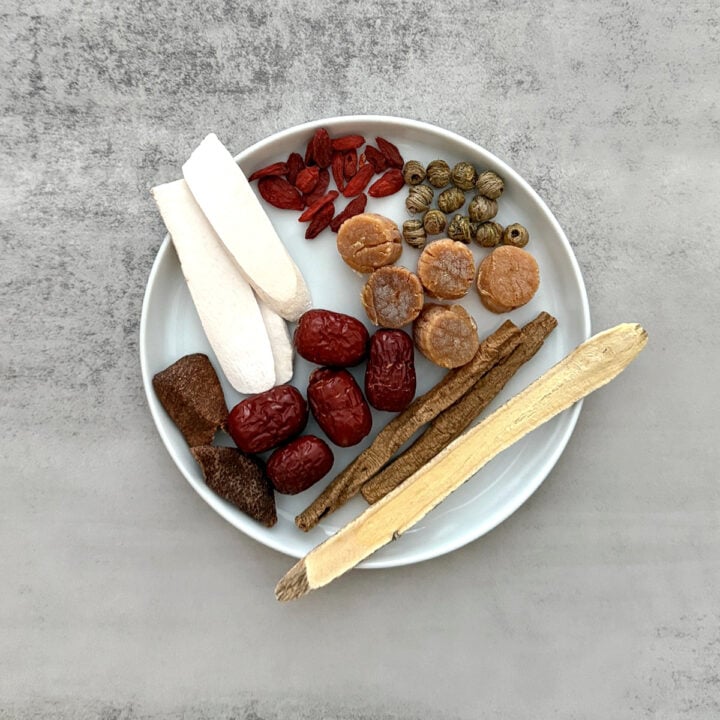
A trusted option is the San Fu Adzuki Red Bean, Job's Tears & Poria Soup. It clears damp-heat, reduces water retention, and supports digestion. This soup is often recommended in late summer and early autumn when humidity lingers.
Yes, Apple, Dried Fig & Sweet Almond Pork Bone Soup (南北杏無花果豬骨湯) is a classic Cantonese recipe. It gently moistens the lungs, relieves dryness, and is simple to prepare for weeknight meals.
Absolutely. Recipes like Snow Fungus, Papaya & Goji Dessert Soup and Asian Pear & Chuanbei Snow Fungus Dessert Soup are considered tong sui (sweet soups) that double as herbal tonics. A stewed peach version with red dates and goji works the same way in late summer, before peach season ends. They provide hydration, support skin health, and soothe the lungs, making them ideal for dry autumn weather.
Other Fall Soups & TCM Moisturizing Recipes
When autumn dryness rolls in, TCM leans on moisturizing Chinese soups that replenish Lung yin and keep the throat, skin, and digestion comfortable. Think snow fungus, lily bulb, Asian pear, jujube, and goji-hydration-forward ingredients that soothe without feeling heavy. Build your cold-weather rotation with these Chinese fall soups that balance flavor, comfort, and function.
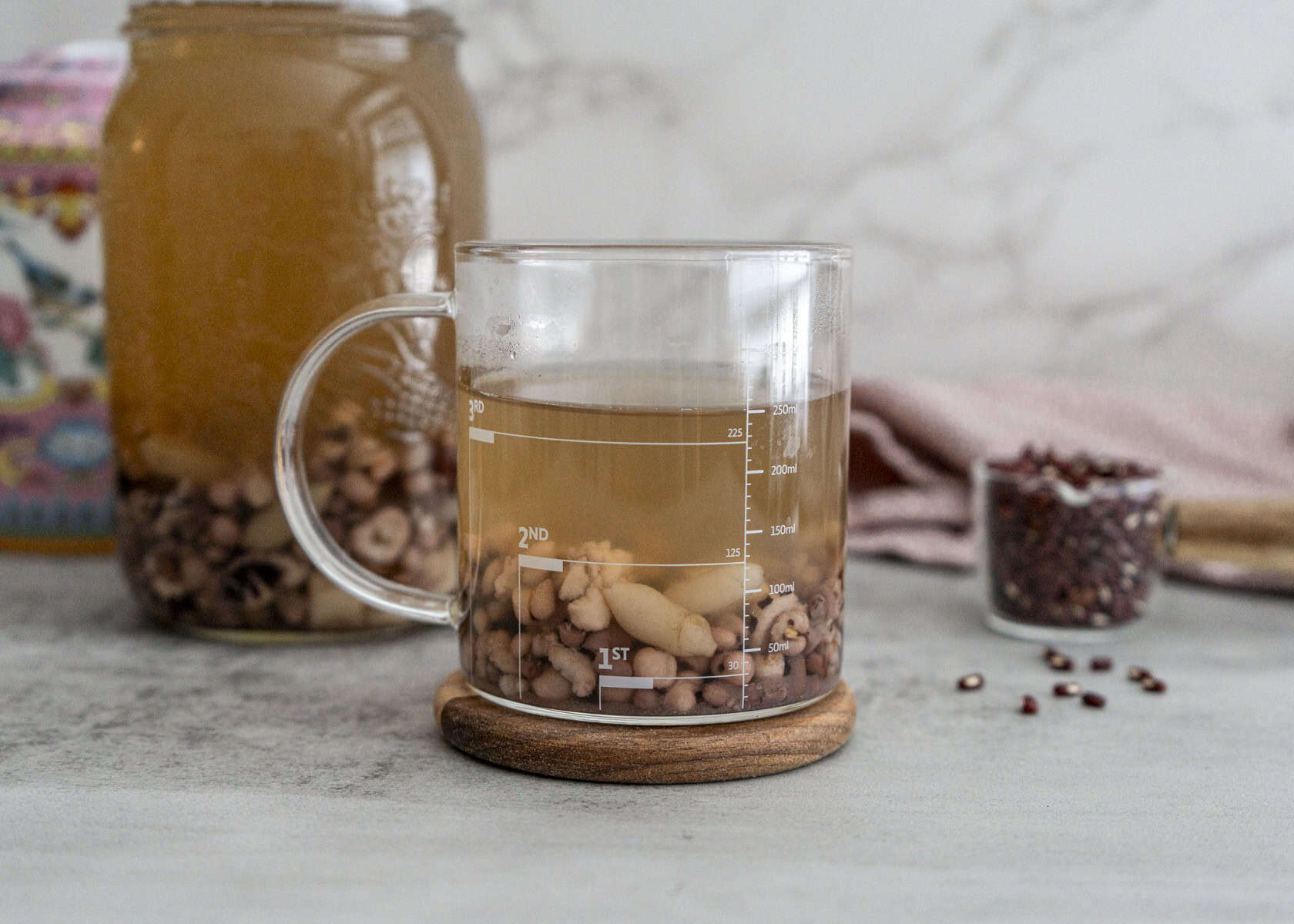
San Fu Adzuki Red Bean, Job's Tears & Poria Soup - a cooling damp-heat herbal soup that lightens humidity while staying gentle.
Asian Pear & Chuanbei Snow Fungus Dessert Soup - a TCM moisturizing sweet soup for dry cough and throat relief during early fall.
Snow Fungus, Papaya & Goji Dessert Soup - a yin-nourishing Chinese dessert soup that hydrates the skin and supports post-summer recovery.
Apple, Dried Fig & Sweet Almond Pork Bone Soup (南北杏無花果豬骨湯) - a Lung-moistening Cantonese broth with gentle aromatics and weeknight-easy simmering.
Black Sesame Tang Yuan Recipe 黑芝麻湯圓 - Balance cooling summer soups with warming autumn desserts like this kidney-nourishing tang yuan recipe-black sesame's Yin-building properties prepare your body for winter's storage phase while satisfying seasonal sweet cravings.
As the seasons shift, these Chinese fall soups and TCM moisturizing recipes offer both comfort and nourishment, helping the body stay balanced through autumn's dryness. Each bowl is more than just food-it's a gentle reminder that healing and pleasure can coexist at the table.
As autumn dryness gives way to winter cold, kidney yang becomes the next priority. The Dongzhi Winter Solstice foods guide covers what changes once December arrives.
This traditional Chinese medicine dessert represents more than just a sweet treat. It is a therapeutic food that addresses modern health concerns through the wisdom of ancient times. Whether you're seeking better sleep, healthier skin, respiratory support, or simply a nourishing dessert that won't spike your blood sugar, this recipe delivers on multiple levels.
The beauty of this dessert lies in its adaptability. Start with the basic five-ingredient version, then experiment with longan flesh for extra blood nourishment or eggs for additional protein. Each variation offers unique benefits while maintaining the core TCM principles that make this dessert so effective.
Balance this moisturizing dessert with our savoury bitter melon soup recipe for complete summer cooling - one sweet, one savoury, both powerfully therapeutic for hot weather wellness.
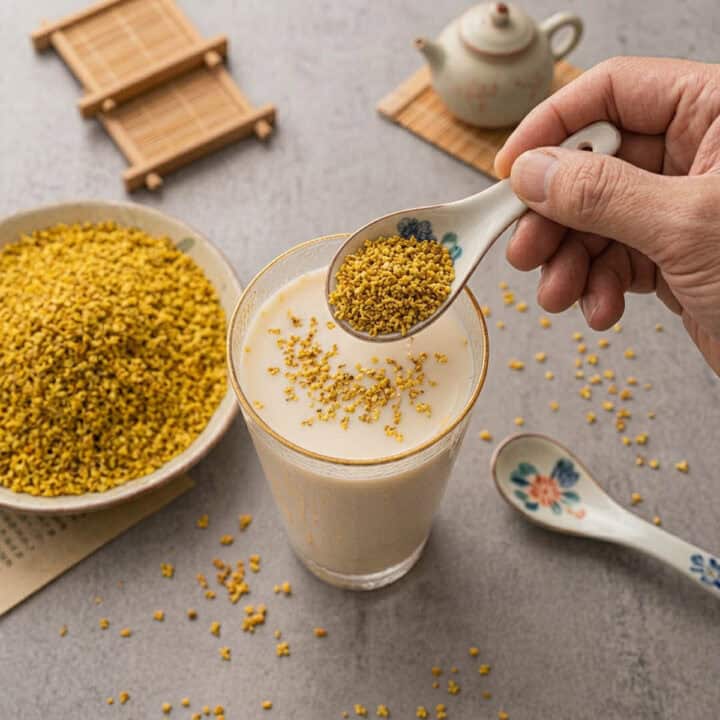
On nights when simmering tong sui feels like a project, an osmanthus honey milk covers the same moistening ground in four minutes. Honey and milk handle the dryness, and osmanthus keeps the cup from running cold.
Ready to experience the healing power of traditional Chinese medicine in your own kitchen? Gather these time-tested ingredients and begin your journey toward better health, one delicious bowl at a time.
Have you tried this TCM dessert recipe? Share your experience and any adaptations you've made in the comments below. For more traditional Chinese medicine recipes and health tips, subscribe to our newsletter and never miss a post!
I'd love to see how you went with my recipes! Leave a comment below or tag me on Instagram @INSTANOMSS #INSTANOMSS.
> Recipe
PrintAutumn Dryness Relief TCM Lotus Snow Fungus Dessert

A bowl of Lotus Seed Lily Bulbs Snow Fungus Sweet Soup 蓮子百合雪耳红枣枸杞糖水 carries the quiet elegance of Cantonese tong sui. The lotus seeds turn tender yet nutty, the snow fungus blooms into a cloudlike texture, while red dates and goji berries lend ruby warmth. This TCM-inspired dessert nourishes Yin, moistens dryness, and soothes the spirit with every spoonful.
- Prep Time: 15
- Cook Time: 75
- Total Time: 1 hour 30 minutes
- Yield: 4 persons 1x
- Category: Dessert
- Method: Boil
- Cuisine: Chinese, TCM
Ingredients
- 80g dried lotus seeds, core removed if present
- 40 g dried lily bulb
- 15 g dried snow fungus (1 medium head), resuscitated and pith removed
- 10 red dates (jujubes), pitted
- 2 tbsp goji berries
- 50g rock sugar to taste
- 2L cold filtered water
Optional Ingredients
- 25g dried longan
- 2 eggs, beaten (for egg-drop) or left whole (for gentle poach)
 Get Recipe Ingredients
 Instructions
Ingredient Prep (Essential for Best Results)
- Soak snow fungus in cold water for 2-3 hours until fully expanded. Overnight preferred.
- Soak lotus seeds for 1 hour, remove green germs for better taste. The lotus plumule has a very bitter taste.
- Soak lily bulbs for 30 minutes in cool water
- Rinse wolfberries and red dates thoroughly
- Optional: Soak longan flesh for 15 minutes if using
To make a lotus snow fungus TCM dessert for Autumn dryness relief recipe, add all the herbal ingredients to a clean soup pot that is not made of stainless steel. We love using THIS Perfect Pot or this Buydeem Health Beverage Maker.
- Add long-cooking ingredients (lotus seed, lily bulbs, red dates, longan and snow fungus) and 2L of cold filtered water to a ceramic cooking pot.
- Bring to a boil, then reduce to a gentle simmer.
- Cook for 75 minutes, until a gelatinous texture develops, the lily bulbs are translucent, and the lotus seeds are tender.
- Maintain gentle heat to preserve medicinal properties
- Add wolfberries (also known as goji berries) in the final 5 minutes to preserve Vitamin C.
- Optional Egg Addition*
- Add rock sugar 冰糖 to taste.
- Served Hot or Chilled.
Optional Egg Addition*
Egg Drop (蛋花, Dàn Huā) - Silky Ribbons
- Beat 1-2 eggs lightly in a small bowl.
- Reduce the soup to a gentle simmer.
- Slowly drizzle the beaten egg into the soup while stirring gently in one direction. Creates beautiful silky egg ribbons throughout.
- Cook 1-2 minutes until the ribbons form and set.
- Serve immediately; the texture will be delicate and silky.
Whole Poached Egg
- Reduce the soup to a gentle simmer.
- Crack 1-2 eggs directly into the simmering soup.
- Cover partially and poach for 4-5 minutes, until the whites are set but the yolks remain soft.
- Carefully remove with a slotted spoon or leave in the soup for serving.
- The texture will be soft, velvety, and more substantial.


Nutrition
- Serving Size: 1 pot
- Calories: 107
- Sugar: 14.8 g
- Sodium: 12.2 mg
- Fat: 1 g
- Carbohydrates: 23.8 g
- Fiber: 2.8 g
- Protein: 2.8 g
- Cholesterol: 0 mg


Pin the above image to your Chinese Medicinal Food Therapy TCM Recipe Pinterest Board to bookmark this page. We are so excited to share our recipes with you!
More Chinese Recipes
Chinese Steamed Chicken With Shiitake Mushroom 冬菇蒸雞
Air Fryer BBQ Pork Char Siu 氣炸鍋蜜汁叉燒
Red Bean Soup (Instant Pot) 蓮子百合紅豆沙






Comment Below