
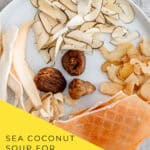
This Sea Coconut Chinese Yam Soup For Period (海底椰淮山螺片湯) is a powerful PMS relief soup designed specifically to support women through their menstrual cycle by combining Traditional Chinese Medicine principles with Cantonese food therapy. The formula addresses hormonal fluctuations, menstrual cramps, and PMS symptoms by balancing three key actions: sea coconut moistens and cools, Chinese yam strengthens the spleen, and conch nourishes liver and kidney yin.
Drink it the week before your period or during menstruation itself. The soup helps regulate cycles, reduce bloating, and restore the Blood and Qi that menstruation depletes.
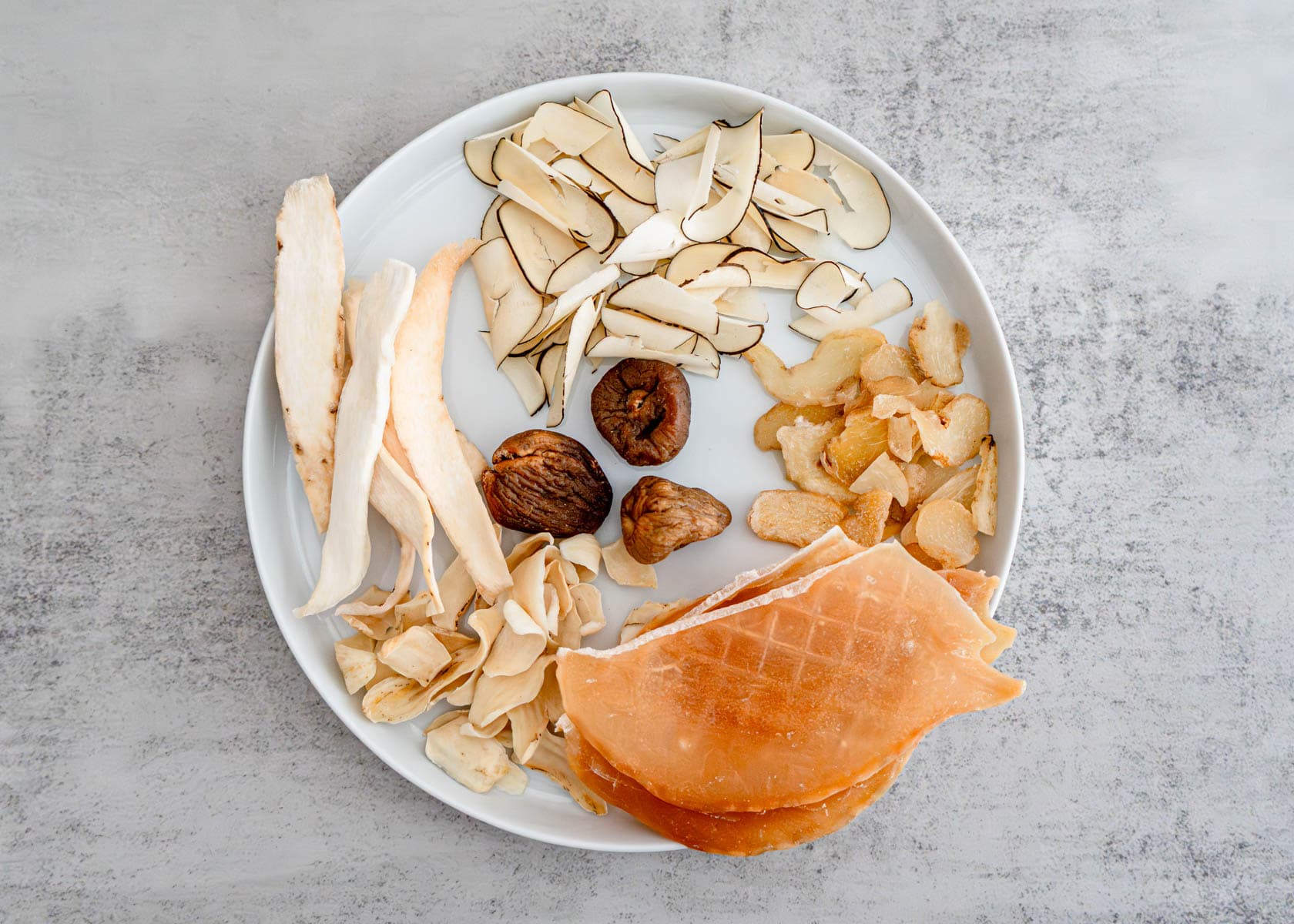
In This Post: Everything You Need To Know Why This PMS Relief Soup Works - TCM Principles for Hormonal Balance
My mother used to say you could spot a woman's approaching period by a specific exhaustion in her eyes and the way she craved something nourishing she couldn't quite name. That's when she'd make this soup. The sea coconut would "moisten what's dried up," she said, while the Chinese yam would "hold everything together."
Traditional Chinese Medicine doesn't treat menstrual health as just five days of bleeding. It's a monthly cycle of Yin and Yang, Qi and Blood, building and releasing. The week before your period (the luteal phase in Western terms) is when Yin should peak, providing the moisture, nourishment, and cooling energy that balances rising Yang.
When Yin falls short, you get the familiar pre-period symptoms. Irritability. Insomnia. Breast tenderness. Bloating. Anxiety. That specific emotional rawness that makes everything harder than it should be.
This PMS relief soup with sea coconut, Chinese yams, and conch addresses menstrual issues at their root. It nourishes liver Yin and kidney Yin, supports spleen Qi, and gently moves stagnant liver Qi that causes cramping and mood swings. It won't cure severe menstrual disorders overnight, but it's one of the most elegant food therapy approaches for maintaining hormonal balance and preventing the monthly suffering that too many women accept as normal.
Check out this quick story summary of our recipe!
Jump to:
- In This Post: Everything You Need To Know Why This PMS Relief Soup Works - TCM Principles for Hormonal Balance
- What Is Sea Coconut Soup Good For?
- Why You Need This Soup: TCM Explanation of Period Health
- The Four Phases of the Menstrual Cycle in TCM:
- Signs You Need Yin-Nourishing Period Support:
- When to Drink Period Soup for Best Results
- Ingredients and Chinese Herbal Benefits and TCM Properties
- PMS Relief Soup Ingredients: TCM Properties Explained
- Instructions - Step-by-Step Cooking Method
- Troubleshooting Common Issues
- Storage and Make-Ahead Tips
- Frequently Asked Questions (FAQs)
- Other TCM Soups for Women's Health
- Building a Complete TCM Meal Plan for Menstrual Health:
- > Recipe
- PMS Relief Soup: Ease Cramps with Sea Coconut TCM
What Is Sea Coconut Soup Good For?
Cantonese food therapy prizes sea coconut soup for nourishing yin and moistening dryness. In TCM terms, "dryness" isn't just thirst. It shows up as dry skin, dry eyes, irritability, insomnia, night sweats, hot flashes, and that wired, anxious feeling where you can't settle or relax. This PMS relief soup addresses the root patterns rather than temporarily masking symptoms.
These are classic Yin deficiency symptoms that intensify during the premenstrual phase when your body should be building yin but is depleted instead.
The sea coconut benefits for periods matter from both TCM and modern perspectives. Sea coconut contains natural plant compounds that regulate inflammation (menstrual cramps and breast tenderness, anyone?). It provides gentle fibre that supports estrogen metabolism through healthy elimination. It offers minerals that balance fluid retention. The cooling, moistening nature specifically addresses the "heat" symptoms many women experience before periods: acne flares, feeling hot and irritable, trouble sleeping, emotional volatility.
The sea coconut benefits for periods make this an effective PMS relief soup from both TCM and modern perspectives
Chinese yams have supported women's health formulas for centuries. Huaishan (淮山) strengthens the spleen and stomach, which in TCM transform food into Qi and Blood. When your period arrives, you're literally bleeding out nutrients. If your spleen Qi is weak, you can't rebuild adequately between cycles. This leads to progressively worse PMS, heavier bleeding, more fatigue, and eventually menstrual irregularities.
Conch provides cooling, mineral-rich nourishment that specifically benefits liver and kidney Yin. The liver in TCM governs smooth Qi flow (preventing cramping and mood swings) and stores blood (regulating menstrual volume and cycle length). When liver Yin is deficient, liver Qi stagnates. This creates the exact pattern of irritability, breast distension, cramping, and irregular cycles that define difficult periods.
Together, they create a period support soup that doesn't just mask symptoms. It addresses the underlying imbalances causing menstrual problems.

Why You Need This Soup: TCM Explanation of Period Health
Traditional Chinese Medicine understands menstruation through the lens of "Heavenly Water" (天癸, tiān guǐ), a substance related to kidney essence that governs reproductive capacity and menstrual cycles. Your period isn't just about hormones. It's a complex orchestration of kidney essence maturing, liver blood filling the chong and ren meridians (the "sea of blood" and conception vessel), and spleen Qi providing the transformative power to build blood each month.
Western medicine recognizes the menstrual cycle as a carefully timed dance of estrogen, progesterone, FSH, and LH regulated by the hypothalamic-pituitary-ovarian axis. TCM has treated menstrual disorders for thousands of years by addressing patterns like liver Qi stagnation, liver and kidney Yin deficiency, spleen Qi weakness, and Blood deficiency. The symptoms line up remarkably well.
The Four Phases of the Menstrual Cycle in TCM:
Menstruation (Days 1-5): Blood Phase Liver Qi must flow smoothly to allow blood to descend. Spleen Qi holds blood in vessels (prevents flooding). Kidney Yang provides warmth for smooth discharge. Main issue: Qi stagnation causes cramping; deficiency causes fatigue.
Post-Menstrual Phase (Days 6-12): Yin-Nourishing Phase Blood and Yin should be replenished. Kidney essence supports follicle development. This is the best time for deeply nourishing foods. Main issue: poor nutrition or a weak spleen prevents adequate rebuilding.
Ovulation (Days 13-14): Transformation Phase Yin transforms to Yang. Kidney Yang surges to release the egg. Liver Qi must flow freely. Main issue: insufficient Yin or Yang can prevent ovulation.
Premenstrual Phase (Days 15-28): Yang-Promoting Phase Yang rises as progesterone increases. Liver Qi becomes more active. If Yin is insufficient, Yang becomes excessive (PMS symptoms). Main issue: Yin deficiency with liver Qi stagnation creates irritability, breast pain, insomnia, and anxiety.
Make this PMS relief soup 2-3 times per month for three full cycles (about 3 months) to see significant improvement in menstrual symptoms. This PMS relief soup is designed specifically for the premenstrual and early menstrual phases. The sea coconut and conch nourish Yin to balance the rising Yang. The Chinese yam strengthens spleen Qi, allowing your body to use these nutrients effectively. The gentle, cooling nature prevents the inflammation and "heat" that causes so many PMS symptoms.
Signs You Need Yin-Nourishing Period Support:
If these symptoms sound familiar, this PMS relief soup addresses your specific pattern.
Yin Deficiency with Liver Qi Stagnation (most common PMS pattern): Intense irritability or rage before period. Breast tenderness or swelling. Trouble falling asleep despite exhaustion. Feeling hot, flushed, or having hot flashes. Dry mouth or eyes. Menstrual cramps with feelings of heat. Scanty, dark menstrual blood. Cycle irregularity (coming early). Anxiety or feeling emotionally raw. Lower back soreness.
Spleen Qi Deficiency with Dampness: Severe bloating before period. Loose stools or digestive upset. Heavy, dragging fatigue. Craving sweets intensely. Heavy menstrual bleeding with pale blood. Feeling cold and tired. Brain fog and poor concentration.
If you experience both hot and cold symptoms, you likely have a mixed pattern that needs both yin nourishment and gentle yang support. This soup's balanced, neutral thermal nature makes it suitable for complex patterns.
When to Drink Period Soup for Best Results
Timing matters significantly in TCM food therapy for menstruation. This isn't a daily maintenance soup. It's targeted medicine for specific phases of your cycle.
Best Timing:
Option 1: Premenstrual Week (Days 21-28) Drink PMS relief soup 2-3 times during the week before your period. This prevents PMS symptoms before they start. It nourishes Yin before the Yang surge that causes irritability. Most effective for preventing breast tenderness, insomnia, and mood swings.
Option 2: During Menstruation (Days 1-3) Drink once during the first three days of bleeding. This supports smooth blood flow. It replenishes fluids lost through bleeding. It reduces cramping caused by Qi stagnation. Particularly good if your period blood is dark, scanty, or clotted.
Option 3: Post-Menstrual Rebuilding (Days 6-9) Drink 1-2 times after bleeding stops. This rebuilds Blood and Yin depleted by menstruation. It strengthens spleen to improve the next cycle. Good if you feel exhausted or depleted after your period.
Avoid: Don't drink this soup during mid-cycle (ovulation time, days 10-14). The cooling, Yin-nourishing nature can dampen the Yang surge needed for ovulation. If you're trying to conceive, switch to slightly warming, Yang-supporting soups during ovulation.
Long-term strategy: Make this PMS relief soup 2-3 times per month for three full cycles (about 3 months) to see significant improvement in menstrual symptoms. TCM builds health gradually through consistent application, not quick fixes.
Ingredients and Chinese Herbal Benefits and TCM Properties
Sea Coconut vs Other Moistening Herbs for Period Health
You might wonder why sea coconut specifically for menstrual health when Traditional Chinese Medicine offers dozens of Yin-nourishing, moistening ingredients. The answer lies in understanding thermal properties, organ meridian targeting, and the specific pattern of imbalance most women experience before menstruation. Not all moistening herbs work the same way. Choosing the wrong one can either provide insufficient support or aggravate symptoms by being too cooling, too warming, or targeting the wrong organ system.
The pre-menstrual phase (luteal phase in Western terms) requires particular nourishment. You need ingredients that moisten without being too cold (which would impair circulation and worsen cramping), nourish Yin without being too rich (which would create digestive stagnation and bloating), and specifically target the liver meridian (which governs smooth Qi flow and emotional equilibrium).
Sea coconut occupies a unique position in the materia medica. It's one of the few neutral-thermal moistening ingredients that specifically benefits breast health and hormonal balance, making it ideal for PMS patterns.
Understanding the ingredients in this PMS relief soup helps you customize it for your specific symptoms
PMS Relief Soup Ingredients: TCM Properties Explained
Sea Coconut (海底椰, Hǎidǐyē)
Not actually a coconut but the seed of the double coconut palm (Lodoicea maldivica), or more commonly in Chinese herbal commerce, the fruit of the Palmyra palm (Borassus flabellifer). Despite the misleading English name, this ingredient has been a cornerstone of Cantonese food therapy for women's health for generations.
The Cantonese specifically seek out sea coconut when Yin deficiency manifests with "heat" signs (irritability, insomnia, hot sensations) combined with breast tenderness or lumps. In traditional medicine shops, it's often displayed alongside other women's health herbs, signalling its reputation for hormonal support.
TCM Thermal Property: Neutral and Sweet Primary Actions: Nourishes Yin and generates fluids, moistens lungs and throat, clears heat, stops cough, beautifies skin, regulates liver Qi Target Organs: Lung, Stomach, Liver meridians
Period Support Role: Provides the cooling, moistening quality needed to balance rising Yang during the pre-menstrual phase, preventing the "heat" symptoms of PMS (irritability, anger, breast tenderness, hot flashes, insomnia). Generates fluids to counter the dryness that creates anxiety and restlessness. Enters the liver meridian, which governs smooth menstrual blood flow, emotional equilibrium, and breast health. Helps reduce breast distension, tenderness, and fibrocystic changes that worsen before periods through gentle liver Qi regulation. Neutral thermal nature won't disrupt digestion (already compromised pre-period) or chill the uterus (which causes cramping and poor circulation).
Why Sea Coconut's Neutral Property Matters for PMS
The neutral thermal property of sea coconut is its greatest strength for menstrual health. Many powerful Yin tonics are strongly cooling, which can interfere with the warm Yang energy needed for smooth menstrual discharge and can aggravate cold-type cramping. Sea coconut moistens and cools just enough to balance excess Yang heat without tipping into cold territory. This makes it suitable for the complex, mixed patterns common in modern women: simultaneously exhausted yet agitated, depleted yet inflamed, needing both cooling and gentle warmth.
The moistening action addresses more than just hydration. In TCM theory, Yin represents substance, structure, coolness, and stillness. When Yin is deficient, Yang rises unchecked like a fire without water to contain it. This creates the exact constellation of severe PMS symptoms: emotional volatility, feeling hot and uncomfortable, inflammatory breast tenderness, acne flares, and that specific insomnia where you're exhausted but can't settle. Sea coconut provides the "water" (Yin substance) to moderate this excessive "fire" (unchecked Yang).
Sea Coconut Quality: What to Look For
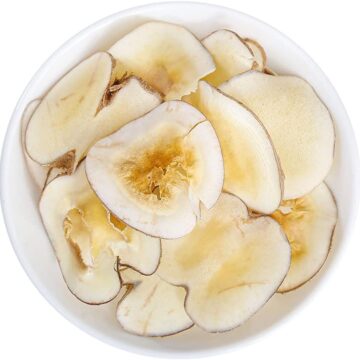
Authentic sea coconut pieces should be thick and ivory-coloured, with a slightly oily texture that gives off a faint, sweet aroma. Avoid thin, brittle, or overly dry pieces, as well as anything with musty odours. Real sea coconut softens to a tender, almost translucent texture after proper soaking and cooking. In Hong Kong and Guangdong markets, vendors often sell premium grades specifically labelled for women's health soups.
White Fungus / Snow Fungus (銀耳, Yín'ěr)
Tremella fuciformis, aka xuě ěr (雪耳), a pale, translucent mushroom that expands dramatically when soaked. While often grouped with sea coconut as a moistening ingredient, white fungus has distinctly different properties and applications. It's popular in beauty and wellness circles for skin hydration and collagen support, but its therapeutic focus differs significantly from sea coconut's hormonal benefits.
TCM Thermal Property: Neutral to slightly Cool and Sweet, Bland Primary Actions: Nourishes Yin and moistens lungs, generates fluids, strengthens stomach, clears heat, beautifies skin, supplements Qi mildly Target Organs: Lung, Stomach, Kidney meridians (notably does not strongly enter Liver meridian)
Period Support Role: General Yin nourishment and fluid generation can provide mild support for overall hydration and beauty aspects (skin quality, moisture), but does not specifically target the liver Qi stagnation and hormonal patterns that cause PMS. Better suited for respiratory dryness, beauty soups, and general wellness rather than targeted menstrual support. Too gentle and diffuse for addressing severe PMS symptoms. More appropriate as a complementary ingredient rather than a primary therapeutic agent for period health.
White fungus occupies the "food" end of the food-medicine spectrum, while sea coconut leans more toward the "medicine" end. This isn't a criticism but a functional distinction. White fungus makes an excellent addition to beauty soups, postpartum recovery, or general moistening formulas, but lacks the liver-entering and Qi-regulating properties essential for menstrual health.
If your primary concern is PMS, cramping, breast tenderness, or emotional symptoms, white fungus won't provide the targeted support you need. However, it can be combined with sea coconut in soups where you want both general moistening and specific hormonal support.
Use white fungus when your focus is skin health, mild lung dryness, or general wellness rather than menstrual symptoms. It's also more budget-friendly and readily available than sea coconut, making it suitable for everyday nourishing soups that aren't targeted therapy.
Solomon's Seal / Polygonatum (玉竹, Yùzhú)
Polygonatum odoratum rhizome, a classical Yin-nourishing herb with a long history in both food therapy and formal herbal medicine. Solomon's seal is significantly stronger than white fungus and more targeted than sea coconut, making it particularly valuable for severe yin deficiency patterns. However, its cooling nature and intense moistening action require careful consideration for menstrual health.
TCM Thermal Property: Slightly Cool to Cool and Sweet Primary Actions: Nourishes yin and moistens dryness, generates fluids and quenches thirst, extinguishes wind, softens and moistens, benefits stomach yin specifically Target Organs: Lung, Stomach meridians
Period Support Role: Excellent for severe Yin deficiency with pronounced heat signs (significant night sweats, afternoon fevers, severe insomnia, burning sensations) that worsen before periods. Addresses the extreme dryness and heat some women experience during luteal phase. However, the cooling nature can be too cold for those with any Yang deficiency or cold-type symptoms (feeling cold, loose stools, pale complexion, cold hands and feet). Not ideal as a primary ingredient for typical PMS patterns but valuable for women whose periods trigger hot flashes, severe night sweats, or intense heat sensations.
Solomon's seal is the right choice when you're dealing with unmistakable Yin deficiency with heat. You wake up drenched in sweat at 3am. Feel hot waves washing over you before your period. Experience severe insomnia despite exhaustion. Have that specific burning, anxious feeling of "Yin fire." These are signs that gentle sea coconut won't be sufficient, and you need stronger cooling and moistening.
The cooling property becomes problematic if you have mixed patterns (both heat and cold signs) or lean toward yang deficiency. Too much cooling can impair digestion (causing bloating, loose stools, poor appetite) and can interfere with the warm yang energy needed for smooth menstrual blood flow.
Cold uterus patterns create severe cramping, dark clotted blood, and painful periods. If you're always cold, have cold hands and feet, or experience cold-type cramping, Solomon's seal is the wrong choice despite being a powerful Yin tonic.
Best use: Combine small amounts (15-20g) of Solomon's seal with warming ginger and neutral sea coconut in soups when you have both yin deficiency heat and need digestive support. Or use it as your primary moistening herb only if you have pure, unambiguous Yin deficiency with heat and no signs of cold whatsoever.
Dried Lily Bulb (百合, Bǎihé)
Lilium brownii or L. lancifolium bulb, specifically valued in TCM for its spirit-calming properties alongside Yin nourishment. Lily bulb occupies a unique position because it addresses both the emotional and mental symptoms and the yin deficiency underlying them, making it particularly relevant for PMS-related anxiety, panic, and emotional sensitivity.
TCM Thermal Property: Slightly Cold and Sweet, Slightly Bitter Primary Actions: Nourishes yin and moistens lungs, clears heat and calms the spirit (shen), stops cough, benefits Heart and calms mind Target Organs: Heart, Lung meridians (significantly enters Heart for emotional regulation)
Period Support Role: Specifically addresses the anxiety, panic attacks, emotional sensitivity, and nervous agitation that intensify before periods in women with yin deficiency. Calms the heart spirit (shen) disturbed by insufficient Yin anchoring. Particularly valuable for those whose PMS includes insomnia with racing thoughts, panic sensations, crying spells, or feeling emotionally unraveled. The heart-lung connection makes it effective for both anxiety and any respiratory symptoms (shallow breathing during panic, sighing, chest tightness). However, doesn't directly address hormonal regulation, cramping, or breast tenderness like sea coconut does.
Lily bulb is your herb when the emotional and mental aspects of PMS dominate your experience. If the week before your period feels like you're emotionally raw, on the verge of tears or panic for no clear reason, unable to sleep because your mind won't stop racing, or experiencing that specific feeling of your spirit being unmoored and adrift, lily bulb addresses this pattern specifically. The spirit-calming action isn't sedation but rather anchoring: providing the yin substance needed to ground an agitated mind.
The slightly bitter flavour drains downward and clears heat, while the sweet flavour tonifies and harmonizes. This combination makes lily bulb effective for the "empty heat" pattern, where deficiency creates internal heat that disturbs the spirit. Think of it as nourishing the roots (yin) so the flames (agitation) have nothing to feed on and naturally settle.
Limitation: lily bulb's focus on heart and lung meridians means it doesn't directly regulate liver Qi (the primary driver of most PMS symptoms like cramping, breast pain, and irritability). It's best used in combination with liver-regulating herbs like sea coconut, or added to a comprehensive formula when emotional symptoms are particularly severe. Don't rely on lily bulb alone for complete menstrual support.
Practical tip: lily bulb should be added in the last 30-40 minutes of cooking, similar to goji berries. Overcooking makes it excessively bitter and diminishes its spirit-calming properties.
Ophiopogon / Dwarf Lilyturf Root (麥冬, Màidōng)
Ophiopogon japonicus root, small tan tubers that are a fundamental Yin tonic in Chinese medicine. While less commonly used in home cooking than the herbs above, ophiopogon deserves mention because TCM practitioners frequently prescribe it for women's health patterns, and it appears in many patent formulas for menstrual regulation.
TCM Thermal Property: Slightly Cold and Sweet, Slightly Bitter Primary Actions: Nourishes Yin and moistens lungs, clears heart and eliminates vexation, generates fluids, moistens intestines Target Organs: Heart, Lung, Stomach meridians
Period Support Role: Addresses the "vexation" (煩, fán) that's difficult to translate but describes that agitated, restless, uncomfortable feeling that can't be soothed, common in severe PMS. Nourishes heart Yin specifically, helping with palpitations, anxiety, and insomnia before periods. Generates fluids to counter severe dryness (dry mouth, thirst, constipation that worsens pre-menstrually). However, cooling nature and heart-lung focus mean it's better as a supporting ingredient rather than primary therapy. Particularly useful when PMS includes significant anxiety, heart palpitations, or severe constipation.
"Vexation" (煩) is the keyword for understanding when ophiopogon is appropriate. This TCM term describes a specific internal restlessness, irritability, and discomfort that feels as though it's emanating from the chest, creating agitation and an inability to settle. If your PMS feels like you want to crawl out of your own skin, can't get comfortable no matter what you do, and experience chest tightness or heart palpitations alongside emotional symptoms, this vexation pattern suggests ophiopogon would be beneficial.
The intestine-moistening property addresses pre-menstrual constipation that results from Yin deficiency drying out the intestines rather than from Qi stagnation. If you experience worsening constipation before your period with dry, hard stools, thirst, and dry mouth, ophiopogon provides more targeted relief than sea coconut.
TCM practitioners often pair ophiopogon with ginseng (麥味地黃湯 variations) for women whose menstrual issues include both Yin deficiency and Qi deficiency, creating complex patterns of exhaustion, anxiety, palpitations, and emotional instability. However, this level of customization requires professional guidance.
Chinese Yam (淮山, Huáishān)
Dioscorea polystachya or D. opposita, specifically the Huai variety from Henan province (considered highest quality). While many soups use fresh Chinese yam (fresh 山药), dried Huaishan (dried 淮山) is preferred for medicinal formulas because the drying process concentrates its Qi-tonifying properties.
For menstrual health, Chinese yam's role in this PMS relief soup is crucial but often overlooked.. It strengthens the spleen's ability to transform food into Qi and blood, which is essential for rebuilding after each period.
TCM Thermal Property: Neutral, Sweet Primary Actions - Tonifies spleen and stomach Qi, nourishes kidney Yin and essence, astringes and secures, stops diarrhea and vaginal discharge, benefits lungs Target Organs (Spleen, Kidney, Lung meridians.)
Period Support Role: Strengthens the spleen's crucial role in creating blood (menstrual health requires abundant, high-quality blood). Provides the "holding" energy that prevents excessive bleeding or spotting. Neutral thermal nature supports without heating (avoiding inflammation) or cooling (avoiding cramping). Tonifies kidney essence which governs the "Heavenly Water" (reproductive capacity and cycle regularity). Particularly effective for women with heavy periods, prolonged bleeding, or extreme fatigue after menstruation. Helps stabilize emotions by strengthening the spleen-heart connection (rumination and worry deplete spleen Qi).
Chinese yam is unique among tonifying herbs because it nourishes without creating dampness or stagnation. Many Qi and blood tonics are rich and heavy, causing bloating or sluggish digestion, especially problematic when digestion is already compromised pre-period. Huaishan builds steadily without these side effects.
Modern research shows Chinese yam contains diosgenin, a compound structurally similar to progesterone, which may support natural hormone balance. It's also rich in mucilage that soothes the digestive tract (good for pre-period bloating and loose stools).
Use dried Huaishan (淮山片) for soup, not fresh, as the medicinal properties are more concentrated. Soak briefly before cooking or add directly to long-simmered soups.
Conch Meat (螺肉, Luóròu)
Dried meat from large sea snails, typically Strombus species. In Cantonese food therapy, dried conch is specifically valued for women's health because it powerfully nourishes liver and kidney Yin without being heavy or hard to digest.
The liver in TCM stores blood and governs smooth Qi flow throughout the body, making it central to menstrual health. When liver blood is deficient or liver Yin is depleted, you get irregular cycles, scanty periods, severe PMS, and intense cramping.
TCM Thermal Property: Cool to slightly Cold, Sweet, Salty Primary Actions - Nourishes liver and kidney Yin, clears heat, brightens eyes, moistens and cools, benefits essence Target Organs (Liver, Kidney meridians.)
Period Support Role: Directly nourishes the liver blood and liver Yin depleted by monthly bleeding and chronic stress. Cooling nature specifically addresses the "heat" symptoms of PMS (irritability, anger, hot sensations, insomnia, red eyes, acne). Provides minerals and amino acids for blood rebuilding. Benefits the kidney essence that governs cycle regularity and reproductive health. Particularly effective for those whose periods come early (heat sign), are dark and scanty (Yin deficiency), or accompanied by severe irritability (liver heat from Yin deficiency).
Dried conch's cooling property makes it especially valuable during the premenstrual phase when internal "heat" from yin deficiency causes emotional volatility, hot flashes, and inflammation. It's also excellent if you tend toward constipation before your period, as it moistens the intestines gently.
The salty flavour in TCM directs herbs to the kidney meridian and softens hardness (reducing breast lumps or fibrocystic breasts often worse before periods). Ocean-derived ingredients are particularly valued for their concentrated minerals and ability to nourish yin at the deepest level.
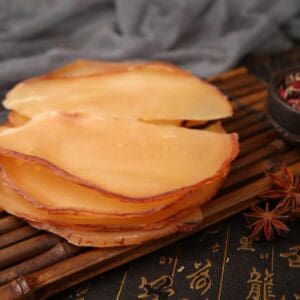
Dried conch is sold in thin, translucent slices. Soak for 3-4 hours before cooking. It will soften to a tender, slightly chewy texture similar to abalone. Quality conch should be pale golden or translucent, not gray or dark.
Honey Dates (蜜棗, Mìzǎo)
These are regular red dates that have been candied or honey-preserved, making them sweeter and more moistening than plain red dates. In period soups, honey dates serve multiple purposes. Mizao harmonize the formula, adds gentle sweetness that makes the medicinal soup palatable, and provides mild blood-tonifying properties without being heating.
TCM Thermal Property: Neutral to slightly Warm, Sweet Primary Actions - Tonifies spleen Qi, nourishes blood mildly, harmonizes other herbs, moistens and sweetens, generates fluids Target Organs: Spleen, Stomach meridians
Period Support Role: Gentle blood-building supports menstrual health without causing inflammation. Harmonizes the cooling nature of conch and sea coconut with mild warmth (preventing the soup from being too cold for menstruation). Natural sweetness satisfies sugar cravings common before periods without blood sugar spikes. Strengthens spleen Qi needed to transform soup nutrients into actual blood and Qi. The moistening quality enhances the Yin-nourishing effect of the entire formula.
Use 2-3 honey dates per pot. More than this makes the soup too sweet and potentially too warming for Yin deficiency patterns. If you can't find honey dates, substitute regular red dates (紅棗), but pit them first and reduce to 6-8 dates total.
Optional Ingredients But Recommended Additions:
Pork Bones or Spare Ribs (豬骨, Zhū gǔ) - Adding pork bones transforms this from a vegetarian tonic tea into a proper meal soup. The bones provide additional minerals for blood building, collagen and gelatin for gut healing (often compromised with hormone imbalance), protein for satiety and energy, and a neutral thermal nature that doesn't disrupt the formula's balance.
Use bones with marrow (neck bones, knuckles) or spare ribs with some meat attached. Blanch for 5 minutes before adding to soup to ensure clear broth.
Fresh Ginger (生薑, Shēngjiāng) - For most menstrual health soups, fresh ginger serves as a supporting ingredient. Warms the digestion to process the nourishing ingredients. Gently promotes qi circulation (preventing stagnation that causes cramping). Reduces nausea common during menstruation.
Use only 3-4 thin slices. Too much ginger creates heat that worsens PMS irritability. If you're very hot-natured (experiencing severe hot flashes, night sweats, or feeling hot all the time), you can omit ginger entirely, although this may make the soup harder to digest.
Dried Tangerine Peel (陳皮, Chénpí) - The aged peel regulates Qi and prevents the nourishing ingredients from creating stagnation or bloating. This is particularly important during the pre-period when digestion is already sluggish.
One small piece (about 1-inch square) is sufficient. Too much makes the soup too drying.
Goji Berries (枸杞, Gǒuqǐ) - Add in the last 20 minutes of cooking. Goji berries nourish liver and kidney blood while benefiting liver Yin, making them perfect for menstrual health. They add gentle sweetness and vibrant red colour (red foods nourish blood in TCM colour theory).
Lotus Seeds (蓮子, Liánzǐ) - If anxiety or insomnia is particularly severe before your period, add lotus seeds. They calm the heart spirit (shen) while nourishing kidney and spleen. Use the type with the core removed (hollow lotus seeds), as the bitter core can be too draining for menstrual health.
Comparison Summary - Choosing the Right Moistening Herb:
- Choose Sea Coconut when: Typical PMS symptoms (breast tenderness, irritability, mild insomnia, bloating). Need liver Qi regulation specifically. Want neutral thermal property (suitable for most constitutions). Addressing both hormonal and emotional symptoms. Looking for one versatile ingredient for menstrual health.
- Choose White Fungus when: General moistening and beauty rather than menstrual symptoms. Budget-friendly option for everyday wellness. Focusing on skin hydration and overall yin nourishment. No significant PMS or hormonal issues.
- Choose Solomon's Seal when: Severe Yin deficiency with pronounced heat (night sweats, hot flashes, burning sensations). No cold signs whatsoever. Mild PMS symptoms don't capture the intensity of your heat symptoms. Willing to balance with warming herbs.
- Choose Lily Bulb when: Emotional and mental symptoms dominate (severe anxiety, panic, emotional rawness). Insomnia with racing thoughts before period. Need spirit-calming alongside yin nourishment. Best combined with other herbs for comprehensive support.
- Choose Ophiopogon when: Specific "vexation" pattern with chest discomfort and restlessness. Heart palpitations or anxiety with periods. Severe pre-menstrual constipation from dryness. Under professional TCM guidance for complex patterns.
The Sea Coconut Advantage for Most Women:
Sea coconut stands out as the most appropriate ingredient for a PMS relief soup because it uniquely combines neutral thermal property (won't aggravate either heat or cold patterns, suitable for mixed symptoms), liver meridian entry (directly addresses the Qi stagnation causing cramping, breast pain, and mood swings), hormonal specificity (traditional reputation specifically for women's breast health and cycle regulation), versatile combination (pairs well with both cooling and warming herbs for customization), gentle yet effective action (strong enough for therapeutic benefit, mild enough for repeated use), and digestive friendliness (won't cause bloating or sluggishness common with richer tonics).
For women dealing with standard PMS patterns (breast tenderness, mood swings, bloating, mild cramping, irritability, some sleep disruption), sea coconut provides comprehensive support without requiring complex pattern differentiation or risking imbalance from overly cooling or warming herbs. It's the "Goldilocks" herb, just right for most menstrual health applications.
When symptoms are severe, complex, or don't respond to sea coconut alone, that's when exploring the other moistening herbs or consulting a TCM practitioner becomes valuable. But for the vast majority of women seeking natural support for monthly symptoms, sea coconut offers the most balanced, effective, and user-friendly option.
Most dry goods ingredients, tools, and supplies can be purchased at local Asian markets, Chinese grocery stores, or Amazon Online. Amazon Prime members receive free shipping and faster delivery times.
Instructions - Step-by-Step Cooking Method
Making this TCM period soup isn't complicated, but attention to timing and technique ensures maximum medicinal benefit. The goal is clear, slightly sweet broth with tender ingredients and that characteristic silky texture from sea coconut's natural mucilage.
Step 1: Prepare the Sea Coconut
Rinse the sea coconut pieces under cold running water to remove any surface dust. Place in a bowl and cover completely with room temperature water. Let soak for 1-2 hours.
Sea coconut doesn't need as long a soak as dried seafood (like octopus), but this brief hydration helps it release its moistening compounds more effectively during cooking. After soaking, the pieces should feel slightly soft and pliable. Drain and set aside. You can discard the soaking water for sea coconut (unlike octopus, it doesn't contain significant nutrients).
Step 2: Prepare Chinese Yam
If using dried Huaishan slices, give them a quick rinse under cold water. No soaking needed. The pieces will soften during the long cooking time.
If you're using fresh Chinese yam instead (less ideal for medicinal purposes but still beneficial), peel and cut into 2-inch chunks. Handle carefully, as fresh yam releases a mucilaginous sap that can irritate sensitive skin. Some people wear gloves when peeling.
Step 3: Soak the Conch Meat
Rinse dried conch slices under cold water. Place in a bowl and cover with room temperature water. Soak for 3-4 hours, or up to 6 hours if you're planning ahead.
The conch will soften significantly and turn from brittle slices into pliable, translucent pieces. Like octopus soaking water, you can strain and save conch soaking liquid to add to your soup pot (it contains dissolved minerals and flavour).
After soaking, check for any hard bits or shell fragments. Drain and set aside.
Step 4: Prepare Pork Bones (if using)
If adding pork bones or spare ribs, this step is essential for clear broth. Bring a pot of water to a rolling boil. Add the bones and boil vigorously for 5 minutes. You'll see gray foam rise to the surface. This is blood and bone fragments you want to remove.
Drain the bones completely in a colander. Rinse each piece under cold running water, scrubbing off any remaining gray bits. The water running off should be clear. This blanching step prevents cloudy, off-tasting broth.
Step 5: Combine Everything
In a large ceramic soup pot (at least 4-quart capacity), add PMS relief soup ingredients in this order: blanched pork bones (if using), soaked and drained sea coconut, soaked and drained conch meat (plus strained soaking water if desired), Chinese yam slices, honey dates (2-3 pieces), fresh ginger slices (3-4 thin slices), dried tangerine peel (1 small piece), any additional herbs EXCEPT goji berries.
Pour in 2 litres (about 8 cups) of filtered cold water. Starting with cold water allows ingredients to release their essence gradually as the water heats.
Step 6: The Initial Boil
Place the pot over high heat, uncovered. Bring to a vigorous rolling boil. This aggressive heat activates the herbs and begins extracting medicinal compounds.
Once boiling hard, use a ladle or fine-mesh skimmer to remove any foam that rises to the surface. Skim for about 3-5 minutes until the foam subsides and the liquid looks clearer.
Step 7: The Gentle Simmer
Reduce heat to the absolute lowest setting your stove allows. You want tiny bubbles barely breaking the surface, not a rolling boil. Cover the pot but leave the lid slightly ajar (about 1 inch crack) to allow gentle evaporation and concentration of flavours.
Simmer for 2 to 2.5 hours. Check occasionally to ensure it's not boiling too hard (reduce heat if needed) or barely simmering (increase heat slightly). The liquid should reduce by about one-quarter, from 8 cups to about 6 cups. If the soup is drying out, add some boiled water and continue cooking.
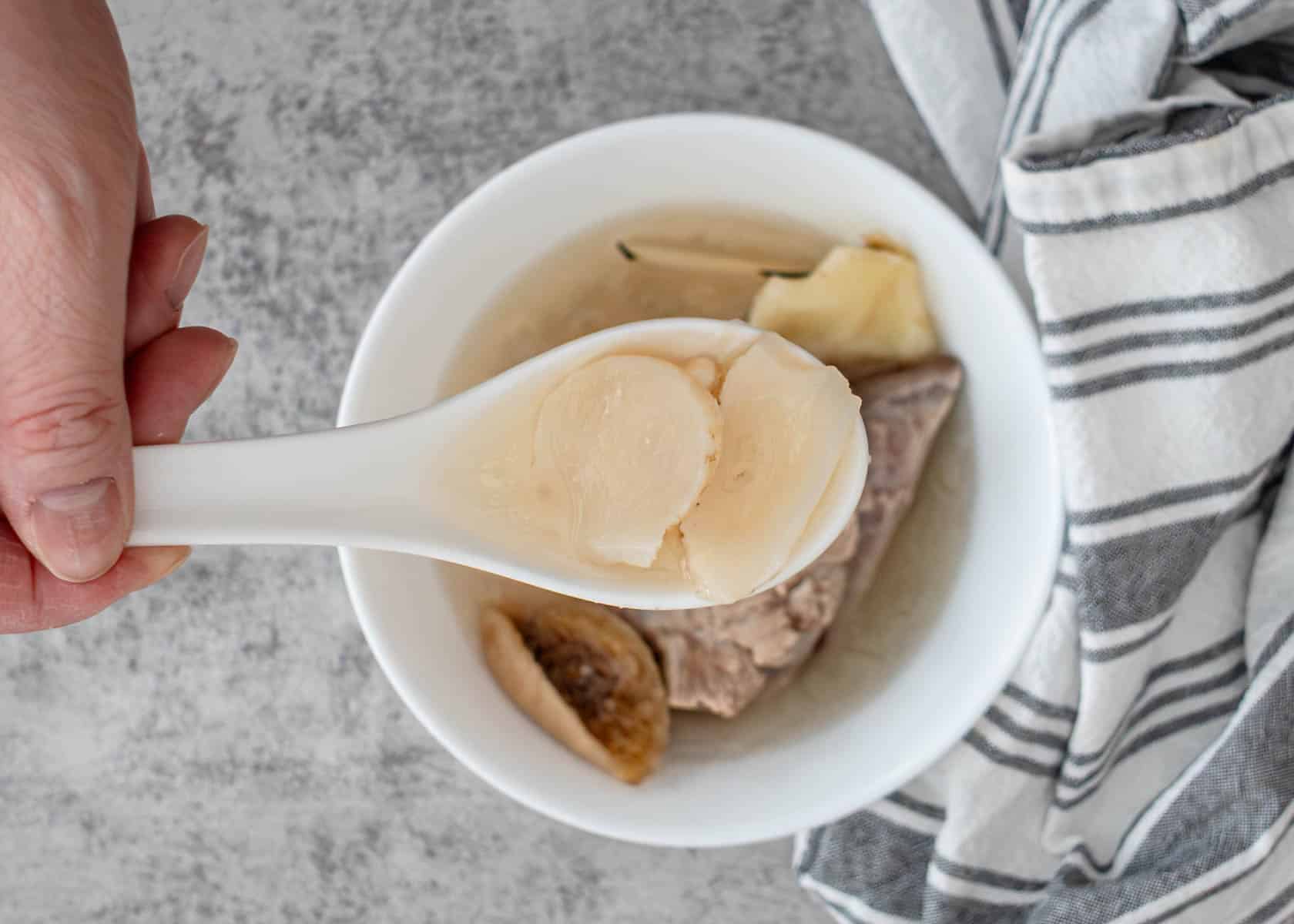
The soup is ready when sea coconut pieces are completely soft and almost translucent, conch meat is tender (not rubbery), Chinese yam slices are very soft, broth is clear with a pale golden color, and broth has a slightly silky, almost gelatinous texture when you swirl the ladle.
Step 8: Add Goji Berries (Last 20 Minutes)
Set a timer. At the 2-hour mark (or 20-30 minutes before you plan to serve), add goji berries directly to the pot. Stir gently. Let them simmer for exactly 20-30 minutes.
Goji berries contain delicate compounds that become bitter with prolonged cooking. The 20-30 minute window allows them to release their blood-nourishing benefits without bitterness.
Step 9: Season Minimally
Turn off the heat. Let the PMS relief soup rest for 5 minutes to settle.
Taste the broth. It should have a natural, gentle sweetness from honey dates and sea coconut, a subtle savoury note from conch (if used) or bones, and a complex herbal undertone.
Add only a tiny pinch of sea salt if needed. Start with ⅛ teaspoon, stir, taste again. This soup should taste clean, sweet, and nourishing, not salty or heavily seasoned. Over-seasoning masks the medicine.
Step 10: Serve Mindfully
Ladle into bowls while warm (not boiling hot). In TCM, warm temperatures are easiest on digestion, especially important when hormonal changes are affecting your digestive system.
Serving size: 1.5 to 2 cups of broth plus solids per serving. Don't just drink the broth; eat the sea coconut, conch, yam, and any meat. These solids contain concentrated medicine and provide protein and fibre.
Best time to drink: Mid-afternoon (3-5pm) or 1-2 hours before dinner. Avoid drinking large amounts of PMS relief soup late at night if you're prone to nighttime urination or bloating.
How to consume: Sip slowly over 20-30 minutes. Chew the solids thoroughly. Sit calmly and let your body receive the nourishment rather than rushing through or eating while distracted.
Slow Cooker Alternative:
After the initial boil and skim, transfer everything except goji berries to a slow cooker. Cook on LOW for 4-5 hours or HIGH for 2.5-3 hours. Add goji berries in the last 30 minutes on LOW or 20 minutes on HIGH.
Slow cooker method is excellent for deeper extraction of medicinal compounds and is more forgiving if you lose track of time.
Instant Pot Method:
After blanching bones (if using), add all ingredients except goji berries to Instant Pot. Use 7 cups water (less than stovetop due to minimal evaporation). Pressure cook on HIGH for 35 minutes with natural release for 15 minutes. Quick release remaining pressure, then switch to SAUTÉ mode, add goji berries, and simmer for 10 minutes.
Instant Pot is convenient but extracts only about 70-80% of the medicine compared to traditional long simmering. Use this method for maintenance rather than acute symptom treatment.
Troubleshooting Common Issues
Sea coconut pieces are still hard after 2 hours: Continue simmering another 30-60 minutes. Very old or improperly dried sea coconut takes longer to soften. Next time, soak for 3-4 hours instead of 1-2. If it's still hard after 3 hours total cooking, your sea coconut may be old or poor quality. It's still medicinal, just not as pleasant to eat.
Conch meat is rubbery and chewy: You under-soaked it. Dried conch needs a full 3-4 hours of soaking to rehydrate properly. If you forgot to soak (or soaked for insufficient time), you'll need to simmer the soup for an additional hour. Next time, start the soak in the morning for evening cooking.
Soup tastes bland or watery: Likely causes: (1) too much water (use exactly 2 litres or slightly less), (2) heat too low so ingredients didn't extract properly, (3) ingredients are old and have lost potency, or (4) you skipped bones, which add depth. Add a touch more honey dates and a pinch of salt, but investigate the root cause.
Soup is too sweet: You used too many honey dates or cooked them too long. For Yin-nourishing soups, you want gentle sweetness, not dessert-level sweetness. Next time, use only 2 honey dates or substitute regular red dates for half the honey dates.
Feeling bloated or heavy after drinking: The soup may be too rich for your current digestive state, or you drank too much too quickly. Solutions: (1) Reduce serving size to 1 cup instead of 2, (2) add an extra piece of dried tangerine peel next batch, (3) increase ginger to 5-6 slices, (4) sip slowly over 30 minutes instead of gulping.
Experiencing more menstrual flow after drinking: This isn't necessarily a problem. If the soup successfully moves stagnant liver qi and nourishes blood, your body may release old, clotted blood that's been stuck. This is actually therapeutic. However, if bleeding becomes excessively heavy or prolonged (soaking through pads every 1-2 hours), stop the soup and consult a TCM practitioner. You may need more astringent herbs.
Getting hot flashes or night sweats after soup: The soup may be too warming for your constitution. Next batch: (1) omit ginger entirely, (2) increase conch to 60-70g, (3) reduce or omit honey dates, (4) add cooling herbs like dried lily bulb (10g). Some women need a cooler formula.
Feeling too cold or experiencing worse cramping: The soup may be too cooling. Next batch: (1) increase ginger to 6-8 slices, (2) reduce conch to 30g, (3) consider adding 1-2 slices of dried ginger (dry ginger is more warming than fresh), (4) drink the soup warm, never cold.
Broth is cloudy or murky: You skipped or rushed the blanching step for bones. The soup is still medicinal, just less visually appealing. Can't be fixed after cooking. Remember proper blanching next time.
Perfect soup indicators: Clear, pale golden broth with slight viscosity. Sea coconut that's tender but not disintegrating. Conch that's tender with slight chew (not rubbery). Chinese yam pieces that are very soft. Gentle, natural sweetness. Feeling calm, hydrated, and satisfied after drinking (not bloated or thirsty).
Storage and Make-Ahead Tips
This PMS relief soup stores well, and many women make double batches, allowing them to drink it over several days.
Refrigerator Storage: Let soup cool to room temperature (about 1 hour). Transfer to glass containers. The soup will become slightly gelatinous when cold due to the sea coconut's natural mucilage and any collagen from bones. This is excellent and indicates successful extraction of moistening compounds.
Store for up to 4 days in the refrigerator. Beyond this, the medicinal potency begins to decline.
Freezing: This soup freezes well for up to 2 months. Portion into individual servings (1.5-2 cups each) in freezer-safe containers. Label with the date and 'PMS Relief Soup - drink premenstrual week.'
The sea coconut texture changes slightly after freezing (becomes a bit softer and more gelatinous), but the medicinal properties remain intact.
Reheating Instructions: Critical: Reheat gently over low heat or in the microwave at medium power. Never bring reheated TCM soup to a rolling boil. High heat degrades the delicate medicinal compounds that took 2+ hours to extract.
Heat until warm and steaming (about 150-160°F / 65-70°C), not piping hot. Stir occasionally to ensure even heating.
From frozen: Thaw overnight in refrigerator, then reheat. Quick thaw method: Place sealed container in cool water for 30 minutes until mostly thawed.
Meal Prep Strategy: Make this soup on a Sunday or Monday. Portion into 2-3 servings and refrigerate. Drink one serving every 2-3 days during your premenstrual week. This ensures you have medicine on hand even when you're feeling too irritable or exhausted to cook.
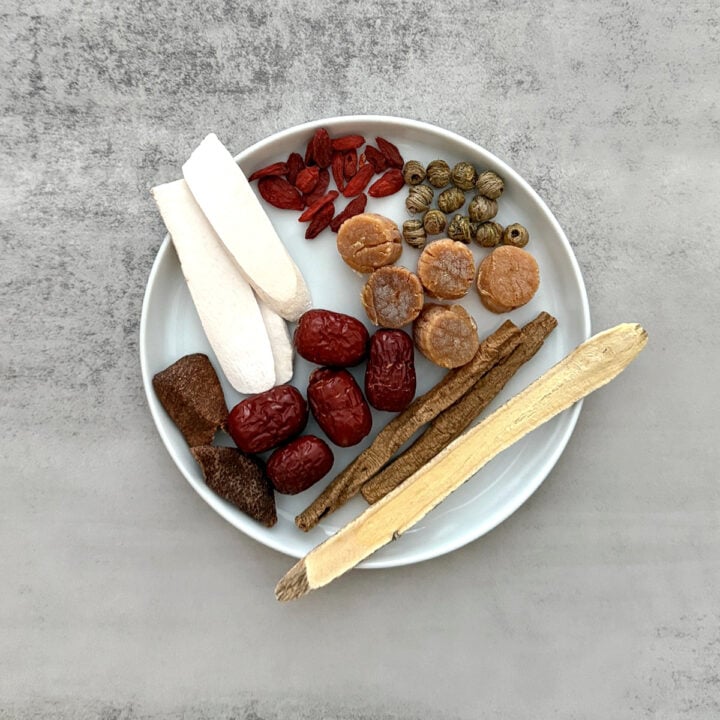
Make-Ahead Ingredient Kit: Keep a dedicated container with all shelf-stable ingredients: dried sea coconut, dried Chinese yam, dried conch, honey dates, dried tangerine peel, and any other dried herbs you use. When cooking day arrives, grab one kit instead of hunting through your pantry for eight items. Only fresh ginger and bones need to be purchased each time. We find these clear deli containers work best!
Timing Across Your Cycle: Menstruation (Week 1): Make and freeze portions for later. Post-menstrual (Week 2): No need for this specific soup. Just focus on blood-building foods. Post-ovulation/luteal (Week 3): Make a fresh batch. Premenstrual (Week 4): Drink 2-3 servings from your batch.
By planning ahead, you always have period support soup ready when you need it, without the burden of cooking while dealing with PMS symptoms.
Frequently Asked Questions (FAQs)
This PMS relief soup works by addressing the TCM root patterns causing PMS: yin deficiency with liver Qi stagnation. Unlike over-the-counter remedies that mask symptoms, this soup nourishes liver yin and kidney yin while moving stagnant qi, preventing symptoms before they start.
For active symptom management (significant PMS or menstrual issues), drink PMS relief soup 2-3 times during the week before your period and optionally once during the first 2-3 days of menstruation. For maintenance after symptoms have improved, once during the premenstrual week is sufficient. Never drink daily for extended periods; TCM formulas are meant to restore balance, not become a permanent crutch.
You can drink it both before and during menstruation, but the timing emphasis differs based on your symptoms. For PMS (irritability, breast pain, insomnia), focus on the week before bleeding starts. For cramping, scanty flow, or clots during menstruation, drink during the first 2-3 days of bleeding. The cooling, yin-nourishing nature helps both patterns by nourishing liver yin (preventing pre-period heat symptoms) and moving liver Qi (preventing menstrual stagnation).
Generally no. If the soup successfully nourishes blood and liver yin, your period may become more regular with better colour and consistency, but not necessarily heavier. Some women with very light, scanty periods due to blood deficiency may notice slightly increased volume as their body rebuilds blood reserves (this is therapeutic). However, if you already have heavy flooding periods, add astringent herbs like Astragalus or reduce serving size.
Yes, with timing adjustments. Drink during the premenstrual phase and menstrual phase, but STOP during the mid-cycle (days 10-16) around ovulation. The cooling, Yin-nourishing nature can dampen the Yang surge needed for ovulation and implantation. During ovulation and the two-week wait, switch to slightly warming, Yang-supporting soups. If you confirm pregnancy, consult your TCM practitioner before continuing.
During pregnancy, conch is generally avoided in the first trimester due to its cooling nature, though it's used later in pregnancy for gestational hypertension or excess heat. The formula would need modification. Consult your TCM practitioner or obstetrician first. During breastfeeding, the soup is generally safe and beneficial for restoring post-partum Yin and blood, though you might reduce conch and increase Chinese yam. Always get professional guidance for pregnancy and breastfeeding.
Chinese herbal medicine shops and larger Asian grocery stores carry both, usually in the dried goods or Chinese medicine section. Sea coconut typically costs $15-30 for a package that makes 4-6 batches. Dried conch costs $20-40 per package. Online sources include Amazon (search "dried sea coconut chinese herb" and "dried conch slices"), or specialty Chinese herb suppliers. If you can't find sea coconut, substitute with dried snow fungus (銀耳) plus dried figs for moistening properties, though the formula will be less targeted for hormonal support.
When properly made, it tastes naturally sweet with gentle herbal notes, clean and light rather than heavy or medicinal. The sea coconut adds subtle coconut-like sweetness. Honey dates provide pleasant sweetness without being cloying. Conch adds a mild umami and slight ocean note (not fishy). The overall impression is refreshing, slightly sweet, and nourishing, like a very gentle herbal tea that happens to be filling. If it tastes strongly fishy, bitter, or medicine-like, something went wrong in preparation or ingredient quality.
Yes. Omit pork bones and add these for more complete nourishment: 8-10 dried shiitake mushrooms (for umami and B vitamins), 50g cashews (for minerals), and double the Chinese yam to 100g. The vegetarian version is still effective, though slightly less blood-building than the version with bones. Consider supplementing with iron-rich foods throughout your cycle.
Week 1-2: Better sleep quality and slightly less irritability. Weeks 3-4 (after first full cycle): Noticeable reduction in breast tenderness and emotional volatility. Cycles 2-3: Significant improvement in PMS symptoms, better energy before period, less cramping. Cycles 4-6: Sustained hormonal balance if you've also addressed stress, sleep, and diet. TCM builds health gradually through consistent application, not overnight fixes. Give it at least three full menstrual cycles while tracking symptoms.
It can support hormonal balance as part of a comprehensive approach, but can't treat these conditions alone. For irregular cycles from blood deficiency and liver qi stagnation, this soup is helpful as it nourishes liver blood and gently moves qi. For PCOS (often involving kidney Yang deficiency, phlegm-dampness, and blood stasis in TCM), you'd need a modified formula with more yang-supporting and dampness-draining herbs, prescribed by a TCM practitioner. Use this soup as supportive therapy, not primary treatment.
Stop the soup and evaluate. (1) Headache on top of head or temples suggests liver yang rising from insufficient yin (the soup needs more time to work; symptoms may worsen briefly before improving), (2) Headache with nausea suggests too rich for your digestion (add more tangerine peel and ginger, reduce serving size), (3) Feeling more emotional or tearful is actually therapeutic (releasing pent-up liver Qi), (4) Severe worsening of any symptom means the formula doesn't match your pattern. Consult a TCM practitioner.
While formulated for women's menstrual health, the ingredients benefit anyone with liver and kidney yin deficiency, spleen qi weakness, or "heat" symptoms from stress and overwork. Men can drink it for dry eyes, insomnia, irritability, night sweats, or general Yin deficiency. It won't cause hormonal issues in men. However, men might benefit more from different formulas targeting their specific imbalances.
Regular coconut uses actual coconut meat or milk, which is moistening but not specifically medicinal for hormonal health. "Sea coconut" (海底椰) is not coconut at all but a palm seed valued in TCM for nourishing yin, clearing heat, and specifically benefiting breast health. They're completely different ingredients with different actions. You can't substitute regular coconut and expect the same period-support benefits.
This PMS relief soup addresses the root TCM patterns causing PMS: yin deficiency with liver qi stagnation. Unlike symptom masking, it nourishes liver yin and kidney yin while gently moving stagnant Qi.
Other TCM Soups for Women's Health
Once you've experienced how this PMS relief soup balances hormones, explore these additional TCM formulas for complete cycle support.
For Blood Building After Menstruation: Red Bean Soup with Lotus Seeds and Lily Bulb (Instant Pot) 蓮子百合紅豆沙. Gentle blood-nourishing dessert soup that rebuilds what menstruation depletes while calming the spirit.
For Energy and Qi Tonification: Chinese Steamed Chicken With Shiitake Mushroom 冬菇蒸雞 - Nourishes Qi and strengthens spleen function, critical for blood production and hormonal balance. Steamed Chicken with Cordyceps Mushrooms and Black Goji 黑枸杞蟲草花蒸雞 - Powerful kidney essence tonic that supports reproductive health and builds stamina.
For Daily Wellness Throughout Your Cycle: Longan Date Tea Recipe (Modified for Summer/Cooling). Simple, everyday blood and spirit nourishing drink perfect for sipping throughout the month.
For Dampness and Bloating Support: Adzuki Red Bean, Job's Tears and Poria Summer Detox Soup 赤小豆薏米茯苓茶 - Drains excess water retention and clears dampness common in pre-menstrual bloating. Winter Melon Soup With Pork Ribs 冬瓜湯 - Cooling, diuretic soup that reduces bloating and clears heat.
Digestive Support and Gentle Nourishment: Kitchari - Ayurvedic healing dish that gives your digestive system a rest while gently building Qi and reducing inflammation.
General Cooling and Heat-Clearing: Chinese Sweet Mung Bean Soup 綠豆沙 -Classic cooling dessert soup that clears heat and toxins, excellent if your period symptoms include acne or inflammation.
Additional Protein and Blood Nourishment: Chinese Braised Beef Brisket & Tendon 柱侯蘿蔔炆牛筋腩 - Rich, warming dish that builds blood and strengthens tendons, ideal for post-menstrual recovery.
Browse the complete recipe collection for more therapeutic cooking inspiration.
Building a Complete TCM Meal Plan for Menstrual Health:
Each phase of your cycle benefits from different types of nourishment. Rotating through diverse TCM soups and dishes ensures comprehensive support.
- Week 1 (Menstruation, Days 1-5): Light, easily digestible foods; sea coconut soup (PMS relief soup) if experiencing cramping; ginger tea for cold-type pain; red bean soup for gentle blood building.
- Week 2 (Post-Menstrual, Days 6-12): Blood and essence building (steamed chicken with cordyceps, beef brisket, longan date tea, red bean soup); focus on rebuilding what was lost.
- Week 3 (Post-Ovulation, Days 13-21): Balanced nourishment; continue blood building; begin preparing body for next phase with balanced soups.
- Week 4 (Pre-Menstrual, Days 22-28): Sea coconut soup 2-3x this week; dampness-draining soups if bloating is severe (adzuki coix seed poria soup); reduce inflammatory foods, excess salt, and heavy meals.
This rotation ensures comprehensive support for all aspects of hormonal fluctuation throughout your cycle. No single soup addresses everything, but strategic combinations create synergistic healing.
Try this PMS relief soup for three cycles and track your symptoms to see how Traditional Chinese Medicine can transform your menstrual health
For traditional Chinese soups, healing recipes, and TCM food therapy that actually work, subscribe to our newsletter and never miss a wellness post!
I'd love to see how you went with my recipes! Leave a comment below or tag me on Instagram @INSTANOMSS #INSTANOMSS.
> Recipe
PrintPMS Relief Soup: Ease Cramps with Sea Coconut TCM
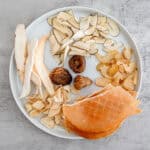
This Sea Coconut Chinese Yam Soup For Period (海底椰淮山螺片湯) is a powerful PMS relief soup designed specifically to support women through their menstrual cycle by combining Traditional Chinese Medicine principles with Cantonese food therapy. The formula addresses hormonal fluctuations, menstrual cramps, and PMS symptoms by balancing three key actions: sea coconut moistens and cools, Chinese yam strengthens the spleen, and conch nourishes liver and kidney yin.
- Prep Time: 15 mins
- Cook Time: 180 mins
- Total Time: 3 hours 15 minutes
- Yield: 4-6 persons 1x
- Category: Soup
- Method: Boil
- Cuisine: Chinese, TCM
Ingredients
- 50g dried sea coconut 海底椰
- 50g dried Chinese yam/Huaishan 淮山
- 50g dried conch meat 螺肉
- 2-3 honey dates 蜜棗
- 2L filtered cold water
Optional but Recommended:
- 1 lb pork spare ribs or soup bones
- 3-4 slices fresh ginger
- 1 small piece dried tangerine peel 陳皮
- 2 tbsp organic goji berries 枸杞
- Pinch of sea salt
 Get Recipe Ingredients
 Instructions
- Prepare ingredients: Rinse sea coconut and soak in water for 1-2 hours. Drain. Rinse dried conch meat and soak for 3-4 hours until softened. Drain and save soaking water. Rinse Chinese yam slices quickly. Rinse honey dates.
- Blanch bones (if using): Bring a pot of water to boil. Add pork bones and boil for 5 minutes. Drain and rinse thoroughly under cold water, scrubbing off gray foam. Set aside.
- Combine everything: In large ceramic soup pot, add blanched bones (if using), soaked sea coconut, soaked conch (plus strained soaking water), Chinese yam slices, honey dates, ginger slices, and tangerine peel. Pour in 2 liters cold filtered water.
- Initial boil: Bring to vigorous rolling boil over high heat. Skim off foam that rises to surface for about 5 minutes.
- Long simmer: Reduce heat to lowest setting. Cover soup pot with lid slightly ajar. Simmer gently for 2 to 2.5 hours. The liquid should be reduced to about 6 cups. Soup is ready when the sea coconut is very soft, the conch meat is tender, and the broth is clear with a slight viscosity.
- Add goji berries: In the last 20-30 minutes of cooking, add goji berries. Set the timer to prevent overcooking.
- Season: Turn off the heat. Taste the broth. Add a tiny pinch of sea salt if needed (start with ⅛ teaspoon). The soup should taste naturally sweet and clean, not heavily salted.
- Serve: Ladle the soup into bowls while it's still warm. Serve 1.5-2 cups per serving, including broth and solids. Eat the sea coconut, conch, and yam pieces along with drinking the broth.



Notes
Adjustments for your pattern:
- More PMS irritability/insomnia: Add 10g white peony root 白芍
- Heavy bleeding: Add 15g astragalus root 黃芪
- Severe cramping: Increase ginger to 6-8 slices
- Very hot constitution: Omit ginger, increase conch to 60-70g
Nutrition
- Serving Size: 1 pot
- Calories: 749
- Sugar: 140.7 g
- Sodium: 5545.1 mg
- Fat: 7.3 g
- Carbohydrates: 153.1 g
- Fiber: 2.1 g
- Protein: 28.3 g
- Cholesterol: 93 mg


Pin the above image to your Chinese TCM Recipe Pinterest Board to bookmark this page. We are so excited to share our recipes with you!
More Chinese Recipes
Chinese Steamed Chicken With Shiitake Mushroom 冬菇蒸雞
Air Fryer BBQ Pork Char Siu 氣炸鍋蜜汁叉燒
Red Bean Soup (Instant Pot) 蓮子百合紅豆沙





Comment Below