
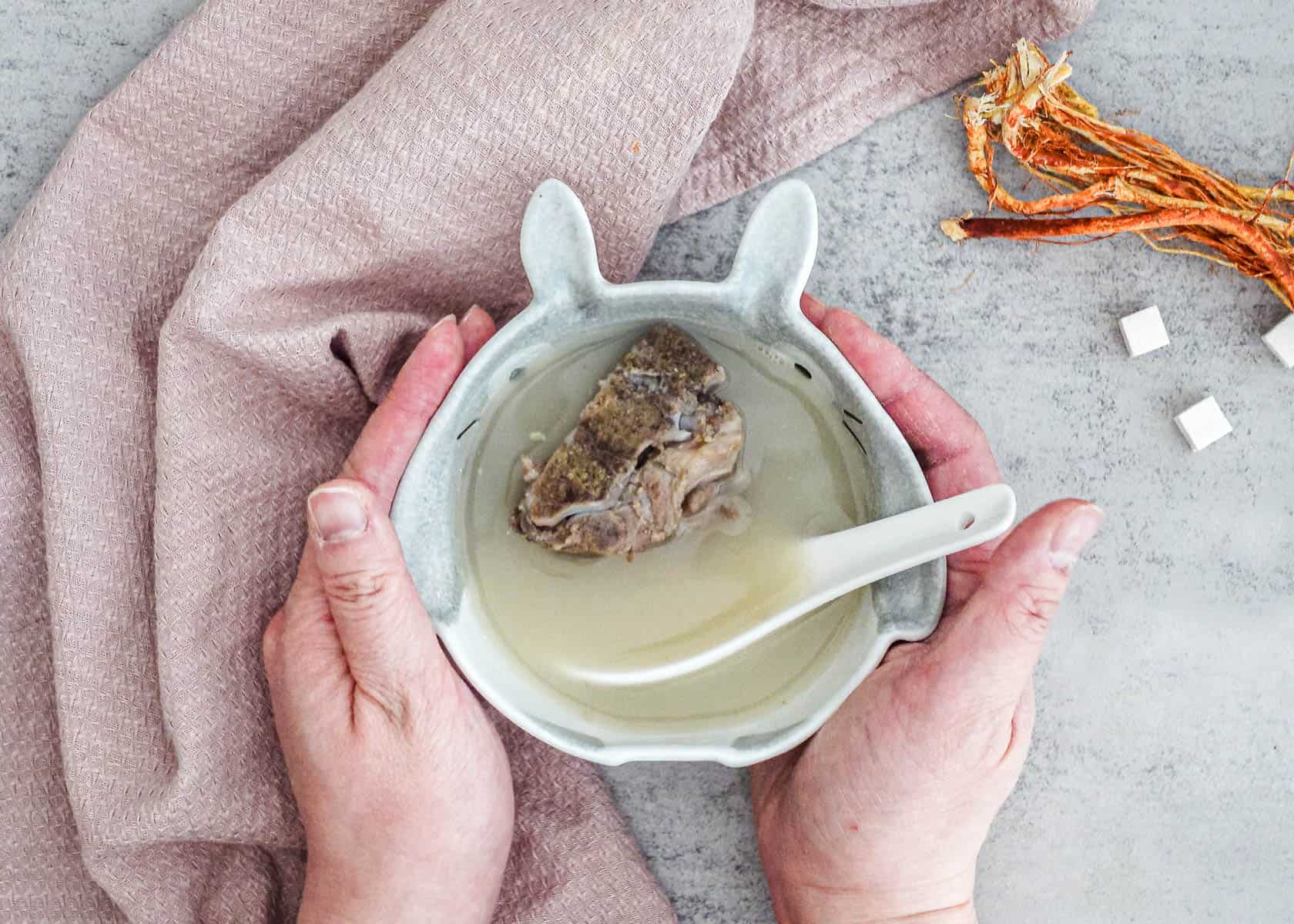
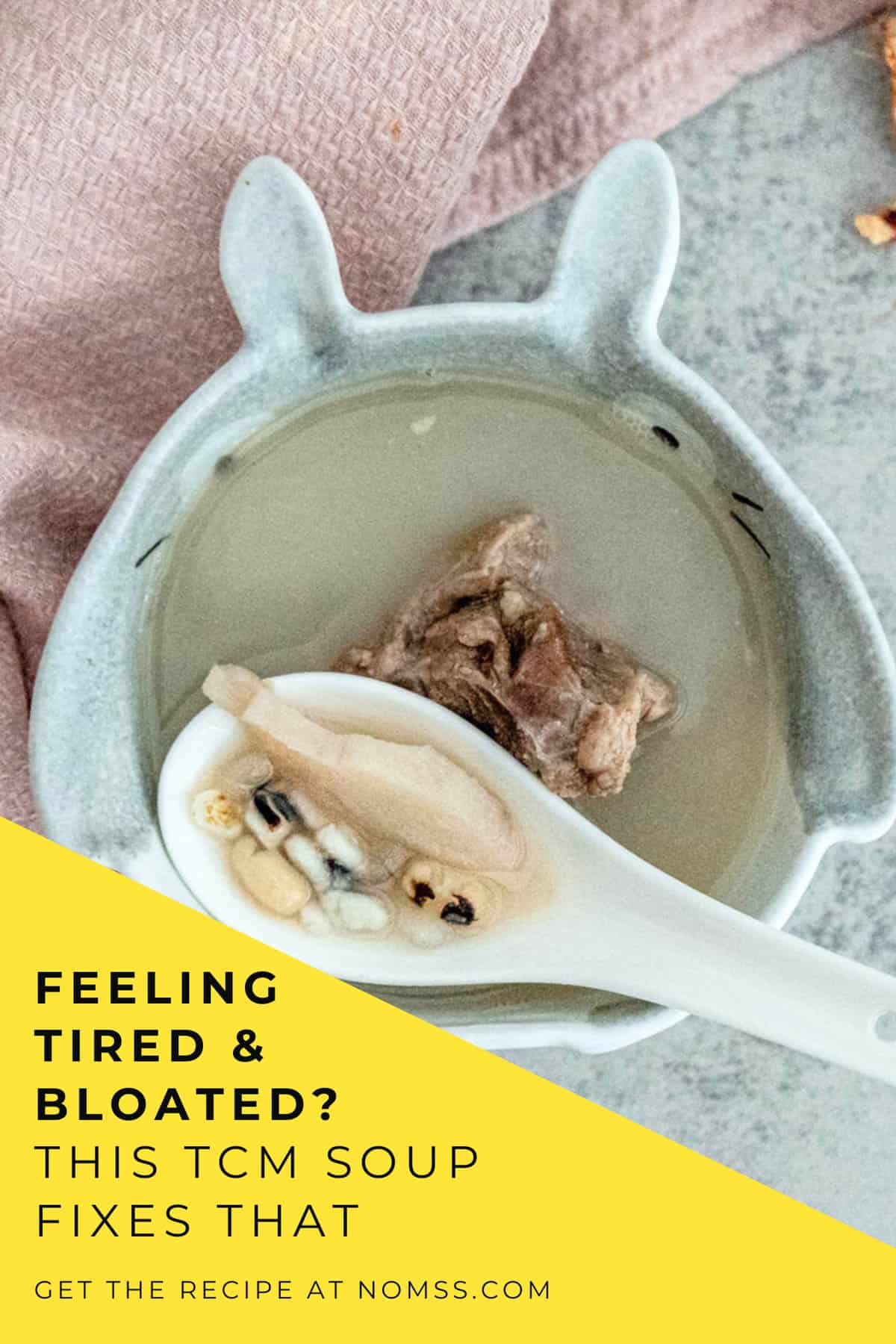
If you've been waking up tired, bloated, and vaguely unmotivated since early March, you're not lazy. In Traditional Chinese Medicine (TCM), this is textbook Spring Dampness (濕氣), and it peaks right after Jingzhe (驚蟄). Your spleen is struggling, your Qi is stagnant, and the solution is sitting in a pot on the stove. This spring dampness soup TCM formula, Pork Bone Five-Finger Peach 五指毛桃豬骨經典去濕健脾湯, has been the answer in Cantonese households for generations.
This classic spring dampness soup TCM formula (健脾去濕湯) combines twelve time-tested ingredients made in Cantonese households for generations. It's the soup your grandmother started making in February before you even felt sick, because she knew what was coming.
> In This Post: Everything You Need for the Classic TCM Spring Dampness Spleen Soup
Spring arrives, humidity climbs, and your spleen quietly starts struggling. This classic TCM spring dampness soup (健脾去濕湯) combines twelve time-tested ingredients, including hairy fig, Job's tears, poria, and dried conch, to strengthen your spleen, drain dampness, and clear 春困 (spring fatigue) before it drags you through the entire season. It's a soup Cantonese families have made every year after Jingzhe for good reason. Simple to prep, freezer-friendly, and genuinely effective.
Check out this quick story summary of our recipe!
Jump to:
- > In This Post: Everything You Need for the Classic TCM Spring Dampness Spleen Soup
- Why Spring Dampness Hits Hard After Jingzhe
- What is Jingzhe?
- What Is Spring Fatigue?
- 5 Signs You Have Spring Dampness
- Who Benefits Most From This Soup
- Ingredients and Chinese Herbal Benefits and TCM Properties
- Where to Buy These Ingredients in Canada
- Best Time to Make This Soup
- Spring vs. Summer Dampness Soups: Which One Do You Need?
- How to Tell If Your Soup Is Working
- Instructions - Step-by-Step Cooking Method For TCM Soup Pork Bone Five-Finger Peach
- Storage and Meal Prep
- Frequently Asked Questions (FAQs)
- Other Spring TCM Soups and Dampness Relief Recipes
- > Recipe Card
- Classic Cantonese TCM Spring Dampness Soup
Why Spring Dampness Hits Hard After Jingzhe
Jingzhe (驚蟄) usually falls in the first week of March. In 2026, Jingzhe falls on March 5. The ground thaws, humidity climbs, and environmental dampness floods the body before most people even notice the change. In TCM, the spleen governs digestion and the transformation of fluids. Excess external dampness puts direct pressure on it.
For a lighter weeknight option during the same season, this Chinese spring soup with carrots, corn, and yam is a gentler complement that works well between heavier herbal batches.
When the spleen is overwhelmed, food sits undigested, water accumulates in the tissues, and mental clarity drops. The physical signs are real: bloating, heavy limbs, loose stools, brain fog, and persistent low energy that no amount of coffee fixes.
This is why a warm bowl of Jingzhe spleen dampness Chinese soup is more than comfort food. It's targeted seasonal medicine.
What is Jingzhe?
Jingzhe (驚蟄), meaning "awakening of insects," is the third solar term in the traditional Chinese calendar, falling between March 5 and 7 each year. It marks the moment when rising temperatures and increased rainfall wake dormant creatures from winter hibernation, and in TCM, it signals an equally significant internal shift. The ground softens, humidity rises sharply, and the body transitions from winter's inward, conserving energy to spring's outward, active energy, a transition the spleen handles badly if it's already weak. TCM practitioners have long identified Jingzhe as the single most important date to begin dampness-clearing food therapy, because the external environment and the internal organ system are both at their most vulnerable to moisture accumulation at exactly the same time.
Navigate Spring Dampness after Jingzhe with this wellness guide.
What Is Spring Fatigue?
春困 (Chūn Kùn) literally means "spring sleepiness." You know the feeling. Eight hours of sleep and you still want to lie down again by noon.
Western science attributes it to circadian rhythm shifts as daylight extends. TCM says dampness is blocking Qi from circulating. Both are accurate, and they point to the same fix: strengthen the spleen, drain dampness, and the energy returns. This spring fatigue soup targets exactly that.

5 Signs You Have Spring Dampness
Not sure if dampness is actually your issue? In TCM, your body gives clear signals. Check how many of these you recognise.
1. You wake up tired no matter how long you sleep. Eight hours in and you still feel like you're moving through wet concrete by mid-morning. This is the most common sign of spring dampness weighing down Qi circulation.
2. Your limbs feel heavy and your head feels foggy. Not painful, just slow. Like your body is slightly waterlogged. TCM calls this "dampness obstructing the clear Yang from rising to the head."
3. You're bloated after meals, even light ones. Your spleen is struggling to transform and transport food efficiently. Fluids accumulate instead of circulating, and digestion stalls.
4. Your tongue has a thick, white or greasy coating. This is the most reliable self-diagnostic tool in TCM. A thin white coating is normal. Thick, greasy, or pasty means dampness has taken hold. Check it first thing in the morning before eating or drinking anything.
5. You've gained a little weight around the midsection without changing your diet. Dampness accumulates as fluid retention and phlegm in TCM, often settling around the middle. It's not fat, it's your spleen losing the battle against excess moisture.
If you checked three or more, your spleen needs support. This is exactly what this spring dampness soup TCM formula targets.
Who Benefits Most From This Soup
This TCM spring dampness soup is best suited for two constitutional types.
Dampness-phlegm constitution (痰濕體質) is the primary target. If you carry weight around the midsection, feel heavy after meals, wake up with a thick tongue coating, or notice persistent bloating, your body is holding excess dampness. The combination of Job's tears, poria, and fox nut works directly on this pattern, draining fluids and restoring spleen function.
Qi-deficient constitution (氣虛體質) is the second key type. Chronic fatigue, shortness of breath on exertion, loose stools, and a pale complexion all point here. Hairy fig (五指毛桃), Chinese yam (淮山), and lotus seeds gently rebuild spleen Qi without overstimulating a system that's already depleted. If your Qi deficiency runs deeper, a nourishing silkie chicken soup for spleen health makes a stronger tonic to alternate with this recipe through the season.
Yin-deficient types (dry mouth, night sweats, persistent heat sensations) should increase Solomon's seal and lily bulbs and reduce Job's tears to avoid further drying. Pregnant women should consult a registered TCM practitioner before consuming Job's tears (薏仁), as it is traditionally contraindicated during pregnancy.
Ingredients and Chinese Herbal Benefits and TCM Properties
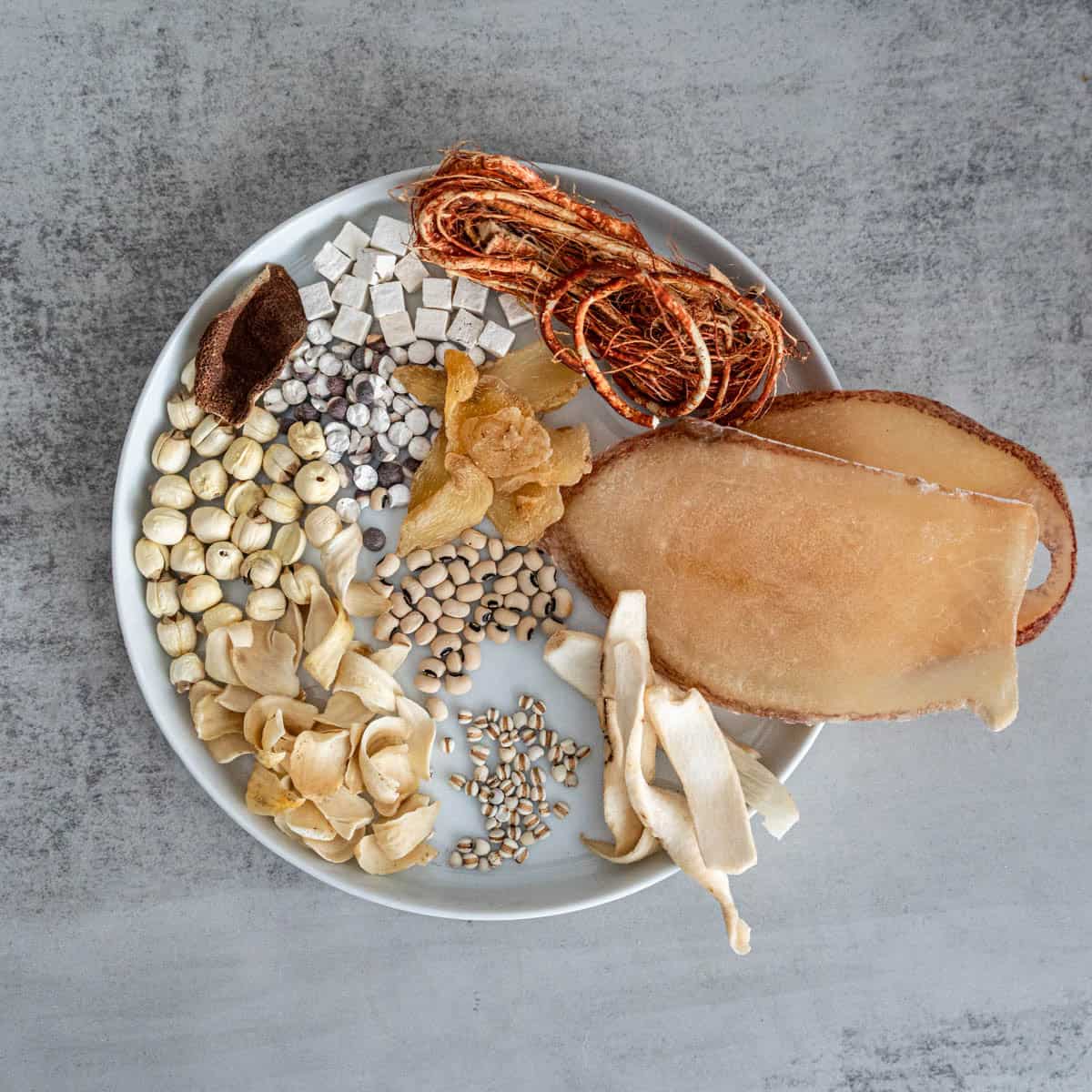
This spring dampness soup TCM recipe uses twelve ingredients working together. Together, they tonify Qi, dry dampness, calm the mind, and nourish without overloading a sluggish digestive system.
The Qi Builders and Dampness Drainers
五指毛桃 (Five-Finger Peach / Hairy Fig / Ficus hirta) smells faintly of coconut and acts as the lead Qi tonic in this formula. It strengthens the spleen, resolves dampness, and supports Lung Qi without generating heat.
薏仁 (Job's Tears / Coix Seed) is the workhorse. It drains dampness, clears mild heat, and supports the spleen meridian. Modern research supports its anti-inflammatory and diuretic properties.
茯苓 (Poria / Fu Ling) is a fungus that transforms phlegm, calms the mind, and works in tandem with Job's tears to flush dampness from the digestive system. Gentle enough for children.
芡實 (Fox Nut / Euryale Seed) astringes excess moisture and strengthens the spleen and kidneys simultaneously. It's the ingredient that stops the spleen from leaking Qi back out.
The Spleen Tonics
眉豆 (Black-Eyed Peas) tonifies the spleen and stomach and adds a mild starchy sweetness to the broth.
蓮子 (Lotus Seeds) calm the mind and stabilize digestion.
淮山 (Chinese Yam / Huai Shan) is one of TCM's most reliable neutral spleen tonics, nourishing Qi without warming or cooling the system.
The Balancers
陳皮 (Aged Tangerine Peel) moves Qi and cuts through any heaviness in the formula. Never skip it.
百合 (Lily Bulbs) moistens the lungs and calms the spirit.
海玉竹 (Solomon's Seal) nourishes Yin and softens the formula so the dampness-draining herbs don't overcorrect and deplete your fluids.
響螺片 (Dried Conch Slices) is a Cantonese hallmark. It nourishes Yin, brightens the eyes, and lends the broth a quiet oceanic depth that separates a good 健脾去濕湯 from a great one.
豬骨 or 瘦肉 (Pork Bones or Lean Pork) forms the flavour foundation. Pork is thermally neutral in TCM and nourishes Yin. Bones give you a richer, more gelatinous broth. Lean pork works equally well if you prefer a cleaner soup.
Where to Buy These Ingredients in Canada
T&T Supermarket carries most of these year-round in their dry goods section. For bulk buying, Chinese herbal stores stock Job's tears (薏仁) and black-eyed peas in large bags at consistent quality. I buy both there because the price per gram is genuinely better than smaller packages at other stores.
For five-finger peach (五指毛桃), dried conch slices (響螺片), poria (茯苓), and Solomon's seal (海玉竹), a Chinese herbal shop (藥材舖) in Chinatown is your best source. The staff will often pre-portion a soup bundle if you ask, which saves time and guesswork.
Most dry goods ingredients, tools, and supplies can be purchased at local Asian markets, Chinese grocery stores, or Amazon Online. Amazon Prime members receive free shipping and faster delivery times.
Best Time to Make This Soup
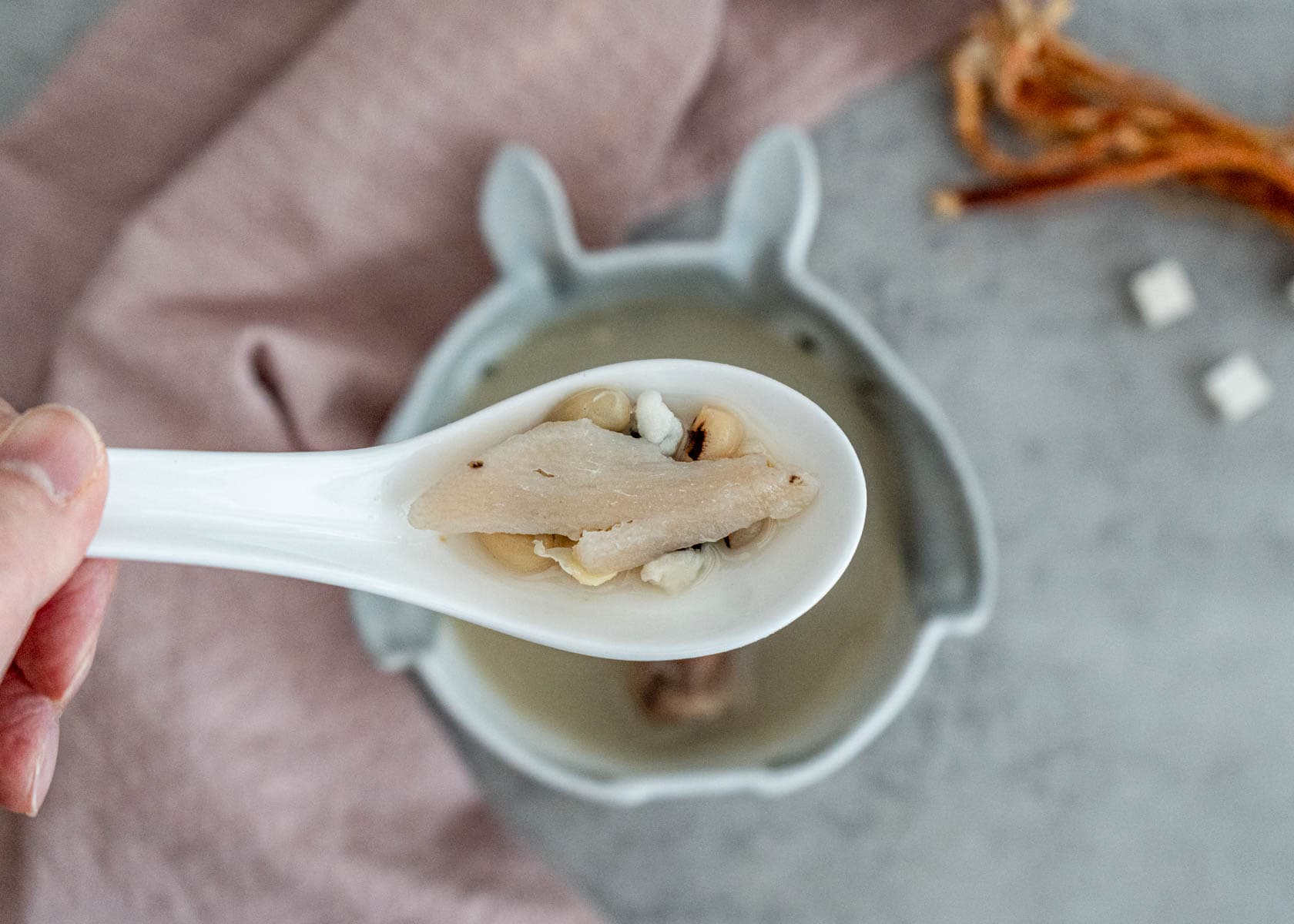
According to the TCM organ clock, the spleen meridian is most active between 9 and 11am. Eating a warm, nourishing meal at lunch, while the stomach meridian peaks from 7 to 9am, is the ideal window for this soup to do its work.
Drink it warm. Cold soups slow digestion and make the spleen work harder, which is the opposite of what you're going for. Make it from Jingzhe (early March) through Grain Rain (穀雨, late April), two to three times a week, and you'll feel the cumulative difference.
Spring vs. Summer Dampness Soups: Which One Do You Need?
Dampness doesn't disappear after spring. It shifts character. Spring dampness is cold and heavy, summer dampness is hot and sticky, and your soup needs to match the season.
Dampness doesn't disappear after spring. It shifts character. Spring dampness is cold and heavy, summer dampness is hot and sticky, and your soup needs to match the season.
| Classic Spring Dampness Soup 健脾去濕湯 | Mung Bean Soup 綠豆沙 | Si Shen Tang 四神湯 | |
|---|---|---|---|
| Best Season | Late winter through late spring | Summer | Year-round |
| TCM Action | Strengthens spleen, drains cold dampness | Clears heat, resolves summer dampness | Tonifies spleen, calms the mind |
| Key Ingredients | Hairy fig, Job's tears, poria, conch | Mung beans, kelp, rock sugar | Poria, lotus seeds, fox nut, Chinese yam |
| Thermal Nature | Neutral to slightly warm | Cool | Neutral |
| Best For | 春困 fatigue, bloating, heavy limbs | Heat rash, irritability, summer heaviness | Weak digestion, loose stools, poor sleep |
| Protein Base | Pork bones or lean pork | None or tofu | Pork small intestine (traditional) or pork ribs |
| Prep Time | 3 hours | 1 hour | 2 hours |
The simple rule: if you feel cold and sluggish, make this spring soup. If you feel hot and sticky, switch to mung bean. If your digestion is unstable year-round, Si Shen Tang 四神湯 is your baseline maintenance soup regardless of season.
How to Tell If Your Soup Is Working
Give it one to two weeks of consistent use, two to three bowls a week, and watch for these specific changes. Your tongue coating should visibly thin out and become less greasy. Morning energy improves gradually, not dramatically, which is how TCM is supposed to work.
Bloating after meals reduces and bowel movements become more regular and formed. Most people notice the mental clarity shift first, that heavy-headed foggy feeling lifts before the physical symptoms fully resolve.
If you're three weeks in and nothing has shifted, increase the Job's tears (薏仁) slightly or reduce cold and raw foods in your diet alongside the soup. Dampness didn't build up in a week and it won't clear in one either, but this soup is doing its job quietly every time you make it.
Pair it mid-week with a cup of chrysanthemum honeysuckle tea to clear any lingering heat from the upper body while the soup handles dampness below
Instructions - Step-by-Step Cooking Method For TCM Soup Pork Bone Five-Finger Peach
How to Make This Classic Spring Dampness Soup TCM Recipe
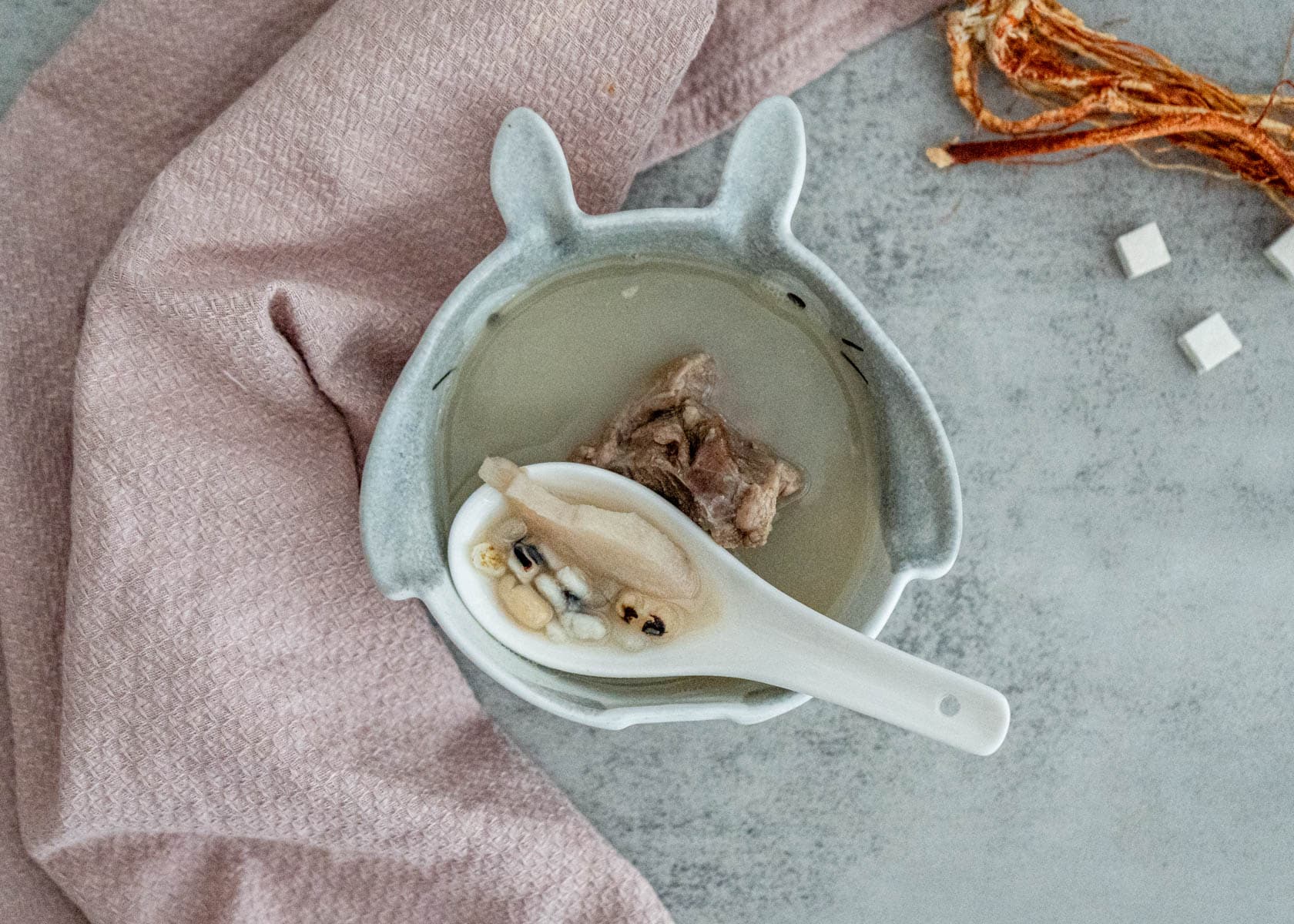
This Chinese dampness soup recipe follows the traditional Cantonese method of a long, low simmer. There's no shortcut that matches it for flavour or therapeutic depth, though the Instant Pot version gets you close on a weeknight. The steps are straightforward: soak, blanch, simmer, season. What matters most is the quality of your ingredients and not rushing the heat.
This TCM soup pork bone five-finger peach recipe is a low-effort, high-reward simmer. The prep takes about 30 minutes, most of which is soaking, and the stove does the rest. Get the blanching and soaking done at the same time and you'll have everything in the pot within half an hour.
Rinse all dry ingredients. Soak them in cold water for 20 to 30 minutes to remove dust and soften the harder seeds for even cooking. Drain and set aside.
Blanch the pork bones or lean pork in boiling water for 3 minutes. Rinse under cold water and set aside. This keeps the broth clear and removes any impurities from the meat.
Add all ingredients and 2.5 litres of cold water to a large pot. Bring to a boil over high heat, then reduce to a low, steady simmer.
Partially cover and simmer for 2 to 2.5 hours. Season with salt to taste before serving. Serve warm, drink the broth, and eat the pork.
Instant Pot: High pressure for 45 minutes, natural pressure release. The broth won't be as clear as stovetop but the flavour holds up well.
Storage and Meal Prep
This soup keeps in the fridge for up to 4 days and freezes beautifully for up to 3 months. I make a double batch on Sundays and freeze half in individual portions. On a weeknight when no one feels like cooking, reheating a container of this takes four minutes and genuinely helps.
For families, this scales easily. Bulk Job's tears and black-eyed peas from Chinese Herbal stores make a large batch cost-effective without any compromise on quality. Portion into deli containers or resealable bags labelled with the date, and you have weeknight soup covered through most of spring.
Reheat gently on the stovetop. Avoid the microwave if you can since it changes the texture of the broth.
If you're making this a Sunday ritual, these vegan Earl Grey shortbread cookies pair nicely alongside a warm bowl while the second batch cools on the stove.
Frequently Asked Questions (FAQs)
Yes. Substitute pork with a large piece of dried tofu skin (腐竹), or simply leave the meat out. The herbal broth is nourishing on its own.
This spring dampness soup TCM formula works best consumed two to three times a week from Jingzhe through Grain Rain.
Yes, with adjustments. Reduce the dried conch slices and use lean pork rather than bones for easier eating.
Chinese herbal shops are the most reliable source. T&T occasionally stocks it pre-packaged. It's also available on Amazon.ca.
Yes. High pressure for 45 minutes with natural pressure release. The result is slightly less clear but equally flavourful.
People with strong Yin deficiency (dry mouth, night sweats, persistent heat sensations) should use with caution and may want to increase Solomon's seal and lily bulbs. Pregnant women should consult a TCM practitioner before using formulas with strong dampness-draining ingredients like Job's tears.

Other Spring TCM Soups and Dampness Relief Recipes
Between soup batches, Lo Bak Go 蘿蔔糕 is a practical weekday option. Daikon's Spleen-supporting properties make it a natural fit for the same seasonal window, and a steamed loaf made Sunday will carry you through the week.
Still fighting 春困 fatigue? More TCM recipes to support your spleen through the season:
Chinese Winter Melon Soup 冬瓜排骨湯
Red Bean Soup (Instant Pot) 蓮子百合紅豆沙
Pin this post to your Chinese Medicinal Food Therapy TCM Recipe Pinterest board to bookmark it for next spring. Because spring always comes back, and so does the dampness.
For traditional Chinese soups, healing recipes, and TCM food therapy that actually work, subscribe to our newsletter and never miss a wellness post!
I'd love to see how you went with my recipes! Leave a comment below or tag me on Instagram @INSTANOMSS #INSTANOMSS.
> Recipe Card
PrintClassic Cantonese TCM Spring Dampness Soup
A classic Cantonese TCM spring dampness soup (Pork Bone Five-Finger Peach 五指毛桃豬骨經典去濕健脾湯) to strengthen the spleen and drain dampness after Jingzhe. Made with five-finger peach, Job's tears, poria, lotus seeds, dried conch, and pork bones.
- Prep Time: 30 mins
- Cook Time: 150 mins
- Total Time: 3 hours
- Yield: 2-4 persons 1x
- Category: Soup
- Method: Boil
- Cuisine: Chinese, TCM
Ingredients
-
- 30g 五指毛桃 (Five-Finger Peach / Hairy Fig / Ficus hirta)
- 30g 薏仁 (Job's Tears / Coix Seed)
- 20g 茯苓 (Poria / Fu Ling)
- 1 piece 陳皮 (Aged Tangerine Peel)
- 30g 眉豆 (Black-Eyed Peas)
- 20g 蓮子 (Lotus Seeds, pitted)
- 20g 百合 (Dried Lily Bulbs)
- 30g 淮山 (Chinese Yam / Huai Shan, dried slices)
- 20g 芡實 (Fox Nut / Euryale Seed)
- 20g 響螺片 (Dried Conch Slices)
- 500g 豬骨 or 瘦肉 (Pork Bones or Lean Pork)
- 15g 海玉竹 (Solomon's Seal / Polygonatum)
- 2.5L cold filtered water
- Salt, to taste
Instructions
-
- Rinse all dry ingredients. Soak in cold water for 20 to 30 minutes. Drain and set aside.
- Blanch pork bones or lean pork in boiling water for 3 minutes. Rinse under cold water and set aside.
- Add all ingredients and cold water to a large pot. Bring to a rolling boil over high heat.
- Reduce to a low simmer. Partially cover and cook for 2 to 2.5 hours.
- Season with salt to taste. Serve hot.
Instant Pot Method: Add all ingredients and water. Cook on high pressure for 45 minutes. Natural pressure release. Season and serve.
Equipment
 Buy Now →
  Buy Now →
  Buy Now →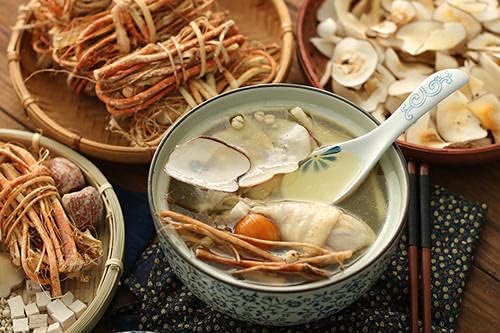
五指毛桃 (Five-Finger Peach / Hairy Fig / Ficus hirta)
Buy Now → Buy Now →
  Buy Now →
  Buy Now →
  Buy Now →
 Notes
- Vegetarian option: Omit pork. Add a large piece of dried tofu skin (腐竹) for substance.
- Most ingredients are available at T&T Supermarket. Five-finger peach and dried conch are best from a Chinese herbal shop (藥材舖).
- Costco carries Job's tears and black-eyed peas in bulk at good value.
- Store up to 4 days in the fridge or 3 months in the freezer.
- Drink the broth warm for maximum TCM benefit.
Nutrition
- Serving Size: 1 pot
- Calories: 0
- Sugar: 0 g
- Sodium: 606.4 mg
- Fat: 0 g
- Carbohydrates: 0 g
- Fiber: 0 g
- Protein: 0 g
- Cholesterol: 0 mg

Pin the above image to your Chinese TCM Recipe Pinterest Board to bookmark this page. We are so excited to share our recipes with you!
More Chinese Recipes
Chinese Steamed Chicken With Shiitake Mushroom 冬菇蒸雞
Air Fryer BBQ Pork Char Siu 氣炸鍋蜜汁叉燒
Red Bean Soup (Instant Pot) 蓮子百合紅豆沙













Comment Below