
Updated for Spring 2026
If you're tired all the time and sleep isn't fixing it, your spleen might be the culprit. In Traditional Chinese Medicine (TCM), chronic fatigue, persistent bloating, and edema that won't shift are textbook signs of spleen Qi deficiency, and this is exactly what Si Shen Tang 四神湯 targets. This classical four herbs Chinese herbal spleen tonic soup has been quietly running in Cantonese kitchens for generations, long before adrenal fatigue became a wellness buzzword.
Si Shen Soup is a gentle, versatile base formula that strengthens the spleen, calms the mind, and helps the body process excess dampness. It's the TCM spleen nourishing soup recipe your grandmother made every week without needing a label for it.
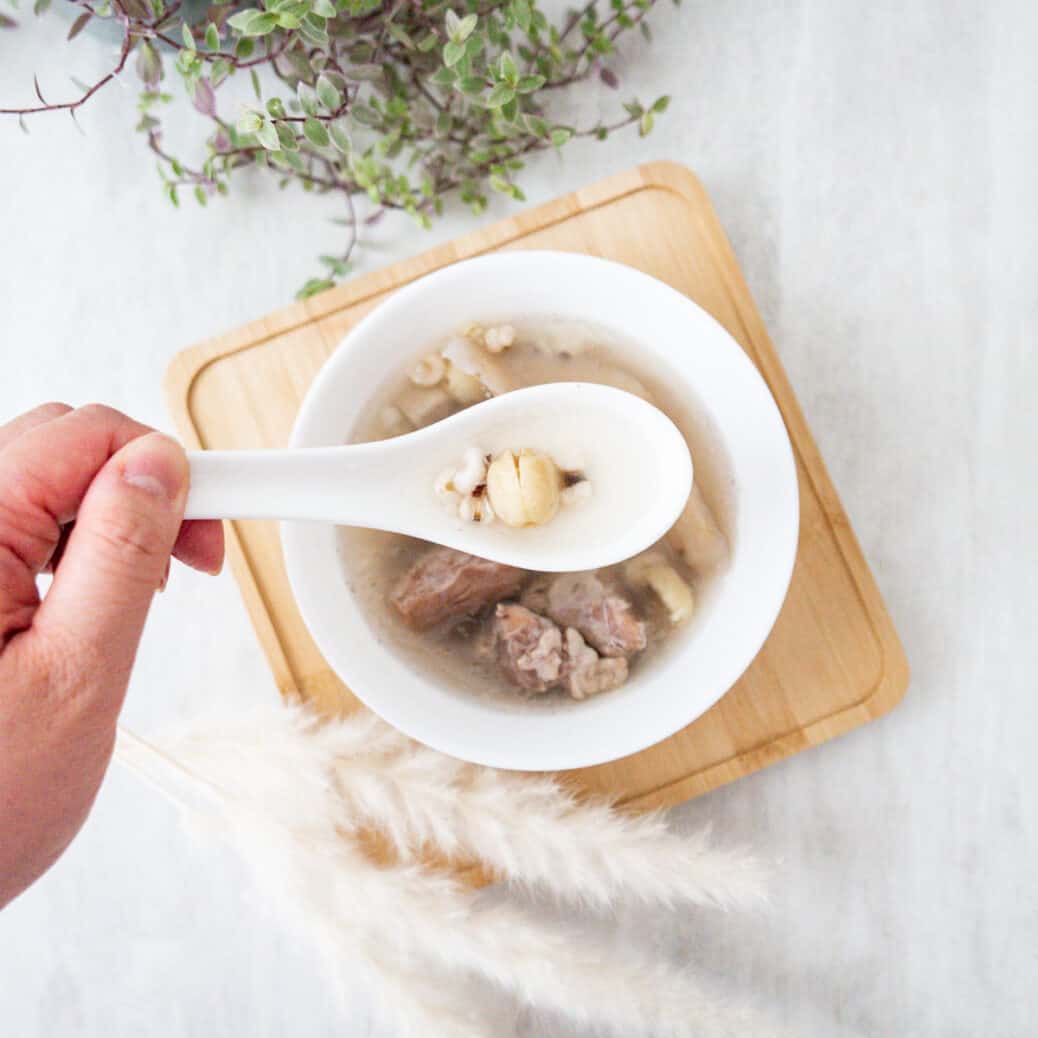
> In This Post: Everything You Need for the Classic TCM Spleen Qi Deficiency Soup Recipe
Tired that no amount of sleep fixes, digestion that stalls after every meal, and a body that holds water it shouldn't. In TCM, that's a spleen Qi deficiency pattern, and Si Shen Tang 四神湯 is the classical Cantonese answer to it. This four herbs Chinese herbal soup combines fox nut, poria, Chinese yam, and lotus seeds to tonify the spleen, calm the mind, and drain dampness gently enough for year-round use. It's freezer-friendly, Instant Pot-compatible, and costs less per serving than a green juice that does considerably less.
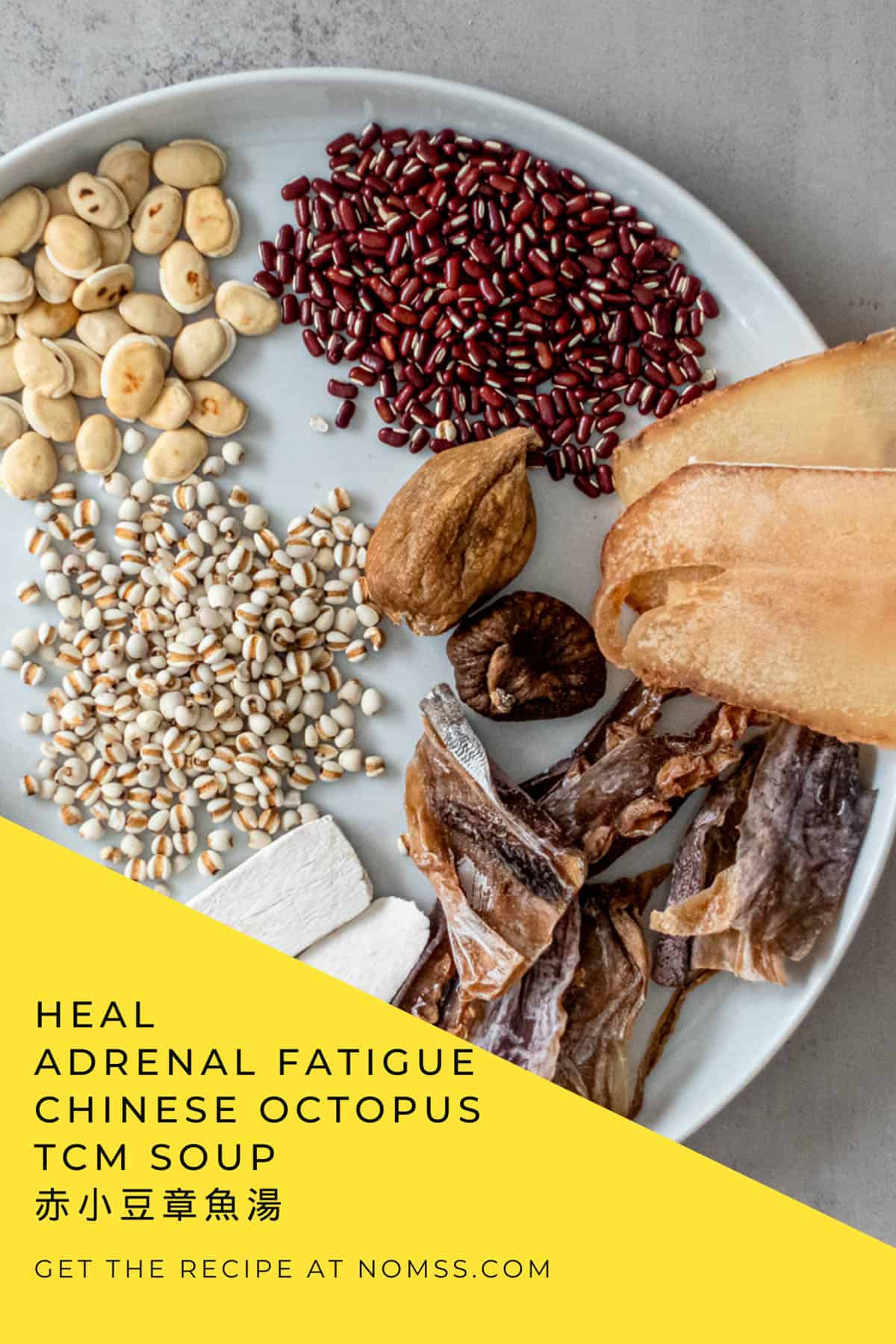
For peak spring dampness after Jingzhe, see our classic TCM spring dampness soup, which layers hairy fig and dried conch on top of this base formula.
Check out this quick story summary of our recipe!
Jump to:
- > In This Post: Everything You Need for the Classic TCM Spleen Qi Deficiency Soup Recipe
- What Is Si Shen Tang 四神湯?
- 5 Signs Your Spleen Needs Support
- How to Read Your Tongue: A Simple TCM Self-Check
- Who Benefits Most From Si Shen Tang
- When Not to Drink Si Shen Tang
- Si Shen Tang Ingredients and TCM Properties
- Optional Chinese Herbs for Si Shen Tang:
- Si Shen Tang Benefits and Cooking Tips
- Shenling Baizhu San 參苓白朮散: The Formula Connection
- Si Shen Tang vs. Other TCM Soups: Which One Do You Need?
- Where to Buy Si Shen Tang Ingredients in Canada
- Where to Buy Si Shen Tang Ingredients in Canada
- How To Make Si Shen Tang at Home: Cooking Tips
- Storage and Meal Prep
- Best Time to Drink Si Shen Tang
- How to Adjust Si Shen Tang by Season
- How to Know If This Soup Is Working
- Frequently Asked Questions (FAQs)
- What to Serve with Si Shen Tang
- > Recipe Card
- Si Shen Tang 四神湯: TCM Spleen Nourishing Soup
- More Chinese Recipes
What Is Si Shen Tang 四神湯?
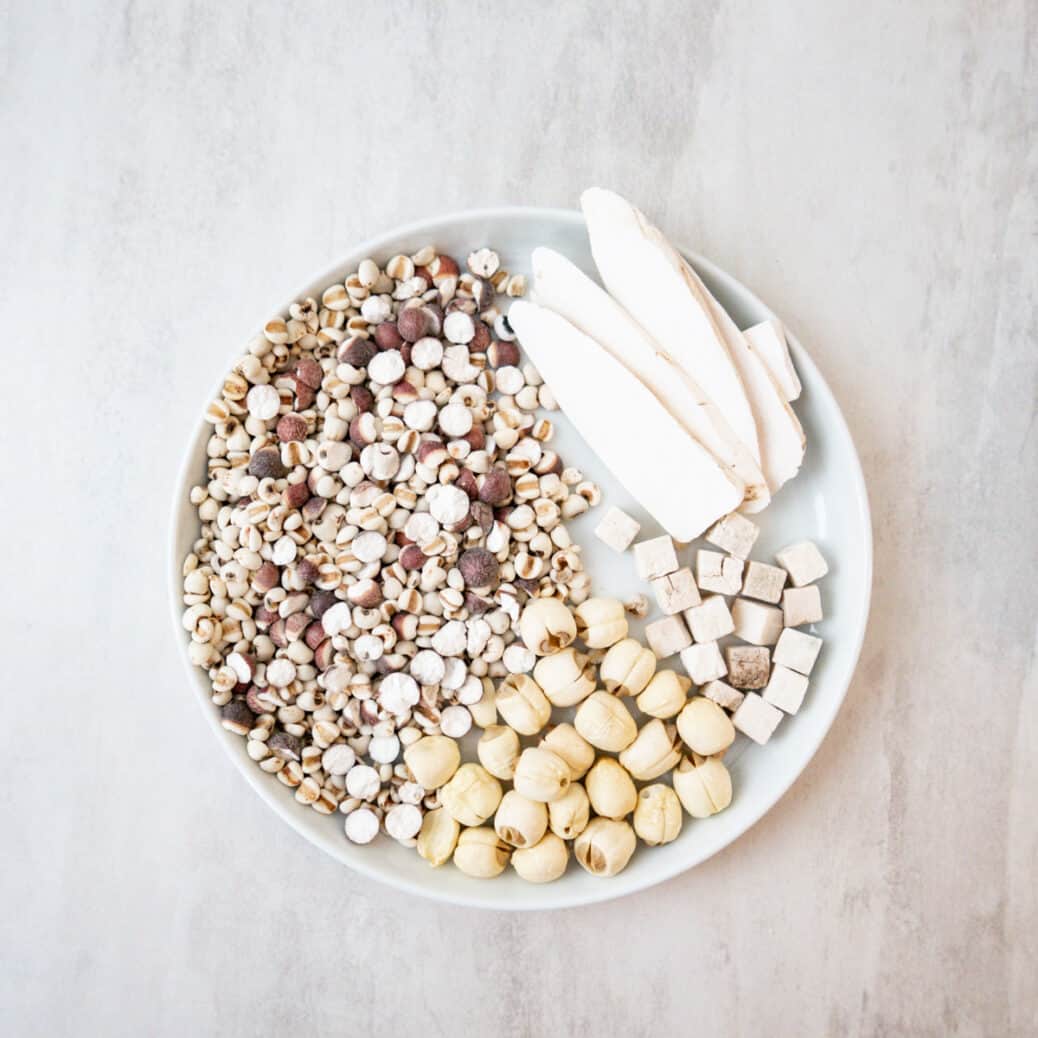
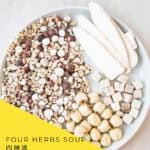
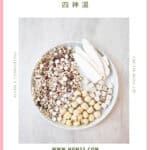
Si Shen Tang translates literally to "Four Spirits Soup." The four spirits refer to four core medicinal herbs: fox nut (芡實), poria (茯苓), Chinese yam (淮山), and lotus seed (蓮子). Together, they tonify the spleen and kidney, calm the mind, and gently drain dampness without being harsh on the digestive system.
This is not a dramatic detox or a five-hour formula requiring obscure ingredients. It's one of the most approachable TCM spleen nourishing soups, and it doubles as a base for more complex formulas like the classic spring dampness soup 健脾去濕湯.
Unlike cooling soups designed for summer heat, Si Shen Tang is thermally neutral, which makes it suitable year-round for most body types. Think of it as the multivitamin of Cantonese herbal soups, minus the chalky tablet.
5 Signs Your Spleen Needs Support
Not sure if this soup is for you? In TCM, the spleen governs the transformation and transportation of nutrients. When it's depleted, the signals are specific.
- You're tired regardless of how long you sleep. Energy that doesn't restore with rest is a reliable sign of spleen Qi deficiency. Coffee helps temporarily. This soup helps structurally.
- Your digestion is unpredictable. Bloating after meals, loose stools, or food that sits heavily in your stomach for hours all point to a spleen struggling to process efficiently.
- You retain water noticeably. Puffiness in the face, swollen ankles, or that tight feeling around the midsection is often dampness accumulating because the spleen can't transform fluids properly.
- Your tongue has a thick, pale, or wet coating. Check it first thing in the morning before eating or drinking. A thick, white, wet coating is one of TCM's clearest indicators of spleen dampness.
- You feel heavy and slightly foggy. Not exhausted exactly, just slow. Like your body is running on four-fifths speed. This is dampness blocking Qi from circulating.
If three or more of these sound familiar, Si Shen Tang is a reasonable place to start.
How to Read Your Tongue: A Simple TCM Self-Check
Check your tongue first thing in the morning before eating, drinking, or brushing your teeth. What you see gives you a reliable snapshot of what's happening inside.
Thin white coating is normal. The tongue body should be pale pink with a thin, even white film across the surface. This is what you're working toward.
Thick white wet coating signals cold dampness. The coating looks heavy, moist, and difficult to scrape off. This is the most common pattern in spleen Qi deficiency and the primary target for Si Shen Tang. If this is your tongue most mornings, this soup belongs in your weekly rotation.
Thick yellow greasy coating signals damp heat. The coating has a yellowish tinge and a greasy texture. This pattern calls for cooling, heat-clearing herbs rather than neutral tonics. Raw Job's tears (薏仁) can be added to the base formula, but a full damp heat pattern is better addressed with the classic spring dampness soup or Ching Bo Leung depending on the season.
Pale tongue body with scalloped edges is a textbook spleen Qi deficiency sign. The scalloping along the sides, which looks like teeth marks pressed into the edge, forms when the tongue is slightly swollen from fluid accumulation that the spleen can't process. A pale colour indicates blood and Qi deficiency alongside the dampness. This is the pattern that responds best to the full Si Shen Tang formula with codonopsis (黨參) added.
Your tongue won't transform overnight, but check it weekly. A visibly thinning coating after two weeks of consistent soup is one of the clearest signs the formula is working.
Who Benefits Most From Si Shen Tang
Si Shen Tang is one of the most accessible TCM soups for spleen and kidney deficiency, addressing both organ systems simultaneously rather than forcing you to choose between two separate formulas.
Qi deficiency constitution (氣虛體質) is the primary target. Chronic low energy, pale complexion, loose stools, and shortness of breath after light activity all fit this pattern. Chinese yam, lotus seed, and fox nut gently rebuild spleen Qi without overstimulating a system that's already running low.
If your Qi deficiency runs deeper with visible pallor, shortness of breath on light exertion, or prolonged post-illness fatigue, a nourishing squab soup makes a stronger essence tonic to alternate with Si Shen Tang through the season.
Dampness-phlegm constitution (痰濕體質) is the second key fit. If you carry weight easily, feel sluggish after meals, or notice persistent heaviness in your limbs, poria and fox nut drain excess moisture while the Chinese yam rebuilds the spleen's capacity to process fluids.
Yin-deficient types should use this formula with care. If you experience dry mouth, night sweats, or persistent heat sensations, add dried lily bulb (百合) and reduce the optional Job's tears. Pregnant women should consult a registered TCM practitioner before consuming formulas with Job's tears (薏仁) as an add-in, as it's traditionally contraindicated during pregnancy.
When Not to Drink Si Shen Tang
This is a gentle formula, but gentle doesn't mean universally appropriate.
Acute illness. If you're in the middle of a cold, flu, or active infection, hold off. TCM prioritises clearing the pathogen first. A tonic soup given during an active exterior condition can inadvertently lock the pathogen deeper into the body. Wait until you've recovered, then use Si Shen Tang to rebuild.
Strong Yang deficiency with severe cold. If you're chronically cold to the bone, with cold hands and feet, frequent urination at night, and low back pain that worsens in winter, the neutral-to-cooling nature of lotus seeds and poria may not be warm enough to move the needle. A formula with more warming herbs like dried ginger or eucommia bark would be more appropriate. Consult your TCM practitioner for a tailored formula.
Pregnancy. The base four herbs are generally considered safe, but Job's tears (薏仁), the most common optional add-in, is traditionally contraindicated during pregnancy due to its strong downward-draining action. If you're pregnant and want to make this soup, use only the four core herbs and skip the Job's tears entirely.
Constipation from dryness. The astringent nature of fox nut and lotus seeds binds and firms, which is helpful for loose stools but counterproductive if your digestive issue is dry, difficult bowel movements. If that's your pattern, increase Chinese yam and add Solomon's seal (玉竹) instead.
If you're unsure which pattern applies to you, a single consultation with a registered TCM practitioner saves a lot of guesswork.
Si Shen Tang Ingredients and TCM Properties
The four core herbs in this spleen Qi deficiency soup each carry a specific function. They work as a team, which is why skipping one to simplify the shopping trip misses the point.
芡實 Euryale Ferox (Fox Nut) is a round, starchy seed with a neutral thermal property and a sweet, mild taste. It tonifies the spleen and kidney simultaneously and astringes excess moisture, which in TCM means it stops the spleen from leaking Qi outward. Fox nut is rich in starch, protein, calcium, and iron, and it gives the broth a gentle body that thinner herb soups lack.
TCM Thermal Property: Neutral | Target Organs: Spleen, Kidney
芡實健脾、益腎、安神、止瀉等功效。主要治療糖尿病、脾虛水腫等病症。
茯苓 Poria Cocos (Fu Ling) is a fungus that grows on pine tree roots, sweet and bland in flavour, and neutral in nature. Its primary action is reducing water retention and dampness from the digestive system while simultaneously calming the heart and spirit. This is why the four herbs Chinese herbal soup addresses anxiety and disrupted sleep just as well as it does poor digestion. Poria is gentle enough for children and suitable for long-term daily use.
TCM Thermal Property: Neutral | Target Organs: Heart, Spleen, Stomach, Lung
茯苓功效能寧心安神,可治拉肚子。茯苓健脾和胃、降低血糖的作用。
Poria is one of the herbs Dr. He Suye reaches for throughout The Best Thing 爱你 cdrama, used in a lily bud and fox nut soup that overlaps closely with the Ching Bo Leung tradition.
淮山 Chinese Yam (Huai Shan / Dioscorea polystachya) is one of TCM's most dependable neutral tonics, sweet in flavour and warming to neither the system nor the emotions. It targets the kidney, lung, and spleen channels at once, promoting urination, supporting immune function, and helping regulate blood sugar and blood pressure. For anyone with spleen deficiency (脾虛), it directly improves digestive function and rebuilds depleted Qi without overstimulating a system that's already running low.
TCM Thermal Property: Neutral | Target Organs: Kidney, Lung, Spleen
淮山益氣養陰,補脾肺腎,對於脾胃虛弱、倦怠無力、食欲不振有很好的治療作用。
蓮子 Lotus Seeds are sweet and astringent, benefiting the spleen, kidney, and heart meridians together. This Chinese herbal soup for digestion and sleep is excellent because its mild calming properties make it particularly useful when fatigue comes packaged with insomnia and restlessness, not just digestive trouble. Lotus seeds stabilize digestion, support regular bowel movements, and reduce what TCM describes as "deficiency heat" rising to disturb the mind at night.
TCM Thermal Property: Neutral | Target Organs: Spleen, Kidney, Heart
蓮子去熱,調理脾胃,促進消化,治療失眠等功效。
Optional Chinese Herbs for Si Shen Tang:
Personalise Your Formula
The base four herbs cover most needs, but TCM encourages tailoring a formula to your specific pattern. These additions are worth considering after a brief consult with your practitioner.
百合 Dried Lily Bulbs are cool in nature and relieve respiratory conditions, dry throat, and restlessness. Adding lily bulb shifts this soup toward better sleep support and lung nourishment. It works especially well in autumn and early winter.
生薏米 Raw Coix Seed (Job's Tears) removes dampness and wind. Its cold nature makes it most suitable for spring and for those who run warm. It's also one of the most studied anti-inflammatory herbs in this family of soups. Add it from Jingzhe through Grain Rain for extra dampness-clearing power.
黨參 Codonopsis Pilosula invigorates the spleen and lungs, relieves fatigue, and enriches the blood. It hosts properties similar to ginseng but is considerably gentler. If you're consistently exhausted and pale, this is worth adding.
當歸 Angelica Sinensis (Dong Guai) tonifies and nourishes the blood, promotes circulation, and reduces menstrual pain. Warm in nature, it targets the spleen, heart, and liver meridians. An excellent addition for women experiencing both blood deficiency and spleen Qi deficiency.
Most dry goods ingredients, tools, and supplies can be purchased at local Asian markets, Chinese grocery stores, or Amazon Online. Amazon Prime members receive free shipping and faster delivery times.
Si Shen Tang's adaptogenic properties help your body handle various stresses, including temperature fluctuations during seasonal transitions. For a holistic Chinese medicine approach to temperature stress management, discover how traditional soups like this work alongside cooling foods and lifestyle adjustments.
Si Shen Tang Benefits and Cooking Tips
- The ingredients have a miraculous ability to soften hard particles (constipation, hardened cholesterol, etc.) within the body.
- Helps to reduce high blood pressure, lower blood sugar and cholesterol levels.
Make this soup overnight in an Instant Pot or Slow Cooker for next morning's hot breakfast! - You can also add chicken meat (skin removed - I recommend drumsticks or chicken breast), spareribs for added nutrition. If you prefer to make this a vegan soup, you can add cashews.
- Option to add in Setaria viridis (狗尾草) to help with digestion and boost immune.
- This spleen nourishing soup can be used as a base for other soups like this Winter Melon Soup 冬瓜湯 and Ching Bo Leung With Pork Chinese Herbal Soup 四季清補涼瘦肉湯.
Shenling Baizhu San 參苓白朮散: The Formula Connection
This is a detail worth knowing. The four core Si Shen Tang herbs, poria, Chinese yam, lotus seed, and Job's tears when added, are also the first part of Shenling Baizhu San (參苓白朮散). This is one of TCM's most established classical formulas for spleen and stomach deficiency.
The full Shenling Baizhu San adds ginseng, atractylodes, hyacinth bean, amomum, platycodon, licorice, and dates. What you're making in this soup is the food-therapy version of the same core principle: nourish the spleen, drain dampness, restore digestive function.
參苓白朮散 - 茯苓、山药、莲子、薏苡仁、人参、白术、白扁豆、砂仁、桔梗、甘草、大棗。
補脾胃,益肺气。用于脾胃虚弱,气短咳嗽,飲食不化,肢倦乏力。
Cooking and eating your herbs is gentler and more sustainable than taking concentrated powders, and it tastes considerably better.
Si Shen Tang vs. Other TCM Soups: Which One Do You Need?
Dampness doesn't behave the same way in every season, and not every soup targets the same pattern. Here's a quick way to orient yourself.
| Si Shen Tang 四神湯 | Spring Dampness Soup 健脾去濕湯 | Ching Bo Leung 清補涼 | |
|---|---|---|---|
| Best Season | Year-round | Spring (post-Jingzhe) | Summer |
| Primary Action | Tonify spleen, calm mind | Drain dampness, strengthen spleen | Clear heat, nourish |
| Intensity | Mild | Moderate | Moderate |
| Best For | Daily maintenance | Seasonal reset | Summer heat and fatigue |
The simple rule: if you feel persistently tired with weak digestion year-round, make Si Shen Tang consistently. If it's early spring and you feel heavy and foggy after Jingzhe, layer up to the full classic spring dampness soup. If it's peak summer and you're hot and sticky, switch to Ching Bo Leung.
Si Shen Tang also works as a base for Chinese winter melon soup, where the four herbs provide the spleen tonic foundation and winter melon adds cooling and further fluid drainage.
Where to Buy Si Shen Tang Ingredients in Canada
Most of the four core herbs are easy to source across Canada without a special trip to a specialist.
T&T Supermarket carries fox nut, lotus seeds, Chinese yam, and poria in the dry goods aisle year-round. The quality is consistent and the pricing is fair for regular weekly cooking. This is the most convenient single stop if you're starting from scratch.
For bulk buying, I pick up Job's tears (薏仁) and lotus seeds at Costco because the quantity and price per gram are genuinely better than smaller retail packages. When you're making this soup two or three times a week through spring, that adds up. Costco's pork tenderloin also works perfectly here, and a single pack covers several batches.
For dried lily bulb (百合), codonopsis (黨參), and angelica sinensis (當歸), a Chinese herbal shop (藥材舖) in your local Chinatown is the most reliable source. The staff at most herb shops will pre-portion a standard Si Shen Tang packet if you ask, which takes the weighing entirely out of the equation. All dry ingredients are also available on Amazon.ca with Prime delivery for anyone outside a major city.
Where to Buy Si Shen Tang Ingredients in Canada
Most of the four core herbs are easy to source across Canada without a special trip to a specialist.
T&T Supermarket carries fox nut, lotus seeds, Chinese yam, and poria in the dry goods aisle year-round. The quality is consistent and the pricing is fair for regular weekly cooking. This is the most convenient single stop if you're starting from scratch.
For bulk buying, I pick up Job's tears (薏仁) and lotus seeds at Chinese herbal store because the quantity and price per gram are genuinely better than smaller retail packages. When you're making this soup two or three times a week through spring, that adds up. Costco's pork tenderloin also works perfectly here, and a single pack covers several batches.
For dried lily bulb (百合), codonopsis (黨參), and angelica sinensis (當歸), a Chinese herbal shop (藥材舖) in your local Chinatown is the most reliable source. The staff at most herb shops will pre-portion a standard Si Shen Tang packet if you ask, which takes the weighing entirely out of the equation. All dry ingredients are also available on Amazon.ca with Prime delivery for anyone outside a major city.
How To Make Si Shen Tang at Home: Cooking Tips
Si Shen Tang is one of the more forgiving herbal soups in the Cantonese canon. The measurements don't need to be surgical. A generous handful of each base herb gets you most of the way there.
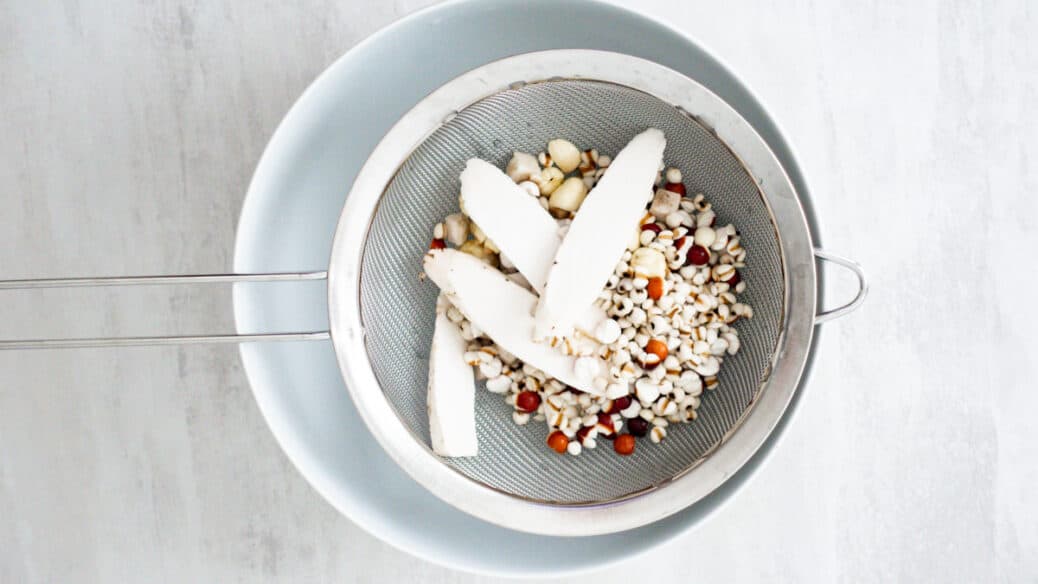
Rinse and soak all dried herbs for 20 minutes in cold water before cooking. This removes dust, softens the harder seeds for even cooking, and shortens total cook time. Don't skip this step.
Parboil the pork (tenderloin, spareribs, or drumsticks with skin removed) in boiling water for three minutes, then rinse under cold water before adding to the pot. This keeps the broth clear and removes impurities from the meat. For a vegan or vegetarian version, substitute cashews, walnuts, or dried tofu skin (腐竹). Dried figs add a natural sweetness that pairs well with the neutral herbal base.
Cooking Times:
- Stovetop: 90 minutes
- Slow cooker: 2 hours
- Instant Pot: 20 minutes on high pressure, natural release
The Instant Pot version is a weeknight staple. Set it before dinner and the soup is ready before anyone starts raiding the snack cupboard. Make a large batch overnight for a warm, nourishing breakfast the next morning.
Storage and Meal Prep
Si Shen Tang is built for batch cooking. It keeps in the fridge for up to four days and freezes well for up to three months. Make a double batch on Sunday and freeze half in labelled individual portions. On a Wednesday night when nobody wants to cook, reheating a container takes four minutes.
For families, scaling this recipe is easy and genuinely cost-effective. Buying the dry herb ingredients in bulk from Chinese herbal shops or Costco keeps the cost per serving low for what you're getting nutritionally. Portion into deli containers or resealable freezer bags with the date, and you have weeknight soup covered through most of the season.
Reheat gently on the stovetop. The microwave works if you're in a hurry, but stovetop preserves the broth texture better.
If you're making this a Sunday ritual, vegan Earl Grey shortbread cookies are a nice thing to have cooling beside the pot while the second batch simmers.
Batch cooking handles the effort. Timing handles the rest.
Best Time to Drink Si Shen Tang
Timing matters in TCM, and this soup has a clear sweet spot.
According to the TCM organ clock, the spleen meridian is most active between 9 and 11am. Drinking a warm bowl during this window gives the herbs direct access to the organ system they're targeting at its peak receptivity. The stomach meridian peaks slightly earlier, between 7 and 9am, so eating a warm breakfast within that window and following with Si Shen Tang at mid-morning is the ideal pairing.
Always drink it warm. Cold liquids dampen spleen function in TCM, which is precisely the opposite of what you're trying to achieve. A bowl straight from the stovetop or reheated gently does far more than the same soup served at room temperature.
If a mid-morning bowl isn't practical on weekdays, lunchtime is the next best window. Avoid drinking it late at night. The digestive system is winding down after 7pm, and a rich herbal soup given to a resting spleen is harder to process efficiently.
How to Adjust Si Shen Tang by Season
Si Shen Tang is one of the few TCM soup formulas genuinely suitable year-round, but the optional add-ins should shift with the seasons to match what your body and the external environment are doing.
Spring (Jingzhe through Grain Rain, March to late April) is peak dampness season. Increase poria (茯苓) and add raw Job's tears (薏仁) to the base formula for stronger dampness drainage. This is the season to make it two to three times a week consistently. For heavier dampness, step up to the full classic spring dampness soup which layers hairy fig and dried conch on top of this base.
Summer (Grain Rain through Start of Autumn, late April to August) brings damp heat. Keep raw Job's tears in the formula and add dried lily bulb (百合) to counterbalance the cooling with gentle moisture. Reduce or omit angelica sinensis entirely as its warming nature works against a body already managing summer heat.
Autumn (Start of Autumn through Start of Winter, August to November) is drying season. Reduce Job's tears significantly or remove it. Add Solomon's seal (玉竹) and increase dried lily bulb to protect lung moisture as the air dries out. The base four herbs alone are well-suited to autumn without modification.
Winter (Start of Winter through Start of Spring, November to February) calls for warmth and deeper nourishment. Add angelica sinensis (當歸) and codonopsis (黨參) to the base formula. This is the season to make the soup richer, cook it longer, and let it do the deeper blood and essence rebuilding that winter is designed for in TCM seasonal eating.
Si Shen Tang is one of the most practical soups for Dongzhi season specifically. The Dongzhi Winter Solstice foods guide covers the full winter TCM eating framework and where this soup fits within it. For the gentler first weeks of the season, the Start of Winter (Lidong) guide explains why a neutral soup like this one comes before the heavier tonics.
The base formula stays constant. The season adjusts the supporting cast.
How to Know If This Soup Is Working
Give it one to two weeks of consistent use, two to three bowls a week, and watch for these specific shifts. Your tongue coating should visibly thin and become less greasy. Morning energy improves gradually, which is exactly how TCM is supposed to work.
Bloating after meals reduces and digestion becomes more regular. Most people notice the mental clarity change first: that thick-headed, foggy quality lifts before the physical symptoms fully resolve.
If you're three weeks in with no shift, increase the poria (茯苓) slightly and reduce cold and raw foods alongside the soup. Dampness doesn't build up in a week, and it won't clear in one either. But it is clearing, quietly, every time you make this.
Pair it mid-week with a cup of chrysanthemum honeysuckle tea to clear any lingering heat from the upper body while the soup addresses dampness in the digestive system.
For additional spleen and heart support between batches, Red Bean Soup with Lotus Seeds and Lily Bulb is a lighter complement that works well as a weekday dessert or afternoon snack.
Frequently Asked Questions (FAQs)
Yes. Omit the pork and substitute cashews, walnuts, or dried tofu skin (腐竹). The herbal broth is nourishing on its own and doesn't require meat for its therapeutic function.
Two to three times a week is the standard recommendation for maintenance. During illness recovery, high-stress periods, or seasonal transitions, daily use for one to two weeks is appropriate.
Yes. This is one of the gentlest formulas in Cantonese herbal cooking. Reduce the portion size and omit warm-natured optional herbs like angelica sinensis for young children.
It's not a weight-loss soup. Reducing dampness and improving spleen function often results in less fluid retention and more stable digestion, so the bloating and heaviness associated with spleen deficiency can resolve. But that's a side effect of better function, not a primary claim.
Yes. Pre-packaged Si Shen Tang packets are available at T&T, most Chinese herbal shops, and on Amazon.ca. They're a practical option for weeknight cooking without individual measuring.
Si Shen Tang is the soup, the food therapy version. Si Shen Wan (四神丸) is a concentrated herbal pill formula for more specific clinical patterns of spleen and kidney Yang deficiency with chronic diarrhoea. The soup is appropriate for general maintenance and prevention. The pill is typically used under TCM practitioner guidance for a diagnosed pattern.
What to Serve with Si Shen Tang
This Chinese herbal soup for fatigue works as a light standalone meal with rice or alongside a simple protein dish. Chinese people love double-boiled soup boiled for a long time. The extra broth is a great way to warm up and absorb nutritious essence, vitamins and minerals. For a full family dinner, pair it with:
For a Spleen-supportive food that pairs well with Si Shen Tang on the same table, Lo Bak Go 蘿蔔糕 uses daikon's digestive properties alongside rice flour and ginger to make a steamed cake that complements the soup's herbal work without burdening digestion.
Make a complete meal with these delicious recipes:
- Easy Homemade Char Siu (Air Fried)
- Chinese Sticky Rice 糯米飯
- Ants Climbing Up A Tree 螞蟻上樹
- Honey Garlic Pork Ribs (Air Fry) 蒜子蜜汁骨
- Instant Pot Braised Chinese Mushrooms 髮菜炆冬菇食譜
- Microwave Soy Sauce Chicken Wings 豉油雞翅微波爐
- Chinese Tomato Egg Stir-fry 番茄炒蛋
For traditional Chinese soups, healing recipes, and TCM food therapy that actually work, subscribe to our newsletter and never miss a wellness post!
I'd love to see how you went with my recipes! Leave a comment below or tag me on Instagram @INSTANOMSS #INSTANOMSS.
> Recipe Card
PrintSi Shen Tang 四神湯: TCM Spleen Nourishing Soup

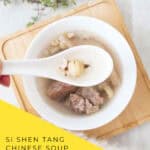
Si Shen Tang 四神湯 is a classic Cantonese TCM spleen nourishing soup using four core herbs: fox nut, poria, Chinese yam, and lotus seeds. This four herbs Chinese herbal soup relieves fatigue, reduces edema, and restores digestive health. Year-round, freezer-friendly, and easy to make on the stovetop or in an Instant Pot.
- Prep Time: 20 mins
- Cook Time: 80 mins
- Total Time: 1 hour 40 minutes
- Yield: 2-4 persons 1x
- Category: Soup
- Method: Boil
- Cuisine: Chinese, TCM
Ingredients
Si Shen Tang Chinese Herbal Soup Packets
- 50 g Euryale ferox 芡實 50克
- 40 g Lotus seed 蓮子 40克
- 40 g Chinese yam 淮山 40克
- 40 g Poria cocos 茯苓 40克
- 1 lbs pork tenderloin 瘦肉 1磅
- 1 L water 水
- salt to taste 鹽少許
(Optional - please consult your TCM practitioner to diagnose which is suitable for your body constituent)
我額外多加了
- 40g Coco seeds 薏仁 40克
- 40g Dried Lily百合 40克
- 25g Codonopsis pilosula 黨參 or Angelica Sinensis 當歸 25克
 Get Recipe Ingredients
 Instructions
- Soak herbs for 20 mins, wash and drain herbs
- Parboil pork tenderloin
- Add all ingredients to a large pot of boiling water.
- Boil for 20 mins and reduce heat to simmer for 1 hour.
- Serve and enjoy!
四神湯煮法
- 清洗藥材。加水浸泡20分鐘。
- 瘦肉汆燙後備用。
- 一起置於鍋中,加入清水,先用大火煮沸,再用小火煮20分鐘。 加入鹽少許調味。
- 上蓋中細火煲1個鐘。
- 或放在電鍋內,燜煮1小時。
Equipment
 Buy Now →
  Buy Now →
  Buy Now →
  Buy Now →
  Buy Now →
  Buy Now →
  Buy Now →
  Buy Now →
  Buy Now →
  Buy Now →
 Notes
Make this soup overnight for a hot breakfast the next day!
Nutrition
- Serving Size: 375ml
- Calories: 285
- Sugar: 1g
- Sodium: 340mg
- Fat: 4.5g
- Saturated Fat: 1.5g
- Trans Fat: 0
- Carbohydrates: 24g
- Fiber: 2.5g
- Protein: 33g
- Cholesterol: 75mg

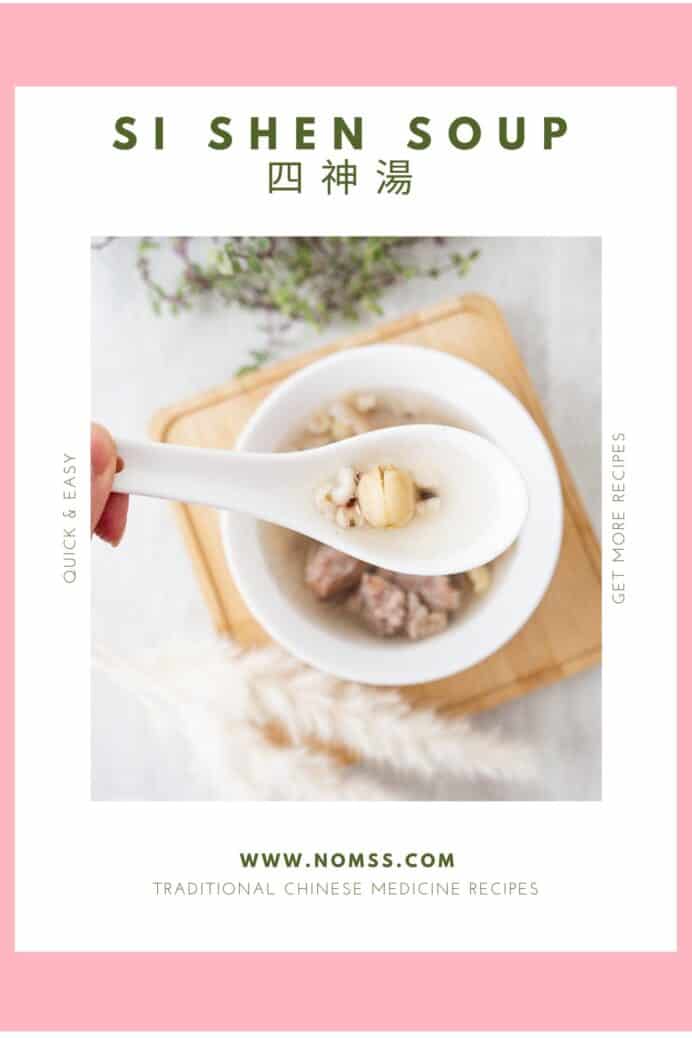
Pin the above image to your Chinese TCM Recipe Pinterest Board to bookmark this page. We are so excited to share our recipes with you!
More Chinese Recipes
Silkie Chicken Cordyceps Soup with Fish Maw and Conch 蟲草花花膠响螺煲烏雞湯
Hokkigai Arctic Surf Clams Cold Appetizer 薑蔥北極貝冷盤
Instant Pot Braised Chinese Mushrooms 髮菜炆冬菇食譜
Nourishing Squab Soup 桂圆枸杞蓮子淮山炖乳鸽汤
Red Bean Soup (Instant Pot) 蓮子百合紅豆沙
Braised Beef Brisket & Tendon 柱侯蘿蔔炆牛筋腩
Fried Garlic Seafood Fried Rice 金蒜海鮮炒飯
Double Steamed Snow Pear with Fritillaria Bulb 川貝燉雪梨
Best Postpartum Pig Trotter Black Vinegar and Ginger 豬腳薑醋


This post contains affiliate links and/or products submitted to Nomss for editorial consideration. To find out more, please visit our About/Disclaimer page.
Remove Ad-Block to view shopping guide!

Renee | The Good Hearted Woman says
It feels so much better using natural methods for addressing health issues.
Casey says
I learned so much with this post-thank you! I will be trying this soon!
Elizabeth says
Thanks for all the information. Your directions and tips are so helpful. Everything is so nicely explained.
Biana says
This dish looks great and I like that you add herbs to it. Great recipe for fall.
cam says
wow! I didn't know a soup like this existed! I can't wait to try it!
Katie says
WoW! I can't get over how much better I feel after having this soup! Big fan!
Jean says
This soup has so many benefits especially when you're tired glad its easy to make.
Jeannie says
happy to learn more about Chinese herbal soups that works wonders to our body, this herbal soup is so good.
Moop Brown says
I appreciate how informative this recipe post is and the variety of different health benefits that come with this soup- thanks!
Nancy says
i hope it helps you and it makes cooking easier!
Chandice Probst says
I’ve had adrenal fatigue and I love that this is a natural remedy. Thank you so much for the way to follow instructions.
Nancy says
Cheers to healthy living and replenished energy!
Cathleen says
This dish is totally new to me, so I love how much information you give about it on this post! It makes me feel more confident that I can make it just right!
Nancy says
so happy to hear that it helps you!
Kate says
Sounds like a wonderful soup. I will check my local Asian shop for the ingredients, can't wait to try!
Nancy says
happy souping!
Heather says
anything to relieve stress and tension and overworked adrenals looks like a yummy idea to me!
Nancy says
absolutely! especially nowadays when anxiety is so high!
Genevieve says
We all struggle with adrenal fatigue especially during the holidays, this is such an important recipe to help with that. I can’t wait to try it!
Nancy says
happy holidays and hope you feel well rested!
Carmy says
I haven't had this in so long as I never knew what the recipe was. My in-laws would make it and the measurements were never exact haha. Thanks for this!
Nancy says
The measurements doesn't have to be too exact for this recipe - if you're used to making this like me, i usually just take a handful of each base ingredient.
Liz says
Love all of the health benefits of this soup!
Nancy says
this soup is soooo soothing!
Marcellina says
How interesting! Thank you for a very informative post and great recipe - lots of new information for me. Thank you!
Nancy says
Hope this helps you!
Megan Ellam says
I love this recipe! So easy and so delicious! Thanks for sharing!
Nancy says
I love recipes that I can make overnight!
Kayla DiMaggio says
What an interesting soup! I am super into wellness and this soup was amazing! I loved all the bright flavors.
Nancy says
This soup is very mellow and full of amazing benefits!
Kristina says
This was delicious soup, and I normally don't eat pork. I can't wait to make it weekly and see if it helps with my chronic tiredness. Thank you!
Nancy says
oh you can skip the pork if you don't prefer the pork shank or tenderloin and sub with cashews. But personally I like adding pork for soups because of the added nutritious.
Jean says
My Chinese friends will be surprised if I make this for them. I like to learn more Chinese recipes.
Nancy says
that will be a nice surprise!
Jules says
This soup looks so wonderful, can I omit the pork? Or is it used for additional flavoring? I just love the array of ingredients you used!
Nancy says
you can omit meat if you prefer and substitute with cashews or walnuts
Oscar says
Loved this soup, was so flavourful. Great recipe.
Nancy says
This is a wonderful soup that is suitable for almost everyone!
Marta says
I'm always on the hunt for food that has medicinal properties. This was such an informative (and interesting) recipe. Thanks for sharing!
Nancy says
Hope the added info helps you!