
Dongzhi 冬至 Winter Solstice: Complete TCM Food Guide
The sun sets before 4 p.m. The cold isn't just outside anymore. It's settled into your lower back, your feet, that steady fatigue that no amount of sleep seems to fix. In Traditional Chinese Medicine, this is not a coincidence.
Dongzhi (冬至) is the Winter Solstice, the most important solar term of the year according to TCM, and the single day when the body's yang energy hits its lowest point. What you eat in the days around Dongzhi either helps rebuild that energy or drains what little you have left. This guide covers exactly which Dongzhi TCM foods to lean on, what to skip, and how to cook for the season in a Canadian kitchen without making it complicated.
If you want a quick weeknight starting point, this Si Shen Tang 四神湯 is a reliable spleen and kidney tonic you can brew on a Sunday and eat through the week.

> In This Post: Everything You'll Need for Dongzhi 冬至
This guide covers what Dongzhi is, why it's the TCM calendar's most critical day for kidney health, and exactly which warming foods support yang energy through the coldest weeks of the year. You'll find a simple Dongzhi lamb soup recipe built for batch cooking, a comparison table of the best winter soups, and a sourcing section for finding TCM herbs in Canada. The FAQ covers signs of kidney yang deficiency, what to eat on the Winter Solstice in a Chinese style, and what comes after Dongzhi when the cold actually gets worse.
Jump to:
- > In This Post: Everything You'll Need for Dongzhi 冬至
- What Is Dongzhi 冬至?
- When Is Dongzhi? Dates to Mark Every Year
- Why Dongzhi Matters in TCM
- Signs Your Kidney Yang Needs Support This Winter
- TCM Foods to Eat on Dongzhi 冬至
- What to Avoid During Winter Solstice
- What to Cook for Dongzhi?
- Best TCM Soups for Winter: Which One Is Right for You?
- Where to Buy Dongzhi Ingredients in Canada
- Frequently Asked Questions (FAQs)
- What Comes After Dongzhi: Into the Coldest Weeks of the Year
- More Winter TCM Recipes to Try
What Is Dongzhi 冬至?
Dongzhi (冬至) is the Winter Solstice, the 22nd of 24 solar terms in the traditional Chinese calendar. It falls each year between December 21 and 23, when the Northern Hemisphere reaches its shortest day and longest night.
The name translates directly as "arrival of winter." Chinese culture has marked this day for over 2,000 years, and historically it carried more ceremonial weight than Lunar New Year. Families gathered. Meals were elaborate. Elders were honoured. It was the turning point of the year, not just a date on the calendar.
In TCM's seasonal framework, Dongzhi isn't just an astronomical event. It's the energetic low point of the entire year.
When Is Dongzhi? Dates to Mark Every Year
The exact date shifts slightly year to year based on the sun's position. Here are the dates to bookmark:
| Year | Dongzhi Date |
|---|---|
| 2024 | December 21, 2024 (Saturday) |
| 2025 | December 22, 2025 (Monday) |
| 2026 | December 22, 2026 (Tuesday) |
| 2027 | December 22, 2027 (Wednesday) |
In Vancouver, Canada, the cold and short days arrive weeks before Dongzhi officially falls. Don't wait for December 21 to start cooking for the season. Shift toward warming, cooked foods as soon as the first frosts hit, usually early November in the Lower Mainland. By the time Dongzhi arrives, your body should already be in winter-eating mode, not just starting.

Why Dongzhi Matters in TCM
In TCM, winter is the season of the kidneys. The kidneys store the body's foundational essence, called jing (精), and regulate warmth, reproductive energy, bone density, and willpower. Winter is when this reserve is most vulnerable.
Dongzhi marks the yin peak: maximum darkness, minimum yang. From this day forward, yang energy begins its slow return toward spring. But in the weeks surrounding the solstice, the kidneys need serious support to hold what they have.
Think of it as your body's annual energy audit. If you've been running on empty since October, Dongzhi is when the deficit shows up most clearly. Warming foods, rest, and reduced cold exposure are the TCM prescription, and they work because they match what the body is actually doing internally during this period.
This is also why Dongzhi TCM foods lean toward black and dark-coloured ingredients. In TCM's Five Element theory, black corresponds directly to the kidneys. Eating by colour is not superstition. It's a shorthand for a well-mapped system of organ support.
Signs Your Kidney Yang Needs Support This Winter
Your body is fairly direct about this. The most common signals are persistent lower back soreness that worsens with cold, hands and feet that can't seem to get warm regardless of socks and layers, frequent urination especially at night, and fatigue that sits deeper than ordinary tiredness.
If you're also noticing low libido, poor short-term memory, or a general sense of being cold from the inside out, those are textbook kidney yang deficiency patterns in TCM. A pale or slightly bluish tinge to the lips is another marker worth noting.
Not everyone presents identically. Kidney yang deficiency sits on a spectrum, and how it shows up depends on your overall constitution and how hard the past year has been on your body. If most of the above list feels familiar, Dongzhi is exactly the right time to address it through food.
TCM Foods to Eat on Dongzhi 冬至
The goal is to warm the kidneys, rebuild yang energy, and support the body's internal fire without adding excess heat that would tip into dryness or inflammation. What to eat on Winter Solstice Chinese-style comes down to a few consistent principles: cook everything thoroughly, eat warm and cooked, and lean heavily on black and dark foods.

Black Sesame Seeds (黑芝麻)
Black sesame is one of the most accessible kidney tonics in TCM. It nourishes kidney yin and jing, supports hair growth and bone density, and works in congee, tangyuan, warm sesame paste, or simply stirred into hot water with a little honey. A tablespoon a day through winter costs almost nothing and pays for itself quickly.
Black Beans (黑豆)
Black beans (黑豆) tonify the kidneys, move blood, and support the lower body. They work braised with pork, simmered in soup, or cooked into a simple sweet tea with ginger. For a soup that covers both spleen and kidney support in one pot, Si Shen Tang 四神湯 is the one to reach for.
Lamb and Mutton (羊肉)
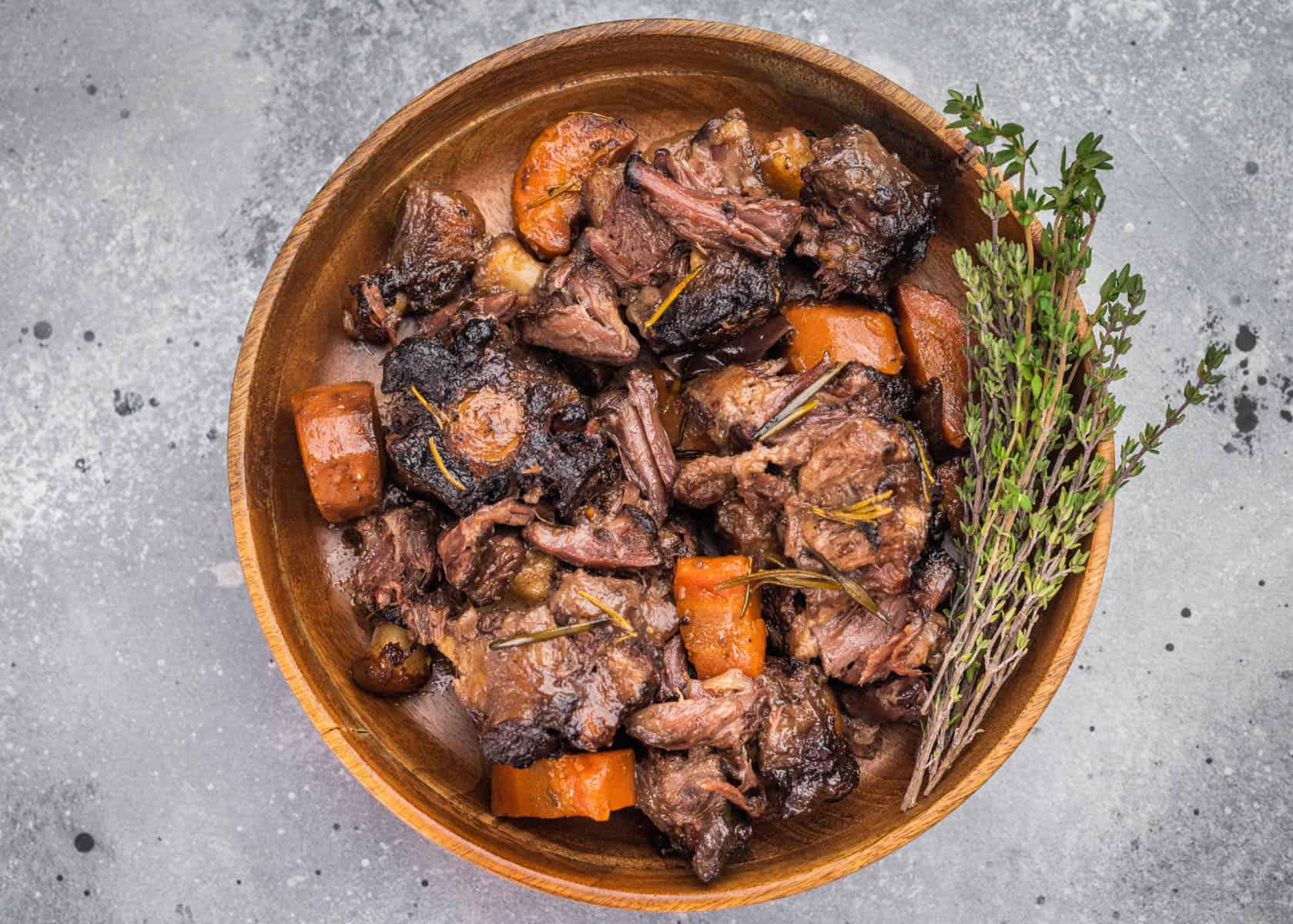
Lamb is the most traditional Dongzhi protein. It's intensely warming, builds yang energy, and dispels cold from the body, which is why lamb soup on Dongzhi is essentially non-negotiable in Northern Chinese cooking. For batch cooking through December and January, I usually buy lamb shoulder at Costco because the quality and price are consistent, and a single pack makes two full batches of winter soup without a separate trip to the butcher.

Walnuts (核桃)
Raw Organic Walnuts warm the kidneys, support brain function, and are classified in TCM as a yang-tonifying nut. A small daily handful works on its own or folded into congee, warm oatmeal, or a black sesame paste.
Most dry goods ingredients, tools, and supplies can be purchased at local Asian markets, Chinese grocery stores, or Amazon Online. Amazon Prime members receive free shipping and faster delivery times.
Supporting Ingredients
Chinese yam (淮山), goji berries (枸杞), longan (龍眼), ginger, cinnamon bark (桂皮), and chestnuts all support kidney function and warm the middle. These are the building blocks of a proper Winter Solstice soup Chinese medicine approach, and you'll find most of them at T&T year-round.
Tangyuan (湯圓): The Iconic Dongzhi Dish
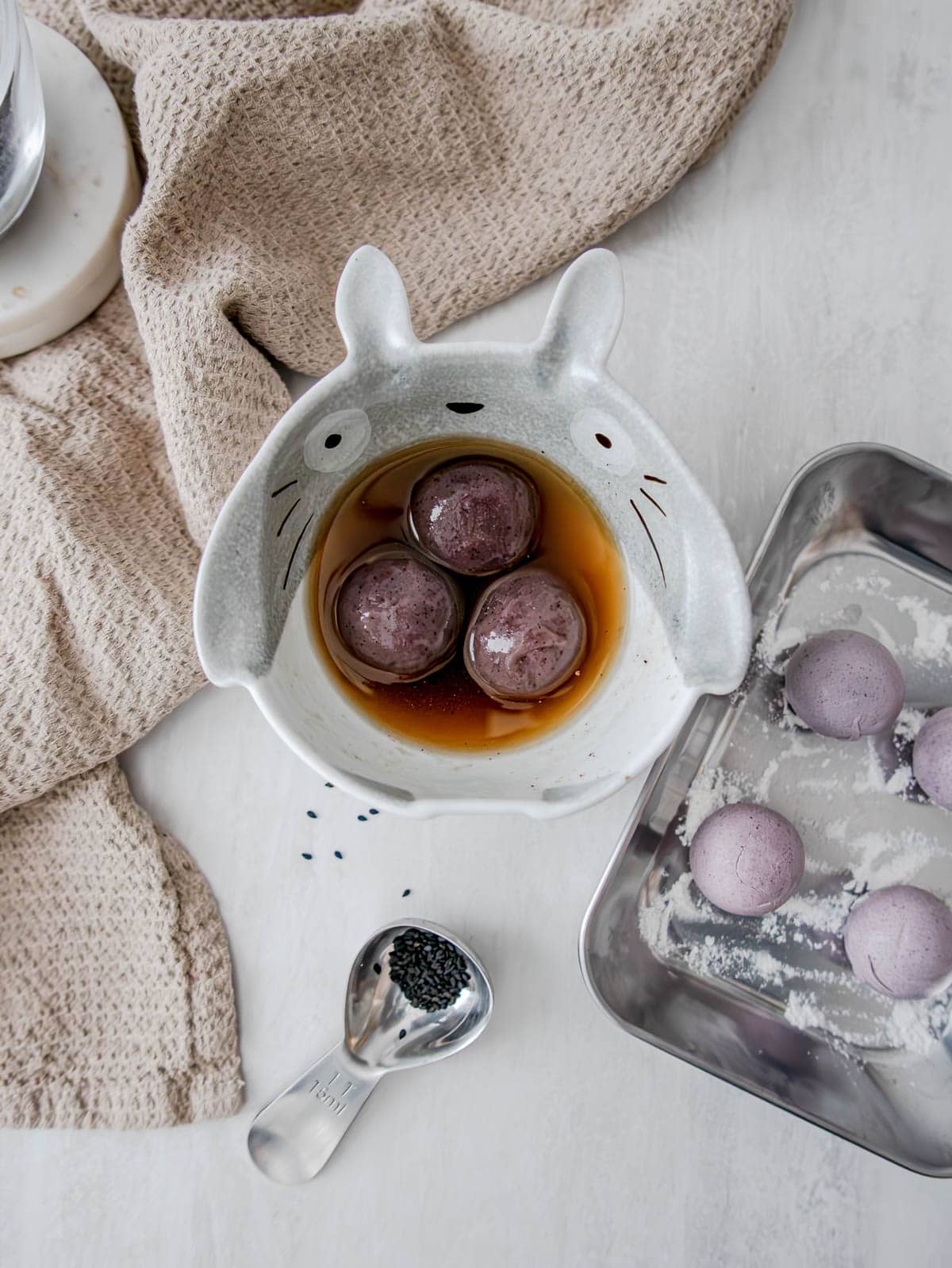
Tangyuan are glutinous rice balls served in warm broth or sweet soup and they're the dish most closely associated with Dongzhi across Chinese households. The round shape represents completeness and family reunion. Black sesame filling is the most traditional, and the most delicious. They're also more forgiving to make from scratch than they look.
What to Avoid During Winter Solstice
Cold drinks and raw food top the list. Smoothies, iced coffee, salads, and anything straight from the fridge all tax the digestive fire and drive cold deeper into the body. December in Canada is not the season for your lunch to also be cold.
Alcohol in excess depletes kidney yin, which destabilizes yang over time. Heavily salted food in large quantities burdens the kidneys directly. Overthinking and chronic worry are also on TCM's avoid list during winter, not as a lifestyle suggestion but as a clinical observation: the kidneys are directly connected to fear and anxiety, and excessive stress depletes kidney essence faster than most dietary choices. Worth keeping in mind mid-December when both tend to run high.
What to Cook for Dongzhi?
Si Shen Tang 四神湯 for spleen and kidney support
Nourishing Silkie Chicken Soup for deep fatigue and cold constitution
Dried Octopus Adzuki Bean Soup for kidney qi and adrenal burnout
Ching Bo Leung 清補涼 for gentler nourishing if you run warm
Best TCM Soups for Winter: Which One Is Right for You?
Not every winter pattern calls for the same soup. Some people run cold all the time (kidney yang deficiency). Others feel fatigued but warm (kidney yin deficiency). Knowing the difference changes what goes in the pot.
| Soup | Key Ingredients | TCM Function | Effort | Best For |
|---|---|---|---|---|
| Nourishing Silkie Chicken Soup 健脾烏雞淮山黃耆湯 | Silkie chicken, Chinese yam, astragalus, goji | Warm kidneys, strengthen spleen, build qi | Moderate | Deep fatigue, cold limbs, spleen and kidney dual deficiency |
| Si Shen Tang 四神湯 | Yam, poria, lotus seeds, euryale | Spleen and kidney dual support | Moderate | Digestive fatigue plus low energy |
| Ching Bo Leung 清補涼 | Six-herb mix | Gentle nourish, clear mild heat | Easy | Sensitive constitutions, transitional season |
| Chinese ABC Soup | Carrot, potato, corn, pork | Qi building, gentle warmth | Easy | Families, children, mild winter fatigue |
| Dried Octopus Adzuki Bean Soup 赤小豆章魚湯 | Dried octopus, adzuki beans, ginger | Kidney qi tonic, adrenal support, reduce water retention | Easy | Adrenal fatigue, kidney essence depletion, postpartum recovery |
Start with the Silkie Chicken Soup if kidney and spleen fatigue are both present. Add Si Shen Tang once a week if your digestion is also struggling alongside the cold and fatigue. Those two soups cover the most common winter pattern for most people cooking Chinese food in Canada.
Where to Buy Dongzhi Ingredients in Canada
Most of what you need is available at T&T Supermarket. The bulk herb section near the back consistently stocks dried Chinese yam, goji berries, tangerine peel, longan, jujube dates, and black beans year-round. The selection expands noticeably in November and December as Dongzhi and Lunar New Year season approaches, which is also when prices are most competitive.
For lamb specifically, I usually buy at Costco because the quality and price are consistent, and the portions make batch cooking practical. A single pack of lamb shoulder from Costco covers two full batches of this soup, enough to last through a week of lunches without an extra grocery run.
Cinnamon bark (桂皮) is worth sourcing from a Chinese herbal shop rather than a mainstream chain. The flat, rough-barked medicinal variety is significantly different from supermarket cinnamon sticks in both flavour and therapeutic function. A dedicated herbal counter at a larger T&T location carries it reliably, especially in December.
For Dongzhi recipes Canada-style pantry stocking, buying black beans and dried yam in bulk makes December cooking much smoother. Amazon Canada also carries most of these ingredients in sealed packages if you're not near a Chinese grocery store, and ordering in late November means everything arrives before Dongzhi.

Frequently Asked Questions (FAQs)
Dongzhi is the Winter Solstice, the 22nd of 24 solar terms in the traditional Chinese calendar. It falls between December 21 and 23 each year and marks the longest night of the year. In TCM, it's the most important day for kidney health and seasonal eating because yang energy is at its annual minimum.
Traditional Dongzhi foods include tangyuan (glutinous rice balls in warm soup), lamb soup, black sesame dishes, black bean preparations, and warming congee. In Northern China, lamb and dumplings are the most common Dongzhi meal. In Southern China and most Cantonese households, tangyuan is the standard. Both approaches are correct. Regional variation is the point.
The best Dongzhi TCM foods are warming and dark-coloured: black sesame seeds, black beans, lamb, walnuts, goji berries, Chinese yam, dried longan, and fresh ginger. These ingredients tonify kidney yang and help the body manage cold and depleted energy through the darkest weeks of winter.
Kidney yang deficiency is a pattern in TCM characterized by persistent cold, deep fatigue, lower back soreness, frequent urination, and poor warming capacity throughout the body. It is most noticeable in winter, when kidney energy is naturally at its lowest. TCM kidney yang warming foods like lamb, black sesame, and ginger are the dietary first line of support.
Yes. Most slow-cooked TCM soups adapt well to the Instant Pot. This lamb soup needs 35 minutes on high pressure with a 15-minute natural release. The result is comparable to 1.5 hours of stovetop simmering, which matters considerably when you're cooking two or three pots a week through December and January.
No. Dongzhi is a solar term based on the astronomical Winter Solstice, falling each year around December 21 to 23. Lunar New Year follows the lunar calendar and lands between late January and February. Historically, Dongzhi was considered the more significant celebration of the two. Modern commercial culture has since redistributed that balance, but TCM doesn't care about modern commercial culture.
Xiaohan (小寒, Minor Cold) arrives in early January, followed by Dahan (大寒, Major Cold) in late January. These are statistically the two coldest solar terms of the year. Kidney support remains the dietary priority through both. Warming soups, black foods, and minimal cold or raw intake continue to be the right approach until Lichun (立春, Start of Spring) in early February, when yang energy has returned enough to shift toward lighter foods.
What Comes After Dongzhi: Into the Coldest Weeks of the Year
Dongzhi is not the coldest point of winter. That comes later, and it catches people off guard every single year.
Xiaohan (小寒, Minor Cold) falls in early January, and Dahan (大寒, Major Cold) follows in late January. These are statistically the two coldest solar terms on the Chinese calendar, which lines up accurately with what most of Canada experiences on the ground from Vancouver to Toronto. The cooking approach stays consistent through all three: warming proteins, cooked vegetables, kidney-supporting herbs, and as little cold or raw food as you can manage.
Think of Dongzhi as the start of a six-week winter eating season, not a single-day event. TCM kidney yang warming foods stay relevant until at least Lichun in early February, when the energy begins its shift back toward spring and the kidneys can start to rest.
For a spring transition plan once January passes, the Spring Dampness and Jingzhe guide covers exactly what shifts when the rains arrive and dampness becomes the next thing to manage.
Winter stores the Yang. Summer spends it. Read the San Fu Periods guide to see how the hottest weeks of the year pick up where Dongzhi leaves off.
More Winter TCM Recipes to Try
- Si Shen Tang 四神湯 for spleen and kidney dual support in one pot
- Ching Bo Leung 清補涼 for a gentler nourishing option if you run warmer constitutionally
- Chinese ABC Soup for a family-friendly weeknight winter bowl
Pin this post to your Chinese Medicinal Food Therapy TCM Recipe Pinterest board to bookmark it for next winter.
For traditional Chinese soups, healing recipes, and TCM food therapy that actually work, subscribe to our newsletter and never miss a wellness post!
I'd love to see how you went with my recipes! Leave a comment below or tag me on Instagram @INSTANOMSS #INSTANOMSS.
Pin the above image to your Chinese Medicinal Food Therapy TCM Recipe Pinterest Board to bookmark this page. We are so excited to share our recipes with you!
More Chinese Recipes
Chinese Steamed Chicken With Shiitake Mushroom 冬菇蒸雞
Air Fryer BBQ Pork Char Siu 氣炸鍋蜜汁叉燒
Red Bean Soup (Instant Pot) 蓮子百合紅豆沙










Comment Below