
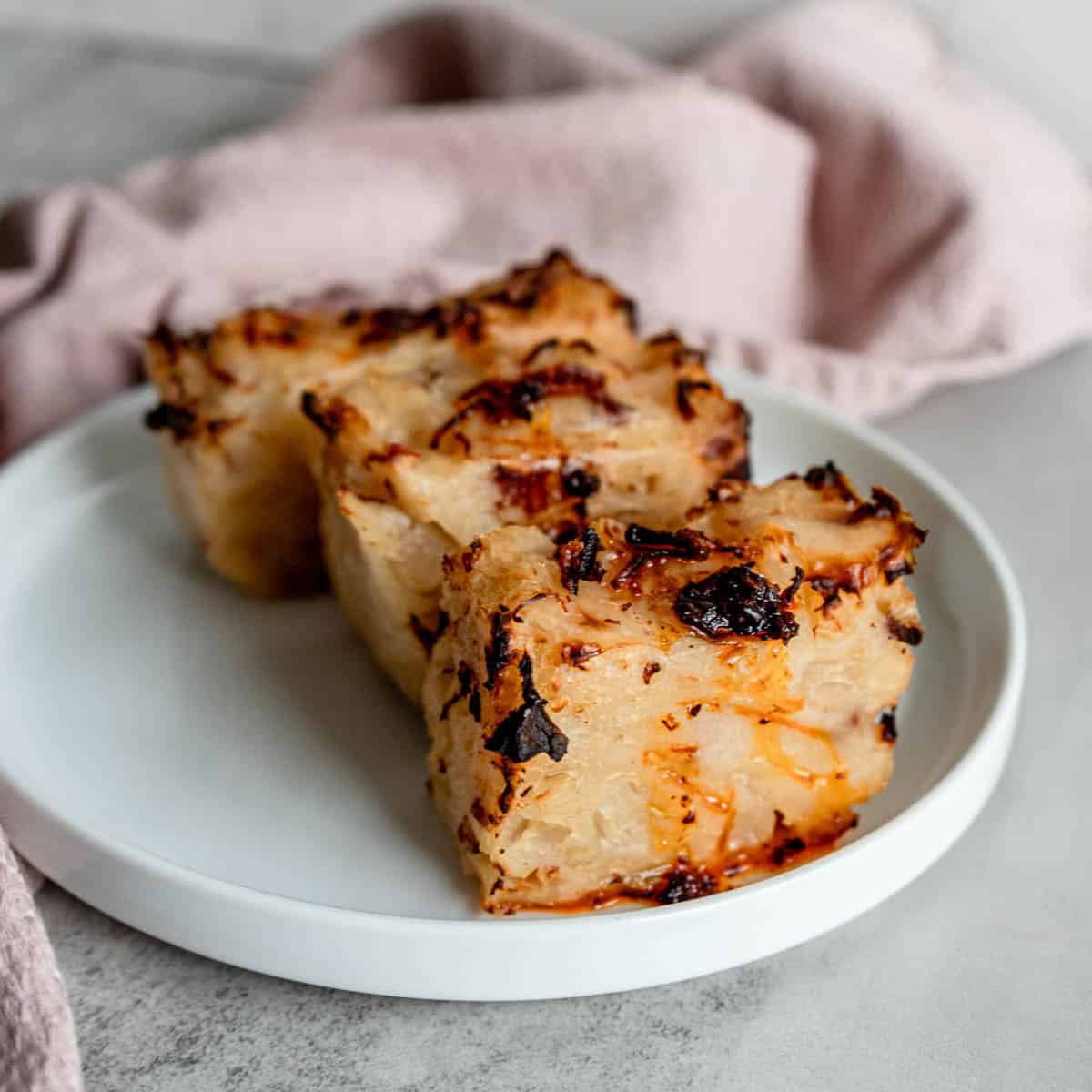
Some recipes live in cookbooks. This one came scrawled in blue ink on the back of a real estate flyer, which, honestly, makes it more credible. Lo Bak Go (蘿蔔糕), the Cantonese name for steamed daikon radish cake, is a dim sum staple and a seasonal go-to in Traditional Chinese Medicine households across Vancouver. It's eaten at Chinese New Year, but it deserves a spot on your stove long after the red envelopes are put away.
If you've only ever ordered turnip cake at dim sum, this is the post that teaches you to make it at home, from scratch, with zero guesswork. The technique is forgiving and the payoff is enormous.
> In This Post: Everything You Need For A Foolproof Lo Bak Go Recipe
This post covers what lo bak go actually is, why TCM households treat daikon radish as a functional food, and how to turn five and three-quarter pounds of daikon into a perfectly set steamed cake with minimal effort. You'll get the full recipe card, storage and reheating instructions, a pan-frying guide for leftovers, where to source ingredients in Canada without overpaying, and a full FAQ. Jump links below.
Jump to:
- > In This Post: Everything You Need For A Foolproof Lo Bak Go Recipe
- What Is Lo Bak Go?
- Lo Bak Go and Chinese New Year
- Lo Bak Go and TCM: Why Daikon Earns Its Place
- Ingredients
- Instructions - Step-by-Step Cooking Method For Cantonese Turnip Cake Rice Flour Recipe
- Steamed vs Pan-Fried Lo Bak Go
- How to Pan-Fry Lo Bak Go Properly
- Reheating Lo Bak Go in the Air Fryer
- Storing and Reheating Lo Bak Go
- Lo Bak Go as a Weekly Batch Cook
- Lo Bak Go vs Other Dim Sum Cakes: A Quick Comparison
- Where to Find Lo Bak Go Ingredients in Canada
- Frequently Asked Questions (FAQs)
- Troubleshooting: Why Didn't My Lo Bak Go Turn Out?
- What to Serve With Lo Bak Go
- More Seasonal TCM Recipes at nomss.com
- More Dim Sum Recipes to Make at Home
- > Recipe Card
- Lo Bak Go (Steamed Chinese Turnip Cake 蘿蔔糕)
What Is Lo Bak Go?
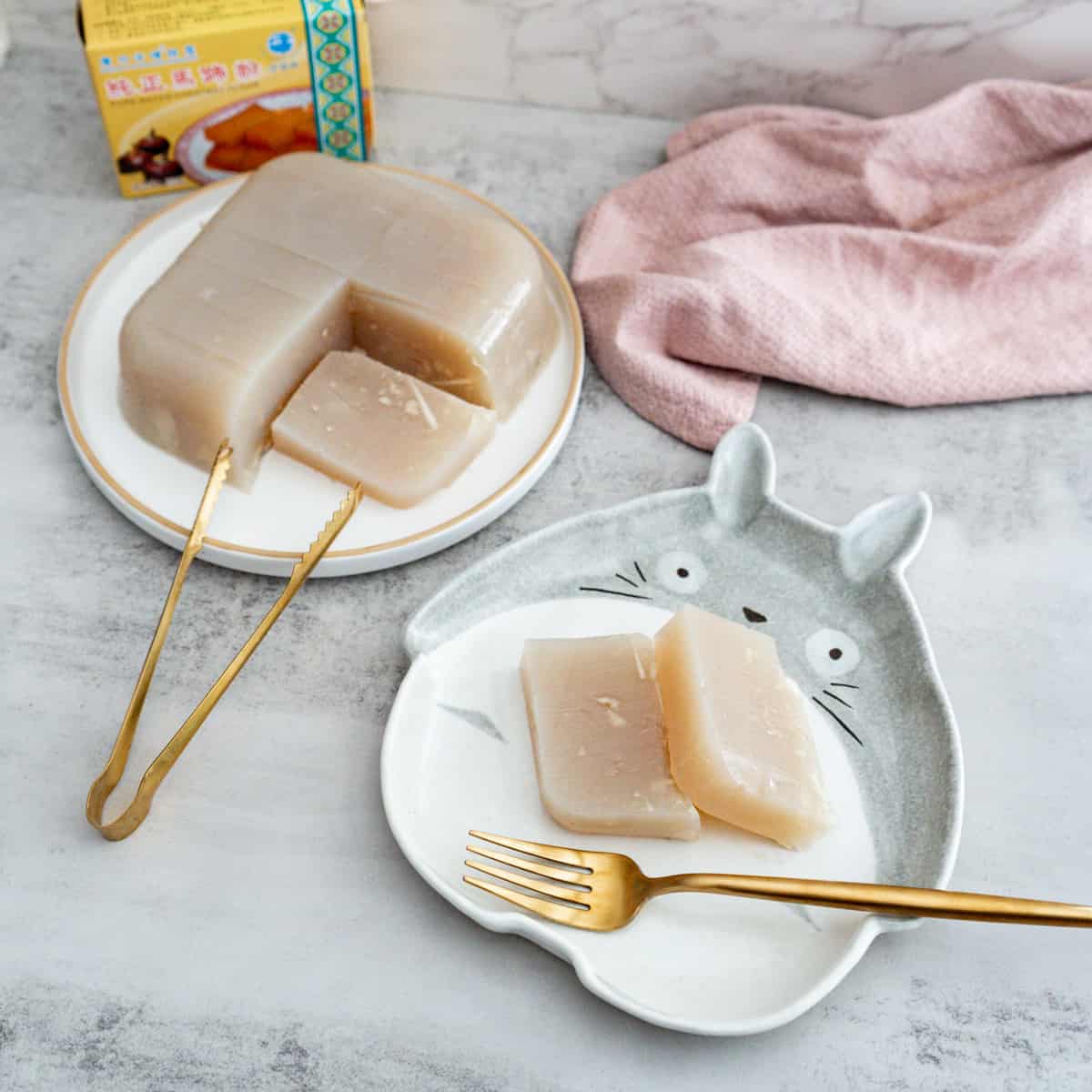
Lo bak go (蘿蔔糕) translates literally as radish cake. In North American dim sum restaurants, you'll see it listed as "turnip cake," though it contains no turnip. The main ingredient is daikon radish (蘿蔔, lo bak), grated, cooked, and mixed into a rice-flour batter that is steamed into a firm, sliceable loaf.
It's been a staple of Cantonese cooking for centuries. It's also one of the twelve traditional Chinese New Year foods because daikon sounds like a prosperous new year in Cantonese, which is the kind of etymological good fortune that makes it easy to eat a second slice.
This Cantonese turnip cake recipe works as a savoury breakfast, a side at dinner, or a midnight fridge raid that requires nothing more than a pan and a bit of oil. No judgment.
Lo Bak Go and Chinese New Year
Lo bak go is one of the twelve traditional Chinese New Year foods eaten during the Lunar New Year season. The reason goes back to language. In Cantonese, 糕 (go) sounds like the word for "high" or "tall," implying upward momentum, growth, and prosperity in the coming year. Eating it is less a superstition and more a reasonable hedge.
On a New Year table, lo bak go is typically served pan-fried alongside nian gao (sweet rice cake) and water chestnut cake, the three classic Cantonese cakes that signal the full festive spread. Each one carries its own symbolic meaning, but lo bak go is the savoury anchor of the trio.
If you're making it for Chinese New Year, serve it pan-fried on a plate lined with a few slices of pickled vegetables and a small dish of hoisin sauce on the side. Make it two to three days ahead. The flavour deepens in the fridge and the cake slices cleaner when fully chilled, which is exactly what you want when guests are arriving and the kitchen is already chaotic.
Lo Bak Go and TCM: Why Daikon Earns Its Place
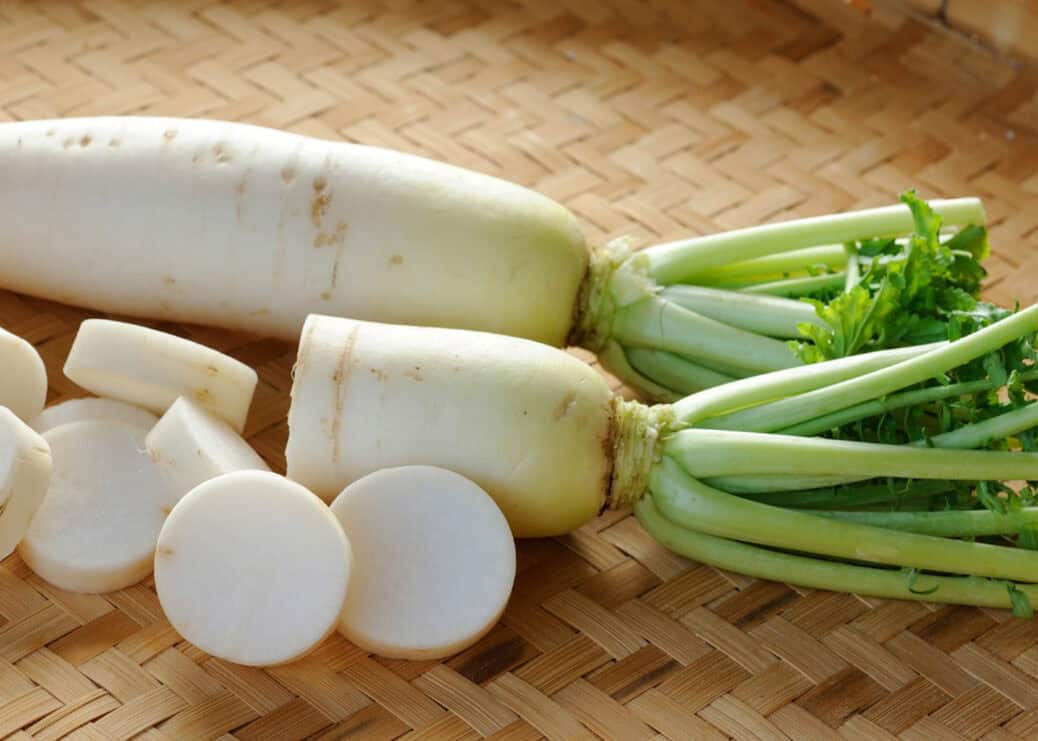
In Traditional Chinese Medicine, daikon radish is classified as cool in nature, with a pungent and slightly sweet flavour. It enters the Lung, Stomach, and Large Intestine meridians, which is a significant amount of work for a single vegetable. TCM practitioners use it to clear heat, resolve food stagnation (消食化滯), dissolve phlegm, and support fluid metabolism.
The timing of lo bak go as a New Year dish isn't accidental. Festive tables overflow with fatty meats, sticky rice, and oily sauces. Daikon's digestive properties make it the natural counterbalance to that kind of seasonal excess. Your body was asking for it before you knew you were eating it.
In spring, daikon continues to justify its place on the table. Spring dampness is a recognized TCM pattern, where sluggish digestion, brain fog, and low energy signal excess moisture accumulating in the body. Foods that move Qi and support the Spleen and Stomach, including daikon, rice flour, and ginger, help clear that seasonal drag. For a broader look at eating for this season, the Spring dampness and Jingzhe TCM guide at nomss.com covers the full picture.
Daikon's TCM Profile
- Nature: Cool.
- Taste: Pungent, sweet.
- Meridians: Lung, Stomach, Large Intestine.
- Key actions: Clears heat, resolves food stagnation, dissolves phlegm, promotes fluid metabolism.
One caution: Those with a cold-deficient Spleen constitution, who tend toward fatigue, loose stools, and cold hands and feet, should eat daikon in moderation and always pair it with something warming. Ginger does exactly that job in this recipe.


Ingredients
This recipe has a short ingredient list, which is part of why it's been on Cantonese tables for generations. Every item pulls its weight, and most are a single T&T run away.
Daikon radish is the backbone of any lo bak go recipe. You need 5¾ lbs (about 2.6 kg), which sounds excessive until you remember daikon is mostly water. It cooks down dramatically. I pick mine up at T&T Supermarket year-round because the freshness is reliable and the price stays reasonable regardless of season.
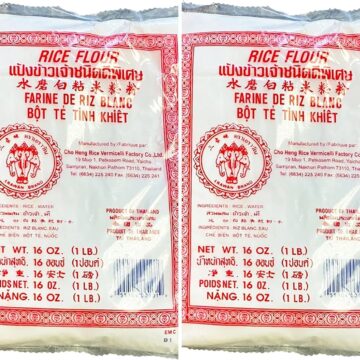
Rice flour (粘米粉) is what gives lo bak go its firm but slightly yielding texture. Don't substitute glutinous rice flour here. That's a different product entirely and will produce something gummy rather than sliceable. Standard rice flour, labelled 粘米粉 at any Chinese grocery, is what you want. At 300g, it's the structural foundation of the cake.
Wheat starch (澄粉/澱粉) at 150g lightens the batter and helps the cake hold together cleanly when sliced cold. It's what separates a properly textured steamed daikon radish cake from one that crumbles when you pick it up. T&T stocks it consistently.
Dried shrimp (蝦乾) at 100g is generous, and correctly so. Soak briefly, chop roughly, and they distribute through the entire cake, adding deep umami to every bite. The quality of your dried shrimp matters more than most people realize. Look for ones that are pink-orange and fragrant, not grey or dusty-smelling.
Ginger powder (薑粉), one tablespoon, brings warmth to a recipe built around a cooling ingredient. In TCM terms, this is the balance point. Without it, the overall dish leans colder than most constitutions benefit from.
Cold Drinking Water at 500g is specified for a reason. Warm water starts activating the starch prematurely and makes the batter lumpy. Cold water keeps the slurry smooth.
Oil, salt, white pepper, and soy or oyster sauce round out the seasoning. The oil at 3 tablespoon keeps the batter from sticking and adds a subtle richness that rice flour alone can't provide.
Most dry goods ingredients, tools, and supplies can be purchased at local Asian markets, Chinese grocery stores, or Amazon Online. Amazon Prime members receive free shipping and faster delivery times.
Vegetarian and Vegan Lo Bak Go
To make a vegan lo bak go, replace the 100g dried shrimp with 80g dried shiitake mushrooms, rehydrated and diced small. Costco often sells large packages that are cost-effective! The soaking liquid is flavourful, so add two to three tablespoons of it directly into the batter along with the mushrooms. Increase the white pepper to one full teaspoon and add an extra tablespoon of light soy sauce to compensate for the lost umami depth. The texture of the finished cake is identical.
The flavour is earthier and slightly less briny, which some people genuinely prefer. T&T stocks dried shiitake mushrooms year-round in the dry goods aisle, and the price is consistent enough that buying an extra bag for the pantry makes sense.
Instructions - Step-by-Step Cooking Method For Cantonese Turnip Cake Rice Flour Recipe
How to Make This Classic Lo Bak Go From Scratch
Step 1: Grate and Cook the Daikon
Peel and grate 5¾ lbs of daikon radish. A box grater works fine; a food processor saves about ten minutes. Transfer the grated daikon to a large wok or wide pot and cook over medium heat until softened and most of the liquid has released, about 10 to 12 minutes. Do not drain it. That liquid becomes part of your batter.
Step 2: Prepare the Dried Shrimp
Soak 100g dried shrimp in cold water for 10 to 15 minutes. Drain and chop roughly into small pieces. You want them distributed through the cake, not concentrated in one corner. Add the chopped shrimp to the cooked daikon and stir to combine.
Step 3: Season the Mixture
Season the daikon and shrimp mixture with 1 teaspoon salt, ½ teaspoon white pepper, 1 tablespoon ginger powder, 3 tablespoon neutral oil, and oyster sauce or light soy sauce to taste. Stir everything together while the mixture is still warm.
Step 4: Make the Slurry
In a large bowl, whisk together 300g rice flour and 150g wheat starch. Add 500g cold water gradually, stirring until a smooth, lump-free slurry forms. Take your time here. Lumps at this stage become lumps in the finished cake.
Step 5: Cook the Batter
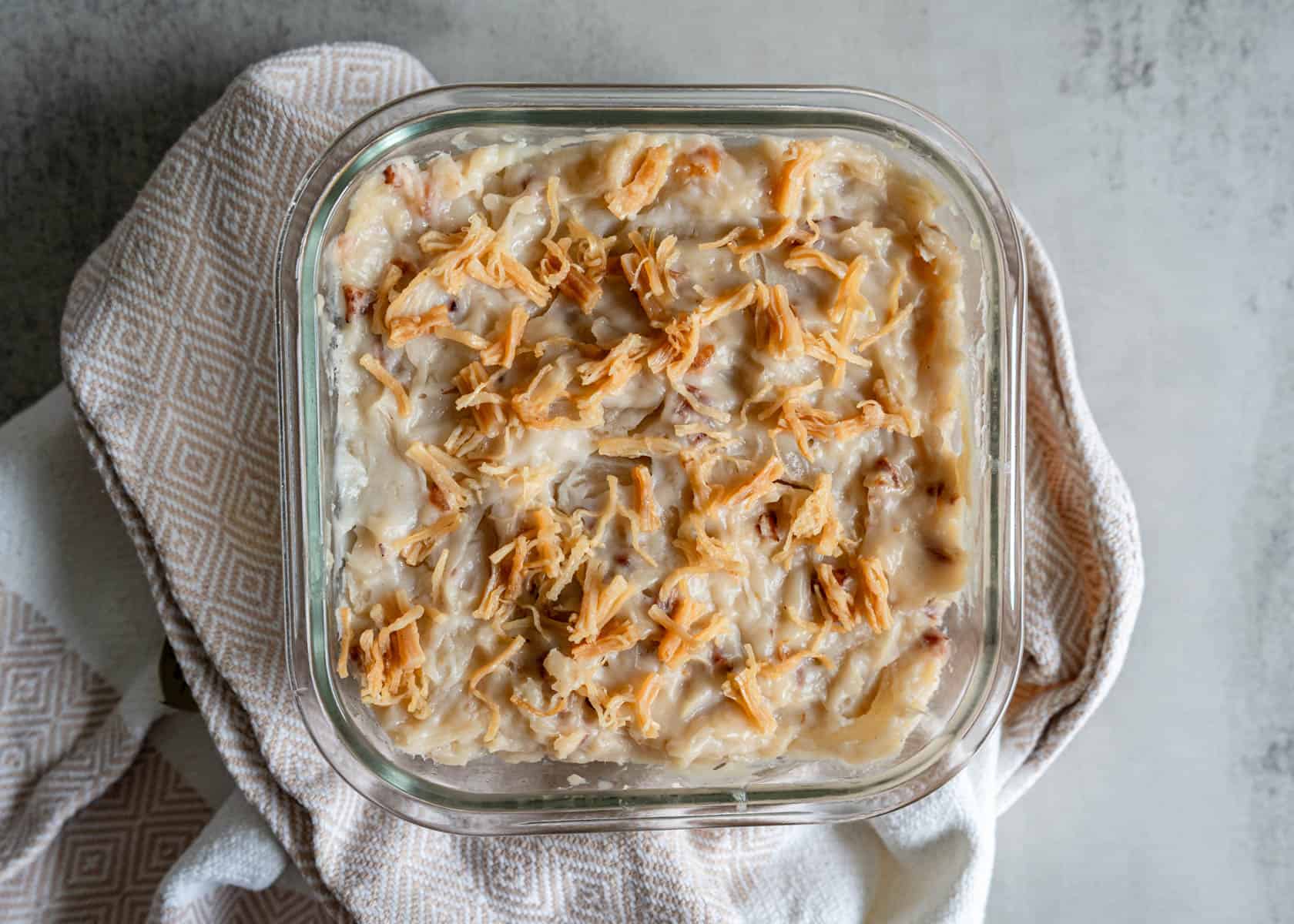
Pour the rice flour slurry into the hot daikon mixture. Stir constantly over low heat until the batter thickens to a porridge-like consistency that holds its shape briefly when you drop a spoonful back into the pot. This step typically takes 5 to 8 minutes. Don't rush it. Undercooked batter means an undercooked centre after steaming.
Step 6: Steam for One Hour
Grease a round or rectangular pan. An 8-inch round cake pan or a standard loaf pan both work. Pour in the batter, smooth the top, and place in a steamer over vigorously boiling water. Steam on high heat for 1 hour. The cake is done when a skewer inserted in the centre comes out clean.
Let it cool completely before touching it. Cutting a warm lo bak go is a guaranteed mess.
Steamed vs Pan-Fried Lo Bak Go
Steamed lo bak go is the quieter version. The texture is silky and soft, the flavour subtle, and the daikon and dried shrimp come through without competition. It's excellent with a drizzle of soy sauce and not much else.
Pan-fried lo bak go is what fills the bamboo steamers at dim sum. Slice the fully cooled cake into 1-cm pieces, heat a thin layer of oil in a non-stick pan over medium-high, and fry each piece for 2 to 3 minutes per side until the exterior is golden and slightly crisped. The contrast between the caramelized crust and the soft interior is the whole point.
Both are worth making. The steamed version is a weeknight move. The pan-fried version is what you make when you have ten minutes and want something that tastes like it took considerably longer.
How to Pan-Fry Lo Bak Go Properly
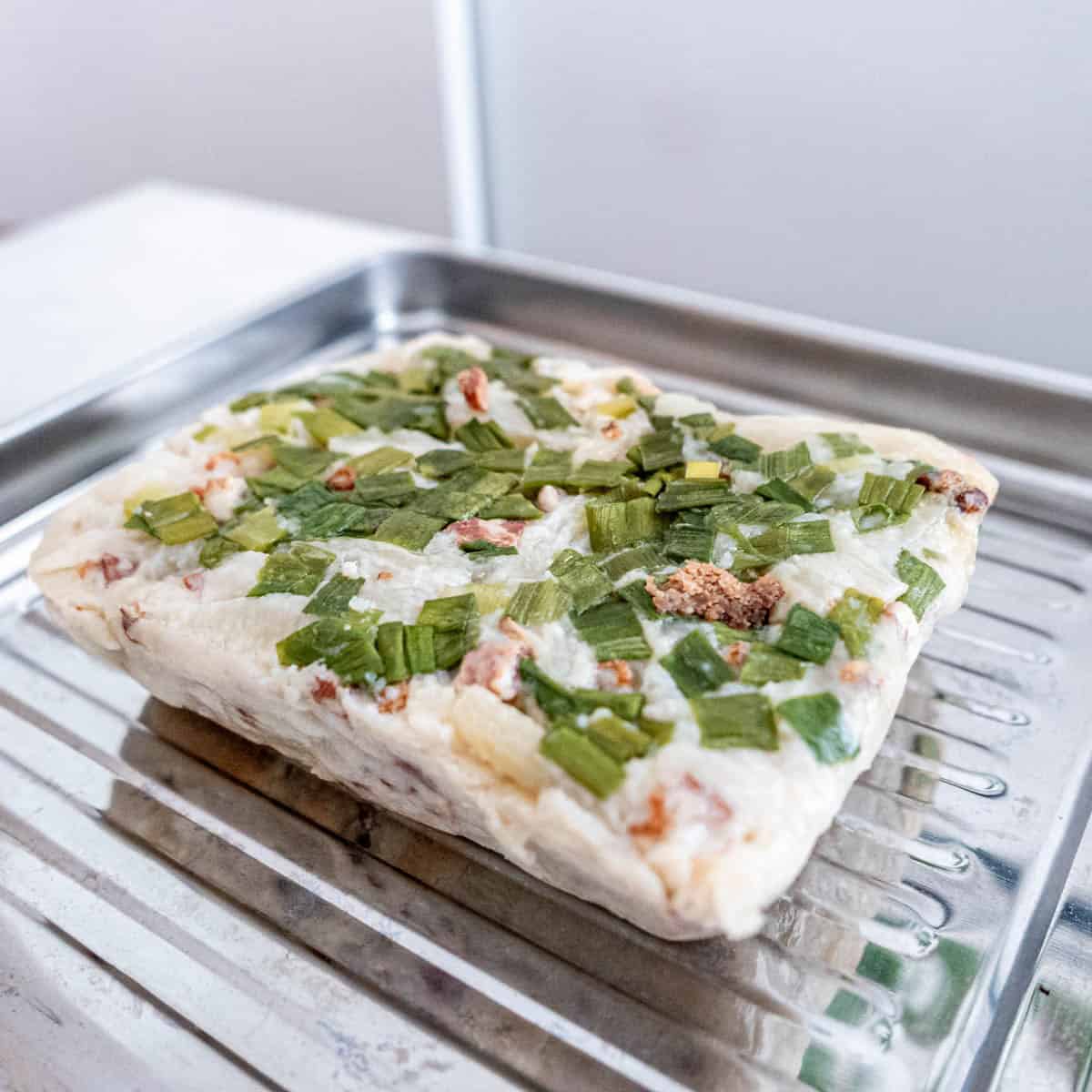
Pan-frying lo bak go sounds straightforward, and mostly it is. But a few small things separate a golden, crisped slice from one that sticks, steams, or falls apart.
Use a Non-Stick Pan
Stainless steel and cast iron both run too hot and too unevenly for rice flour cakes. The exterior scorches before the interior warms through. A good non-stick pan gives you controlled, even contact heat, which is exactly what pan-fried lo bak go needs to develop that crust without burning.
Get the Oil Temperature Right
Heat the pan over medium to medium-high before adding oil. Add a thin layer of neutral oil, enough to coat the base of the pan without pooling. The oil is ready when a small piece of cake placed in the pan sizzles immediately on contact. If it doesn't sizzle, the pan isn't hot enough and the cake will absorb oil instead of crisping.
Too hot is equally problematic. If the oil smokes before the cake goes in, reduce the heat and wait 30 seconds. Burnt exterior, cold interior is a common mistake and entirely avoidable.
Know When to Flip
This is where most people go wrong. Leave the slice alone for 2 to 3 minutes before attempting to flip. A properly crisped base releases from the pan naturally. If you try to flip it and it resists, it's not ready. Give it another 30 to 60 seconds. Forcing the flip tears the crust and the slice comes apart.
When it releases cleanly and the underside is deep golden, flip once and repeat on the other side. Two flips total. That's it.
Work in Batches
Crowding the pan drops the temperature and turns a fry into a steam. Work in batches of three to four slices depending on pan size, and keep finished slices warm in an oven at 200°F while the next batch cooks.
Reheating Lo Bak Go in the Air Fryer
The air fryer is the best way to go when reheating Chinese radish cake (蘿蔔糕), and the results actually rival freshly pan-fried. The hot circulating air crisps the exterior without drying out the inside, which a microwave cannot claim to do.
Slice the cold cake into 1-cm pieces and place them in a single layer in the air fryer basket. No oil needed, though a light spritz of cooking spray gives you a slightly more golden finish.
Air fry at 400°F (200°C) for 15 to 20 minutes, flipping halfway through.
Check at the 15-minute mark. Thinner slices are done sooner; thicker ones benefit from the full 20 minutes. The outside should be firm and lightly crisped, the inside still soft. From frozen, add 5 extra minutes and skip the flip until the halfway point so the slice has time to thaw through before it moves.
Storing and Reheating Lo Bak Go
This recipe makes a substantial amount, which is by design. Lo bak go stores well in the fridge for up to 5 days, tightly wrapped. It also freezes cleanly. Slice the fully cooled cake, wrap each piece individually, and freeze for up to one month.
To reheat from frozen, pan-fry over medium-low heat, covered, for about 5 minutes per side. The steam trapped under the lid heats the interior while the pan crisps the outside. It's actually better than reheating in a microwave.
Making this Chinese turnip cake from scratch as a weekend batch cook is genuinely worth the time. One session produces a week of breakfasts, sides, or snacks at a per-portion cost that's difficult to argue with.
Lo Bak Go as a Weekly Batch Cook
This recipe scales up cleanly. A double batch takes roughly the same amount of active effort as a single one and produces enough lo bak go to cover breakfasts, snacks, and sides for the better part of a week. That matters when you're managing a household grocery budget and trying to keep weekday mornings from becoming a production.
Make it on Sunday. Store the loaf whole and unsliced in the fridge, tightly wrapped in plastic. Slice and pan-fry or air fry individual portions each morning as needed. The whole loaf keeps for five days refrigerated, so a double batch made Sunday easily runs through Friday without any loss of quality.
At T&T, daikon is consistently priced and reliably fresh, which makes this one of the more cost-effective batch cooks in a Cantonese kitchen. Rice flour and wheat starch are pantry staples that keep indefinitely. The only perishable is the daikon itself, and at 5¾ lbs per batch, doubling it is a straightforward Costco trip when they have it in stock.

Lo Bak Go vs Other Dim Sum Cakes: A Quick Comparison
| Cake | Main Ingredient | Texture | TCM Nature | Best Served |
|---|---|---|---|---|
| Lo Bak Go (蘿蔔糕) | Daikon radish | Firm, sliceable | Cool | Steamed or pan-fried |
| Wu Tou Gou (芋頭糕) | Taro | Dense, earthy | Neutral, slightly warm | Pan-fried |
| Ma Lai Gou (馬拉糕) | Eggs, flour | Fluffy, spongy | Neutral | Steamed |
| Nian Gao (年糕) | Glutinous rice | Chewy, sticky | Warm | Pan-fried or steamed |
Lo bak go is the only one in this group that actively supports digestion from a TCM standpoint. It's not the flashiest cake on the table, but it's doing the most work.
If you want to round out your Cantonese cake repertoire, start with Water Chestnut Cake 馬蹄糕 or Chinese Coconut Milk Pudding 椰汁糕. Both are significantly easier than they look and share the same spirit of simple ingredients done well.
Where to Find Lo Bak Go Ingredients in Canada
Every ingredient in this recipe is accessible in Vancouver and across Canada's major cities. T&T Supermarket is the most reliable one-stop shop: fresh daikon, 粘米粉 rice flour, 澄粉 wheat starch, and dried shrimp are all consistently stocked.
For daikon specifically, Costco is worth checking. When they carry it, the quality is consistent and the price per kilo is hard to match elsewhere, particularly if you're planning to make multiple batches or want to keep the grocery bill in check. I usually buy rice flour and wheat starch at T&T and pick up daikon wherever the price makes sense that week.
One ingredient worth upgrading: the dried shrimp. Mid-grade to premium dried shrimp, the kind that smells like the ocean rather than a fish market, genuinely changes the flavour of the finished cake. Ask at T&T's seafood dry goods section and spend a few extra dollars if you can. It's the one place this recipe rewards you for it.
Frequently Asked Questions (FAQs)
Got questions about lo bak go? These are the ones that come up most.
They're the same dish. Lo bak go (蘿蔔糕) is the Cantonese name. "Turnip cake" is the English translation used on most North American dim sum menus. The name is technically a mistranslation since it's made with daikon radish, not turnip, but it's been in use long enough that no one is correcting it anymore.
Two likely causes. First, the batter wasn't cooked long enough before steaming. It needs to reach a thick, porridge-like consistency on the stove before it goes into the pan. Second, and more commonly, the cake was sliced before it cooled fully. Let it reach room temperature, then refrigerate for at least an hour before cutting.
Yes. For a vegetarian version, replace dried shrimp with rehydrated dried shiitake mushrooms, diced small. Season more generously with white pepper and soy sauce to compensate for the lost umami depth.
Traditional lo bak go uses wheat starch, which does contain gluten. For a gluten-free version, substitute tapioca starch or additional rice flour. The texture will be slightly softer, but the flavour holds.
It's traditionally eaten at Chinese New Year, when daikon's digestive properties balance the richness of festive meals. In TCM terms, it's also well-suited to spring, when the Spleen needs support against seasonal dampness, and to late summer, when damp-heat patterns benefit from foods that regulate digestion. Year-round, it's appropriate for most constitutions, particularly those with Stomach heat or food stagnation. Those with a cold-deficient Spleen constitution should eat it alongside warming ingredients like ginger.
Up to 5 days in the fridge, tightly wrapped. Sliced and wrapped individually, it freezes well for up to one month.
Yes. For the Instant Pot, place the greased, filled pan on the trivet with one cup of water in the pot. Steam on high pressure for 35 to 40 minutes with a natural release. Check with a skewer before removing.
Yes, and many regional variations do. Lap cheong (Chinese sausage), diced shiitake mushrooms, and preserved turnip (chai poh) are the most common additions. Keep the total weight of add-ins under 150g or the batter ratio gets thrown off and the cake won't set cleanly.
Daikon is mild by nature, so seasoning at the cooking stage matters more than most people expect. Taste the daikon mixture before adding the slurry and adjust salt, white pepper, and oyster sauce then. Once the rice flour goes in, seasoning doesn't distribute as evenly.
Absolutely, and it's actually better that way. Make it two to three days ahead, refrigerate it whole and unsliced, then pan-fry or air fry portions as needed. The flavour deepens after a day in the fridge.
They share the same base but aren't identical. Chai tow kway is the Teochew version, common in Singapore and Malaysia, where the steamed cake gets stir-fried with egg, preserved radish, and dark soy. Cantonese lo bak go is typically served sliced and pan-fried without the stir-fry treatment.
An 8-inch round cake pan or a standard loaf pan both work well. A round pan gives you shorter, wider slices that crisp up faster when pan-fried. A loaf pan produces longer slices closer to what you'd see at dim sum. Either way, grease it generously before pouring in the batter.
At most Cantonese dim sum restaurants, yes. It's a classic trolley item, usually served pan-fried in small squares with hoisin sauce or chilli oil on the side. Some restaurants offer a steamed version on request, though the pan-fried is far more common in North America.
Restaurant kitchens typically use a higher ratio of rice flour to daikon, which produces a firmer, more uniform slice that holds up to high-heat wok frying. Homemade versions tend to have more daikon flavour and a softer texture. Neither is wrong; they're just calibrated for different purposes.
Hoisin sauce is the standard. Chilli oil, XO sauce, and light soy with a few drops of sesame oil all work well. Some people eat it plain and that's a completely reasonable position to take.
It's a translation holdover. Early Cantonese immigrants translated 蘿蔔 (lo bak, meaning daikon) as turnip because the two vegetables look similar and turnip was more familiar to English speakers at the time. The name stuck, even though no turnip is involved.
Most Cantonese dim sum restaurants will pack it for takeout, though the texture suffers a bit in transit. If you're planning to take it home, ask for it unfried if possible and pan-fry or air fry it yourself. You'll get a much better result than reheating a pre-fried piece that's been sitting in a container.
Troubleshooting: Why Didn't My Lo Bak Go Turn Out?
The cake is too soft and won't hold its shape when sliced. The batter wasn't cooked long enough on the stove before steaming. It needs to reach a thick, porridge-like consistency that briefly holds its shape when dropped from a spoon. If it's still pourable and loose, keep stirring over low heat. Another common cause is slicing before the cake has fully cooled. Refrigerate for at least one hour after it reaches room temperature before cutting.
The cake is too dense and heavy. The ratio of rice flour to daikon is off, usually from measuring flour by volume instead of weight. Always use a kitchen scale. 300g of rice flour is the correct amount for 5¾ lbs of daikon. Packing flour into a cup measure adds 20 to 30 percent more than the recipe calls for, which produces a cake that's stodgy rather than firm.
The cake didn't set in the centre. Steam time was too short or the water level in the steamer dropped during cooking. Check the water level at the 30-minute mark and top it up with boiling water if needed. Never add cold water to a steamer mid-cook. The temperature drop affects the set. If the skewer comes out wet after one hour, steam for an additional 10 to 15 minutes and check again.
The pan-fried slices are sticking and falling apart. Two likely causes. First, the pan wasn't hot enough before the oil went in. Second, the slice was moved too soon. A properly crisped base releases from a non-stick pan on its own. If it's sticking, it needs more time. Leave it alone for another 30 to 60 seconds before trying again.
The flavour is bland even after seasoning. Daikon's water content dilutes seasoning significantly during cooking. Taste the daikon and shrimp mixture before adding the rice flour slurry and adjust salt, white pepper, and oyster sauce at that stage. Once the starch goes in, seasoning doesn't distribute evenly through the batter. Season aggressively before the slurry, not after.
What to Serve With Lo Bak Go
Classic daikon radish cake pairs well with anything you'd find on a classic Cantonese breakfast table, and a few things you wouldn't expect.
Congee is the most natural pairing. The soft, savoury porridge and the firm, crisped cake are textural opposites that work together in exactly the way dim sum is intended. A bowl of Instant Pot Salted Pork and Century Egg Congee 皮蛋瘦肉粥 alongside a few pan-fried slices is a complete Cantonese breakfast that costs a fraction of what a dim sum restaurant charges for the same experience.
Cantonese pickled vegetables cut through the richness of the fried cake cleanly. A small dish of quick-pickled daikon, carrot, or mustard greens resets the palate between bites. It's the kind of table condiment that seems optional until it's not there.
Chilli oil is the modern pairing that dim sum restaurants haven't fully caught on to yet. A few drops over a pan-fried slice adds heat and depth without competing with the daikon flavour. XO sauce works the same way if you want something more umami-forward. Try adding this fragrant peppercorn oil to it too!
Hong Kong milk tea rounds out the full cha chaan teng experience. The tannins in the strong black tea cut the oiliness of pan-fried lo bak go the same way they cut through a plate of HK French toast. If you're making this for a weekend brunch spread, brew the tea first. Everything else can wait.
More Seasonal TCM Recipes at nomss.com
If Chinese radish cake got you thinking about TCM-aligned cooking, these posts go deeper into seasonal eating and medicinal soups. The Spring dampness and Jingzhe TCM guide covers why daikon-forward eating makes particular sense in spring. The San Fu Periods guide maps the full year of seasonal transitions. And Si Shen Tang (四神湯) is the four-herb soup that does for the Spleen in any season what homemade steamed lo bak go does at the table.
This cake has been on Cantonese tables for as long as anyone can remember. There's a reason it never left.
More Dim Sum Recipes to Make at Home
Mastered lo bak go? These are worth adding to your dim sum repertoire next:
Hong Kong Style French Toast 港式西多士
Salted Pork and Century Egg Congee 皮蛋瘦肉粥
Salt and Pepper Chicken Knees 椒鹽脆雞膝
Pin this post to your Dim Sum Recipes or Chinese New Year Food Pinterest board so it's ready when the craving hits. Because the craving always hits.
For traditional Cantonese recipes, TCM food therapy, and seasonal eating guides that actually make sense, subscribe to our newsletter and never miss a post!
I'd love to see how you went with my recipes! Leave a comment below or tag me on Instagram @INSTANOMSS #INSTANOMSS.
> Recipe Card
PrintLo Bak Go (Steamed Chinese Turnip Cake 蘿蔔糕)

A classic Cantonese steamed daikon radish cake made with rice flour and dried shrimp. Serve it straight from the steamer or slice and pan-fry until golden. Naturally satisfying, deeply savoury, and rooted in TCM seasonal eating principles.
- Prep Time: 25
- Cook Time: 80
- Total Time: 1 hour 45 minutes
- Yield: 2-4 persons 1x
- Category: Main Dishes
- Method: Steam
- Cuisine: Chinese
Ingredients
- 5¾ lbs (about 2.6 kg) daikon radish, peeled and grated
- 300g rice flour (粘米粉)
- 150g wheat starch (澄粉)
- 100g dried shrimp (蝦乾), soaked 10 minutes and roughly chopped
- 1 tbsp ginger powder (薑粉)
- 500g cold water
- 3 tbsp neutral oil, plus more for greasing the pan
- 1 tsp salt
- ½ tsp white pepper
- 2 tbsp oyster sauce or light soy sauce, to taste
 Get Recipe Ingredients
 Instructions
-
- Peel and grate daikon radish. Cook in a large wok or wide pot over medium heat, stirring occasionally, until softened and most liquid has released, 10 to 12 minutes. Do not drain.
- Soak dried shrimp in cold water for 10 to 15 minutes. Drain and chop roughly. Add to the cooked daikon.
- Season the daikon mixture with salt, white pepper, ginger powder, oil, and oyster sauce or soy sauce. Stir to combine.
- In a large bowl, whisk rice flour and wheat starch together. Add cold water gradually and stir until a smooth, lump-free slurry forms.
- Pour the slurry into the hot daikon mixture. Stir constantly over low heat until the batter thickens to a porridge-like consistency that holds its shape briefly when dropped from a spoon, about 5 to 8 minutes.
- Grease a round or rectangular baking pan. Pour in the batter and smooth the top.
- Steam over vigorously boiling water on high heat for 1 hour, until a skewer inserted in the centre comes out clean.
- Cool completely before slicing. Serve steamed or pan-fry slices in oil over medium-high heat for 2 to 3 minutes per side until golden.




Notes
- For pan-fried lo bak go: slice cold cake into 1-cm rounds and fry in a lightly oiled non-stick pan over medium-high heat for 2 to 3 minutes per side.
- Storage: refrigerate tightly wrapped for up to 5 days. Freeze individual slices for up to 1 month.
- To reheat from frozen: pan-fry covered over medium-low heat, about 5 minutes per side.
- Do not substitute glutinous rice flour for regular rice flour. They produce completely different textures.
Nutrition
- Serving Size: 1 BATCH
- Calories: 626
- Sugar: 0.7 g
- Sodium: 938.3 mg
- Fat: 12.8 g
- Carbohydrates: 108.1 g
- Fiber: 12.2 g
- Protein: 21.3 g
- Cholesterol: 40.3 mg

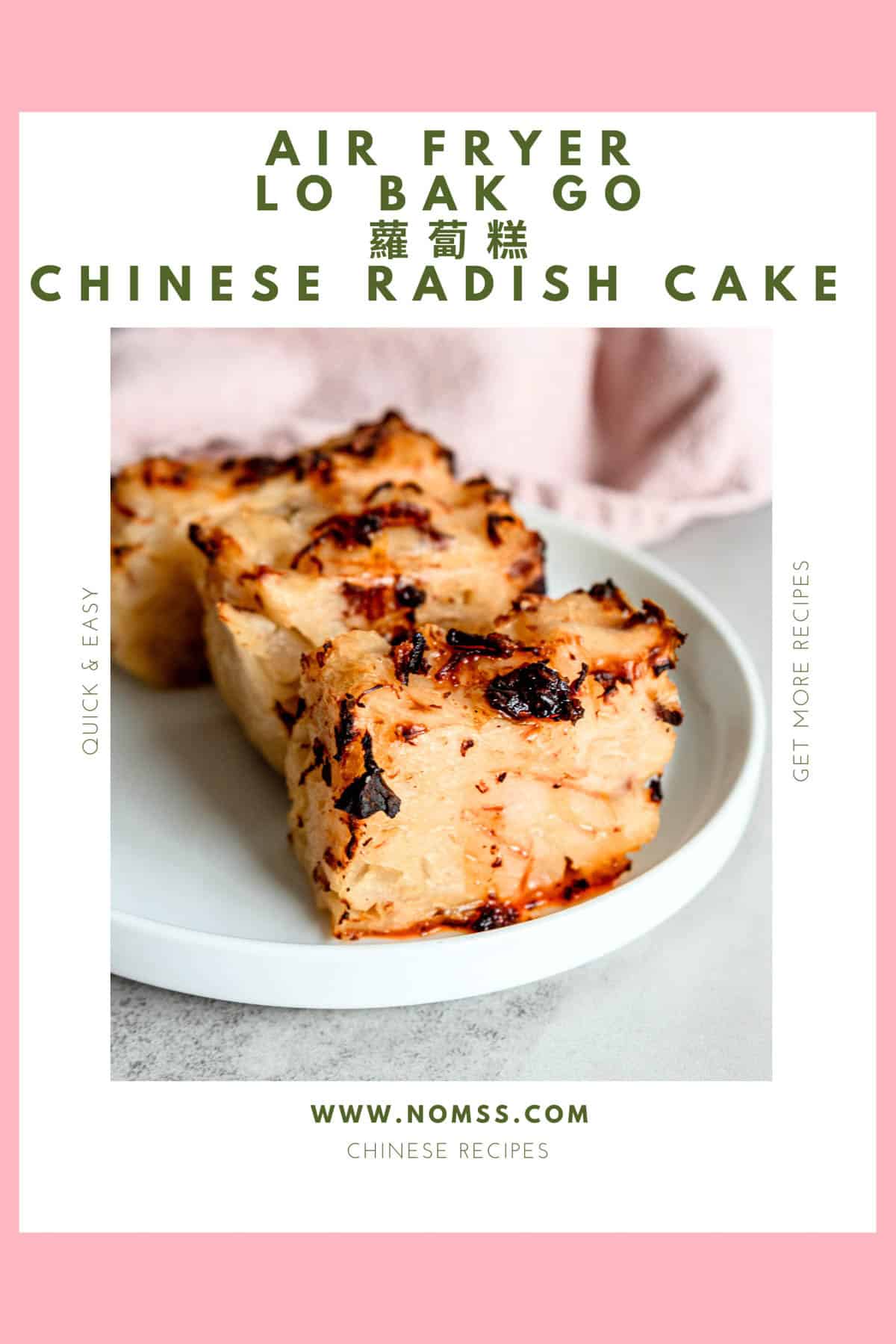
Pin the above image to your Chinese Recipe Pinterest Board to bookmark this page. We are so excited to share our recipes with you!
More Chinese Recipes
Chinese Steamed Chicken With Shiitake Mushroom 冬菇蒸雞
Air Fryer BBQ Pork Char Siu 氣炸鍋蜜汁叉燒
Red Bean Soup (Instant Pot) 蓮子百合紅豆沙








Comment Below