
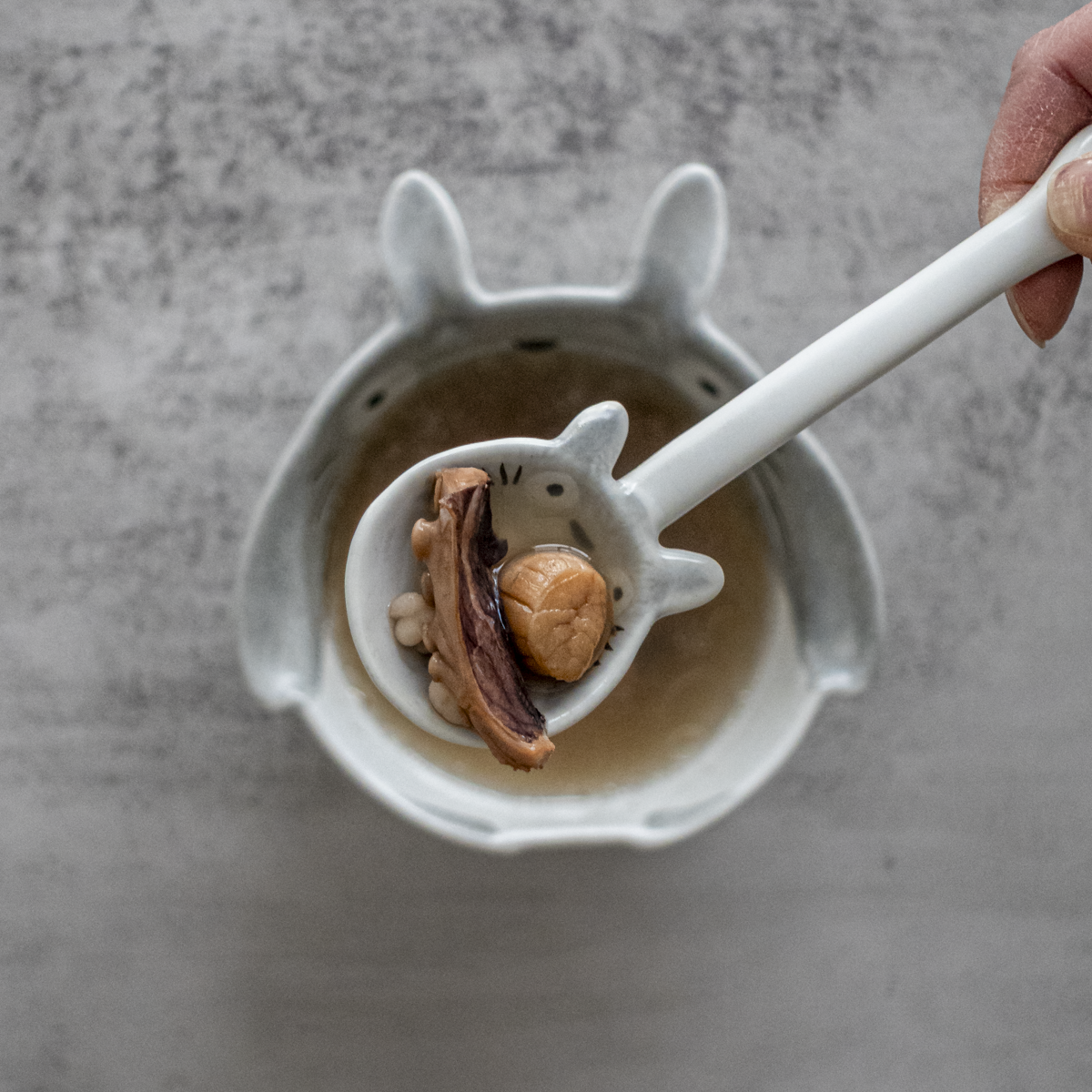
This comforting Chinese Dried Octopus Adzuki Bean Soup for Adrenal Fatigue (赤小豆章魚湯) blends coastal umami and earthy sweetness into a medicinal broth prized in Traditional Chinese Medicine (TCM). It's a slow-simmered, nutrient-rich soup that supports spleen and kidney Qi, helps with mild water retention, and warms the center. Perfect for autumn-winter menus, postpartum recuperation, or anytime you want a restorative seafood soup.
> In This Post: Everything You'll Need For The Best Traditional Chinese Octopus Adzuki Soup For Kidney Essence Depletion
My grandmother used to say you could tell someone was running on fumes when they craved salt and couldn't bounce back from anything. That's when she'd pull out the dried octopus and those dark red adzuki beans, declaring it was time to "feed the kidneys."
In Traditional Chinese Medicine, what Western medicine calls adrenal fatigue is understood as kidney essence depletion. Your kidneys (in the TCM sense, not just the organs) are your body's battery pack, storing the vital energy you're born with and replenishing what you use daily. When chronic stress drains this reserve, you end up with that specific exhaustion where sleep doesn't help, coffee makes things worse, and you feel like you're pushing a boulder uphill just to get through basic tasks.
Kidney essence depletion hits hardest in winter, peaking around the Winter Solstice. The Dongzhi Winter Solstice foods guide covers the full December cooking framework for kidney support.
This traditional Cantonese octopus adzuki soup recipe, known as 赤小豆章魚湯 (chi xiao dou zhang yu tang), isn't a quick fix for burnout. Nothing is when you've depleted yourself to this level. But it's one of the most respected kidney nourishing soups in the Chinese wellness kitchen for rebuilding what chronic exhaustion has stolen from you.
Jump to:
- > In This Post: Everything You'll Need For The Best Traditional Chinese Octopus Adzuki Soup For Kidney Essence Depletion
- What Is Dried Octopus Soup Good For?
- Why You Need This Soup: TCM Explanation of Adrenal Fatigue
- How Does TCM Treat Adrenal Fatigue? The Kidney-Adrenal Connection
- Dried Octopus vs Fresh Octopus: Why Dried Works Better for Adrenal Support
- Ingredients and Chinese Herbal Benefits and TCM Properties
- Ingredient Variations:
- Instructions - Step-by-Step Cooking Method
- Troubleshooting Common Issues
- Storage, Meal Prep Guide, and Make-Ahead Tips
- Frequently Asked Questions (FAQs)
- Other TCM Chinese Soups for Vital Defence
- > Recipe
- Dried Octopus Adzuki Bean Soup for Adrenal Fatigue | TCM Recipe
Check out this quick story summary of our recipe!
What Is Dried Octopus Soup Good For?
Let's understand the TCM benefits of dried octopus soup. Dried octopus is particularly valued in Chinese medicine for its ability to nourish kidney yin and essence (jing), which are the deep reserves that govern your stress response, hormonal balance, and long-term vitality. Unlike stimulants that whip your already-exhausted adrenals into working harder, this healing soup provides the raw materials your body needs to actually repair and rebuild.
The dried octopus health benefits are impressive from both TCM and modern nutrition perspectives. The mineral profile includes zinc for hormonal synthesis, selenium for thyroid function (which often crashes alongside adrenal issues), B vitamins for cellular energy production, and easily absorbable protein that doesn't tax your already-compromised digestion.
Adzuki beans for kidney health have been used in Chinese food therapy for thousands of years. These small red beans complement octopus beautifully by draining dampness, which in modern terms means reducing inflammation and supporting kidney filtration to clear metabolic waste that accumulates when your stress response is stuck in overdrive. They're also rich in potassium, which helps balance the sodium retention that happens when cortisol patterns are disrupted.
Together, they create what TCM calls a kidney tonic soup, something that doesn't just address symptoms of adrenal exhaustion but actually replenishes the organ system that regulates your stress response and restores adrenal function naturally.
Why You Need This Soup: TCM Explanation of Adrenal Fatigue
In Traditional Chinese Medicine (TCM), adrenal fatigue is understood as a depletion of Kidney Qi brought on by chronic stress. When the body's vital energy is drained, it upsets the balance of yin and yang, leaving you feeling worn down and ungrounded. While not recognized as a medical diagnosis in Western medicine, TCM interprets symptoms like fatigue, sugar cravings, and mood swings as signs that the body's energy reserves are running low.
Western medicine recognizes HPA axis dysfunction, which is when your hypothalamus, pituitary, and adrenal glands stop communicating properly after prolonged stress.
TCM has been treating this pattern for thousands of years as kidney yang deficiency, kidney yin deficiency, or complete kidney essence depletion. Treatment aims to nourish the Kidneys, rebuild Qi, and restore emotional harmony through acupuncture, herbal formulas, and supportive dietary therapy.
Signs You Need Kidney Nourishing Soup:
The symptoms of kidney essence depletion overlap remarkably with what we now call adrenal fatigue symptoms:
- Constant exhaustion and sleep doesn't fix it (fatigue that sleep doesn't help)
- Difficulty waking up, hitting snooze repeatedly, feeling like you can't wake up in the morning
- Constant exhaustion and salt cravings (your body trying to stabilize blood sugar and electrolytes)
- Feeling wired but tired at the same time (that wired tired feeling that's so confusing)
- Brain fog and exhaustion making even thinking feel hard
- Getting sick easily and taking forever to recover from stress or illness
- Loss of libido due to stress and hormone depletion
- Dark circles under eyes that never go away
- Lower back weakness or pain (the kidney area in TCM)
- Sensitivity to cold when you used to tolerate temperature fine
If this sounds like your life, you're not broken. You're depleted. And depletion responds to nourishment, not stimulation. This is exactly how to know if you have adrenal fatigue from a TCM perspective.
How Does TCM Treat Adrenal Fatigue? The Kidney-Adrenal Connection
In Traditional Chinese medicine, the kidneys are much more than the organs that filter your blood. They're considered the root of all yin and yang in the body, the storehouse of your essential energy, and the foundation of your stress resilience. What Western medicine identifies as cortisol imbalance and HPA axis healing, TCM addresses through kidney essence restoration.
What is kidney essence in Chinese medicine? Think of jing (essence) as your body's savings account. You're born with a certain amount, and you're supposed to live off the interest, not the principal. But chronic stress, overwork, lack of sleep, and pushing through exhaustion when you should rest forces your body to withdraw from the principal. Eventually, the account runs dry.
The difference between kidney yin and yang deficiency matters for choosing the right foods and herbs:
Kidney Yang Deficiency (Cold, Exhausted Type):
- Always cold, especially hands and feet
- No libido or sexual energy
- Lower back feels cold and weak
- Frequent urination, especially at night
- Severe fatigue in the morning
- Needs warming, energizing foods
Kidney Yin Deficiency (Wired, Burnt Out Type):
- Night sweats or hot flashes
- Insomnia despite exhaustion
- Anxiety with fatigue
- Dry mouth, dry skin
- Afternoon fever or flushed face
- Needs cooling, nourishing foods
Kidney Yin and Yang Deficiency (most common in severe burnout): Both cold and hot symptoms, total depletion on all levels. This dried octopus adzuki bean soup addresses both patterns simultaneously, making it perfect for severe adrenal fatigue recovery.

Dried Octopus vs Fresh Octopus: Why Dried Works Better for Adrenal Support
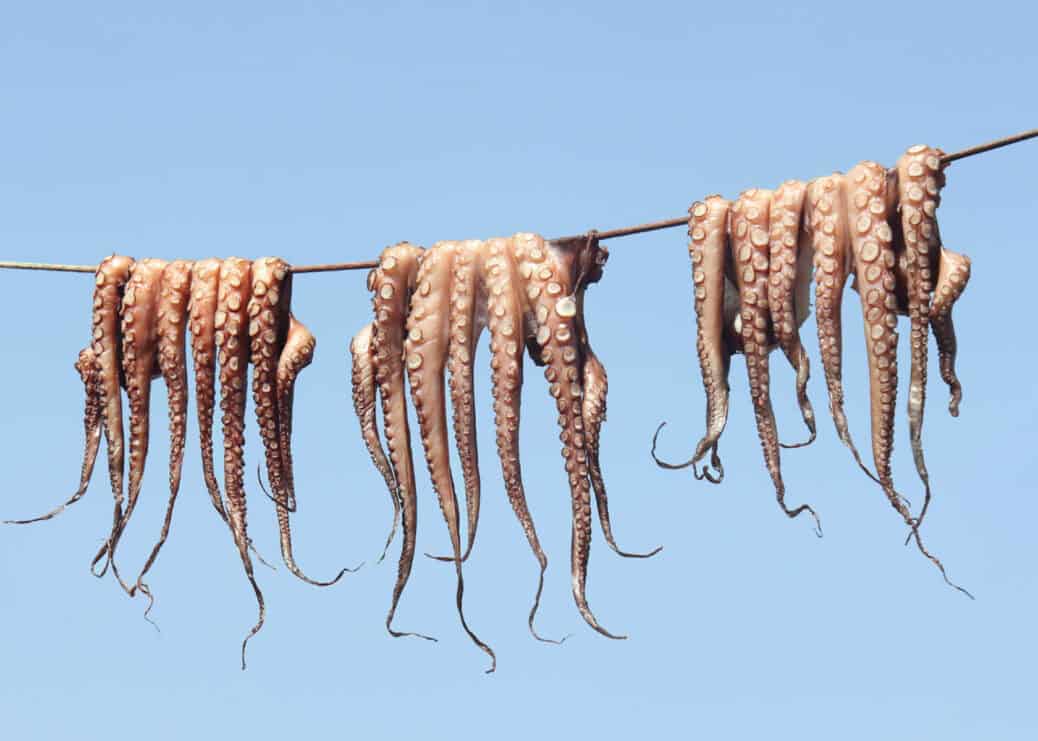
You might wonder why use dried octopus instead of fresh for this Chinese tonic soup. The drying process actually concentrates the minerals and creates a different medicinal property. In TCM, dried seafood is considered more tonifying (building) while fresh seafood is more neutral or cooling.
When you're dealing with chronic fatigue and burnout, you need deep nourishment, not just a light protein source. The dried form also releases gelatin during the long cooking process, creating a bone broth-style Chinese soup that's incredibly healing for your gut (which is often damaged when you have adrenal issues).
Plus, dried octopus keeps for months in your pantry, so you can always have the ingredients ready when you feel that particular emptiness that means you're running on fumes.

Ingredients and Chinese Herbal Benefits and TCM Properties
What Makes This Kidney Tonic Soup So Powerful for Adrenal Recovery?
In TCM philosophy, adrenal fatigue isn't recognized as a disease but as a pattern of kidney essence (jing) depletion. The kidneys in Chinese medicine are far more than organs that filter blood. They're the root of all yin and yang in the body, storing your inherited constitution and governing your stress response, reproductive function, bone health, and willpower. When you push beyond your limits for too long, you literally consume your kidney essence, leaving you depleted on the deepest level.
This dried octopus adzuki bean soup addresses depletion through a sophisticated combination of ingredients that work synergistically. Unlike stimulants that whip exhausted organs into temporary action, these ingredients provide the raw materials (essence, blood, and qi) your body needs to actually rebuild. The ocean-derived minerals from octopus nourish yin, the beans drain the dampness that makes you feel heavy and foggy, and the herbs regulate the kidney yang and yin that have fallen out of balance.
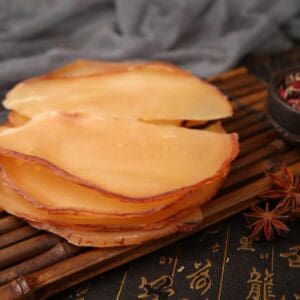
Dried Octopus (章魚, Zhāngyú) - Octopus vulgaris or related species, dried and preserved. In TCM, seafood from deep ocean waters is considered especially nourishing to kidney essence because of its concentrated minerals and the principle that "what lives in water nourishes water" (the kidney element). Octopus specifically is prized for its ability to tonify both qi and blood while nourishing yin, making it a complete kidney tonic food.
- TCM Thermal Property: Neutral to slightly Warm and Salty
- Primary Actions: Tonifies qi and blood, nourishes kidney essence (jing), strengthens tendons and bones, promotes lactation, restores vital energy
- Target Organs: Kidney, Liver, Spleen meridians
- Adrenal Support Role: Provides deep nourishment to kidney essence depleted by chronic stress; the salty flavor directs herbs to the kidney meridian; high mineral content (zinc, selenium, B12) supports hormonal synthesis and cellular energy production critical for adrenal recovery
The drying process concentrates octopus's medicinal properties, transforming it from a neutral food into a powerful essence-building ingredient. The collagen released during long cooking becomes gelatin that heals the gut lining (often damaged in adrenal fatigue) while providing easily absorbed amino acids.
Adzuki Beans (赤小豆, Chì xiǎodòu) - Vigna angularis, small dark red beans distinct from the larger red beans used in desserts. These are a classical TCM ingredient for draining dampness and promoting urination. In the context of adrenal fatigue, dampness manifests as water retention, brain fog, heavy limbs, and sluggish metabolism. The beans' diuretic action isn't harsh like pharmaceutical diuretics; it gently eliminates excess without depleting minerals.
- TCM Thermal Property: Neutral to slightly Cool and Sweet, slightly Sour
- Primary Actions: Drains dampness, promotes urination, reduces edema, clears heat, detoxifies, disperses blood stagnation
- Target Organs: Heart, Small Intestine, Kidney, Bladder meridians
- Adrenal Support Role: Eliminates dampness accumulation from poor metabolism (common when cortisol is dysregulated); reduces water retention and bloating; potassium content helps balance sodium dysregulation in adrenal fatigue; supports kidney function without over-taxing exhausted organs
The small size and dark red color indicate stronger medicinal properties than larger beans. TCM considers red foods to nourish blood and enter the Heart meridian, which is why adzuki beans both drain excess and gently tonify.
Raw Coix Seeds (薏米/薏苡仁, Yìmǐ / Yìyǐrén) - Coix lacryma-jobi, also known as Job's tears. These tear-shaped seeds are one of the most powerful dampness-draining ingredients in TCM, particularly valued when water retention, brain fog, and heavy limbs accompany adrenal fatigue. In Chinese medicine theory, dampness is a pathological accumulation of fluids that obstructs qi flow and weighs down the body, creating that specific "tired and heavy" feeling distinct from pure exhaustion. Coix seeds gently eliminate this obstruction without depleting the body.
- TCM Thermal Property: Cool to slightly Cold and Sweet, Bland
- Primary Actions: Drains dampness and promotes urination, strengthens spleen, clears heat, expels pus, benefits joints, stops diarrhea
- Target Organs: Spleen, Stomach, Lung meridians
- Adrenal Support Role: Eliminates the dampness accumulation that creates brain fog, bloating, and heavy limbs common when cortisol dysregulation impairs metabolism; reduces edema and water retention without harsh diuretic effects; supports spleen function critical for transforming food into qi and blood; helps clear the "foggy" feeling that makes adrenal fatigue so debilitating; particularly beneficial for those whose exhaustion includes joint swelling or stiffness
The cooling nature of coix seeds means they should be used in moderation (¼ cup maximum) if you're already cold all the time. They work synergistically with warming ginger to balance the formula. Raw coix seeds are preferred over roasted for maximum dampness-draining properties, though roasted versions are gentler on cold constitutions. Soak briefly or add directly to long-cooked soups.
Hyacinth Beans / White Lablab Beans (白扁豆, Bái biǎndòu) - Lablab purpureus (Dolichos lablab), specifically the white variety. These flat, oval beans are a classical TCM ingredient specifically chosen for their dual action of strengthening the spleen while simultaneously resolving dampness, making them ideal for adrenal fatigue where weak digestion and fluid retention coexist. Unlike many dampness-draining ingredients that can be harsh or depleting, hyacinth beans are gentle tonifiers that build while they clear. In Chinese herbalism, they're considered one of the best foods for "summer dampness" - that heavy, muggy feeling of exhaustion combined with digestive upset.
- TCM Thermal Property: Neutral to slightly Warm and Sweet
- Primary Actions: Tonifies spleen and stomach qi, resolves dampness, harmonizes the middle jiao (digestive system), stops diarrhea and vaginal discharge from dampness, clears summer heat, detoxifies
- Target Organs: Spleen, Stomach meridians
- Adrenal Support Role: Strengthens the weakened digestion universal in adrenal exhaustion (bloating, poor appetite, loose stools, undigested food) while simultaneously draining the dampness that creates brain fog and heaviness; harmonizes the digestive system so you can actually absorb the nourishing octopus and bone nutrients; particularly effective for chronic diarrhea or loose stools from spleen qi deficiency; supports the spleen's critical role in transforming food into qi and blood needed for kidney essence rebuilding; gentle enough for long-term use without over-drying
Hyacinth beans are particularly valued because they strengthen without being cloying or heavy, and they drain dampness without being overly cooling or depleting. This makes them perfect for the complex pattern of adrenal fatigue where you need both building and clearing simultaneously. The white variety (白扁豆) is preferred over other colors for medicinal use as it has stronger spleen-tonifying properties.
Use ¼-½ cup in combination with adzuki and black beans for comprehensive support, or substitute half the adzuki beans with hyacinth beans if your primary issue is weak digestion with loose stools rather than water retention with firm edema. They cook to a creamy texture that adds body to the soup while being easy to digest even when the digestive system is compromised.
Dried Scallops (瑤柱/干貝, Yáo zhù / Gān bèi) - Dried adductor muscle of scallops (Patinopecten yessoensis or Chlamys farreri), considered a premium ingredient in Cantonese cuisine and TCM food therapy. These golden-amber dried muscles are extraordinarily concentrated sources of umami and nutrients, with a single small piece expanding dramatically during cooking. In Chinese medicine, dried scallops are specifically valued for nourishing kidney yin and liver yin, making them the perfect complement to dried octopus which is more balanced or slightly yang-supporting. Together, they create a comprehensive kidney tonic that addresses both yin and yang deficiency simultaneously.
- TCM Thermal Property: Neutral to slightly Warm and Sweet, Salty
- Primary Actions: Nourishes kidney and liver yin, tonifies qi and blood, strengthens spleen, promotes lactation, softens hardness, benefits essence and marrow
- Target Organs: Kidney, Liver, Spleen meridians
- Adrenal Support Role: Powerfully nourishes the kidney yin depleted by chronic stress, addressing the "wired but tired" pattern with night sweats, insomnia, dry eyes, and anxiety; extremely high in taurine (supports stress resilience and cortisol regulation), glycine (calming, anti-inflammatory), and easily absorbed minerals; provides the moistening, cooling aspect needed when burnout creates both exhaustion and agitation; supports collagen production and tissue repair; particularly effective for those whose adrenal fatigue includes severe yin deficiency signs like hot palms/feet, afternoon fever, or irritability with exhaustion
Dried scallops are expensive but potent. Just 3-4 small pieces (about 15-20g) added to the soup dramatically increases its yin-nourishing power and creates an incredibly rich, satisfying umami depth. They're especially important if your adrenal fatigue leans toward kidney yin deficiency (anxious, can't sleep despite exhaustion, night sweats) rather than pure kidney yang deficiency (cold, sluggish, can't wake up). Quality matters significantly: look for intact, golden-amber colored pieces with visible muscle fibers. Avoid broken, grayish, or moldy scallops.
Soak dried scallops for 2-3 hours before adding to soup, or add them dry and let them rehydrate during the long simmer. They will shred into delicate threads that distribute throughout the broth, creating silky texture. The soaking water contains concentrated flavor and nutrients; strain and add it to your soup pot.
Pork Bones (豬骨, Zhū gǔ) - Pork spare ribs, neck bones, or any bones with marrow. In TCM, bones and marrow are considered the physical manifestation of kidney essence. The principle "essence generates marrow, marrow fills the bones" means that nourishing marrow directly supports kidney essence. During the long simmering process, minerals, collagen, gelatin, and marrow compounds infuse into the broth, creating what TCM calls a "essence-nourishing soup base."
- TCM Thermal Property: Neutral to slightly Warm and Sweet
- Primary Actions: Nourishes essence and marrow, tonifies kidney and liver, strengthens bones and tendons, supplements qi and blood, moistens dryness
- Target Organs: Kidney, Liver, Large Intestine meridians
- Adrenal Support Role: Bone marrow provides deep essence nourishment similar to kidney but more readily available; collagen and gelatin heal the gut damage common with chronic stress and cortisol elevation; minerals (calcium, phosphorus, magnesium) support bone health affected by prolonged cortisol exposure; amino acids (glycine, proline) reduce inflammation and support tissue repair; the neutral thermal property makes it suitable for both yin and yang deficiency patterns
The marrow inside bones is particularly valued in TCM as it directly corresponds to the "marrow" that the kidneys govern. This includes not just bone marrow but also the brain and spinal cord (considered "sea of marrow"). When kidney essence is depleted, cognitive function suffers - the brain fog and poor concentration of adrenal fatigue. Marrow-rich bone broth addresses this on a fundamental level.
For maximum benefit, choose bones with visible marrow (leg bones, knuckles) or use spare ribs which have both meat for additional protein and connective tissue that becomes therapeutic gelatin.
Most dry goods ingredients, tools, and supplies can be purchased at local Asian markets, Chinese grocery stores, or Amazon Online. Amazon Prime members receive free shipping and faster delivery times.

Optional Ingredients
Pork Kidney (豬腰, Zhū yāo) - Actual pork kidney organ is a great option to replace or add to using pork bones. TCM employs the principle of "treating organs with organs" or "补形以形" (bǔ xíng yǐ xíng). Consuming an animal's kidney provides specific nutrients and energetic properties that support the corresponding human organ system. While this might sound like folk medicine, modern nutrition confirms organ meats are uniquely rich in CoQ10, specific amino acids, and bioavailable minerals.
- TCM Thermal Property: Neutral and Salty
- Primary Actions: Tonifies kidney yang and yin, strengthens the lower back and knees, nourishes essence, supports reproductive function
- Target Organs: Kidney meridian specifically
- Adrenal Support Role: Provides direct, targeted nourishment to kidney essence; organ-specific nutrients support adrenal cortex repair; "like treats like" principle makes this especially effective for severe kidney/adrenal depletion; rich in vitamin B12 and iron for energy production
If using pork bones instead, the marrow provides similar essence-nourishing properties, though slightly less targeted than actual kidney.
Dried Conch (響螺片/螺肉, Xiǎngluó piàn / Luó ròu) - Dried meat from large sea snails, typically Strombus species or similar gastropods. In Cantonese food therapy, dried conch is prized for its powerful yin-nourishing and heat-clearing properties, making it particularly valuable when adrenal exhaustion manifests with inflammatory or "heat" symptoms. While less famous than dried octopus or scallops, conch is specifically sought by those who understand TCM deeply because it addresses a particular pattern: depleted yin with residual heat causing insomnia, irritability, and inflammation.
- TCM Thermal Property: Cool to Cold and Sweet, Salty
- Primary Actions: Nourishes yin and clears heat, brightens eyes and improves vision, moistens lungs, benefits kidney essence, clears liver heat, reduces inflammation
- Target Organs: Kidney, Liver, Lung meridians
- Adrenal Support Role: Specifically addresses the "burnt out but can't calm down" pattern where chronic cortisol elevation has created both depletion and inflammatory heat; nourishes kidney yin while simultaneously clearing the heat that causes night sweats, hot flashes, red eyes, irritability, and racing thoughts; particularly effective for those whose burnout includes autoimmune flares, skin inflammation, or feeling simultaneously exhausted and agitated; supports eye health often damaged by chronic stress and screen time; provides cooling minerals that calm the nervous system without sedation
Dried conch's cooling nature makes it ideal for summer adrenal fatigue or for those living in hot climates where heat exacerbates exhaustion. It's also the best choice when your burnout includes clear inflammation: joint pain, skin issues, chronic infections, or autoimmune symptoms alongside fatigue. The cooling property balances the warming nature of ginger and eucommia bark, creating a more neutral formula suitable for mixed patterns.
Use 30-40g dried conch as a partial or full replacement for dried octopus if you have more yin deficiency with heat signs than pure cold exhaustion. Conch is often sold in thin slices that look like translucent chips. Soak for 4-6 hours like octopus, though conch tends to soften faster. The texture after cooking is tender and slightly chewy, similar to abalone.
Important: Dried conch is significantly more cooling than octopus. If you're always cold, have pale complexion, or have loose stools, use it sparingly (just 10-15g combined with octopus) rather than as a full replacement. Best for those with clear heat signs alongside exhaustion.
Black Beans (黑豆, Hēidòu) - Glycine max (black soybeans) or Phaseolus vulgaris (black turtle beans). In TCM's five-element theory, black foods correspond to the Water element and directly nourish the kidneys. Black beans are particularly valued for tonifying kidney yin while also supporting kidney yang, making them effective for the mixed yin-yang deficiency common in severe burnout.
- TCM Thermal Property: Neutral and Sweet
- Primary Actions: Tonifies kidney yin and yang, nourishes blood, promotes urination, dispels Wind, detoxifies
- Target Organs: Kidney, Spleen meridians
- Adrenal Support Role: Directly replenishes kidney essence through the "like treats like" principle (black foods for the "black" or Water element kidneys); anthocyanins provide antioxidant protection against stress-induced cellular damage; supports both the depleted (yin) and weakened (yang) aspects of exhausted adrenals
Black beans also strengthen the spleen's ability to transform food into qi and blood, which is crucial when your digestive system is compromised by stress.
Fresh Ginger (生薑, Shēngjiāng) - Zingiber officinale, fresh rhizome. While dried ginger (干姜) is more warming and enters deeper to warm interior cold, fresh ginger is pungent and slightly warming with additional qi-regulating properties. It's essential in this formula to support kidney yang (the warming, activating aspect) and to improve circulation so the nourishing ingredients reach where they're needed.
- TCM Thermal Property: Slightly Warm and Pungent
- Primary Actions: Warms the middle jiao, dispels Cold, assists kidney yang, stops nausea, resolves phlegm, regulates qi circulation
- Target Organs: Lung, Spleen, Stomach, Kidney meridians
- Adrenal Support Role: Combats the "cold" symptoms of kidney yang deficiency (always feeling cold, low libido, morning fatigue); improves digestion of the rich, nourishing ingredients; promotes circulation to deliver nutrients to depleted tissues; reduces bloating common with weak spleen function
For those with pure yin deficiency (night sweats, hot flashes), use only 2-3 slices. For yang deficiency (cold extremities, low energy), increase to 6-8 slices.
Dried Tangerine Peel (陳皮, Chénpí) - Citrus reticulata peel, aged for at least 3 years. The aging process is crucial; fresh citrus peel is cooling and draining, while aged peel becomes aromatic, warming, and regulating. In formulas with heavy, nourishing ingredients like octopus and beans, tangerine peel prevents stagnation and ensures smooth qi flow.
- TCM Thermal Property: Warm and Pungent, Bitter
- Primary Actions: Regulates qi, strengthens spleen, resolves dampness, transforms phlegm, prevents stagnation from tonifying herbs
- Target Organs: Lung, Spleen meridians
- Adrenal Support Role: Ensures the dense, nourishing ingredients don't create bloating or sluggish digestion (weak digestion is universal with adrenal fatigue); aromatic oils stimulate appetite when exhaustion kills hunger; prevents the soup from being too heavy or hard to digest; supports spleen function critical for transforming food into qi
The older the peel, the more medicinal. Ten-year aged 陳皮 is considered a treasure and costs accordingly, but even 3-year peel is effective.
Red Dates (紅棗, Hóngzǎo) - Ziziphus jujuba, dried jujube fruits. These sweet, mild fruits are among the most commonly used ingredients in Chinese tonic soups because they simultaneously tonify qi and blood while calming the spirit. The calming the spirit action is particularly important for the "wired but tired" state of adrenal exhaustion.
- TCM Thermal Property: Warm and Sweet
- Primary Actions: Tonifies Spleen and Stomach qi, nourishes blood, calms the spirit (shen), harmonizes other herbs, generates body fluids
- Target Organs: Spleen, Stomach, Heart meridians
- Adrenal Support Role: Addresses the anxiety and restlessness that accompany exhaustion; natural sweetness provides sustained energy without blood sugar spikes; high in iron and B vitamins for blood building; harmonizes the formula so the strong kidney herbs don't overwhelm a weakened system; improves sleep quality by calming the Heart spirit
Always pit the dates before cooking to reduce their heating property if you have any heat signs (night sweats, irritability).
Potent TCM Herbs for Targeted Kidney Support:
Eucommia Bark (杜仲, Dùzhòng) - Eucommia ulmoides bark. This is THE premier herb for kidney yang deficiency in TCM, particularly when it manifests as lower back weakness, which is both a TCM kidney symptom and a common complaint in adrenal fatigue. Modern research shows it helps regulate cortisol and supports adrenal cortex function. This Traditional Chinese Soup For Back Pain Recipe 社仲巴戟豬尾骨燉湯 is perfect for those suffering from nagging chronic back pains. Ideal for Postpartum and those with coccyx pain, weak knees and tender tendons.
- TCM Thermal Property: Warm and Sweet, slightly Pungent
- Primary Actions: Tonifies kidney yang and liver, strengthens tendons and bones, calms the fetus, lowers blood pressure, promotes healing
- Target Organs: Kidney, Liver meridians
- Adrenal Support Role: Directly strengthens kidney yang depleted by chronic stress; the "warming" action combats the cold, sluggish feeling of burnout; strengthens the lower back and knees (kidney area); research shows it helps normalize HPA axis function; supports collagen formation for tissue repair; safe for long-term use unlike stimulating herbs
Eucommia bark contains compounds that support connective tissue, which is why it's used for back pain. But in TCM theory, this effect comes from nourishing the kidneys, which "rule the bones."
Goji Berries (枸杞, Gǒuqǐ) - Lycium barbarum or L. chinense berries. These bright red berries are one of the most famous kidney and liver yin tonics in TCM. They're particularly effective for "yin deficiency with empty heat" - that state where you're exhausted yet agitated, can't sleep yet can't wake up, depleted yet wired.
- TCM Thermal Property: Neutral and Sweet
- Primary Actions: Nourishes kidney and liver yin, benefits essence and blood, brightens eyes, moistens lungs, strengthens legs
- Target Organs: Kidney, Liver, Lung meridians
- Adrenal Support Role: Replenishes the yin fluids consumed by chronic stress; calms the "empty heat" that causes night sweats, irritability, and insomnia in exhausted people; extremely high in antioxidants to combat oxidative stress from cortisol; nourishes blood (often deficient in adrenal fatigue); improves energy without stimulation
Goji berries must be added only in the last 30 minutes of cooking or they become bitter and lose their medicinal properties. Their bright red color and sweet taste signal blood-nourishing properties. This everyday Goji Berry Chrysanthemum Tea is excellent at blood-nourishing benefits without the internal heat.
Dried Rehmannia Root (熟地黃, Shúdìhuáng) - Rehmannia glutinosa root, prepared through a steaming and drying process that transforms it from cool and blood-cooling (raw rehmannia/生地黃) to warm and blood-nourishing (prepared rehmannia). This is considered the king herb for nourishing kidney yin and blood.
- TCM Thermal Property: Slightly Warm and Sweet
- Primary Actions: Tonifies kidney yin and essence, nourishes blood and yin, strengthens marrow, benefits liver, generates body fluids
- Target Organs: Kidney, Liver, Heart meridians
- Adrenal Support Role: For severe yin deficiency with night sweats, insomnia, tinnitus, and hot palms/feet; extremely powerful blood tonic for those who are pale, dizzy, have scanty periods; "fills the marrow" which TCM connects to brain function and bone health; addresses the deep essence depletion that causes premature aging appearance in burnout
Prepared rehmannia is very rich and cloying, which is why it needs the tangerine peel to aid digestion. Use this only if you have clear yin deficiency signs.
Morinda Root (巴戟天, Bājítiān) - Morinda officinalis root. This herb specifically tonifies kidney yang while also nourishing kidney essence, making it ideal for the loss of libido and reproductive function common in adrenal fatigue. It's gentler and less heating than other yang tonics.
- TCM Thermal Property: Slightly Warm and Sweet, Pungent
- Primary Actions: Tonifies kidney yang, strengthens sinews and bones, expels Wind-Dampness, benefits essence
- Target Organs: Kidney, Liver meridians
- Adrenal Support Role: Restores sexual function and libido lost to chronic stress; strengthens yang without being overly drying (preserves yin); addresses the "cold" presentation of adrenal fatigue; helps with morning fatigue and difficulty getting out of bed; traditionally used for "coldness and pain in the lower back and abdomen"
Morinda root is particularly effective when combined with eucommia bark, as they synergistically support both the essence and the yang aspects of kidney function.
Cordyceps (冬蟲夏草, Dōngchóng xiàcǎo) - Ophiocordyceps sinensis, the famous caterpillar fungus. This is arguably the most revered substance in TCM for supporting both kidney yin and yang simultaneously while also tonifying lung qi. It's called "the bridge" because it harmonizes yin and yang rather than pushing in one direction. A favourite way to use cordyceps is this Steamed Chicken with Cordyceps Mushrooms and Black Goji 黑枸杞蟲草花蒸雞 straightforward and juicy dish which boosts the immune system in the winter.
- TCM Thermal Property: Neutral and Sweet
- Primary Actions: Tonifies kidney yang and yin, augments lung qi, stops cough, benefits essence and marrow, improves immunity
- Target Organs: Kidney, Lung meridians
- Adrenal Support Role: The closest TCM equivalent to an adaptogen that directly nourishes the adrenals; supports cellular energy (ATP) production; balances rather than stimulates; traditionally used for "exhaustion from chronic disease"; modern research confirms it supports cortisol regulation and stamina; helps the body adapt to stress without depleting reserves
Real wild cordyceps costs $20,000+ per pound, but cultivated Cordyceps militaris provides similar benefits at 1/100th the cost. For severe adrenal depletion, adding 3-5 pieces makes a significant difference.
The Synergistic Formula Design:
This isn't a random collection of ingredients. The formula follows classical TCM principles:
- Chief herbs (君药): Dried octopus and black beans directly nourish kidney essence
- Deputy herbs (臣药): Adzuki beans drain dampness that obstructs recovery; eucommia and goji support yin and yang
- Assistant herbs (佐药): Ginger and tangerine peel regulate qi and digestion so the tonics don't stagnate
- Envoy herbs (使药): Red dates harmonize the formula and guide herbs to the correct meridians
The long cooking time is essential. It breaks down the octopus collagen into absorbable gelatin, releases minerals from bones, and allows the herbs to fully express their properties. This creates a deeply nourishing, easily digestible medicine disguised as soup.
When your kidney essence is severely depleted, you can't digest supplements or raw foods well. This soup provides pre-digested nourishment that your exhausted system can actually use.
Ingredient Variations:
Protein & Seafood Alternatives:
- For unavailable octopus - Use dried cuttlefish (墨魚, same amount) or dried squid (60-80g)
- More affordable option - Use 1 piece octopus + 2-3 dried scallops (瑤柱) for combined essence and yin building
- Fresh seafood substitute - Use 1 lb fresh octopus/squid + increase pork bones to 1.5 lbs (add seafood only in last 30 minutes)
- Collagen boost - Use pork trotters (pig feet) instead of bones, especially good for postpartum recovery
- No seafood available - Double the pork bones (2 lbs) and add extra black beans (increase to ¾ cup)
These additions allow you to customize the soup even more precisely to your specific pattern of adrenal depletion and concurrent symptoms, particularly when digestive weakness or dampness obstruction is preventing recovery.
Instructions - Step-by-Step Cooking Method
The difference between mediocre Chinese soup and deeply therapeutic kidney tonic comes down to technique and patience. These steps follow traditional Cantonese soup-making methods that extract maximum minerals from dried octopus, release medicinal compounds from herbs, and transform tough ingredients into melt-in-your-mouth nourishment. Four hours seems long, but 95% is hands-off simmering while the pot does the work. Your job is simply not to rush the process.
Step 1: Prepare The Dried Octopus
Rinse the dried octopus pieces under cold running water to remove any surface dust or salt. Place in a large bowl and cover completely with room temperature water. The octopus will expand significantly, so use plenty of water.
Let soak for 4-6 hours at room temperature, or overnight in the refrigerator if you're planning ahead. How long to soak dried octopus directly affects the final texture. Under-soaked octopus stays rubbery even after hours of cooking. Properly soaked octopus becomes tender and releases its full mineral content into the broth.
Pro tip: Save the soaking water! It contains dissolved minerals and flavor compounds. Strain it through a fine-mesh sieve to remove any sediment, then add this liquid to your soup pot. This is where traditional cooks gain an edge over recipes that discard this liquid gold.
After soaking, locate the hard beak in the center where all the tentacles meet. Push it out firmly with your thumb. It should pop out easily. Cut the octopus into 2-3 inch pieces. Don't go smaller; they'll shrink during cooking.
Step 2: Blanch the Pork Bones
Fill a large pot with water and bring to a rolling boil over high heat. Add your pork bones (or spare ribs) and let them boil vigorously for 3-5 minutes. You'll see gray foam and impurities rise to the surface. This is exactly what you want to remove.
Why this matters: Blanching removes blood, bone fragments, and impurities that would cloud your soup and create off-flavors. This single step is the difference between restaurant-clear broth and murky, slightly metallic-tasting home soup.
Drain the bones completely in a colander. Rinse each piece under cold running water, using your hands to scrub off any remaining foam or dark bits clinging to the bones. The water running off should be clear. Transfer the cleaned bones to a plate and set aside.
Pro tip: Don't skip the scrubbing step. Those little gray bits will make your final soup taste "muddy." Clean bones = clean-tasting medicine.
Step 3: Rinse Your Beans
While the bones drain, rinse your adzuki beans and black beans in a fine-mesh strainer under cold water. Swirl them around with your hand, removing any stones or debris. No soaking needed; the long cooking time will soften them completely.
Some TCM practitioners insist on soaking beans overnight to reduce cooking time, but for medicinal soups, cooking beans from dry allows them to release more of their therapeutic compounds into the broth. Your choice depends on whether you prioritize speed or medicine.
Step 4: Combine Everything in Your Soup Pot
Now comes the easy part. In your largest soup pot (at least 6-quart capacity), add in this order:
- Blanched and cleaned pork bones
- Soaked octopus pieces PLUS the strained soaking water
- Both types of beans (adzuki and black)
- Fresh ginger slices (smash them lightly with the flat of your knife first to release oils)
- Dried tangerine peel (rinse quickly if it seems dusty)
- Red dates (pitted to reduce heating properties)
- Any TCM herbs EXCEPT goji berries (eucommia bark, rehmannia, morinda, etc.)
- Pour in 10-12 cups of filtered water
Pro tip: Layer denser items on the bottom (bones), lighter items on top (herbs). During the long simmer, everything will settle properly. The ginger releases more flavor when smashed first.
If using rice wine, add a generous splash (2-3 tablespoons) now. It helps extract medicinal properties from the herbs and adds subtle complexity.
Step 5: The Critical Boil
Place your pot over high heat, uncovered. Let it come to a vigorous, rolling boil. This aggressive heat does several things: activates the herbs, begins extracting minerals from the octopus, and forces any remaining impurities to the surface.
Watch the pot during this phase. You'll see foam forming on top - this is normal. Use a ladle or fine-mesh skimmer to skim off this foam. Keep skimming until the foam subsides and the liquid looks relatively clear. This usually takes 5-7 minutes of active boiling.
Why this matters: This initial hard boil extracts the maximum minerals and medicinal compounds. Think of it as "jump-starting" the medicine. After this, gentle heat takes over.
Step 6: The Long, Slow Simmer
Once you've skimmed the foam and the broth is boiling vigorously, reduce the heat to the absolute lowest setting your stove allows. You're looking for tiny bubbles that just barely break the surface, not a rolling boil. Cover the pot, but leave the lid slightly ajar (about 1 inch crack) to allow some evaporation and concentration.
Check the pot occasionally. The liquid should reduce by about one-third (from 12 cups to 8 cups). If it's reducing too quickly, lower heat and adjust the lid to cover more. If it's barely simmering, increase heat slightly.
Pro tip: The soup is ready when the octopus is fork-tender (yields easily without being mushy) and the beans are completely soft with no chalky centre. Test a piece of octopus at the 3-hour mark. If it's still chewy, continue cooking.
Slow cooker alternative: After the initial boil and skim, transfer everything to a slow cooker. Cook on low heat for 8-10 hours or high heat for 5-6 hours. The extended time in a slow cooker actually extracts more medicine, making this method ideal for severe adrenal depletion.
Step 7: Add Goji Berries (Last 30 Minutes)
Set a timer! Goji berries are sensitive to overcooking. Added too early, they become bitter and lose their medicinal properties. Added at the right time, they provide sweetness and powerful yin-nourishing benefits.
At the 3.5-hour mark (or 30 minutes before you plan to eat), add your goji berries directly to the pot. Stir gently. Let them simmer for exactly 20-30 minutes. They'll plump up and turn the broth slightly sweeter.
Why timing matters: Goji berries contain delicate compounds that degrade with prolonged heat. The 30-minute window is the sweet spot where they release their benefits without becoming bitter.
Step 8: Season
Turn off the heat. Let the soup rest for 5 minutes. Now taste the broth.
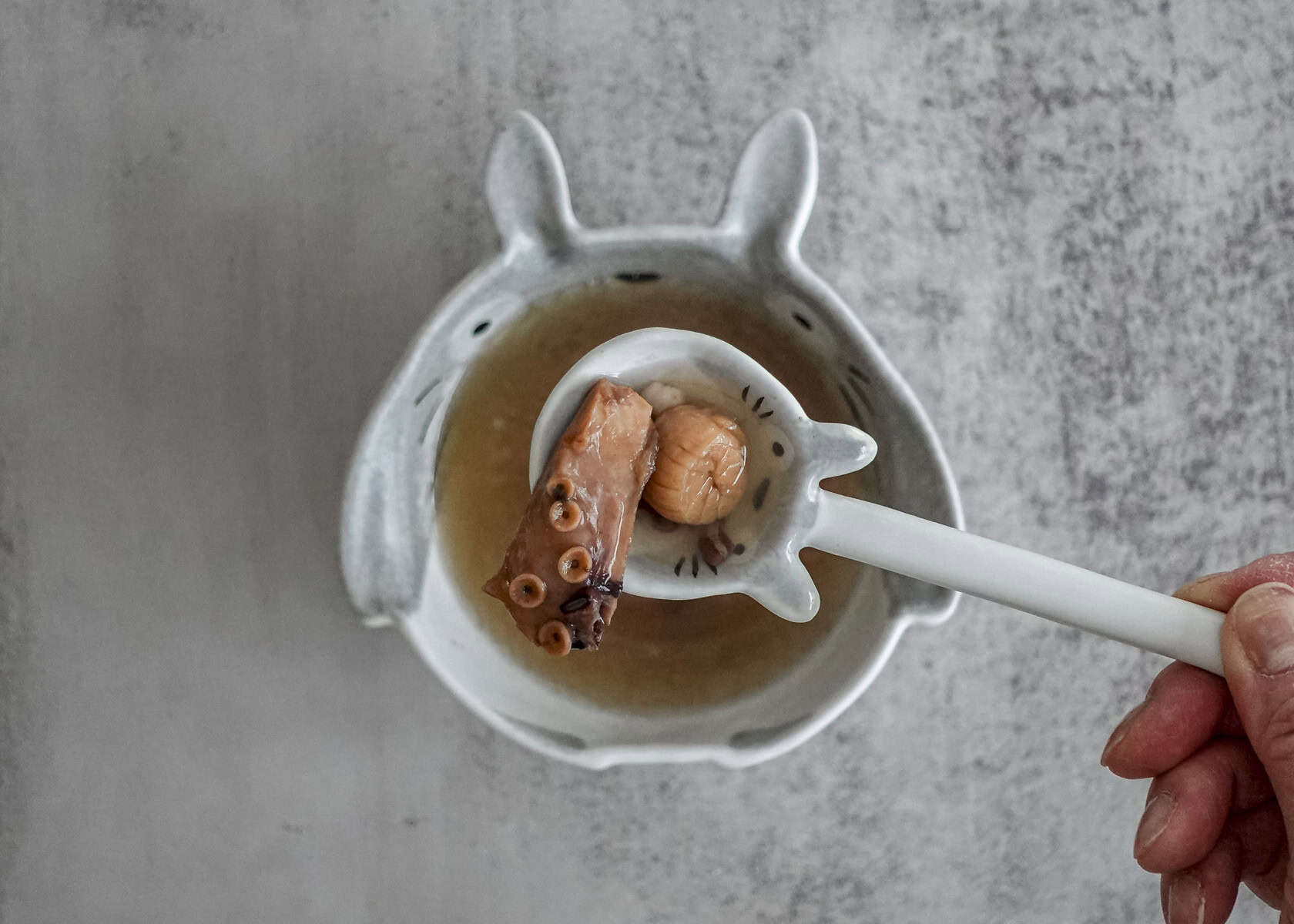
A slightly salty, oceanic flavour from the octopus, earthy sweetness from the beans, subtle ginger warmth, and a complex herbal undertone. The broth should feel slightly thick and silky from the gelatin.
The natural salt from the octopus should provide most of the seasoning. Add only a small pinch of sea salt if needed. Start with ¼ teaspoon, stir, taste again.
That ocean saltiness from the octopus is providing the sodium your depleted adrenals are craving in a balanced, bioavailable form. Heavy seasoning masks this and defeats the therapeutic purpose.
Pro tip: If the soup tastes bland, the problem isn't salt - it's likely under-cooking (herbs haven't released) or low-quality ingredients. Resist the urge to add soy sauce or other seasonings. This isn't meant to taste like restaurant soup; it's meant to taste like medicine.
Step 9: Serve & Enjoy
Ladle the soup into bowls while still quite warm (not boiling hot, not lukewarm). In TCM, warm temperatures are easiest on a compromised digestive system.
Pro serving tip: Don't just drink the broth and ignore the solids. The octopus and beans have absorbed the herbal compounds and contain fibre and protein your body needs. Chew slowly and thoroughly.
Step 10: Timing Your Consumption for Maximum Benefit
Best time to drink: Between 5-7pm ("kidney time" in the TCM organ clock) or 1-2 hours before bed. Drink the soup slowly over 20-30 minutes, savouring it rather than gulping. Your body absorbs the nutrients better when you're relaxed and mindful.
After eating: Sit quietly for 15-20 minutes. Avoid immediately jumping into stressful activities or intense exercise. This soup is working to rebuild your kidney essence - give your body the space to receive and process it.
Troubleshooting Common Issues
Octopus is still tough after 4 hours: Continue simmering another hour. Old or improperly dried octopus takes longer. Next time, soak longer (8-12 hours) or choose a different supplier.
Beans aren't soft: Old beans (more than 1 year old) may never fully soften. Don't add salt until the very end, as salt prevents beans from softening. If beans are too old, you may need 5-6 hours of cooking.
Soup tastes bland: Likely causes: (1) octopus wasn't properly soaked, (2) cooking temperature too low so herbs didn't extract, (3) not enough octopus (use the full 50-60g), or (4) herbs are old and have lost potency. Add a touch more sea salt, but investigate the root cause for next time.
Soup is too salty: You used too much natural seasoning or the octopus was particularly salty. Add another cup of water and simmer 10 more minutes to dilute. Next time, rinse the octopus more thoroughly before soaking.
Broth is murky/cloudy: You skipped or rushed the blanching and skimming steps. The soup is still medicinal, just less visually appealing. Can't be fixed after the fact, but remember for next batch.
Feeling bloated after eating: The soup might be too rich for your current digestive state. Next time: (1) add an extra piece of aged tangerine peel, (2) increase ginger to 6-7 slices, (3) reduce beans by half, and (4) eat smaller portions (1 cup instead of 2).
Feeling too warm/getting night sweats after: The soup is too yang-tonifying for your constitution. Reduce ginger to 2 slices, omit warming herbs like morinda or cinnamon, and add cooling elements like extra goji berries or lotus seeds.
Perfect soup indicators:
- Clear, deeply coloured broth (amber to dark brown)
- Octopus that's tender but not mushy
- Beans that are creamy inside, no chalky core
- Silky, slightly thick texture from gelatin
- Subtle salty-sweet-herbal flavour that tastes "nourishing" not "seasoned"
- You feel warm, satisfied, and calm after eating (not bloated or overfull)
This isn't a recipe you'll master the first time. Each batch teaches you about timing, your stove's heat levels, and how your body responds. By the third or fourth batch, you'll instinctively know when the octopus is perfectly tender and when the medicine has been fully extracted. That's when this soup transforms from a recipe you follow into medicine you create.
Storage, Meal Prep Guide, and Make-Ahead Tips
This kidney tonic soup is perfect for batch cooking when you're too exhausted to cook daily. Make a triple batch every 2 weeks, and you'll always have medicine on hand. The soup actually improves after 24-48 hours as flavours meld and medicinal compounds integrate.
Let leftover soup cool to room temperature, then transfer to glass containers. Refrigerate for up to 4 days, or freeze for up to 3 months.
Reheating instructions: Reheat gently over low heat, never bringing it back to a boil. Boiling reheated Chinese medicine soup degrades the medicinal compounds that took 4 hours to extract. Aim for "very warm" not "piping hot."
Pro tip: The soup actually tastes better the next day as the flavours continue to meld. Some TCM practitioners say the medicine is strongest on day 2.
Thawing from Frozen: Best method: Thaw overnight in refrigerator, then reheat. Quick method: Submerge sealed container in cool water for 30-40 minutes until mostly thawed.
Organization Hack: Keep a "kidney soup box" with all shelf-stable ingredients (dried octopus, herbs, beans, tangerine peel, dates). When cooking day arrives, grab one box/pouch instead of hunting for 8 items. Only buy fresh ginger and bones each time.
Frequently Asked Questions (FAQs)
More isn't better with TCM food therapy. For acute burnout (first 1-2 months), drink 3-4 times weekly with rest days between servings so your body can process the dense nourishment. Once in maintenance mode (after 6+ months), once weekly is sufficient.
Properly made dried octopus adzuki bean soup tastes savoury, slightly salty with clean oceanic flavour (not fishy), earthy sweetness from beans, and subtle herbal notes. The dried octopus becomes tender with a pleasant, slightly chewy texture similar to mushrooms after the long simmer. If your soup tastes strongly fishy, you have poor-quality octopus (should smell like clean ocean, not ammonia) or skipped the proper soaking and blanching steps.
Generally yes, and many Chinese postpartum soup recipes feature dried octopus for its blood-building and kidney essence properties. During pregnancy, skip eucommia bark and reduce ginger if you have heartburn; while breastfeeding, this soup is actually recommended because octopus promotes lactation and helps rebuild qi and blood lost during childbirth. Always consult your doctor and TCM practitioner if you have pregnancy complications.
Dried octopus isn't at regular Western supermarkets; visit Chinese herbal medicine shops or Asian grocery stores or Amazon. Look for light tan or beige colour (not gray), firm texture, clean ocean smell (never ammonia), and expect $20-40 per package that makes 3-4 batches. Can't find it? Ask staff (many stores keep it behind the counter) or substitute dried cuttlefish (墨魚), which has similar kidney-nourishing properties.
Week 1-2: Better sleep quality and reduced salt cravings. Week 3-4: Improved morning energy and less brain fog. Month 2-3: Real stress resilience returns; stressful days don't completely wreck you. Month 4-6: Sustained energy and better hormonal balance. Month 6-12: Full recovery if you've also addressed sleep, stress, and lifestyle; this soup provides building blocks but won't work if you're still sleeping 4 hours nightly and working 80-hour weeks.
Fresh octopus works in a pinch but provides only 60-70% effectiveness because the drying process concentrates minerals and creates the tonifying properties valued in TCM kidney tonic soups. If using fresh (1 lb replaces 50-60g dried), increase pork bones to 1.5-2 lbs, add octopus only in last 30-45 minutes of cooking, and double the TCM herbs to compensate. Serious adrenal recovery requires the concentrated nourishment only dried octopus provides.
Consult your doctor and TCM practitioner before starting because kidney-nourishing herbs can affect blood pressure, though many find it stabilizes naturally as adrenal function improves. Start with small portions (½ cup), monitor blood pressure daily for first week, reduce or omit eucommia bark initially, and never stop or reduce blood pressure medication without medical supervision. The dried octopus provides balanced electrolytes (sodium with potassium from beans), not straight sodium like table salt.
Vegetarian kidney tonic soup is challenging but possible: use ½ cup ground black sesame paste (nourishes kidney essence), ½ cup walnuts, 8-10 dried shiitake mushrooms, 2 strips kombu seaweed (ocean minerals), triple the black beans (¾ cup), and double all TCM herbs. Reality check: vegetarian version works slower; you'll need 4-5 servings weekly versus 2-3x for omnivore version, plus supplemental TCM herbal formulas from a practitioner. Consider adding omega-3 algae supplements to replace seafood fatty acids.
Properly made soup smells clean, slightly oceanic, earthy, and herbal (savory and comforting, not unpleasant). Strong fishy or ammonia smell means poor quality dried octopus (buy from reputable Chinese herbal medicine shops) or improper soaking; sour smell means spoilage; burnt smell means heat too high. If ammonia smell persists after 4 hours cooking, octopus was bad and soup must be discarded.
Instant Pot works but extracts only 60-70% of therapeutic value versus traditional method: soak octopus 12 hours, blanch bones, pressure cook high for 60 minutes with natural release 20-30 minutes, then sauté mode with goji berries for 10 minutes. Use Instant Pot for maintenance phase or emergencies; use traditional 4-hour method for acute burnout when you need maximum medicinal extraction and when batch cooking. Best strategy: make traditional triple batch every 2 weeks, freeze portions, use Instant Pot only between batches.
You can make effective simplified version with just dried octopus, beans, bones, ginger, and red dates (still tonifies kidney essence and supports adrenal recovery, just slower results). Most impactful single additions: eucommia bark (15g) for lower back weakness, cold feeling, morning fatigue, loss of libido; or goji berries (3 tablespoons) for night sweats, insomnia, dry eyes, anxiety. Any Chinese herbal medicine shop sells individual herbs for $3-5 each or pre-made "kidney soup packets" for $10-15.
Acute burnout (months 1-2): 3-4 times weekly with rest days between, serving 1.5-2 cups. Active recovery (months 3-6): 2-3 times weekly, same serving size. Maintenance (month 6+): Once weekly, 1-2 cups. Best timing: between 5-7pm ("kidney time" in TCM organ clock) or 1-2 hours before bed for maximum absorption.
Other TCM Chinese Soups for Vital Defence
Once you've experienced the profound nourishment of this Chinese dried octopus adzuki bean soup, you'll want to explore more TCM healing soups that address different patterns of imbalance. These nomss.com recipes all share the same Traditional Chinese Medicine philosophy: food as medicine, long-simmered broths that extract maximum therapeutic value, and ingredients chosen for their energetic properties, not just flavour.
Bookmark these traditional Chinese medicine summer and Chinese seasonal wellness flavourful dishes that restore as they refresh.
Chinese Sweet Mung Bean Soup 綠豆沙
Modified Longan Date Tea for Summer (No Overheating)
Winter Melon Soup With Pork Ribs 冬瓜湯
Adzuki Red Bean, Job's Tears and Poria summer detox soup 赤小豆薏米茯苓茶
Browse our complete recipe collection for more therapeutic cooking inspiration.
Each of these recipes extends Traditional Chinese Medicine's core principle: food is your first medicine. When dealing with chronic fatigue, burnout, or kidney essence depletion, variety in your medicinal foods ensures you're addressing multiple organ systems and preventing boredom. Rotate through different TCM soups and nourishing dishes throughout the week rather than relying on a single remedy.
Building a TCM meal plan for adrenal recovery:
- Monday and Thursday: Chinese Dried Octopus Adzuki Bean Soup (kidney essence building) Tuesday: Kitchari (digestive rest and gentle qi building)
- Friday: Beef brisket with tendon (additional blood and marrow nourishment)
- Saturday: Quick Bang Bang Chicken with Okra black fungus side (lighter but still supportive)
- Sunday: Mung bean Soup as dessert after regular meals (cooling and detoxifying)
This rotation ensures you're getting comprehensive support: kidney tonification, blood building, Qi restoration, digestive healing, and heat clearing. No single food does everything, but a strategic combination of TCM recipes creates synergistic healing.
Want to deepen your understanding of Chinese food therapy? Each recipe on nomss.com includes detailed explanations of TCM properties, helping you choose dishes that match your specific pattern of imbalance. Whether you're dealing with kidney yang deficiency (cold, exhausted, low libido), kidney yin deficiency (night sweats, insomnia, wired but tired), qi deficiency (fatigue, poor appetite, weak immunity), or blood deficiency (pale, dizzy, scanty periods), there's a Traditional Chinese Medicine soup that addresses your needs.
Have you tried this Chinese dried octopus adzuki bean soup for adrenal fatigue?
This kidney tonic soup proves that healing doesn't require expensive supplements or complicated protocols. With high-quality dried octopus, beans, bones, and a handful of TCM herbs, you can create medicine that's been rebuilding depleted bodies for thousands of years. Your version, simmered with patience in your own kitchen, carries an intention and care that no store-bought remedy can match.
The next time you're too exhausted to function, remember this recipe. It's the kind of medicine that transforms burnout into recovery, one nourishing bowl at a time.
For traditional Chinese soups, healing recipes, and TCM food therapy that actually work, subscribe to our newsletter and never miss a wellness post!
I'd love to see how you went with my recipes! Leave a comment below or tag me on Instagram @INSTANOMSS #INSTANOMSS.
> Recipe
PrintDried Octopus Adzuki Bean Soup for Adrenal Fatigue | TCM Recipe
Dried Octopus Adzuki Bean Soup for Adrenal Fatigue (赤小豆章魚湯) is a TCM Recipe and Cantonese kidney tonic soup that nourishes kidney essence, fights adrenal fatigue, and restores energy naturally. This deeply nourishing TCM soup combines dried octopus, adzuki beans, dried scallops, conch, hyacinth beans, raw coix seeds, and Chinese herbs to rebuild Qi and blood depleted by chronic stress and burnout.
- Prep Time: 15 mins
- Cook Time: 3 hours
- Total Time: 3 hours 15 minutes
- Yield: 4-6 persons 1x
- Category: Soup
- Method: Boil
- Cuisine: Chinese, TCM
Ingredients
- 2 pieces dried octopus (50-60g total)
- ½ C adzuki beans
- ¼ C hyacinth beans
- ¼ C raw ciox seeds
- 50g Chinese yams
- 2 Dried Figs
- 1 Chinese Date
- 25g dried scallops
- 1 lb pork spare ribs or soup bones with marrow
- 2L filtered cold water
- salt to taste
Optional Ingredients
- 5 slices fresh ginger (increase to 8 for cold-type adrenal fatigue)
- 3 pieces dried tangerine peel (chen pi)
- ¼C Black Beans
- 10 red dates, pitted
 Get Recipe Ingredients
 Instructions
- Rinse dried octopus under cold water. Place the octopus in large bowl and cover completely with room temperature water.
- Soak for 4-6 hours at room temperature, or overnight in the refrigerator. Save the soaking water.
- Remove hard beak from centre where tentacles meet (push out with thumb). Cut into 2-3 inch pieces.
- Bring a large ceramic pot of water to a boil. Add pork bones and boil vigorously for 3-5 minutes. Drain and rinse bones thoroughly under cold water, scrubbing off any gray foam. Set aside.
- In large soup pot (at least 6-quart), combine blanched bones, soaked octopus pieces plus the soaking water (strained), both types of beans (adzuki and hyacinth), figs, Chinese mizao, raw coix seeds, and other optional ingredients/TCM herbs like ginger, tangerine peel, red dates, eucommia bark, EXCEPT goji berries. Add 12 cups of cold filtered water.
- Bring to vigorous rolling boil over high heat. Skim off any foam that rises to surface (about 5-7 minutes).
- Reduce heat to the lowest setting. Cover pot with lid slightly ajar. Simmer gently for 3.5 to 4 hours. Soup should reduce to about 8-10 cups. Octopus should be fork-tender and the beans completely soft.
- In the last 30 minutes of cooking, add goji berries. Set a timer (they become bitter if cooked longer).
- Turn off the heat. Taste broth and add a small pinch of sea salt if needed (octopus provides natural sodium, so start with ¼ teaspoon).
- Serve warm (not boiling hot). Each serving should include octopus pieces, beans, meat from bones, and plenty of deeply coloured broth.




Notes
Slow Cooker Method: After blanching bones and skimming foam, transfer everything except goji berries to slow cooker. Cook on LOW 8-10 hours. Add goji berries last hour.
Instant Pot Method: Soak octopus 12 hours. Pressure cook HIGH 60 minutes with natural release 20-30 minutes. About 60-70% as effective as traditional method.
Storage: Refrigerate 4-5 days or freeze up to 3 months. Soup becomes gelatinous when cold (this is good - that's collagen).
Reheating: Warm gently over low heat until steaming. Never boil reheated soup (destroys medicinal compounds).
Nutrition
- Serving Size: 1 pot
- Calories: 287
- Sugar: 9.4 g
- Sodium: 194.6 mg
- Fat: 11.2 g
- Carbohydrates: 17.2 g
- Fiber: 3.6 g
- Protein: 29.5 g
- Cholesterol: 92.2 mg

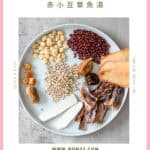
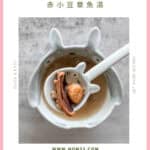
Pin the above image to your Chinese TCM Recipe Pinterest Board to bookmark this page. We are so excited to share our recipes with you!
More Chinese Recipes
Chinese Steamed Chicken With Shiitake Mushroom 冬菇蒸雞
Air Fryer BBQ Pork Char Siu 氣炸鍋蜜汁叉燒
Red Bean Soup (Instant Pot) 蓮子百合紅豆沙







Comment Below