
There's something magical about brewing chrysanthemum honeysuckle tea - watching dried chrysanthemum flowers unfurl in hot water. Their petals slowly releasing a golden hue that promises relief from the oppressive heat of summer. Add honeysuckle buds and a twist of licorice root, and you've got one of Traditional Chinese Medicine's most beloved cooling teas. A simple remedy that's been quieting internal flames for centuries. This Chrysanthemum Honeysuckle Tea 甘草金銀花白菊花茶 isn't just another herbal infusion. It's your body's reset button when you're feeling overheated, irritable, or dealing with that scratchy throat that won't go away! This 3-ingredient cooling, inflammation-reducing tea is your ancient Chinese remedy for modern heat problems!
> In This Post: Everything You'll Need For The Best Honeysuckle Chrysanthemum Tea Recipe
Consider this your complete roadmap to brewing authentic Chrysanthemum Honeysuckle Tea that actually works. You'll learn exactly which dried flowers to buy (and where), how to balance the cooling properties without freezing out your digestion, plus ingredient swaps for different symptoms - from angry red eyes to that scratchy throat that showed up uninvited. Whether you're a TCM newbie or just want a killer cooling tea for summer, I'm breaking down the traditional wisdom and modern tweaks that make this three-herb combo so legendary. This Chinese anti-inflammatory tea joins the ranks of time-tested Chinese herbal cooling remedies that have kept families balanced through sweltering summers for generations.
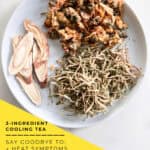
Check out this quick story summary of our recipe!
Jump to:
- > In This Post: Everything You'll Need For The Best Honeysuckle Chrysanthemum Tea Recipe
- Ingredients and Chinese Herbal Benefits and TCM Properties
- Ingredient Variations:
- When Should You Drink Chrysanthemum Tea?
- Beyond Summer: Year-Round Heat-Clearing Benefits
- How to Source Quality Ingredients
- Understanding the Cooling Properties in TCM
- Who Should Be Cautious?
- The Science Behind the Sip
- Chrysanthemum Honeysuckle TCM tea recipe Flavour Profile: What to Expect
- Instructions - Step-by-Step Cooking Method
- Storage, Meal Prep Guide, and Make-Ahead Tips
- Frequently Asked Questions (FAQs)
- Other Heat-Clearing Teas & TCM Summer Cooling Recipes
- > Recipe
- Chrysanthemum Honeysuckle Tea Recipe | TCM Cooling Drink
- Ingredient Prep (Essential for Best Results)
Ingredients and Chinese Herbal Benefits and TCM Properties
What Makes This Chinese Herbal Tea So Effective?
In TCM philosophy, many modern ailments stem from excess "heat" in the body. This isn't about temperature - think inflammation, redness, restlessness, and that general feeling of being wound too tight. The three-herb combination in this tea works synergistically:
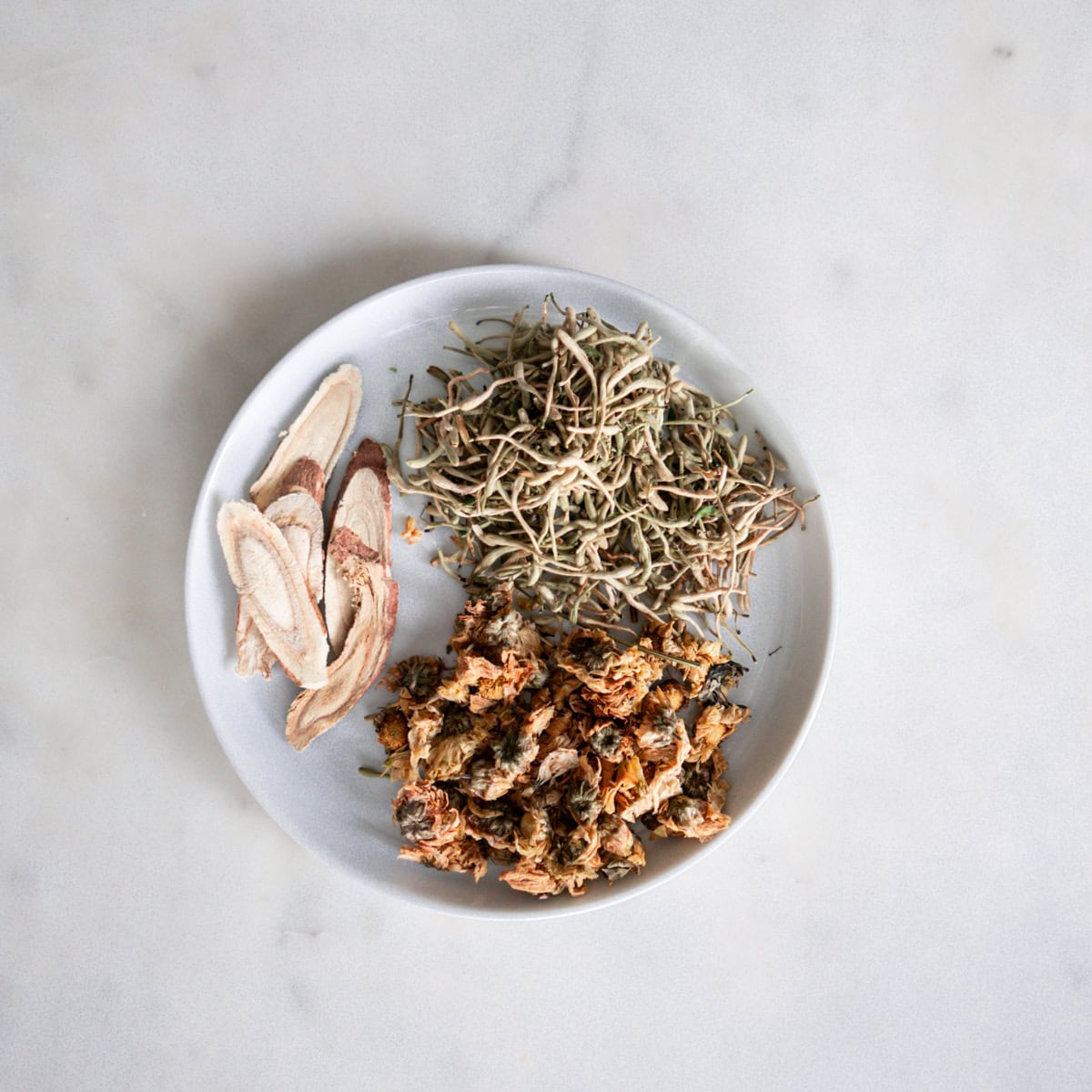
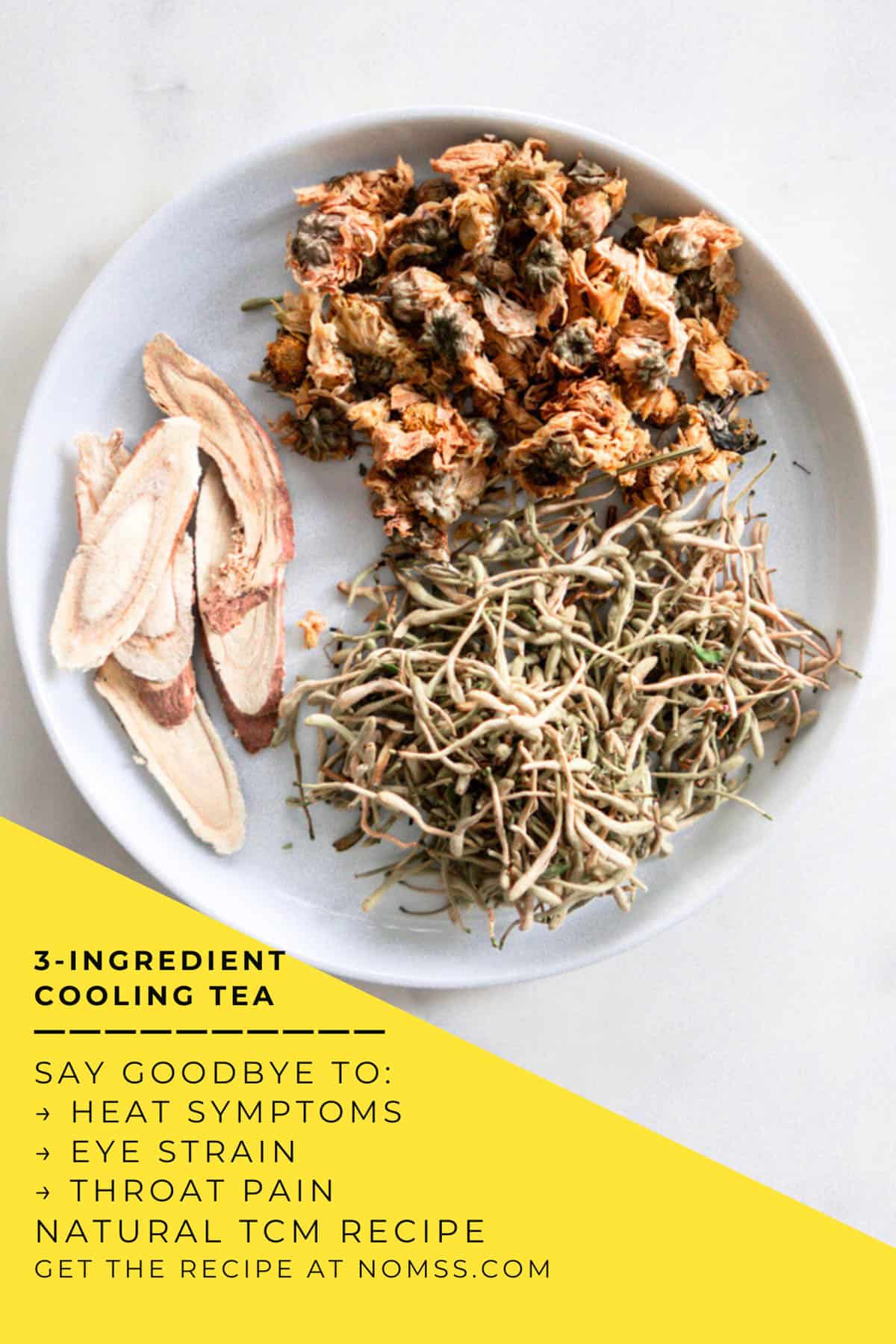
Chrysanthemum flowers (白菊花, Bái júhuā) - Chrysanthemum morifolium, commonly known as Garden Mum, clear heat from the liver and eyes, which is why your grandmother probably told you to drink this when you've been staring at screens too long. The cooling properties help with red, dry eyes and headaches that pulse at your temples.
- TCM Thermal Property: Cool and Sweet, slightly Bitter
- Primary Actions: Clears Liver heat, brightens eyes, calms Liver Yang rising, disperses Wind-Heat
- Target Organs: Liver, Lung meridians
- Heat-Clearing Role: Specifically targets upper body heat manifesting as red eyes, headaches, dizziness, and visual strain from screen time
Honeysuckle (金銀花, Jīnyín huā) - Honeysuckles are arching shrubs in the genus Lonicera of the family Caprifoliaceae. This clade of dicotyledonous flowering plants is the superstar for clearing heat and toxins. In TCM terms, it "drains fire" and is particularly effective for sore throats, early-stage colds, and skin inflammations. The sweet fragrance isn't just pleasant; it's therapeutic!
- TCM Thermal Property: Cold and Sweet
- Primary Actions: Clears heat and toxins, drains fire, expels Wind-Heat, reduces swelling
- Target Organs: Lung, Heart, Stomach meridians
- Heat-Clearing Role: Powerfully eliminates Heat-Toxins manifesting as sore throat, fever, skin eruptions, and early-stage infections
Licorice root (甘草, Gāncǎo) - Glycyrrhiza uralensis, also known as Chinese licorice, acts as the harmonizer, moderating the cooling effects while adding natural sweetness. It soothes the throat, supports the digestive system, and enhances the effectiveness of other herbs.
- TCM Thermal Property: Neutral and Sweet
- Primary Actions: Harmonizes other herbs, tonifies Spleen Qi, moistens Lungs, clears heat and toxins, relieves throat pain
- Target Organs: All twelve meridians (enter every channel)
- Heat-Clearing Role: Moderates the intense cooling properties while enhancing throat-soothing effects and preventing digestive upset.
Optional Ingredient (Sweetener)
Rock Sugar (冰糖, Bīng Táng) - Crystallized cane sugar used extensively in TCM formulas, rock sugar is far more than a sweetener. Rock Sugar is considered a gentle medicinal ingredient that moistens, cools, and harmonizes. Unlike refined white sugar (which TCM considers heating and dampness-producing), rock sugar's crystallization process creates a neutral-to-cool substance that complements heat-clearing formulas without interfering with their therapeutic actions.
- TCM Thermal Property: Neutral to slightly Cool and Sweet
- Primary Actions: Tonifies Spleen and Lung Qi, moistens Lungs and throat, clears mild heat, stops cough, harmonizes herbal formulas, generates fluids
- Target Organs: Spleen, Lung, Stomach meridians
- Heat-Clearing Role: Provides moistening sweetness that soothes dry, inflamed tissues without adding heat to the body; enhances the heat-clearing herbs' effectiveness by protecting the digestive system from excessive cold
Rock sugar's crystal structure creates a slower dissolution rate than granulated sugar, allowing its sweet essence to gradually permeate the tea without causing blood sugar spikes or dampness accumulation.
In classical TCM texts, rock sugar appears in lung-moistening formulas for dry coughs and throat irritation, which are the very conditions this chrysanthemum honeysuckle tea addresses. Its neutral-cool nature means it won't counteract the cooling herbs, while its Qi-tonifying property prevents the formula from being purely draining (which could weaken those with deficient constitutions).
Most dry goods ingredients, tools, and supplies can be purchased at local Asian markets, Chinese grocery stores, or Amazon Online. Amazon Prime members receive free shipping and faster delivery times.
Ingredient Variations:
- For stronger cooling - Add 5-6 pieces dried peppermint (薄荷)
- For sore throat focus - Double the honeysuckle to 2 tablespoons
- For eye strain - Use 12-15 chrysanthemum flowers
- For digestion - Add 3-4 slices fresh ginger (balances the cooling nature)
- For mild sweetness - Use 1-2 pieces of rock sugar instead of honey
- Yellow vs. white chrysanthemum - White (bai ju hua) is more cooling; yellow (huang ju hua) is gentler
For a nourishing twist that balances cooling with Qi-building, try the longan red date chrysanthemum tea variation that adds mai dong for extra moisture.

When Should You Drink Chrysanthemum Tea?
This cooling herbal tea shines during:
- Hot summer months when you need natural heat relief-pair it with cooling mung bean soup for maximum effect
- Dry, windy weather that leaves your throat parched
- After eating spicy or fried foods to balance internal heat
- During seasonal transitions when colds are circulating
- Late afternoons when you need a caffeine-free pick-me-up
- Before bed if heat symptoms keep you restless (but not too late-it's hydrating!)
Beyond Summer: Year-Round Heat-Clearing Benefits
While chrysanthemum honeysuckle tea shines as a summer staple, internal heat doesn't clock out when autumn arrives. In TCM theory, heat can accumulate any time of year-from late-night screen binges that strain your Liver, stress-fueled irritability during work deadlines, or that post-holiday food coma after too many fried foods and spicy hot pot sessions.
Winter's dry indoor heating can actually create significant heat symptoms, such as parched throat, restless sleep, and those annoying mouth sores that appear when your body's fluids become depleted.
Think of this tea as your portable fire extinguisher. Reach for it whenever you feel overheated, inflamed, or wound too tight, regardless of what the thermostat says outside.
How to Source Quality Ingredients
The difference between mediocre and magnificent chrysanthemum tea lies in your ingredients:
Where to buy: Chinese herbal shops, Asian grocery stores, or reputable online TCM suppliers are your best bet.
Look for:
- Chrysanthemums with intact petals and bright colour (not brown or musty).
- Honeysuckle buds that are greenish-yellow, not completely brown.
- Licorice root that's firm and aromatic, not dried out.
Storage Pro Tips: Store your TCM tea blend ingredients and dried herbs in airtight containers away from direct sunlight. Properly stored, they'll maintain potency for 8-12 months.
Understanding the Cooling Properties in TCM
Here's what makes this herbal infusion different from your standard tea: In Traditional Chinese Medicine, foods and herbs fall on a spectrum from warming to cooling. This concept is unrelated to serving temperature.
Cooling herbs like chrysanthemum and honeysuckle:
- Clear excess heat and inflammation
- Support the liver and detoxification pathways
- Calm the mind and reduce irritability
- Help with skin conditions related to heat
- Soothe throat discomfort
It is crucial to remember that "cooling" doesn't mean everyone should drink this tea constantly or at a "cold" temperature. These same heat-clearing principles apply across TCM cooking, from bitter melon soup to lighter summer broths.

Who Should Be Cautious?
Skip or limit this jin yin hua tea if you:
- Have a naturally cold constitution (always cold, pale, loose stools)
- Are pregnant or breastfeeding (consult your healthcare provider first)
- Take blood pressure medications (licorice can interact)
- Have chronic diarrhea or weak digestion
- Feel cold after drinking it (your body is telling you it's too cooling)
TCM is about balance. If you love this tea but find it too cooling, add a few slices of fresh ginger to warm it up.
The Science Behind the Sip
Modern research is catching up with ancient wisdom. Studies show:
- Chrysanthemum contains antioxidants that support eye health and reduce inflammation
- Honeysuckle has demonstrated antibacterial and antiviral properties in laboratory studies
- Licorice root contains glycyrrhizin, which has anti-inflammatory effects
While these findings are promising, remember this tea is a traditional remedy, not a medical treatment. It's part of a holistic approach to wellness that includes diet, rest, and lifestyle balance.
Chrysanthemum Honeysuckle TCM tea recipe Flavour Profile: What to Expect
First-timers often ask: "What does chrysanthemum tea taste like?"
Imagine a delicate floral note with subtle sweetness, an earthy undertone from the licorice, and a clean, refreshing finish from the honeysuckle. It's not perfumy or overwhelming. It is more like a gentle whisper of flowers with natural sweetness. The licorice adds a mellow, slightly anise-like depth that lingers without dominating.
If you find it too mild, steep for a longer time or use more flowers. Too intense? Dilute with hot water.
Instructions - Step-by-Step Cooking Method
The difference between medicinal tea and murky disappointment often comes down to technique. These steps honour the traditional TCM brewing method, which preserves the herbs' therapeutic properties while coaxing out their most balanced flavours. Follow this sequence exactly for tea that's as effective as it is delicious.
Ingredient Prep (Essential for Best Results)
- Rinse the Dried Herbs - Place the chrysanthemum flowers, honeysuckle buds, and licorice root in a fine-mesh strainer and rinse under cool, running water for 10-15 seconds at most. This removes surface dust and any processing residue without washing away the water-soluble medicinal compounds. Pat gently with a clean towel if excess water remains. Over-rinsing or soaking can diminish the potency of herbs and dilute their essential oils.
- Prepare Your Brewing Vessel - Select a glass herbal beverage tea maker or ceramic pot (never metal, as it can react with herbal compounds) and rinse it with hot water to preheat. This step ensures even heat distribution and prevents temperature shock that can cause bitter extraction. A preheated vessel maintains optimal steeping temperature throughout the process, allowing the herbs to release their properties gradually rather than in a harsh burst.
- Measure Herb Proportions Precisely - Use 8-10 chrysanthemum flowers, 1 tablespoon (10-12 buds) of honeysuckle, and 2-3 slices of licorice root per 4 cups of cold, filtered water. TCM formulas rely on specific ratios to achieve balanced therapeutic effects. Too much honeysuckle creates excessive cold, while too little chrysanthemum won't adequately clear Liver heat. Keep pre-portioned amounts in small containers for consistent results every time.
- Achieve Optimal Water Temperature - Heat filtered water until it reaches a rolling boil, then remove it from the heat and let it rest for 30-45 seconds to reach 200-205°F (93-96°C). Water that's too hot (full boiling) over-extracts bitter compounds and destroys delicate volatile oils. Water that's too cool won't properly extract the medicinal properties. This temperature sweet spot maximizes both flavour and therapeutic benefit while preventing cloudiness.
Cooking Process
Quickly rinse the chrysanthemum, honeysuckle, and licorice under cool water to remove any dust. This takes 10 to 15 seconds. Do not soak them.
Place all herbs in a teapot or heat-proof glass pitcher. Pour 4 cups of just-boiled water (around 200°F/95°C) over the herbs. Cover and steep for 5-7 minutes.
Add rock sugar to taste.
Strain the tea into cups. The liquid should be a pale golden colour with a subtle floral aroma.
These herbs are generous. You can re-steep the tea by adding 3 cups of hot water to the same herbs and steep for 8-10 minutes for a second, lighter brew. You can typically get 2-3 steeps from quality dried herbs.
Pro Tip: In the summer months, consider drinking cold Chrysanthemum Honeysuckle Tea. Let the tea cool to room temperature before storing it in the refrigerator.
For summer refreshment, chrysanthemum honeysuckle tea can be enjoyed cool, but with a TCM twist. If you refrigerate the tea, remove it 15-20 minutes before drinking and let it reach cool room temperature (not ice-cold). In TCM theory, drinking refrigerator-cold beverages "extinguishes the digestive fire" (Spleen Yang), which impairs your body's ability to transform food and fluids. This can lead to bloating, loose stools, and reduced nutrient absorption. Cool or room-temperature tea still provides heat-clearing benefits without compromising digestive function. If you prefer it chilled, take small sips rather than gulping to minimize the temperature shock!
Serving Suggestions
- Traditional way: Serve hot in small cups, sipping slowly between bites of light meals.
- Modern twist: Brew strong, chill thoroughly, and serve over ice with a squeeze of fresh lemon and sprig of mint. It's phenomenal as a summer cooler.
- Afternoon ritual: Pair with light snacks like osmanthus jelly, almond cookies, or fresh fruit-anything that won't create more internal heat.
- Post-meal digestive: Sip slowly after enjoying Chinese herbal soups to aid digestion and prevent food stagnation.
Beyond the Cup: Using This Tea in Cooking
Get creative with leftover tea:
- Ice cubes: Freeze into cubes for iced drinks or to add to smoothies
- Rice cooking liquid: Use instead of water for subtly fragrant rice
- Soup base: Use as the liquid foundation for adzuki bean detox soup or other light vegetable broths
- Poaching liquid: Gently poach pears or apples in the tea for a TCM-inspired dessert
Storage, Meal Prep Guide, and Make-Ahead Tips
Brewed tea: Keeps in the refrigerator for up to 2 days in an airtight container. The flavour actually mellows and becomes sweeter.
Dry ingredients: Pre-mix your chrysanthemum, honeysuckle, and licorice in a jar. Scoop 2-3 tablespoons per pot for quick preparation.
Tea bags: Create your own by portioning the herb mix into empty, fillable tea bags. This is perfect for the office or travel.
Frequently Asked Questions (FAQs)
During hot weather or when experiencing heat symptoms, daily consumption is fine for most people. Otherwise, 2-3 times per week is a good maintenance routine.
This usually means the water was too hot (boiling), which can over-extract the herbs. Aim for water that's just off the boil.
Yes, in moderation. Reduce the herbs by half for children under 12, and always consult with a healthcare provider for children under 3.
Zero caffeine, making it perfect for afternoon or evening consumption.
To make chrysanthemum honeysuckle tea, rinse 8-10 dried chrysanthemum flowers, 1 tablespoon honeysuckle buds, and 2-3 slices licorice root. Place in a teapot and steep with 4 cups of 200°F water for 5-7 minutes. Strain and serve hot, or cool to room temperature for a refreshing summer drink. The herbs can be steeped 2-3 times for multiple servings.
Chrysanthemum honeysuckle tea has a delicate floral flavor with subtle natural sweetness from the licorice root. The taste is light and refreshing with earthy undertones-not perfumy or overpowering. The chrysanthemum provides a gentle flower essence while honeysuckle adds a clean, slightly sweet finish. Most people describe it as soothing and pleasant, especially when served at the proper temperature.
Chrysanthemum honeysuckle tea clears internal heat and inflammation, soothes sore throats, reduces eye strain from screen time, relieves headaches, supports natural detoxification, and calms irritability from excess heat. In TCM terms, it clears Liver heat, drains fire-toxins, and cools the upper body without damaging digestive function. It's particularly effective for heat-related conditions like red inflamed eyes, fever, and skin eruptions.
Purchase dried chrysanthemum flowers and honeysuckle buds from Chinese herbal medicine shops, Asian supermarkets (look in the dried goods section), or reputable online TCM suppliers. Amazon is also a good place to get the ingredients quickly! Choose chrysanthemums with intact, bright-colored petals (avoid brown or musty ones) and honeysuckle buds that are greenish-yellow, not completely brown. Quality herbs ensure maximum therapeutic benefits and better flavour.
Yes, chrysanthemum honeysuckle tea is excellent for sore throat relief. The honeysuckle (jin yin hua) specifically clears heat-toxins and reduces throat inflammation, while licorice root coats and soothes irritated tissues. In Traditional Chinese Medicine, this combination treats "Wind-Heat" patterns that cause throat pain, making it ideal for early-stage colds or heat-related throat discomfort. Drink warm for best results.
Yes, chrysanthemum honeysuckle tea can be enjoyed cold, especially in summer. However, TCM recommends drinking it at cool room temperature rather than ice-cold from the refrigerator. Extremely cold beverages can "extinguish digestive fire" and impair digestion. If you prefer it chilled, remove from the fridge 15-20 minutes before drinking, or take small sips to minimize temperature shock to your system.
White chrysanthemum (bai ju hua) has stronger cooling properties and is more effective for clearing Liver heat, treating red eyes, and reducing inflammation. Yellow chrysanthemum (huang ju hua) is milder and gentler, better suited for those with sensitive digestion or weaker constitutions. For maximum heat-clearing benefits in this recipe, white chrysanthemum is preferred, but yellow can be substituted for a less cooling effect.
Use 2-3 slices of dried licorice root (or 1 teaspoon of small pieces) per 4 cups of water. This amount harmonizes the formula without overpowering the floral notes or causing potential side effects. People with high blood pressure should limit licorice consumption or omit it entirely, as excessive amounts may affect blood pressure. The licorice moderates the cooling herbs and adds natural sweetness.
No, chrysanthemum honeysuckle tea is completely caffeine-free. It contains only dried flowers and licorice root-no tea leaves (Camellia sinensis) which contain caffeine. This makes it perfect for afternoon or evening consumption without affecting sleep. It's an ideal herbal alternative for those sensitive to caffeine or looking for a relaxing, therapeutic beverage any time of day.
Yes, children over age 3 can drink chrysanthemum honeysuckle tea in moderation. Reduce the herb amounts by half for children under 12 (use 4-5 chrysanthemum flowers, 1.5 teaspoons honeysuckle, 1 slice licorice). Always consult a pediatrician or TCM practitioner for children under 3. The tea's cooling nature makes it helpful for heat-related childhood issues like mild fever or irritability, but shouldn't be given daily to young children.
Brewed bai ju hua jin yin hua combination lasts 2 days in the refrigerator when stored in an airtight glass container. The chrysanthemum honeysuckle flavour actually becomes slightly sweeter and mellower over time. Beyond 2 days, the therapeutic properties diminish and the tea may develop off-flavours. For best results, brew fresh batches every 1-2 days. The dried herbs themselves stay potent for 8-12 months when stored in airtight containers away from light.
For viewers who found their way to TCM through The Best Thing 爱你, this chrysanthemum honeysuckle tea pairs well with the jujube sleep tea Dr. He Suye prescribes in the drama, one cooling and one nourishing, used on alternating evenings depending on how you're running.
This chrysanthemum honeysuckle tea with licorice root represents something bigger than a simple beverage recipe. It's an invitation to slow down, tune into your body's signals, and address imbalances before they become illnesses.
The next time you feel that creeping internal heat, the kind that shows up as irritability, restless sleep, or that nagging sore throat, reach for these three humble herbs. Let them steep, watch the flowers bloom in hot water, and remember that sometimes the most powerful medicine is also the simplest.
Other Heat-Clearing Teas & TCM Summer Cooling Recipes
Still need more ways to beat internal heat after this chrysanthemum honeysuckle tea recipe? Explore a curated collection of traditional Chinese cooling beverages and therapeutic summer remedies. These authentic TCM drinks are designed to clear heat, replenish fluids, and restore your body's natural balance when temperatures soar.
This TCM summer wellness collection draws on centuries-old Chinese medicine wisdom to keep you hydrated and centred, featuring refreshing soups, detoxifying teas, and heat-draining elixirs that work with your body's constitution rather than against it.
Bookmark these traditional Chinese medicine cooling recipes and seasonal wellness staples that soothe inflammation while they refresh.
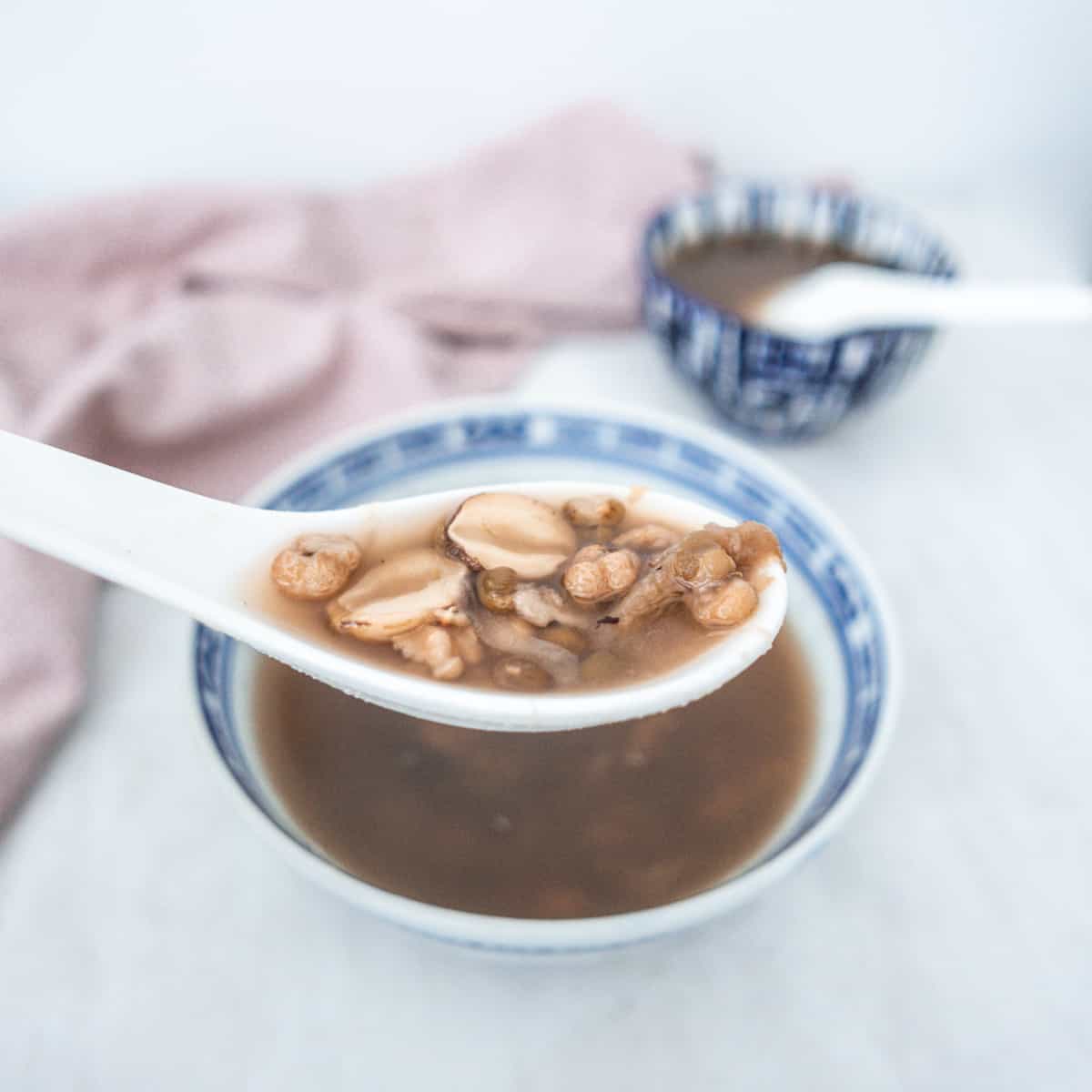
Chinese Sweet Mung Bean Soup 綠豆沙 - The ultimate heat-clearing dessert soup that drains summer fire
Winter Melon Soup With Pork Ribs 冬瓜湯 - Cooling, diuretic soup that eliminates dampness and excess heat
Adzuki Red Bean, Job's Tears and Poria summer detox soup 赤小豆薏米茯苓茶 - Triple-threat formula for clearing damp-heat and supporting Spleen function
The Best Thing 爱你 Cdrama Red Bean Recipes including 赤小豆鲤鱼汤 and daily red bean water, for clearing blood stasis and supporting emotional recovery through TCM food therapy.
Chinese Medicine Bitter Melon Soup Recipe 苦瓜黃豆酸菜排骨湯 - Intensely cooling soup for stubborn heat and blood sugar balance
Non-Heaty Summer Cooling Longan Red DateTea 桂圓紅棗枸杞麥冬菊花茶 (清涼不上火) - Modified summer tonic that nourishes Qi and Blood while preventing internal heat buildup
Serve alongside our TCM spring dampness spleen soup for a complete top-to-bottom spring dampness protocol.
Browse our complete recipe collection for more therapeutic beverage inspiration and TCM seasonal guidance that actually works.
Have you tried this chrysanthemum honeysuckle tea recipe? Share your brewing tips and any herb variations you've discovered in the comments below. Did it help with your heat symptoms or sore throat? For more traditional Chinese medicine recipes and herbal wisdom, subscribe to our newsletter and never miss a wellness post!
I'd love to see how you went with my recipes! Leave a comment below or tag me on Instagram @INSTANOMSS #INSTANOMSS.
> Recipe
PrintChrysanthemum Honeysuckle Tea Recipe | TCM Cooling Drink
This Chrysanthemum Honeysuckle Tea 甘草金銀花白菊花茶 isn't just another herbal infusion. It's your body's reset button when you're feeling overheated, irritable, or dealing with that scratchy throat that won't go away! This 3-ingredient cooling, inflammation-reducing tea is your ancient Chinese remedy for modern heat problems!
- Prep Time: 2
- Cook Time: 7
- Total Time: 9 minutes
- Yield: 4 persons 1x
- Category: Drink
- Method: Boil
- Cuisine: Chinese, TCM
Ingredients
- 8-10 Chrysanthemum Flower 菊花
- 1 tbsp Dried Honeysuckle Flower 金银花
- 2-3 slices Licorice Root 甘草
- Sweeten with Rock Sugar 冰糖 if desired
- 1 L water 水
 Get Recipe Ingredients
 Instructions
Ingredient Prep (Essential for Best Results)
- Rinse the Dried Herbs - Place the chrysanthemum flowers, honeysuckle buds, and licorice root in a fine-mesh strainer and rinse under cool, running water for 10-15 seconds at most. This removes surface dust and any processing residue without washing away the water-soluble medicinal compounds. Pat gently with a clean towel if excess water remains. Over-rinsing or soaking can diminish the potency of herbs and dilute their essential oils.
- Prepare Your Brewing Vessel - Select a glass herbal beverage tea maker or ceramic pot (never metal, as it can react with herbal compounds) and rinse it with hot water to preheat. This step ensures even heat distribution and prevents temperature shock that can cause bitter extraction. A preheated vessel maintains optimal steeping temperature throughout the process, allowing the herbs to release their properties gradually rather than in a harsh burst.
- Measure Herb Proportions Precisely - Use 8-10 chrysanthemum flowers, 1 tablespoon (10-12 buds) of honeysuckle, and 2-3 slices of licorice root per 4 cups of cold, filtered water. TCM formulas rely on specific ratios to achieve balanced therapeutic effects. Too much honeysuckle creates excessive cold, while too little chrysanthemum won't adequately clear Liver heat. Keep pre-portioned amounts in small containers for consistent results every time.
- Achieve Optimal Water Temperature - Heat filtered water until it reaches a rolling boil, then remove it from the heat and let it rest for 30-45 seconds to reach 200-205°F (93-96°C). Water that's too hot (full boiling) over-extracts bitter compounds and destroys delicate volatile oils. Water that's too cool won't properly extract the medicinal properties. This temperature sweet spot maximizes both flavour and therapeutic benefit while preventing cloudiness.
Cooking Process
- Quickly rinse the chrysanthemum, honeysuckle, and licorice under cool water to remove any dust. This takes 10 to 15 seconds. Do not soak them.
- Place all herbs in a teapot or heat-proof glass pitcher. Pour 4 cups of just-boiled water (around 200°F/95°C) over the herbs. Cover and steep for 5-7 minutes.
- Add rock sugar to taste.
- Strain the tea into cups. The liquid should be a pale golden colour with a subtle floral aroma.
- These herbs are generous. You can re-steep the tea by adding 3 cups of hot water to the same herbs and steep for 8-10 minutes for a second, lighter brew. You can typically get 2-3 steeps from quality dried herbs.


Notes
Pro Tip: In the summer months, consider drinking cold Chrysanthemum Honeysuckle Tea. Let the tea cool to room temperature before storing it in the refrigerator.
Nutrition
- Serving Size: 1 pot
- Calories: 14
- Sugar: 0.4 g
- Sodium: 15 mg
- Fat: 0.1 g
- Carbohydrates: 2.9 g
- Fiber: 0.5 g
- Protein: 0.6 g
- Cholesterol: 0 mg

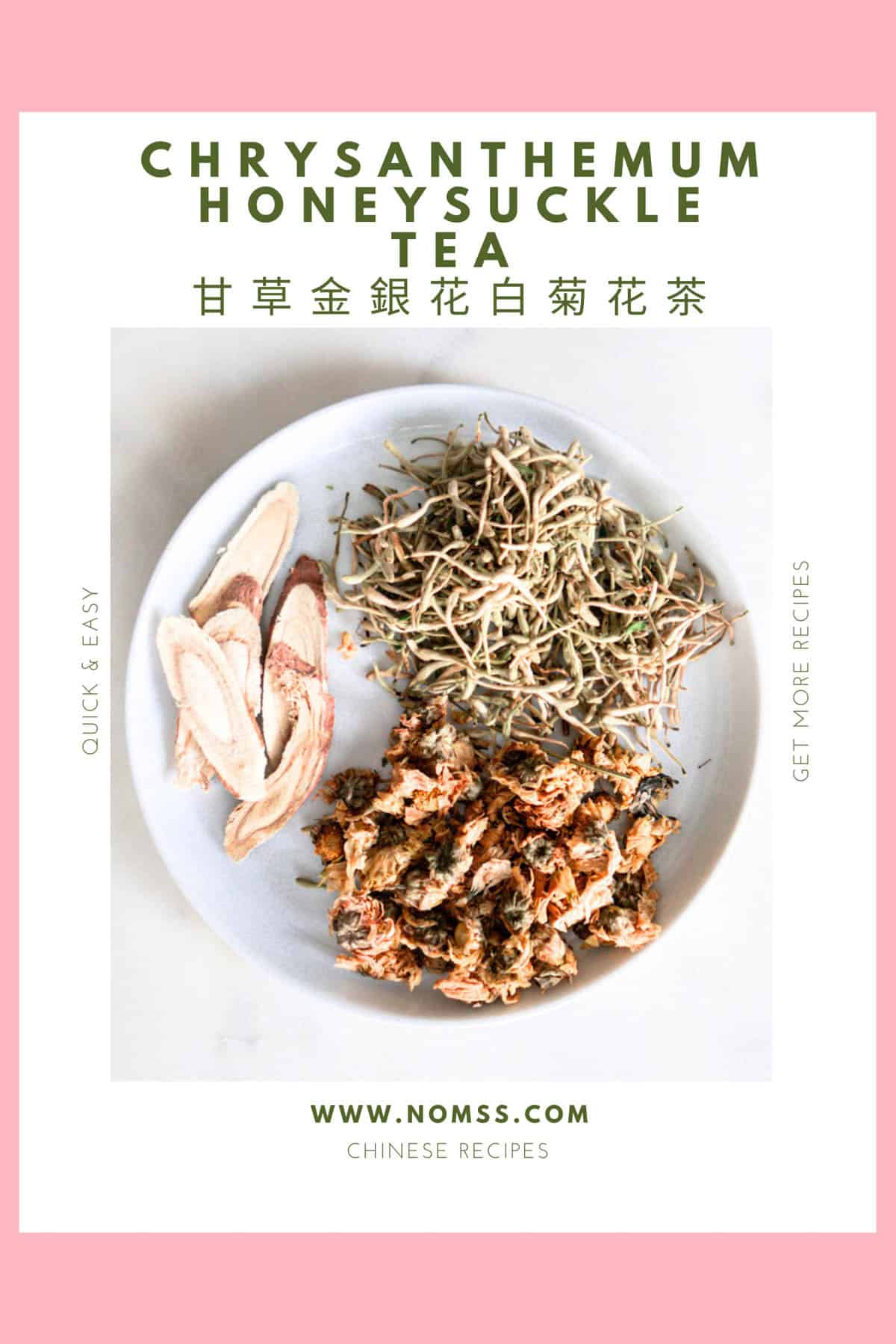
Pin the above image to your Chinese Medicinal Food Therapy TCM Recipe Pinterest Board to bookmark this page. We are so excited to share our recipes with you!
More Chinese Recipes
Chinese Steamed Chicken With Shiitake Mushroom 冬菇蒸雞
Air Fryer BBQ Pork Char Siu 氣炸鍋蜜汁叉燒
Red Bean Soup (Instant Pot) 蓮子百合紅豆沙






Comment Below