
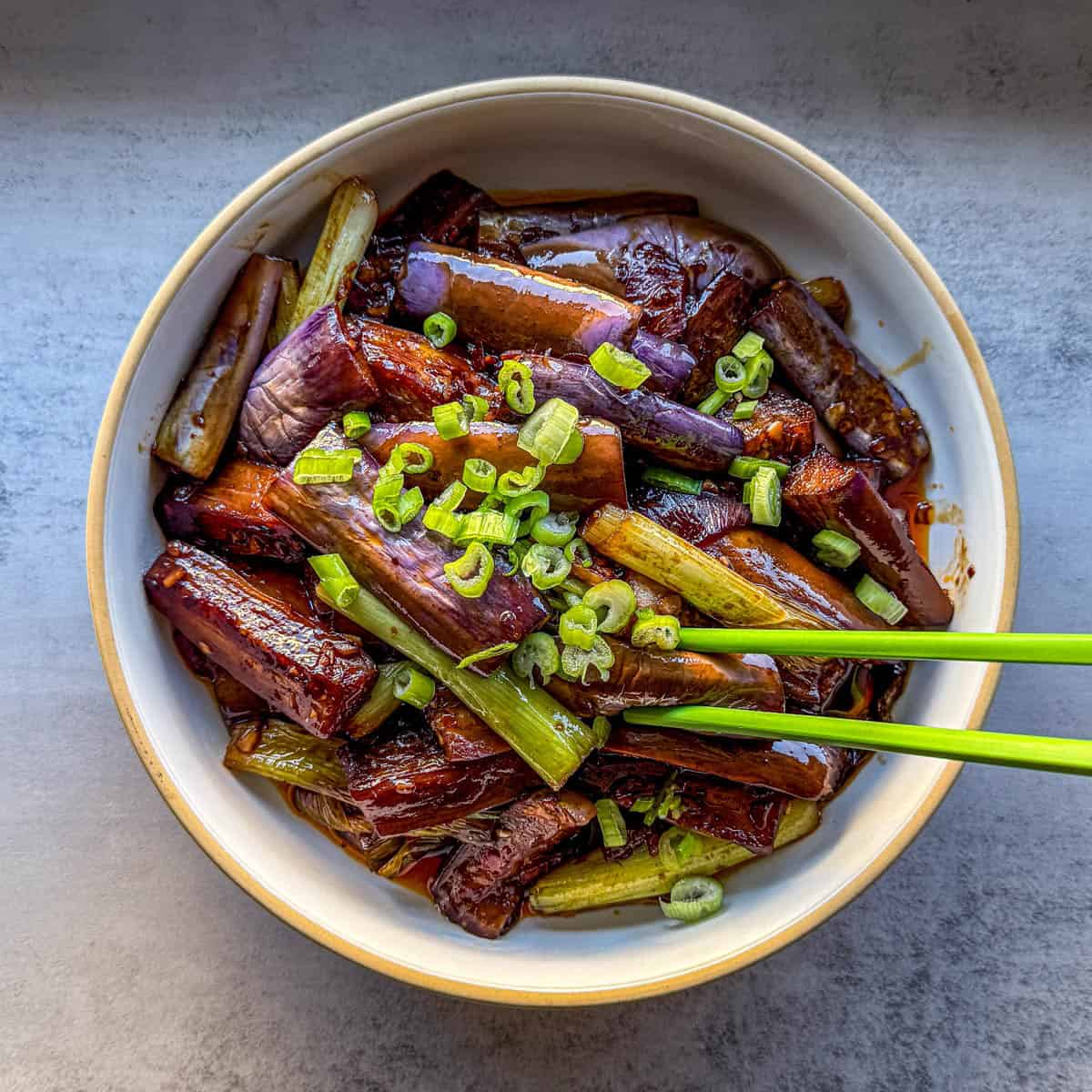
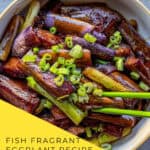
This Fish Fragrant Eggplant Recipe 魚香茄子 is silky, a little sweet, a little sour, and properly spicy, made without a single fish in the pot. It takes about 25 minutes, uses one wok, and comes together with pantry staples you likely already have from making other stir fries.
The name comes from a Sichuan sauce originally built for cooking fish. Cooks later applied that same sauce to eggplant, pork, and other vegetables, and the name just stuck.
This Yu Xiang Qiezi Recipe keeps showing up in fan clips from Love Has Fireworks 爱情有烟火, cooked in Qian Fei's tiny shared kitchen for Li Yi Fei. It's easy to see why.
> In This Post: Everything You Need for The Best Spicy Garlic Eggplant Stir Fry
This spicy garlic eggplant stir fry comes together in one wok, with a sauce built on garlic, ginger, and doubanjiang doing most of the heavy lifting. Below you'll find the full drama backstory, the TCM reasoning behind the ingredients, a ground pork option, substitutions if you can't find Chinese eggplant, and the printable recipe card with exact measurements.
Jump to:
- > In This Post: Everything You Need for The Best Spicy Garlic Eggplant Stir Fry
- What Is Love Has Fireworks 爱情有烟火?
- Why This Dish Works as TCM Food Therapy
- Ingredients and Chinese Herbal Benefits and TCM Properties
- Fish Fragrant Eggplant Ground Pork Option
- Eggplant Substitutions
- Common Mistakes to Avoid
- Where to Buy the Ingredients in Canada
- Instructions - Step-by-Step Cooking Method For Yu Xiang Qiezi Recipe
- What to Serve with Fish Fragrant Eggplant Ground Pork
- Storing and Make-Ahead Fish Fragrant Eggplant Recipe
- Fish Fragrant Eggplant Frequently Asked Questions (FAQs)
- Other Eggplant Recipes
- > Recipe Card
- Fish Fragrant Eggplant Recipe 魚香茄子 (With Ground Pork Option)


What Is Love Has Fireworks 爱情有烟火?
Love Has Fireworks is a Love Has Fireworks recipe kind of show, the type where half the romance happens over a shared stove. It stars Tan Jianci as Li Yi Fei, a once-wealthy investment banker who loses his footing after a bad investment, and Wang Churan as Qian Fei, a Shanghai transplant renting out her spare room to cover her mortgage after a breakup and a layoff. Full cast details are on IMDb. He becomes her tenant. Cohabitation chaos follows, then the usual slow burn into something real.
Cooking carries a lot of that slow burn. A good chunk of the show's charm sits in small domestic scenes, him eating what she makes, her cooking through a bad week anyway. Fish fragrant eggplant fits right into that kind of scene: cheap, fast, deeply comforting, the exact dish you make when you're too tired to think but still want dinner to taste like something.
A quick honesty note before you scroll further. I couldn't pin down one confirmed episode where this exact dish appears on screen. If you watched the scene and remember the episode number, drop it in the comments and I'll update this post with the credit.
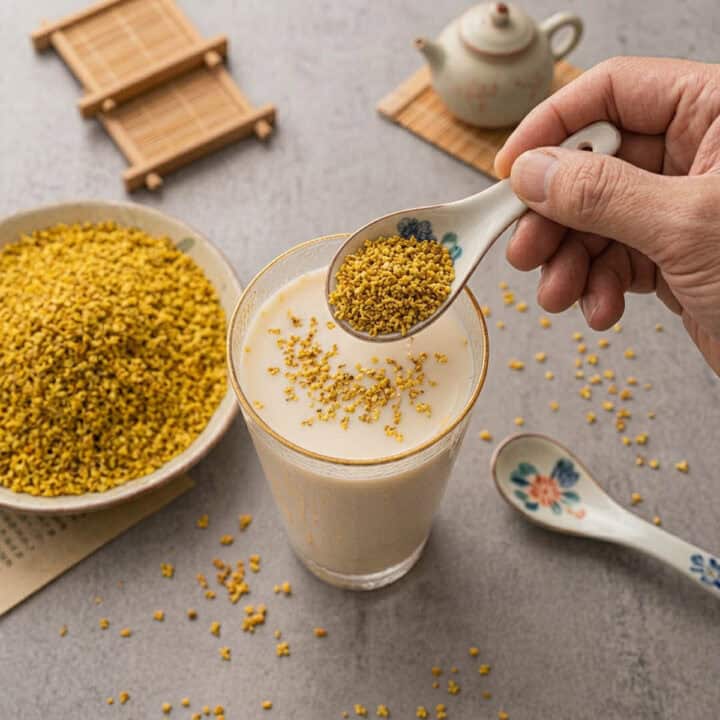
If shared-kitchen romance is your weakness, The Early Spring has one too, and its signature is a cup. Here's the 桂花牛奶 osmanthus milk recipe Luke makes for Flora.
Why This Dish Works as TCM Food Therapy
Eggplant is cooling and clears heat, one reason it shows up so often in Cantonese eggplant stir fry dishes during warmer months. On its own, a lot of cooling eggplant can leave digestion feeling a bit flat.
That's where the sauce earns its keep. Garlic, ginger, and scallion are all warming, and they're the same trio propping up half the soups on this site. Doubanjiang, the fermented broad bean paste behind the sauce's kick, adds warmth too, along with a little digestive fire that balances the cooling eggplant.
Add ground pork and the dish gets more grounding and more protein. Leave it out and you've got a lighter, vegetable-forward version that still holds its own next to a bowl of rice. Either way works within a TCM food therapy framework built around balance rather than restriction.
Ingredients and Chinese Herbal Benefits and TCM Properties
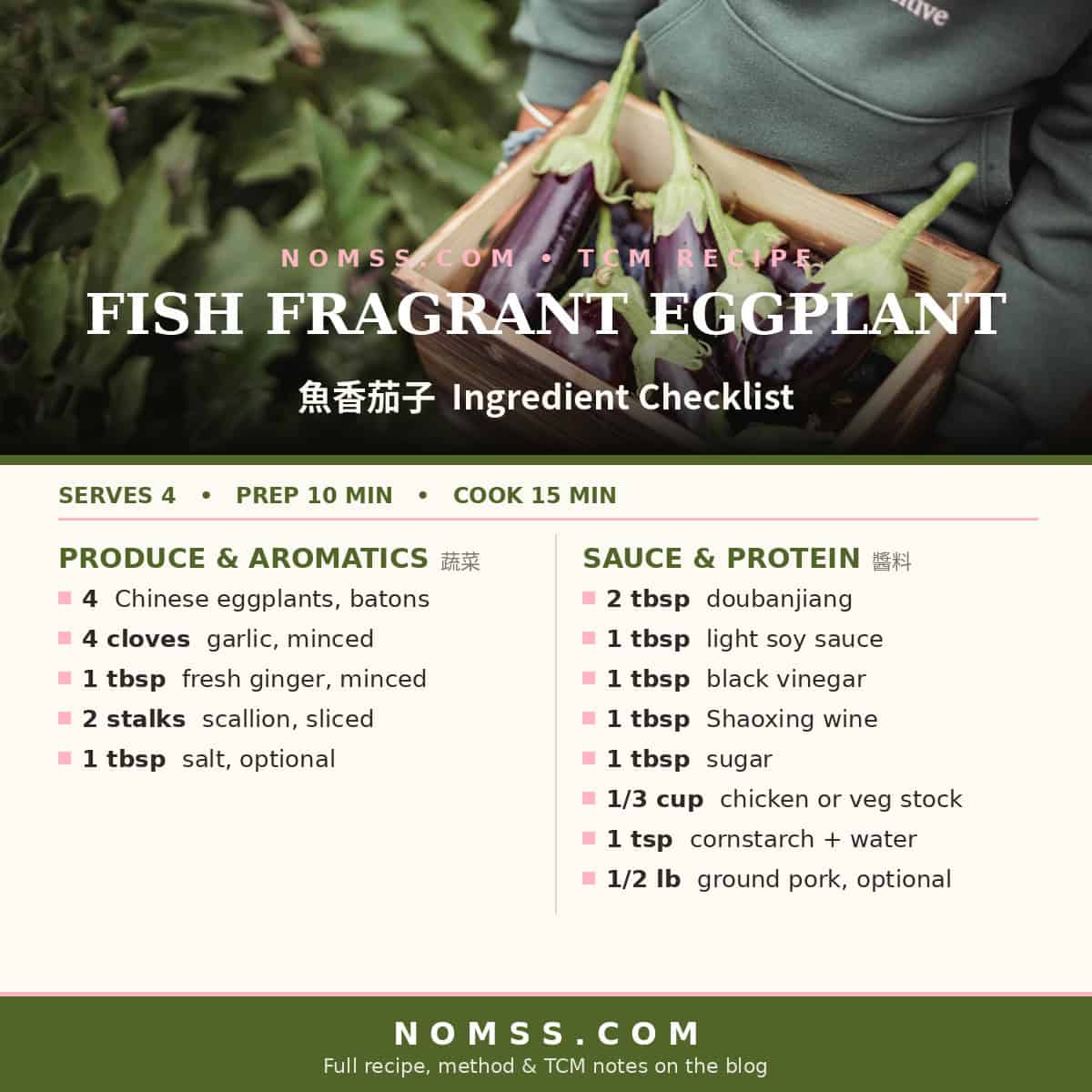
This fish fragrant eggplant recipe uses nine ingredients. Together, they build a sauce that goes well beyond flavour, warming the middle Jiao, moving stagnant Qi, invigorating blood, and balancing the eggplant's cooling nature so the whole dish sits well after eating.
The Vegetable Foundation
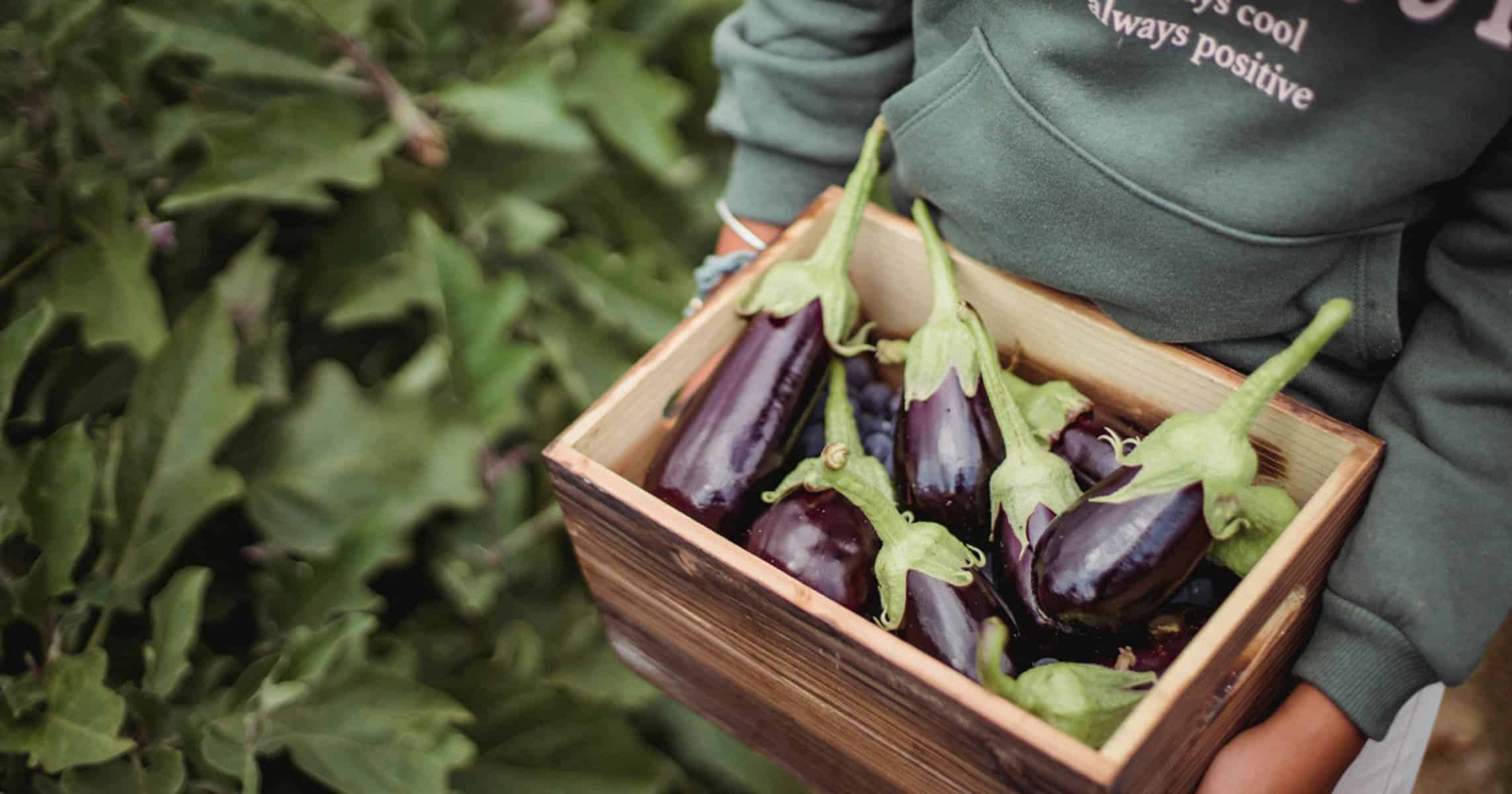
Eggplant (茄子) is the anchor. In TCM, eggplant is cool in thermal nature, sweet, and targets the Spleen, Stomach, and Large Intestine meridians. It clears heat, invigorates blood, and reduces swelling, which is exactly why it needs a warming sauce built around it rather than a cold one.
The Warming Aromatics
Garlic (大蒜) is warm and pungent, working on the Spleen, Stomach, and Lung meridians. It warms the middle, moves Qi, and has a mild detoxifying action. In the sauce it's doing double duty, flavour first, digestive support second.
Ginger (姜) is warm and pungent too, targeting the Lung, Spleen, and Stomach. It dispels cold, warms the middle, and settles the stomach. This is the ingredient most responsible for keeping cooling eggplant from feeling heavy on digestion.
Scallion (葱) is warm and pungent, affecting the Lung and Stomach meridians. It disperses cold and gives the sauce its final lift right before serving. Small ingredient, real job.
The Fermented Backbone
Doubanjiang (豆瓣酱) is warm and salty-pungent, targeting the Spleen and Stomach. It stimulates appetite, moves Qi and blood, and warms the middle Jiao. This is the ingredient the whole dish is named after, and it needs real heat in the wok to release its colour properly.
Black Vinegar (黑醋) sits closer to neutral, sour in flavour, targeting the Liver and Stomach. It invigorates blood and helps break down heavier, richer foods, which is part of why the sauce doesn't feel greasy even with the oil from frying.
Shaoxing Wine (料酒) is warm and sweet-pungent, targeting the Heart, Liver, and Kidney meridians. It invigorates circulation and dispels cold, and it's also doing practical work here, cutting any gaminess from the pork if you're using it.
The Balancing Touch
Sugar (糖) is neutral to slightly warming, sweet, targeting the Spleen and Stomach. In small amounts, it tonifies Qi and harmonizes the sharper, saltier ingredients around it, which is the whole point of a fish fragrant sauce. Nothing should taste like it's shouting over anything else.
The Optional Protein
Ground Pork (猪肉末) is neutral in nature, sweet and salty in flavour, targeting the Spleen, Stomach, and Kidney meridians. It builds Qi and blood and adds a grounding, nourishing quality the vegetable-only version doesn't have. This is the ingredient that turns the dish from a side into dinner.
Most dry goods ingredients, tools, and supplies can be purchased at local Asian markets, Chinese grocery stores, or Amazon Online. Amazon Prime members receive free shipping and faster delivery times.

Quick answer for the busy scroller: fish fragrant eggplant sauce is garlic, ginger, doubanjiang, soy sauce, black vinegar, sugar, and stock, thickened with a cornstarch slurry. No fish involved.
Fish Fragrant Eggplant Ground Pork Option
The classic version is meatless, but a fish fragrant eggplant ground pork upgrade turns it from a side dish into a full dinner. Brown the pork first, set it aside, then build the sauce in the same pan so the fond does the flavour work for you.
Half a pound is plenty for four eggplants. For a hungrier crowd or planned leftovers, go up to three quarters of a pound and add an extra splash of stock so the sauce still coats everything evenly.
Eggplant Substitutions
Chinese eggplant, the long thin purple kind, is worth seeking out. It holds its shape and soaks up sauce instead of turning to mush.
Japanese eggplant works nearly as well and is easier to find outside Chinese grocers. Italian eggplant, the fat round kind from most regular grocery stores, is fine in a pinch but has more seeds and a spongier texture, so salt it a little longer before cooking.
Zucchini is not a true substitute, but if eggplant genuinely isn't available, it will carry the sauce reasonably well for a lighter, less traditional version.
Common Mistakes to Avoid
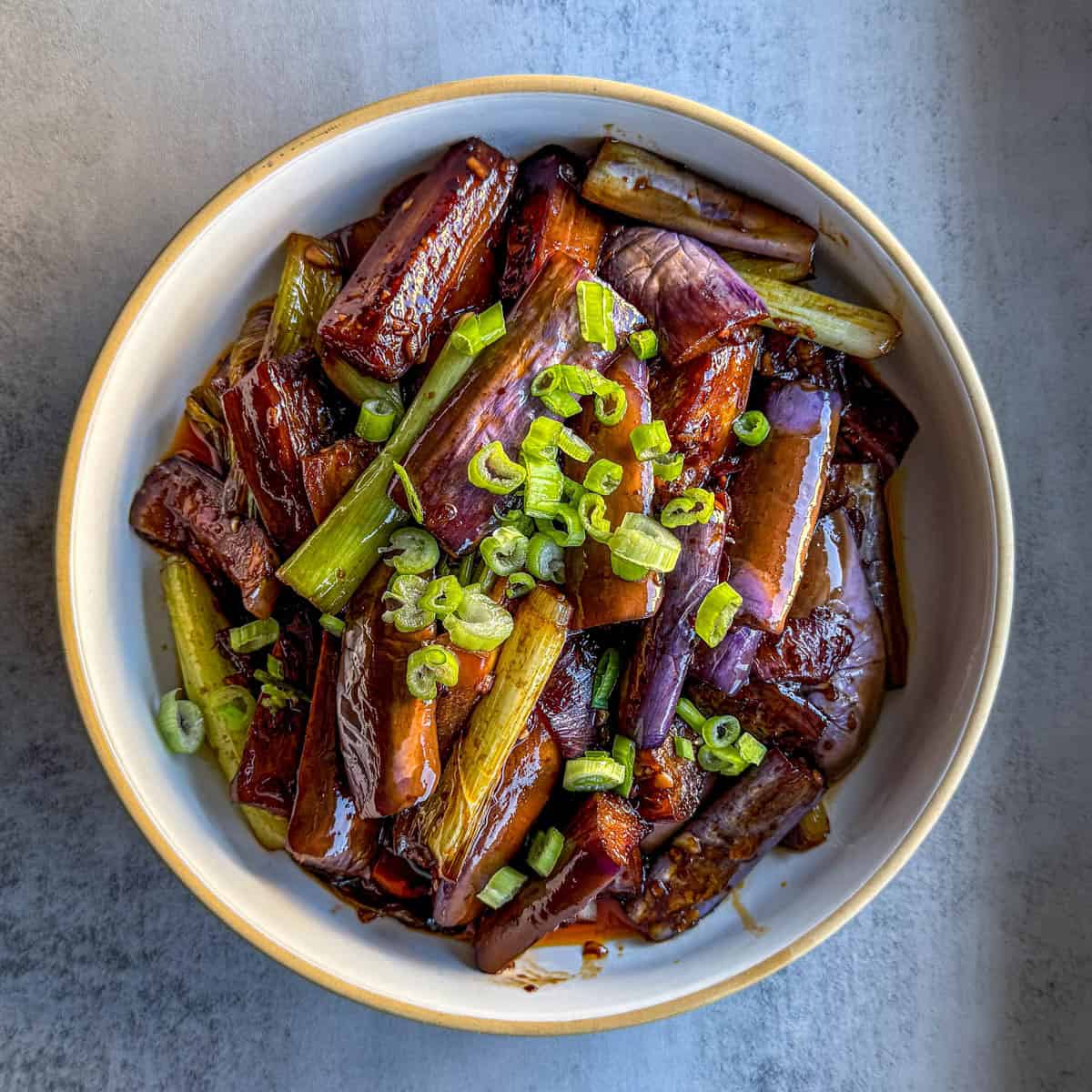
Skipping the salt step is the biggest one. Unsalted eggplant releases water as it cooks, and that water thins the sauce and stops the eggplant from browning properly.
Overcrowding the wok is the second. Fry the eggplant in batches with space between pieces, or you'll steam it instead of searing it, and the texture never quite recovers.
Adding the doubanjiang too late is the third. It needs those thirty seconds in hot oil to release its colour and depth. Thrown in with the liquid ingredients, it tastes flat and a little raw.
Where to Buy the Ingredients in Canada
T&T Supermarket carries fresh Chinese eggplant year round, usually near the bok choy. Doubanjiang, black vinegar, and Shaoxing wine sit a few feet away in the sauce aisle.
I usually buy ground pork at Costco because the quality and price are consistent, and the bulk pack means I can portion some off for this recipe and freeze the rest for dumplings or congee later in the week. One Costco pork pack covers two or three separate meals, and a bag of Chinese eggplant from T&T rarely runs more than a few dollars.
This is also a fast, budget-friendly family meal that beats takeout on cost and reheats well for next-day lunches. Double the sauce, freeze half, and you've got a head start on a heavier week without much extra effort.
Instructions - Step-by-Step Cooking Method For Yu Xiang Qiezi Recipe
How to Make Cantonese Eggplant Stir Fry At Home
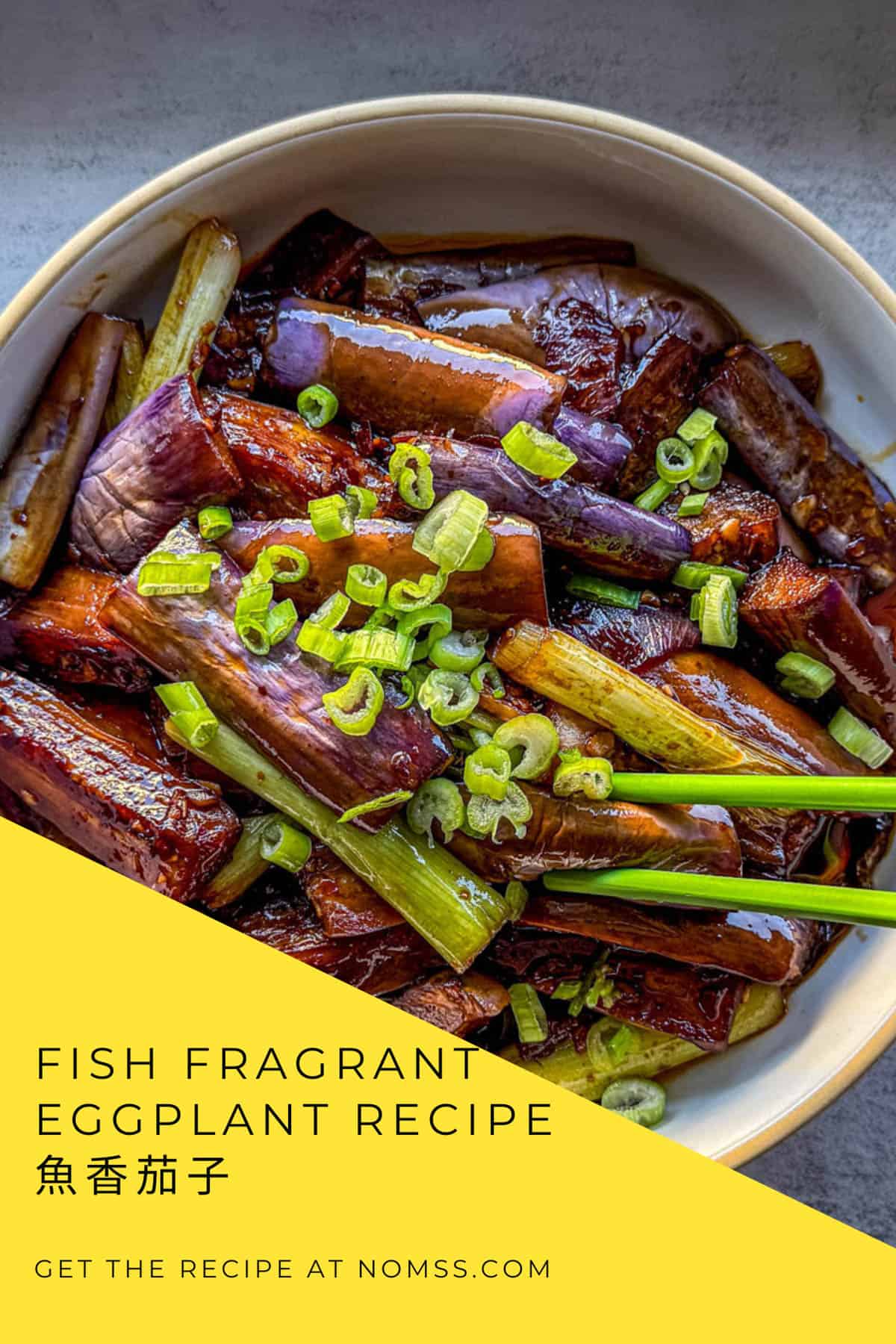
How to make Cantonese eggplant stir fry at home comes down to timing more than technique. Nothing here is hard, but the order matters, and rushing the sauce step is where most home cooks lose the dish.
Step 1: Prep the Eggplant
Cut the eggplant into batons about the size of your thumb. Toss them with salt if you have 20 minutes to spare, then let them sit in a colander over the sink.
This isn't optional if you want browning instead of steaming. Salt pulls water out of the eggplant, and that water is exactly what stops it from crisping up in the wok. Rinse and pat dry before it goes anywhere near oil.
Step 2: Fry the Eggplant First
Heat 2 tablespoons of oil in a wok over high heat until it just starts to shimmer. Add the eggplant in batches, never all at once.
Give each batch 4 to 5 minutes, turning occasionally, until the pieces go soft and lightly golden at the edges. Set the eggplant aside on a plate and don't rinse the wok. That fond left behind is flavour, not mess.
Step 3: Brown the Pork, If Using
Add a touch more oil to the same wok and drop in the ground pork. Break it apart with your spatula as it cooks.
Cook until no pink remains, about 3 to 4 minutes. Set it aside with the eggplant and keep the wok on the heat.
Step 4: Build the Aromatic Base
Lower the heat to medium. Add garlic, ginger, and the white parts of the scallion straight into the wok.
Stir for 30 seconds, just until the kitchen smells like garlic and not much longer. Burnt garlic turns bitter fast, and there's no saving the sauce after that happens.
Step 5: Bloom the Doubanjiang
Add the doubanjiang directly into the aromatics. Stir it through the oil for another 30 seconds.
This step is where the sauce actually gets its colour and depth. Skip it or rush it, and the final dish tastes flat no matter how much sauce you add later.
Step 6: Build the Sauce
Pour in the soy sauce, black vinegar, Shaoxing wine, sugar, and stock. Stir everything together and bring it to a gentle simmer.
Taste it here before anything else goes back in. This is your last easy chance to adjust for more tang, more sweetness, or more heat.
Step 7: Bring It All Together
Return the eggplant and pork to the wok. Toss everything so the sauce coats each piece evenly, not just pooling at the bottom.
Add the cornstarch slurry last and stir constantly. The sauce thickens fast, usually within a minute, and clings to the eggplant instead of running off it.
Step 8: Finish and Serve
Scatter the scallion greens over the top right before you take the wok off the heat. Serve immediately over steamed rice while the sauce is still glossy.
This dish doesn't wait well once it's sauced. Get it to the table hot, and eat it the same way Qian Fei would, straight from the wok to a bowl of rice.
What to Serve with Fish Fragrant Eggplant Ground Pork
Steamed white rice is the obvious choice, and honestly the right one. The sauce is punchy enough that it needs something plain underneath to soak it up properly.
A light soup rounds out the meal without competing for attention. Something like a simple egg drop soup or a clear vegetable broth works well, since the fish fragrant sauce already carries plenty of depth on its own.
For a full Cantonese-style spread, add a steamed fish or simple garlic greens on the side. Bok choy with oyster sauce or steamed gai lan takes five minutes and adds a fresh, plain contrast to the rich, spicy eggplant.
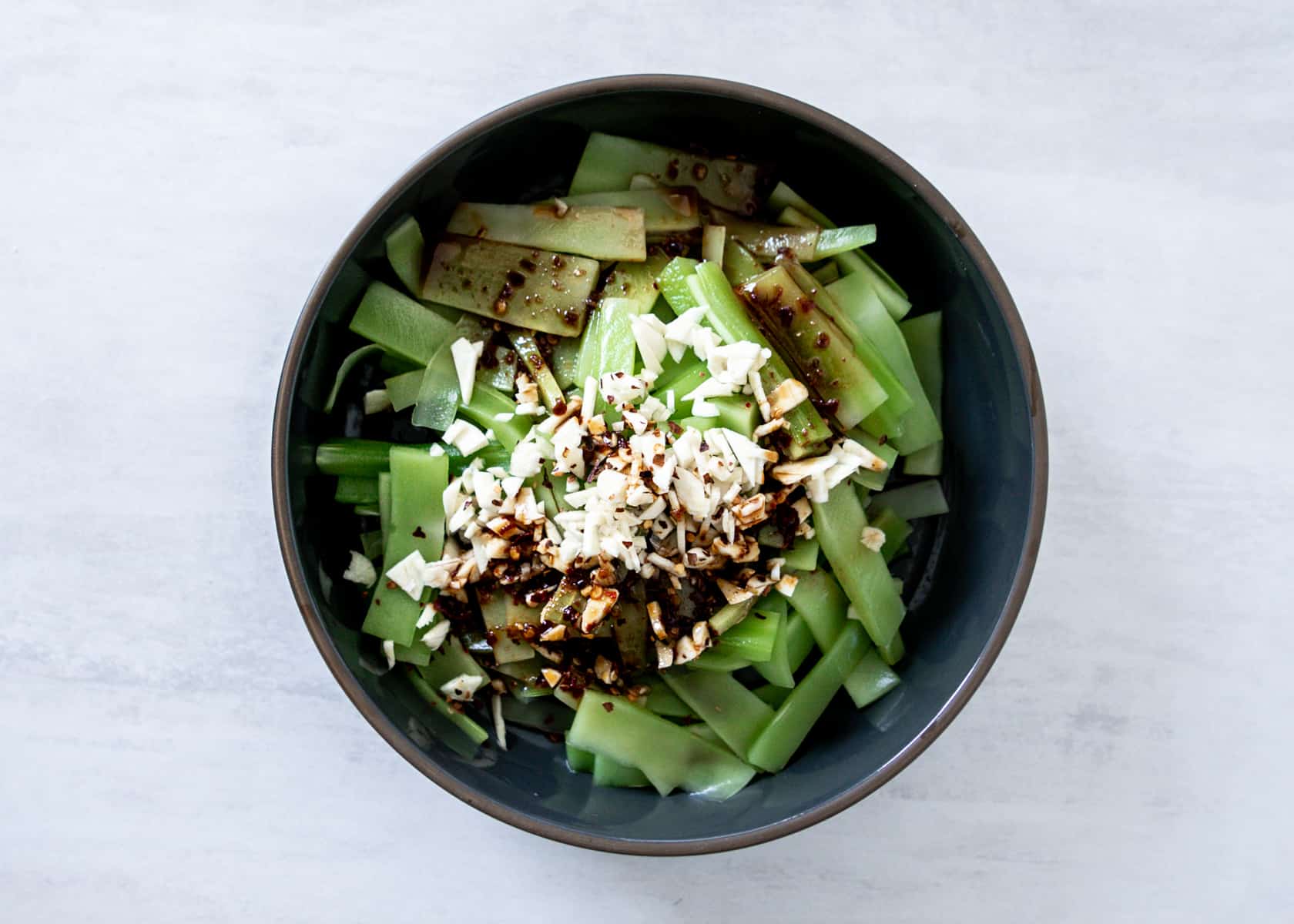
If you're serving fish fragrant eggplant ground pork to a crowd, a cold cucumber or celtuce salad with a touch of vinegar and sesame oil cuts through the richness nicely. It also means you're not standing over the stove for a third dish while everyone waits.
Storing and Make-Ahead Fish Fragrant Eggplant Recipe
This fish fragrant eggplant recipe stores well, with one caveat. The sauce holds up fine, but the eggplant softens further every day it sits, so texture is the tradeoff for convenience.
For the fridge, transfer cooled leftovers to an airtight container and eat within 3 days. Reheat gently in a pan over medium heat rather than the microwave, since a pan keeps the sauce from breaking or turning watery.
For freezing, this dish is better frozen without the eggplant. Freeze just the cooked sauce and pork mixture in a sealed container for up to 2 months, then fry fresh eggplant when you're ready to eat. Frozen and reheated eggplant turns mushy in a way that's hard to disguise.
If you want a true make-ahead option, prep the sauce ingredients and portion the raw ground pork the night before. That cuts your active cooking time down to about 15 minutes on a busy weeknight, which is really the whole point of keeping this in your regular rotation.
Did you see the Tea Leaf Eggs Qian Fei cooked for Li Yi Fei? He took a selfie and posted on his WeChat social circle. So Cute!
Fish Fragrant Eggplant Frequently Asked Questions (FAQs)
Yes, without the ground pork. Double check your doubanjiang brand, since a few contain shrimp or fish paste in the fermentation.
The sauce, sweet, sour, salty, and a little spicy, was originally developed in Sichuan for cooking freshwater fish. Cooks later applied the same sauce to eggplant, pork, and other vegetables, and the name travelled with it.
The sauce keeps well in the fridge for up to three days. The eggplant is best cooked fresh, since it softens further and loses texture on reheating.
It has a gentle heat from the doubanjiang, more warming than fiery. If you want it spicier, add a teaspoon of chili garlic sauce or a pinch of dried chili flakes with the aromatics.
Sweet, sour, salty, and a little spicy, all at once, with a garlicky depth underneath. The eggplant itself turns silky and mild, so it mostly carries the sauce rather than fighting it.
Fresh works better here. Frozen eggplant releases too much water as it thaws, and the texture goes soft in a way that doesn't hold up in a stir fry.
A regular non-stick or cast iron pan works fine. A wok just makes the high-heat frying step easier since the sloped sides handle tossing without oil splashing everywhere.
Not as written, since regular soy sauce and some doubanjiang brands contain wheat. Swap in tamari and check the doubanjiang label, and it converts easily.
Yes, though the flavour shifts. Chili garlic sauce or a mix of miso and chili paste gets you close, but doubanjiang's fermented depth is hard to fully replace.
It should look soft and slightly collapsed, with lightly browned edges, not shiny or wet. If it still looks firm and glossy in the middle, give it another minute or two per batch.
Other Eggplant Recipes
If you've already got the eggplant and doubanjiang out, the natural next move is a milder, saucier braise. Chinese Braised Eggplant 紅燒茄子 uses many of the same building blocks, oyster sauce, garlic, and an optional ground pork add-in, but takes a gentler, less spicy direction than the fish fragrant eggplant recipe above. It's a good side to rotate in when you want the same silky texture without the heat.
More eggplant recipes worth having in rotation:
Chinese Fish Paste Stuffed Peppers 煎讓三寶 - a Hong Kong dim sum classic where fresh fish paste gets stuffed into peppers, tofu, and eggplant, then pan-fried and served with black bean sauce. A genuinely different way to use eggplant if you want something closer to dim sum than stir fry.
Easy Vegan Unagi Don (Eggplant Unadon) うなぎ丼 - whole eggplant steamed or microwaved until creamy, then basted in a sticky vegan unagi sauce for a plant-based take on grilled eel rice bowls. Completely different flavour profile from anything Sichuan, but proof eggplant can carry a glaze just as well as it carries a stir fry sauce.
For delicious Chinese comfort food recipes and TCM food therapy that actually work, subscribe to our newsletter and never miss a wellness post!
I'd love to see how you went with my recipes! Leave a comment below or tag me on Instagram @INSTANOMSS #INSTANOMSS.
> Recipe Card
Fish Fragrant Eggplant Recipe 魚香茄子 (With Ground Pork Option)
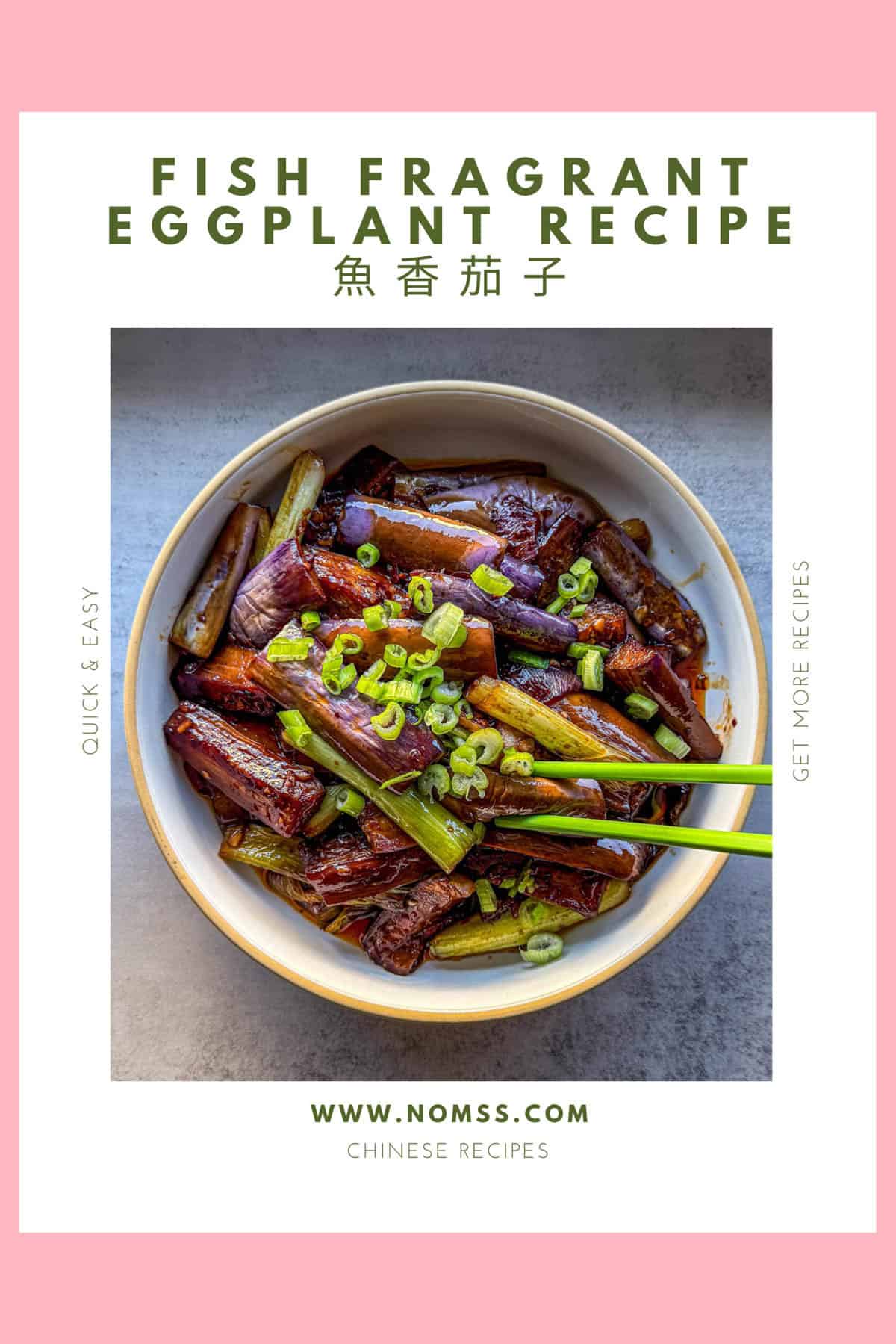
Fish Fragrant Eggplant Recipe 魚香茄子 is a Sichuan-style stir fry with sweet, sour, and spicy notes, inspired by the home-cooked comfort food in Love Has Fireworks 爱情有烟火. Ready in under 30 minutes, with an easy ground pork add-in for a full dinner.
- Prep Time: 10 mins
- Cook Time: 15 mins
- Total Time: 25 minutes
- Yield: 4 persons 1x
- Category: Main Dishes
- Method: Stir-fry
- Cuisine: Chinese
Ingredients
- 4 Chinese eggplants (long purple variety), cut into batons
- 1 tbsp salt (for eggplant, optional)
- 3 tbsp neutral oil, divided
- ½ lb ground pork (optional)
- 4 cloves garlic, minced
- 1 tbsp fresh ginger, minced
- 2 stalks scallion, white and green separated, sliced
- 2 tbsp doubanjiang (fermented broad bean paste)
- 1 tbsp light soy sauce
- 1 tbsp black vinegar
- 1 tbsp Shaoxing wine
- 1 tbsp sugar
- ⅓ cup chicken or vegetable stock
- 1 tsp cornstarch mixed with 2 tablespoon water
 Get Recipe Ingredients
 Instructions
- Cut the eggplant into batons and toss with salt if you have 20 minutes to spare. This draws out excess water so the eggplant browns instead of steaming. Rinse and pat dry before cooking.
- Heat 2 tablespoon oil in a wok over high heat. Fry the eggplant in batches until lightly golden and softened, about 4 to 5 minutes per batch. Set aside.
- If using ground pork, add it to the same wok with a touch more oil and cook until browned, breaking it apart as it cooks. Set aside with the eggplant.
- Lower the heat slightly. Add garlic, ginger, and scallion whites. Stir for 30 seconds until fragrant, then add the doubanjiang and cook another 30 seconds to release its colour and oil.
- Stir in soy sauce, black vinegar, Shaoxing wine, sugar, and stock. Bring to a simmer.
- Return the eggplant and pork to the wok. Toss to coat everything in the sauce.
- Add the cornstarch slurry and stir until the sauce thickens and clings to the eggplant, about 1 minute.
- Top with scallion greens and serve hot over rice.


Notes
-
- No doubanjiang on hand? Chili garlic sauce works in a pinch, though the flavour is sharper and less fermented.
- Salting the eggplant is optional but worth it if you have the time. It's the difference between eggplant that browns and eggplant that just goes soft and oily.
- Leftovers keep in the fridge for up to 3 days. Reheat gently in a pan rather than the microwave to keep the sauce from separating.
Nutrition
- Serving Size: 1 plate
- Calories: 517
- Sugar: 6.7 g
- Sodium: 1934.1 mg
- Fat: 23.4 g
- Carbohydrates: 59.4 g
- Fiber: 4.7 g
- Protein: 17.6 g
- Cholesterol: 40.9 mg

More Chinese Recipes
Chinese Steamed Chicken With Shiitake Mushroom 冬菇蒸雞
Air Fryer BBQ Pork Char Siu 氣炸鍋蜜汁叉燒
Red Bean Soup (Instant Pot) 蓮子百合紅豆沙




Claire says
Made this for dinner and it had so much flavor. The eggplant soaks up that sauce perfectly. Served it with steamed rice and we ate every bit. Adding this to our regular rotation.
Nancy says
IKR? we usually eat so much rice with this dish too!
Lara says
I really like the look of this! It’s beautifully presented and looks like such a comforting and enjoyable dish.
Nancy says
Thanks Lara - So happy you loved it! it really captures FALL in this cake! Glad you enjoyed this cozy pumpkin cake!
Larissa says
This came out so silky and flavorful, with the perfect balance of sweet, sour, and spicy. I loved how quickly it all came together in one pan!
Nancy says
Awesome Larissa - so glad to hear it came out perfectly and everyone enjoyed this easy to make pumpkin cake!
Kara says
Made it for dinner just now (with pork and everything) and it was EVERYTHING. All the sweet, spicy and slightly tangy flavors that we love in one dish. Definitely a keeper!
Nancy says
Thanks Kara - it really captures all the flavours in the recipe! Glad you enjoyed it!