
This 茶葉蛋 Chinese Tea Leaf Eggs Recipe turns a dozen ordinary eggs into a fragrant, marbled snack using one pot and about ten minutes of hands-on time. I love eggs in every form, fried, soft boiled, scrambled, even cold from the fridge after Chinese takeout the night before. My parents cooking up a pot of these felt like Christmas morning when I was a kid.
My stay-at-home daughter won't come near the kitchen if eggs are on the menu, though. Go figure.
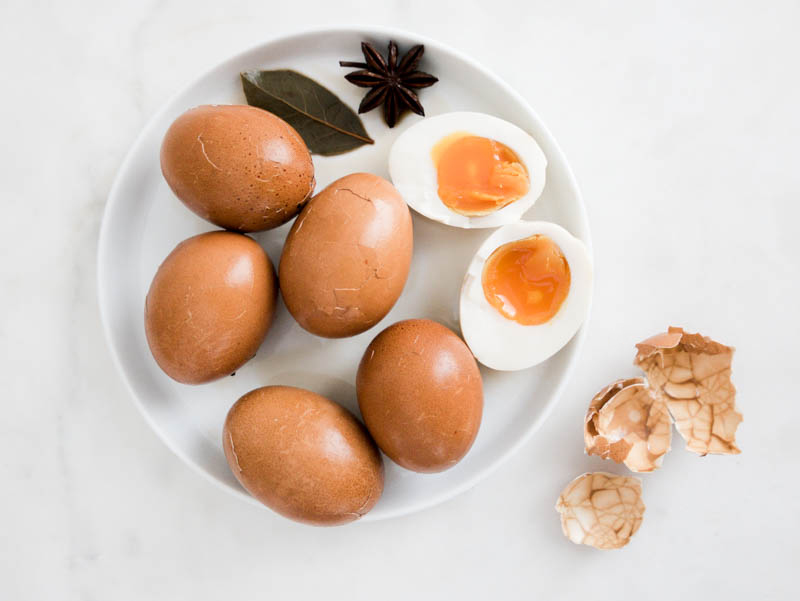
茶葉蛋, or tea leaf eggs, is a traditional Chinese appetizer usually served with a bowl of rice or eaten on its own as a snack. The tea stained shells crack to reveal a beautiful marbled surface underneath, and the egg itself takes on rich umami flavour from a marinade of light and dark soy sauce, star anise, cinnamon, Sichuan peppercorns, Shaoxing wine, and black tea leaves.
> In This Post: Everything You Need for The Best Chinese Marbled Tea Eggs
We're covering the soft boiled vs hard boiled debate (spoiler: always go soft), three ways to cook the eggs including stovetop, sous vide, and Instant Pot, and exactly how long to marinate for that deep, amber-coloured yolk.
You'll also find the full marinade breakdown, a quick Canadian grocery guide for Costco and T&T finds, and a reusable marinade tip that saves you from starting from scratch next time. Plus, why Qian Fei's tea eggs in 爱情有烟火 Love Has Fireworks make this the most quietly romantic batch you'll ever make.
Jump to:
- > In This Post: Everything You Need for The Best Chinese Marbled Tea Eggs
- What Are Chinese Tea Leaf Eggs?
- Are Tea Leaf Eggs Healthy?
- Soft Boiled vs Hard Boiled: Getting Marbled Tea Eggs Right
- Ingredients and Chinese Herbal Benefits and TCM Properties
- Instructions - Step-by-Step Cooking Method For Five Spice Tea Eggs
- Other Egg Recipes
- > Recipe Card
- Chinese Tea Leaf Eggs 茶葉蛋
What Are Chinese Tea Leaf Eggs?
Tea leaf eggs are hard or soft cooked eggs that get a light crack on the shell, then a long soak in a spiced tea and soy marinade. The cracks let the dark liquid seep in, which is what creates that marbled pattern once you peel them. You'll find tea stained eggs sold hot from the pot at convenience stores across Taiwan and China, the same way a hot dog cart works here.
At home, they're more of a make-ahead snack than a meal. Keep a batch in the fridge and you've got a protein hit ready whenever someone in the house gets hungry between meals.
Are Tea Leaf Eggs Healthy?
Eggs are a compact protein source, and in Traditional Chinese Medicine, the yolk is considered nourishing for blood and yin, the kind of food you'd reach for when you want something grounding rather than light. Five spice powder, which often shows up in the marinade, leans warming, which makes this a cozy snack for cooler weather. None of that makes tea eggs a health food exactly. They're salty and rich, and one or two at a time is plenty.
Soft Boiled vs Hard Boiled: Getting Marbled Tea Eggs Right
The question I get most is whether to make tea stained eggs hard or soft boiled. My answer is soft, every time. Store-bought tea eggs are almost always overcooked, with a rubbery white and sometimes a chalky green ring around the yolk that nobody asked for.
If a Japanese ajitama ramen egg and a Chinese tea leaf egg had a baby, that's the texture I'm chasing. Half runny, with a yolk that thickens slightly over a two to three day marinade. Soft boiled tea leaf eggs hold the marinade differently than a fully hard egg, and the yolk picks up colour and flavour in a way a hard yolk just can't.
The Momofuku version of a soy sauce egg asks you to lower eggs into boiling water and cook for exactly six minutes and fifty seconds, stirring gently for the first minute and a half so the yolk sets evenly. It's a fussy method, but it works. I personally lean on the sous vide method below because it's harder to mess up and gives the most consistently marbled tea eggs I've made.
Ingredients and Chinese Herbal Benefits and TCM Properties
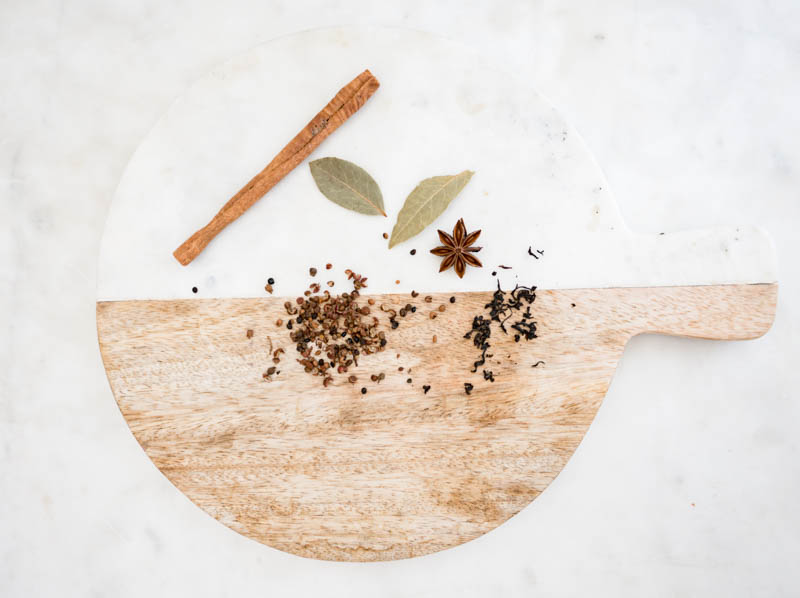
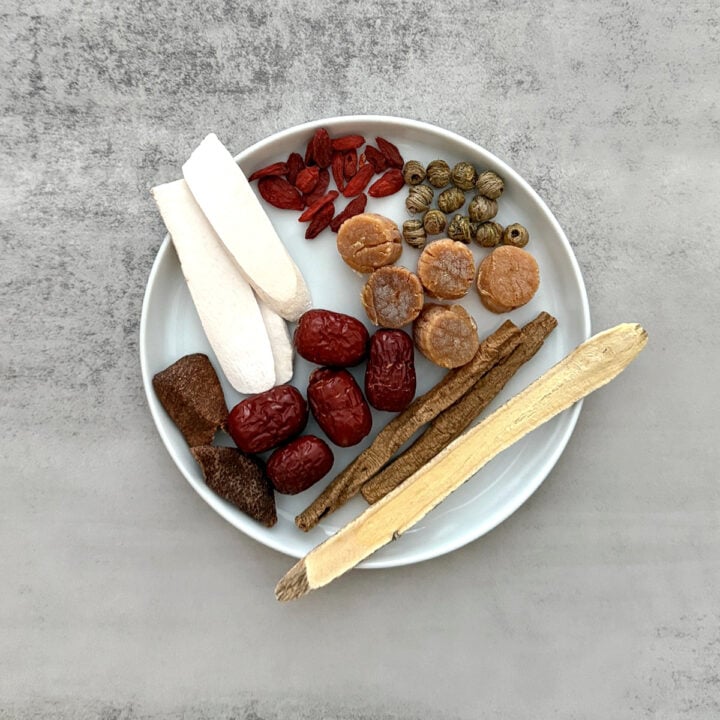
This tea leaf eggs recipe uses fourteen ingredients. Together, they build a fragrant marinade that goes well beyond flavour, warming the middle Jiao, moving stagnant Qi, nourishing blood, and balancing the whole formula so no single spice overpowers the rest.
The Protein Foundation
鸡蛋 (Eggs) are the anchor. In TCM, eggs are neutral in thermal nature, sweet, and classified as a Yin-nourishing food that tonifies blood and Qi. They target the Heart, Kidney, and Lung meridians, making them especially useful for building and replenishing. A batch of these at the start of the week gives your household a steady, protein-rich snack that supports rather than depletes.
The Warming Aromatics
花椒 (Sichuan Pepper) is hot and pungent and goes straight to work on the Spleen, Stomach, and Kidney meridians. It warms the middle Jiao, dispels interior cold and dampness, and helps the stomach process food more efficiently. In the marinade it adds that distinctly numbing warmth that keeps this snack from feeling heavy.
桂皮 (Cinnamon) is hot and pungent, targeting the Kidney, Spleen, Heart, and Liver meridians. It warms Yang, dispels cold from the channels, and relieves pain. This is the spice that gives tea eggs their unmistakable fragrance and turns a plain boiled egg into something that smells like your grandmother's kitchen.
香叶 (Bay Leaves) are warm and pungent, with an affinity for the Stomach and Spleen. They move Qi, warm the middle, and ease digestion. They're quiet in the pot but the broth falls flat without them.
辣椒干 (Dried Chilies) run hot. They disperse cold and dampness, invigorate circulation, and activate the Spleen and Stomach meridians. Three pieces in the marinade adds warmth without making the eggs spicy, just enough to keep the blend from sitting dull.
八角 (Star Anise) is warm and pungent-sweet, targeting the Liver, Kidney, Spleen, and Stomach meridians. It regulates Qi, warms the middle, and dispels cold. Star anise is what makes five spice powder recognizable, and it's doing the same structural work here in the marinade.

The Herbal Support
当归 (Chinese Angelica Root) is warm, sweet, and pungent, and one of the most significant blood tonics in the TCM materia medica. It targets the Heart, Liver, and Spleen meridians, tonifying and invigorating blood, easing pain, and moistening the intestines. Including it here is what separates a TCM-informed tea egg from a purely flavour-driven one. It's subtle in the finished egg but worth adding, especially if you're cooking for someone who runs cold or feels depleted.
甘草 (Licorice Root) is neutral and sweet, the great harmonizer. It targets the Spleen, Stomach, Lung, and Heart meridians, tonifying Spleen Qi and softening any harsh or competing properties among the other spices. In classical TCM formulas, licorice almost always appears at the end of the ingredient list for exactly this reason. It doesn't dominate; it balances.
The Seasoning and Sweeteners
茶叶 (Tea Leaves) are cool in nature, bitter and slightly sweet, and they target the Heart, Lung, and Stomach meridians. Tea clears heat, refreshes the mind, and aids the body in processing fats and heavy foods. Pu erh is the most tonifying choice and gives the deepest amber colour. A strong black or red tea bag works just as well if that's what's already in your cupboard.
冰糖 (Rock Sugar) is neutral and sweet, gentler on the digestive system than refined white sugar. In TCM, rock sugar nourishes Lung Yin, stops dry cough, and promotes body fluids. It rounds out the saltiness in the marinade without making the eggs taste sweet.
盐 (Salt) is cold and salty, targeting the Kidney, Heart, and Liver meridians. It softens and clears, and in the right amount it draws the marinade deep into the egg white so the flavour isn't just on the surface.
生抽 and 老抽 (Light and Dark Soy Sauce) are slightly cold and salty, clearing mild heat and promoting digestion. Light soy sauce carries the savoury flavour; dark soy is what stains the eggs that deep mahogany colour once the marinade works its way through the cracked shell.
Most dry goods ingredients, tools, and supplies can be purchased at local Asian markets, Chinese grocery stores, or Amazon Online. Amazon Prime members receive free shipping and faster delivery times.
Best Time to Make These Eggs
Chinese tea leaf eggs suit autumn and winter best. The warming spices in this recipe, cinnamon, star anise, Sichuan pepper, and dried chili, all push heat inward and dispel cold. When the weather turns and your body starts craving something more grounding than a salad, a batch of these in the fridge makes a lot of sense.
That said, the Chinese Angelica (当归) makes this a recipe worth rotating year-round if you run cold, feel depleted after a long work week, or just need reliable protein that doesn't require cooking again every single day.
According to the TCM organ clock, the Stomach meridian peaks between 7 and 9am, and the Spleen meridian follows from 9 to 11am. A tea egg eaten at breakfast or mid-morning works with that window rather than against it, giving your digestive system something substantial to process when it's actually running at full capacity. A cold egg pulled straight from the marinade and eaten at your desk at noon is fine too. TCM principles are a guide, not a rulebook.
Start the marinade on a Thursday or Friday night. By Saturday morning you have deeply stained, jammy eggs ready to go. By Sunday night the yolk has thickened to that brownish gold colour and the flavour has settled all the way through. That two to three day window is the sweet spot, and it lines up naturally with a weekly batch-cooking routine if you already prep on weekends.
Avoid making these during a heat wave if you or someone in your household runs constitutionally hot, prone to night sweats, restlessness, or a persistently red face. The warming spices will add fuel to the fire. Cool the recipe down by reducing the Sichuan pepper and dried chilies by half and skipping the Chinese Angelica until the season shifts.
Did you see the Fish Fragrant Eggplant Recipe 魚香茄子 Li Yi Fei keeps requesting Qian Fei's to cook for him?
Instructions - Step-by-Step Cooking Method For Five Spice Tea Eggs
How to Make Marbled Tea Eggs at Home
This five spice tea eggs recipe follows a three-part method: build the marinade, cook the eggs, crack and soak. None of the steps are technically difficult. What matters is the order and the patience. The marinade does most of the work once it hits the fridge, so the actual hands-on time is about fifteen minutes.
This is a genuinely low-effort batch recipe. Prep the marinade the night before if it's easier. The eggs can go in the next morning and be ready to eat by the following day.
Step 1: Bring the Eggs to Room Temperature
Pull the eggs out of the fridge at least 20 minutes before cooking. Cold eggs dropped into boiling water crack from thermal shock, which breaks the shell before you've had a chance to do it on purpose. Room temperature eggs also cook more evenly from white to yolk.
Step 2: Build the Five Spice Tea Marinade
Add all marinade ingredients to a medium pot: water, salt, Sichuan pepper, Chinese Angelica, cinnamon stick, licorice, star anise, bay leaves, dried chilies, tea leaves, rock sugar, light soy sauce, and dark soy sauce. Bring to a boil over medium-high heat, then reduce to a low simmer for 10 minutes. The dark soy will stain the liquid a deep amber almost immediately. That colour is what eventually marbles the egg white.
Remove the pot from heat. Discard the tea bags if you used them. Let the marinade cool completely before the eggs go in. Rushing this step and adding warm eggs to a hot marinade cooks the yolk further than you want.
Step 3: Cook the Eggs
Choose your method based on what equipment you have. All three get you to the same result. The texture differences are subtle but real.
Stovetop Method
Bring a separate large pot of water to a rolling boil. Lower the eggs in gently using a spoon, one at a time. Cook for exactly 6 minutes and 50 seconds. Stir the eggs slowly for the first minute so the yolk centres rather than settling to one side. While they cook, fill a large bowl with ice and cold water. Transfer the eggs straight into the ice bath the moment the timer goes. Leave them there for at least 5 minutes. The cold stops the cooking and keeps the yolk from developing that chalky green ring.
Sous Vide Method
Set your sous vide machine to a steady 63°C (145.4°F). Submerge the whole eggs in their shells directly in the water, no bags needed. Cook for one hour. The result is the most consistently creamy yolk of the three methods, with a white that's fully set but still tender. Transfer to an ice bath after the hour is up and cool for 5 minutes before cracking.
Instant Pot Method
Place the eggs on the trivet with one cup of cold water underneath. Seal the lid and cook on low pressure for 4 minutes. Let the pressure release naturally for 5 minutes, then switch to a quick release for any remaining pressure. Move the eggs straight to an ice bath. Test one egg first and adjust by 30-second increments if you want a firmer or softer result, since every Instant Pot runs slightly differently.
Step 4: Crack the Shells for the Marble Pattern
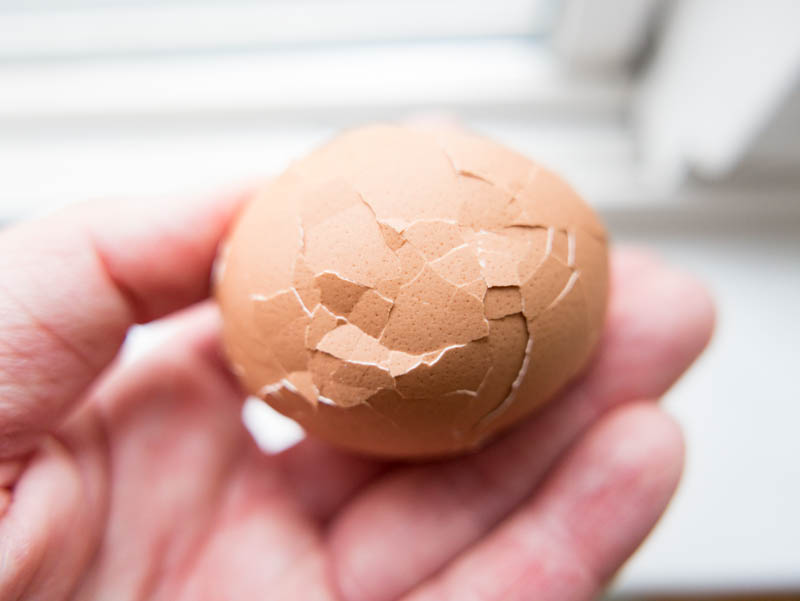
Once the eggs are cool enough to handle, tap each one all over with the back of a spoon. You want a network of fine cracks across the whole surface, not one big split. Think of it like cracking the glaze on an antique ceramic, even, delicate, and deliberate. The more uniform the cracks, the more even the marble pattern once the marinade seeps through.
Don't peel the shells. The shell stays on through the entire marinating time. It's what controls how much colour and flavour gets in, and it keeps the egg from absorbing so much brine that it turns rubbery.
Step 5: Marinate the Eggs
Gently lower the cracked eggs into the cooled marinade. Do not drop them in. A soft-cooked egg with a cracked shell will break apart if it hits the bottom of the pot with any force, and at that point you have a very expensive and very sad bowl of spiced scrambled eggs.
How Long to Marinate Tea Eggs
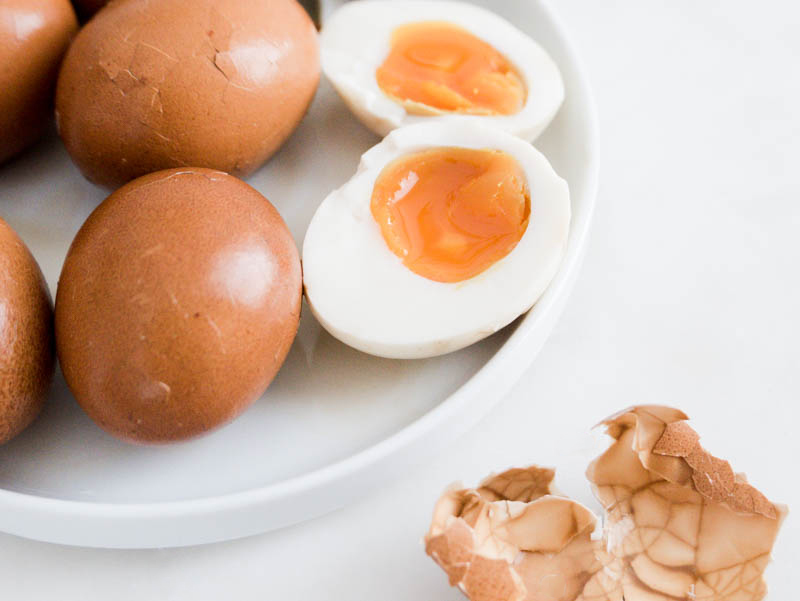
Transfer everything to a covered container and refrigerate. Marinate for at least one overnight soak. Two to three days is where the magic actually happens: the yolk thickens and turns that warm brownish gold, the white picks up deep colour through the cracks, and the five spice flavour has time to settle all the way through rather than sitting only on the surface.
Taste one egg on day two. If it's salty enough for you, pull the batch. If you want more depth, let them go another day.
What to Do with Leftover Marinade
You can reuse the marinade more than once if you store it properly. Just bring it back to a boil and let it cool fully before adding a new batch of eggs. Always dip in with a clean spoon, never one that's touched raw egg or anything else in your fridge.
Step 6: Peel and Serve
Peel carefully under cold running water. The shell should come away cleanly, revealing the marbled surface underneath. Slice in half lengthwise to show the yolk. Serve at room temperature or cold straight from the fridge, alongside rice, as a snack, or packed into a lunchbox with a few sides.
The ones you don't eat within five days can stay in their marinade, covered, in the fridge. The flavour only deepens.
Where to Buy Tea Egg Ingredients in Canada: Costco and T&T Grocery Guide
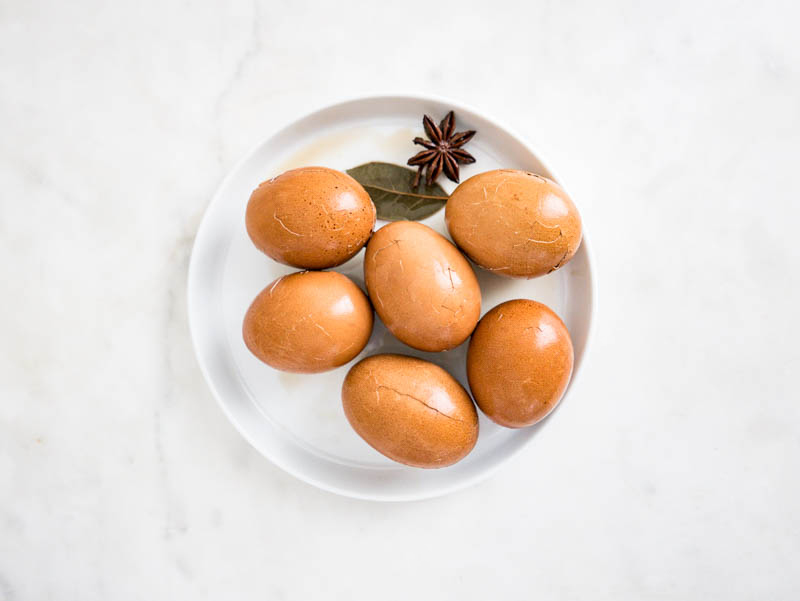
A dozen eggs is the easy part. I usually grab mine at Costco because the price and quality stay consistent from one trip to the next, which matters when you're cooking for a family and watching the grocery bill. Their large cartons also make this an easy recipe to double if you're meal prepping for the week.
For the marinade, T&T Supermarket is where I stock up on loose black tea, whole star anise, Sichuan peppercorns, and Shaoxing wine in one trip. Dark soy sauce and cinnamon sticks last for ages in the pantry, so buying them in the larger T&T sizes works out cheaper per use than the small bottles at a regular grocery store. None of this needs to be fancy or imported. A basic black tea bag from your cupboard does the job if that's what you've got.
This is genuinely a budget-friendly protein for family meals. A dozen eggs and a few pantry spices stretch into a snack, a lunchbox add-on, or a side for rice for under what you'd pay for a single takeout appetizer.
What to Serve with Tea Leaf Eggs
Tea eggs work as a starter, a side, or a packed lunch addition. Serve them alongside a bowl of congee or plain rice for a simple breakfast, or slice one in half over a bowl of noodle soup. If you want to build out a full family dinner, pair a batch with Anyday Microwave Black Cod for a protein-forward meal that comes together fast on a weeknight.
They're also great cut into halves or quarters on a snack platter for kids, since the marbled pattern tends to get even picky eaters curious enough to try a bite.
Storing and Make-Ahead Tea Eggs
Tea eggs keep well in their marinade in the fridge for up to five days, and honestly taste better on day three than day one. Pull a few out each morning for lunchboxes or a quick protein snack. They don't freeze well once peeled, so plan to make only what you'll eat within the week.
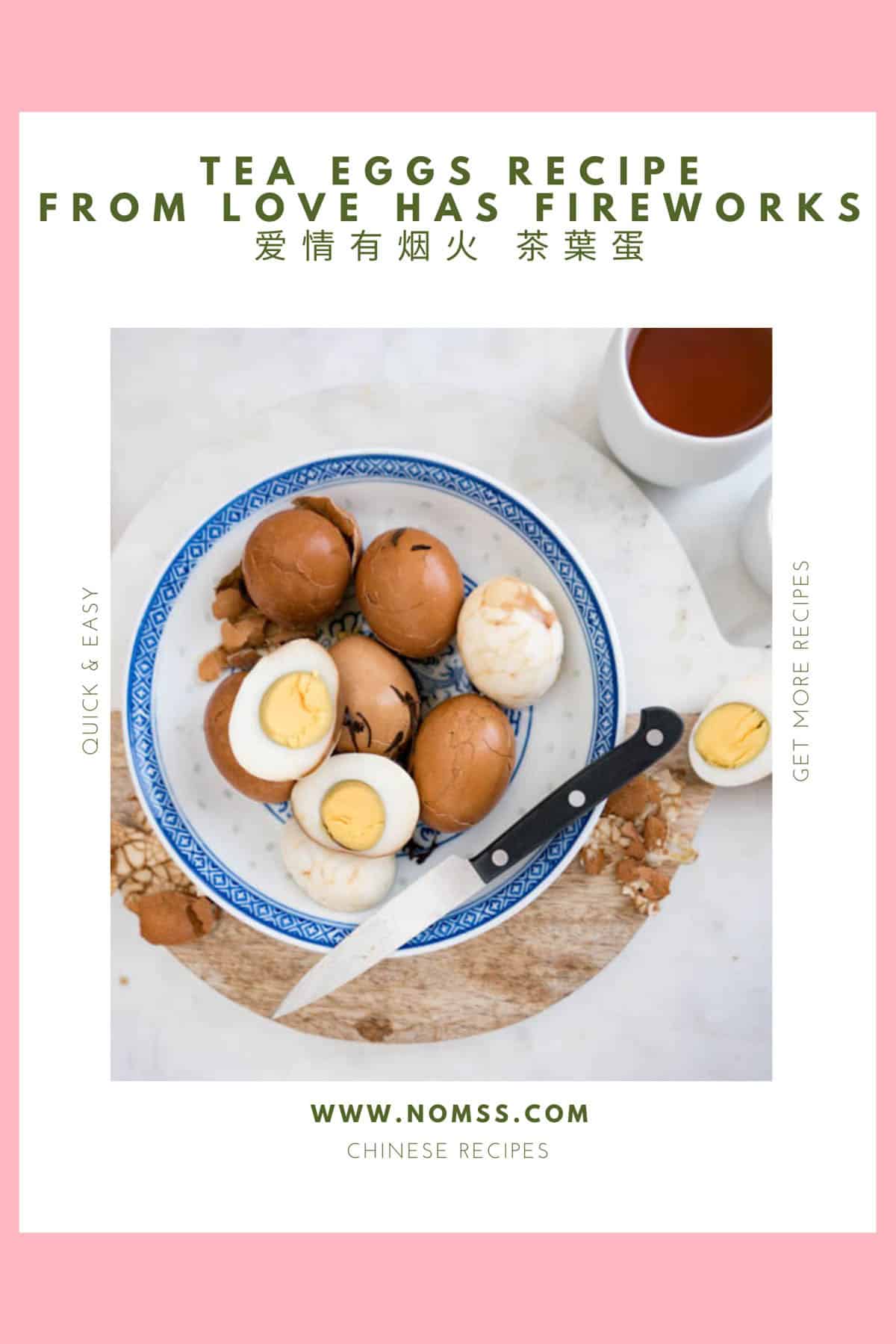
茶葉蛋 in Love Has Fireworks 爱情有烟火
If you've been watching Love Has Fireworks 爱情有烟火, the 2026 cdrama starring Tan Jianci as Li Yi Fei and Wang Churan as Qian Fei, you'll know the whole show runs on this idea of 烟火气, the warmth of ordinary domestic life. Qian Fei, a investment banker who's just lost her job and her fiancé in the same week, ends up renting a room to Li Yi Fei, a wealthy investment banking rival who's lost his own footing after a deal goes sideways.
Their relationship builds almost entirely through small, unglamorous acts of cooking and care, and tea leaf eggs fit that texture of the show perfectly. They're not a banquet dish. They're the kind of thing you make on a quiet night when you're trying to take care of someone without making a big deal of it, which is exactly the register this drama lives in. If you want to recreate that scene at home, a batch of these in the fridge is a low-effort way to look after your own household the way Qian Fei looks after hers.
Have you seen what TCM recipes Dr. He Suye (starring Zhang Linghe) cooked for Shen Xifan in The Best Thing 爱你 cdrama?
Tea Leaf Eggs Frequently Asked Questions (FAQs)
Marbled tea eggs get more questions than almost any recipe on this site, which makes sense. The cracking technique looks alarming the first time, the marinating window is open-ended, and the TCM spice list throws people who are used to a simpler brine. These are the questions that come up most often, answered plainly so you can get the eggs in the pot and stop second-guessing yourself.
Up to five days when stored in their tea egg brine in a covered container. This makes them one of the better options for Chinese tea eggs batch cooking meal prep, since a batch of ten on Sunday carries you through most of the week. The flavour deepens each day, so the egg you eat on day four is genuinely better than the one you eat on day one.
Yes, completely. The crack is the whole point. Knowing how to crack tea eggs for the marble pattern correctly is what separates a beautifully stained marbled tea egg from a blown-out mess. Tap with the back of a spoon, aim for a network of fine lines across the whole shell, and the marinade does the rest. As long as the eggs were fully cooked before cracking and the marinade was brought to a boil, there's no food safety concern.
Yes, and the answer to "can you reuse Chinese tea egg marinade safely" is the same every time: boil it first, let it cool completely, then add the next batch of eggs. The tea egg marinade darkens and concentrates with each use, which actually improves the colour on the second batch. Always dip in with a clean spoon and store it covered in the fridge between uses.
They can be. This recipe is straightforward to adapt as gluten free tea eggs. Swap the light and dark soy sauce for tamari, replace the sugar with maple syrup, and check that your tea bags don't contain malted barley, which sneaks into some cheaper blends. The warming spices in this five spice tea eggs version, Sichuan pepper, star anise, cinnamon, and dried chili, are naturally gluten free and don't need substituting.
The best tea to use for Chinese tea leaf eggs is a strong black tea, which gives the deepest amber colour and the most pronounced tannin flavour in the finished egg. Pu erh is the most tonifying choice from a TCM standpoint and lends the brine a slightly earthy depth. A strong oolong works if that's what's already in your cupboard. Whatever you use, brew it strong. A weak tea produces a pale brine and a pale egg, which rather defeats the purpose.
The best tea to use for Chinese tea leaf eggs is a strong black tea, which gives the deepest amber colour and the most pronounced tannin flavour in the finished egg. Pu erh is the most tonifying choice from a TCM standpoint and lends the brine a slightly earthy depth. A strong oolong works if that's what's already in your cupboard. Whatever you use, brew it strong. A weak tea produces a pale brine and a pale egg, which rather defeats the purpose.
How long to marinate Chinese tea leaf eggs depends on what texture and colour you're after. One overnight soak gives you a lightly stained white and a yolk that's still quite soft. Two to three days is where the colour deepens properly through the cracked shell and the yolk thickens to that warm brownish gold that makes these worth the wait. Taste one egg on day two and go from there. Beyond three days, the eggs get noticeably saltier and the white firms up considerably, which some people prefer and others don't.
Always soft boiled. Soft boiled tea eggs absorb the marinade differently than a fully hard egg, and the yolk picks up colour and flavour in a way a chalky hard yolk simply can't match. For soft boiled Chinese tea eggs step by step, the stovetop method at exactly 6 minutes and 50 seconds with an immediate ice bath is the most reliable approach without special equipment. The sous vide method at 63°C for one hour gives an even more consistent result if you have the machine.
The Chinese tea leaf eggs sous vide method recipe is the most hands-off of the three cooking options. Set your machine to a steady 63°C (145.4°F), submerge the whole eggs in their shells directly in the water for one hour, then transfer straight to an ice bath. No bags, no guesswork, no standing over the stove counting seconds. Sous vide tea eggs give the most consistently creamy yolk of any method, which is exactly what you want for a three-day marinade where the yolk is the star.
For how to make tea eggs in Instant Pot low pressure, place the eggs on the trivet with one cup of cold water underneath. Cook on low pressure for 4 minutes, let the pressure release naturally for 5 minutes, then quick-release any remainder before moving the eggs to an ice bath. Instant pot tea eggs are the fastest route when you need a batch on a weeknight and don't want to watch a pot. Test one egg first and adjust by 30-second increments until you hit the yolk texture you want, since every machine runs a little differently.
Chinese tea leaf eggs with Chinese Angelica TCM is a deliberate upgrade, not just a flavour choice. Chinese Angelica (当归) is one of the most significant blood tonics in the TCM materia medica, targeting the Heart, Liver, and Spleen meridians. Adding it to the marinade turns a simple snack into something closer to TCM spiced eggs, the kind of thing you'd make for someone who runs cold, feels depleted, or needs steady nourishing protein without anything too stimulating. Chinese braised eggs with warming spices have a long history in Cantonese cooking for exactly this reason. The flavour contribution is subtle in the finished egg, but the intention behind it is not.
Other Egg Recipes
If you've got a batch of marbled tea eggs in the fridge, the natural next move is to repurpose the hard boiled ones. Chinese Deviled Eggs with Pork Floss and Nori 肉鬆海苔魔鬼蛋 uses tea leaf eggs as the base, upgraded with kewpie mayo, nori flakes, and smoked paprika. The tea egg marinade gives the white a depth that plain hard boiled eggs simply can't match, and it makes a party platter that looks like you spent far more effort than you actually did.
More egg recipes worth having in rotation:
Instant Pot Salted Pork and Century Egg Congee 皮蛋瘦肉粥 - silky Cantonese rice porridge with century egg and tender pork, done in the pressure cooker in about 20 minutes. A tea egg sliced in half on the side is not a bad addition.
Vegan Egg Drop Soup 蛋花湯 - a 15-minute plant-based version of the Cantonese classic, made with Just Egg instead of the usual. Light, fast, and genuinely good on a weeknight when you want something warm without the fuss.
Best Air Fryer Hong Kong Style French Toast 港式西多士 - egg-battered milk bread stuffed with peanut butter and kaya, air fried to golden. Technically a breakfast recipe. Realistically, a reason to get out of bed.
Dried Scallops Egg White Fried Rice 瑤柱蛋白炒飯 - egg white fried rice with conpoy, kai lan, and a finishing hit of dark soy. The egg white keeps it light while the dried scallops carry the umami.
For traditional Chinese soups, healing recipes, and TCM food therapy that actually work, subscribe to our newsletter and never miss a wellness post!
I'd love to see how you went with my recipes! Leave a comment below or tag me on Instagram @INSTANOMSS #INSTANOMSS.
> Recipe Card
PrintChinese Tea Leaf Eggs 茶葉蛋
Fragrant, Chinsee Marbled Tea Eggs 茶葉蛋with a soft boiled, creamy yolk. Steeped in a TCM-inspired soy and spice brine with Chinese Angelica, Sichuan pepper, star anise, cinnamon, and black tea. Gluten-free adaptable and ideal for batch cooking.
- Prep Time: 2
- Cook Time: 10
- Total Time: 12 minutes
- Yield: 8 eggs 1x
- Category: appetizer, snack
- Method: boil
- Cuisine: Chinese
Ingredients
-
10 eggs 鸡蛋
-
3 cups water 清水, or enough to submerge the eggs
-
20g salt 盐 (approximately 2 teaspoons)
-
5g Sichuan pepper 花椒 (approximately 1 teaspoon)
-
5g Chinese Angelica 当归 (1 small piece)
-
1 cinnamon stick 桂皮
-
10g licorice root 甘草 (3 to 4 pieces)
-
2 star anise 八角
-
2 bay leaves 香叶
-
3 dried chilies 辣椒干
-
1 tablespoon black tea leaves 茶叶, or 2 black tea bags (pu erh, black tea, or red tea)
-
60g rock sugar 冰糖
-
50g light soy sauce 生抽
-
50g dark soy sauce 老抽
-
2 slices fresh ginger, optional
Instructions
Step 1: Bring eggs to room temperature.
Remove eggs from the refrigerator and leave out for 20 minutes. Cold eggs dropped into boiling water crack from thermal shock before you've had a chance to do it on purpose.
Step 2: Build the five spice tea marinade.
Add all marinade ingredients to a medium pot: water, salt, Sichuan pepper, Chinese Angelica, cinnamon stick, licorice, star anise, bay leaves, dried chilies, tea leaves, rock sugar, light soy sauce, dark soy sauce, and ginger if using. Bring to a boil over medium-high heat. Reduce to a low simmer for 10 minutes. Discard tea bags. Remove from heat and let cool completely before the eggs go in.
Step 3: Cook the eggs. Choose one method.
Stovetop: Bring a large pot of water to a rolling boil. Lower eggs in gently, one at a time. Cook for exactly 6 minutes and 50 seconds, stirring slowly for the first minute so the yolk centres. Transfer immediately to an ice bath for 5 minutes.
Sous Vide: Set machine to 63°C (145.4°F). Submerge whole eggs in their shells directly in the water for 1 hour. Transfer to an ice bath for 5 minutes.
Instant Pot: Place eggs on the trivet with 1 cup of cold water underneath. Cook on low pressure for 4 minutes. Natural pressure release for 5 minutes, then quick release any remainder. Transfer to an ice bath.
Step 4: Crack the shells for the marble pattern.
Once cool, tap each egg all over with the back of a spoon to create a network of fine cracks across the whole surface. Do not peel. The shell stays on through the entire marinating time.
Step 5: Marinate.
Lower cracked eggs gently into the cooled marinade. Do not drop them in. Transfer everything to a covered container and refrigerate. Marinate overnight at minimum. Two to three days gives deeper colour and a thicker, brownish gold yolk.
Step 6: Peel and serve.
Peel under cold running water. Serve at room temperature or cold from the fridge, alongside rice, congee, or as a standalone snack.


Notes
For gluten free tea eggs: swap both soy sauces for tamari and the rock sugar for maple syrup. Check tea bags for malted barley.
Leftover tea egg brine: bring to a full boil before reusing, let cool completely, and always dip with a clean spoon. Reusable once or twice.
If cooking for anyone who runs constitutionally hot, reduce Sichuan pepper and dried chilies by half and omit the Chinese Angelica.
Store eggs in their marinade in a covered container in the fridge for up to 5 days. Flavour deepens each day.
Nutrition
- Serving Size: 8 eggs
- Calories: 115
- Sugar: 1.7 g
- Sodium: 1486.8 mg
- Fat: 5.2 g
- Carbohydrates: 9.4 g
- Protein: 8.4 g
- Cholesterol: 186 mg

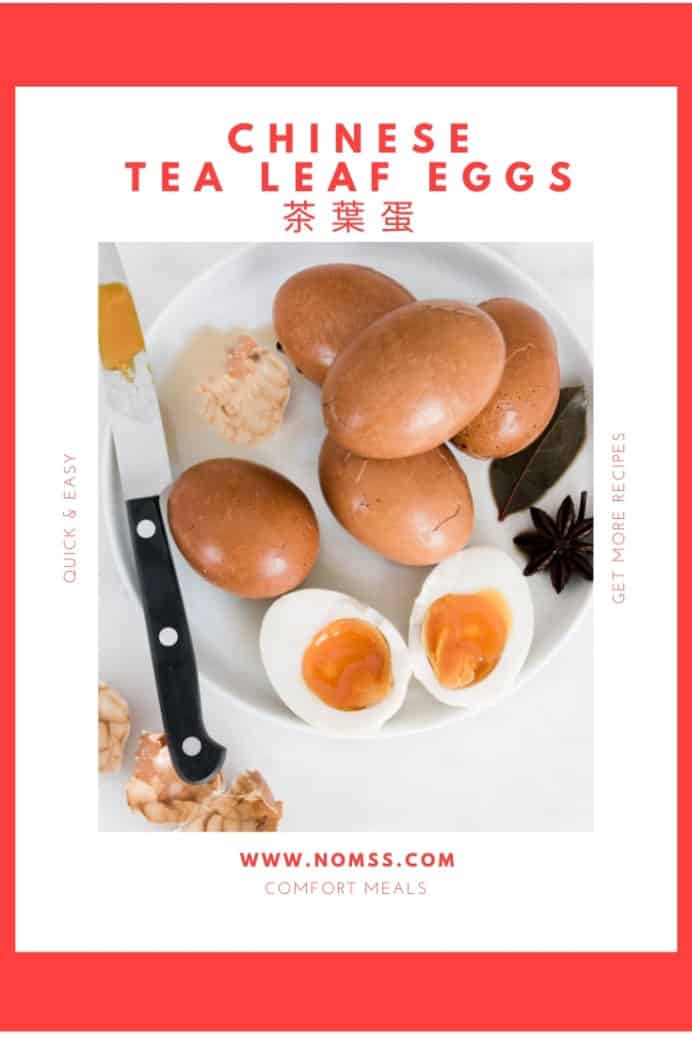
Pin the above image to your Chinese TCM Recipe Pinterest Board to bookmark this page. We are so excited to share our recipes with you!
More Chinese Recipes
Chinese Steamed Chicken With Shiitake Mushroom 冬菇蒸雞
Air Fryer BBQ Pork Char Siu 氣炸鍋蜜汁叉燒
Red Bean Soup (Instant Pot) 蓮子百合紅豆沙









Terri says
I'm with you I LOVE eggs! And this recipe is awesome. My daughter didn't like eggs with she was that little either, but don't worry, she'll grow out of it!
Nancy says
I HOPE SO!! I try so hard to get her to eat eggs (and other healthy stuff) and she always runs away!
Kristen says
Oh my, I’m so excited to try these. I have a Ninja Foodi so it will be an experiment!
Nancy says
Does the Ninja Foodi work well ? i'm interested
Sharon says
Cool!! What a neat technique. I love artsy looking food. I've been an egg eater since childhood and still love them. Can't wait to try this out.
Nancy says
me too ! I love eggs and need to eat them couple times a week!
Yvonne Langen says
These are delicious and beautiful - the texture from the sous vide is incredible!
Nancy says
Haha Sous vide eggs never fails me!
Vanessa says
They are so beautiful! I love eggs so these are a real treat. However, I also understand what it is like to have a child that won't go near them
Nancy says
Thanks Vanessa!! I find kids this generation hates it more than my generation or those before. It's so strange!
Joss says
I've never seen these before, really cool!
Nancy says
Thanks Joss!! These are super popular in Asia. Hope you get to try one sometime!
Denise@urbnspice says
How very interesting, Nancy! I am so curious about this recipe and plan on trying it in my new sous-vide that my daughters just gifted me with. Thanks so much for sharing all of the different ways of making your Chinese Tea Leaf Eggs.
Nancy says
What a great gift your daughter got you! It's such a life saver and I love how precise cooking is with it! Can't wait to see you make these and other meals!
Bernice Hill says
oooh, I love eggs too. I often either have scrambled eggs or medium boiled eggs with toast for lunch. I don't boil eggs any more and I don't have a sous vide but I love making eggs in my instant pot!
I've made these before, thanks for reminding me how easy and delicious they are.
Nancy says
I've actually never made eggs in my IP before. Though i hear it is super simple at 4 minutes.
I will have to give it a try!