
Dendrobium Silkie Chicken Soup with Astragalus and Codonopsis 淮山黨參石斛北芪紅棗烏雞湯
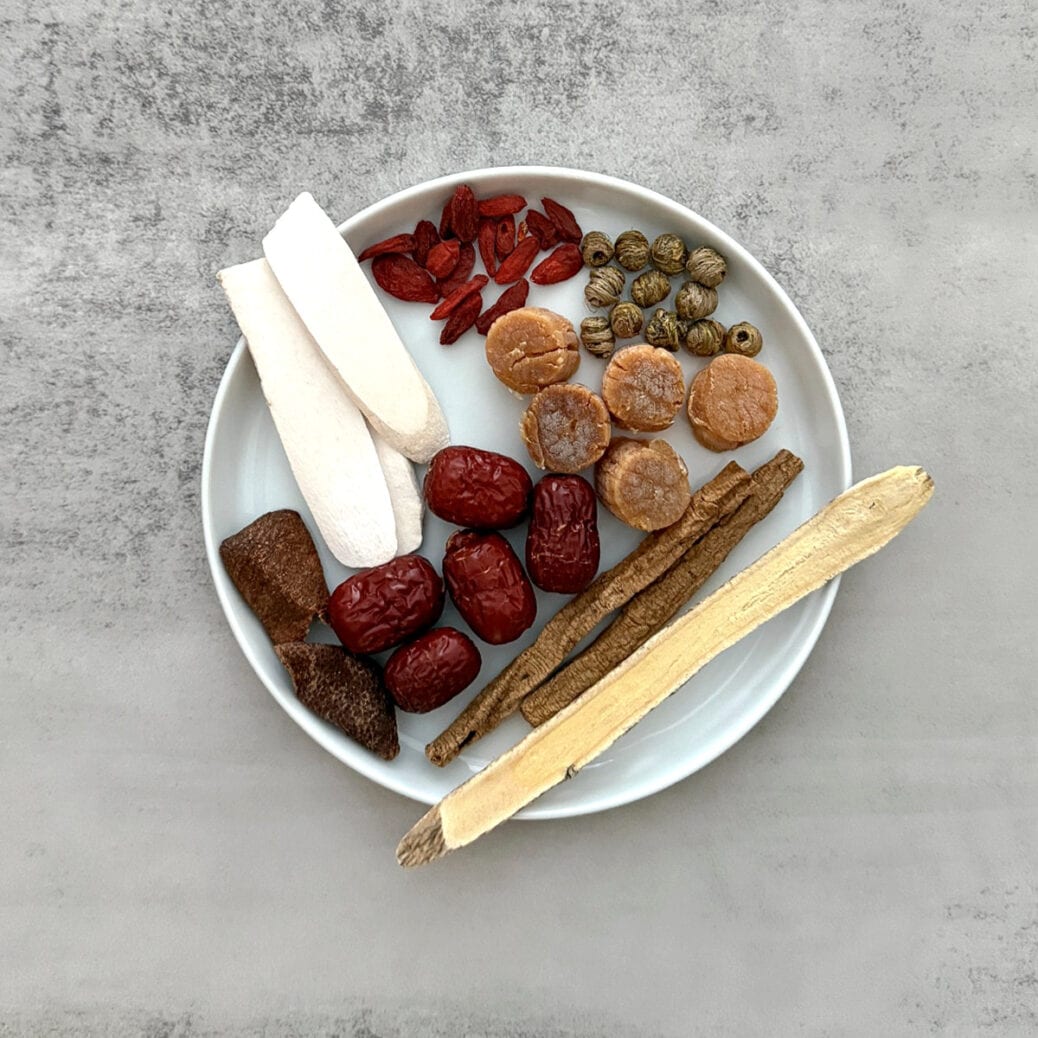
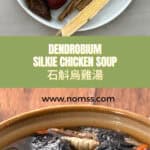
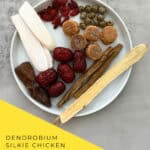
Dendrobium (石斛, shíhú) is an orchid, and the part that goes in the pot is the stem, dried into tight golden coils that look like they fell out of a sewing kit. In this soup it shares the water with four pantry regulars, Chinese yam, codonopsis, astragalus and red dates, plus one black-skinned silkie chicken.
The Chinese name reads like an ingredient list because it is one: 淮山黨參石斛北芪紅棗烏雞湯. It's a Cantonese slow-simmered soup (老火湯) for the stretch when autumn dryness hasn't quite left and the cold has started moving in. It takes two hours on the stove, and you're needed for about fifteen minutes of it.
My grandma makes this every year, right after school starts. Once my hands feel cold at night and the fog starts misting in the morning, I know this soup is in season.
> In This Post: What You'll Learn About Dendrobium Silkie Chicken Soup
You'll get the reasoning behind the herb combination, what each ingredient does in the pot, and how TCM classifies it. There's a guide to the two types of dendrobium so you don't pay for the bitter one by accident, plus Canadian sourcing notes.
After that come the stovetop method with visual cues, an Instant Pot option, storage, five variations and the questions people ask most.
Why These Five Herbs Share a Pot
In Chinese food therapy this is a 補氣養陰 (bǔ qì yǎng yīn) soup. Half the pot is traditionally said to tonify qi, and the other half to nourish yin.
Codonopsis and astragalus are the qi pair, combined so often that the duo has its own shorthand, 參芪 (shēn qí). Astragalus is classed as slightly warm, and a pot built on it alone is traditionally considered drying for some people.
Dendrobium is the counterweight. TCM classes it as sweet and slightly cold and associates it with Stomach yin and body fluids, which is how the combination earns the description 補而不燥: nourishing without the dryness.
It sits in the middle of the tonic range. My Chinese herbal silkie chicken soup with yam, red dates and goji is the gentler, neutral pot. This one is a step richer, and the heavy warming tonics wait for Dongzhi.
These are traditional frameworks for seasonal eating, not medical findings. Soup is dinner, not treatment.

Ingredients: Traditional Uses and TCM Properties
Silkie chicken (烏雞, wūjī, also called 竹絲雞). A small breed with white feathers and black skin, meat and bones. It gives a lean broth with a concentrated chicken flavour. TCM classes it as sweet and neutral, and it's traditionally used to nourish yin and blood.
Chinese yam (淮山, huáishān). Dried white slices of Dioscorea polystachya that soften in the pot and add a faint starchy sweetness. Sweet and neutral in TCM, and traditionally associated with the Spleen, Lung and Kidney.
Codonopsis root (黨參, dǎngshēn). Long, wrinkled tan roots with a mild sweetness, sometimes nicknamed poor man's ginseng. Classed as sweet and neutral, it's one of the most common qi tonics in Chinese home soups.
Astragalus (北芪, běiqí, also 黃芪, huángqí). Pale yellow slices shaped like tongue depressors, with a sweet, slightly beany smell. Sweet and slightly warm in TCM, and traditionally used to tonify qi.
Dendrobium (石斛, shíhú). The dried orchid stem. TCM classes it as sweet and slightly cold, and traditionally associates it with the Stomach and Kidney and with generating fluids.
Red dates (紅棗, hóngzǎo). Sweet and warm, traditionally said to harmonize the other herbs. They're also why the broth needs no sugar.
Ginger (薑). Two or three slices, to take the edge off the poultry.
Most dry goods ingredients, tools, and supplies can be purchased at local Asian markets, Chinese grocery stores, or Amazon Online. Amazon Prime members receive free shipping and faster delivery times.

Ingredient Notes and Sourcing
You'll see dendrobium in two forms. 鐵皮石斛 (tiěpí shíhú, Dendrobium officinale) is usually sold as small golden coils called 楓斗 (fēngdǒu), and it's mild and slightly sweet. 金釵石斛 (jīnchāi shíhú, Dendrobium nobile) comes as flat, straw-like sticks and tastes noticeably bitter.
For soup, most cooks prefer the coils. They cost more, but the recipe uses 10 grams. Dendrobium sold for cooking is cultivated, since wild plants are protected.
Choose dried yam slices that are ivory, not chalk white, because very white slices have often been sulphur-treated. Codonopsis should bend a little and smell sweet. Red dates should be plump, and pitted before they go in.
In Canada, T&T Supermarket and most Chinese supermarkets stock silkie chicken, usually frozen and whole, along with dried Chinese yam and red dates. For dendrobium, astragalus and codonopsis, a Chinese herbal shop (藥材舖) is usually cheaper by weight, and staff will portion a soup bundle if you show them the name. Costco isn't much help with this one, beyond the ginger.
Elsewhere, look to Chinese supermarkets, Chinese herbal shops and reputable online retailers.
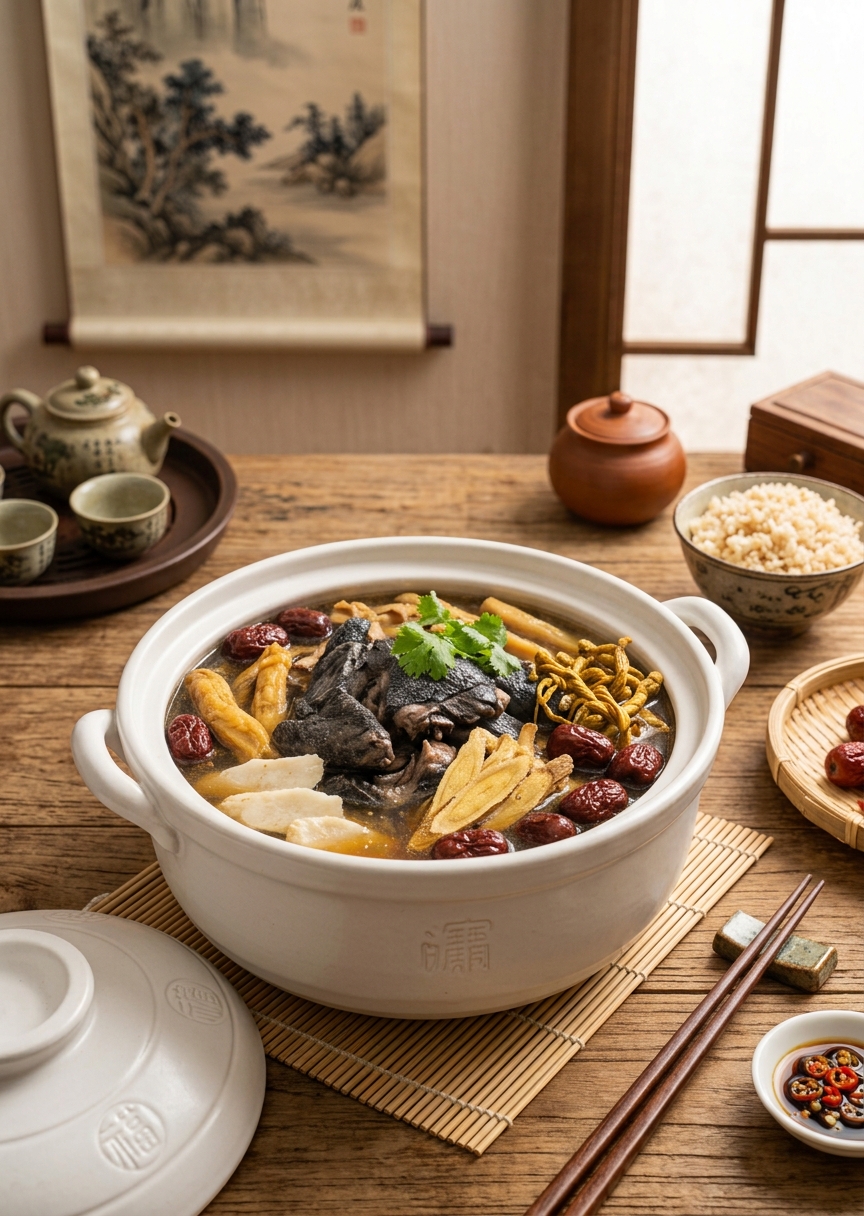
How to Make Dendrobium Silkie Chicken Soup
Rinse the dried herbs to remove dust. Soak the dendrobium in cool water for 30 minutes, since it's the slowest to soften, and snip tight coils in half so more surface meets the water. The yam, codonopsis and astragalus need only 10 minutes.
Trim the silkie. Remove the head, tail and loose fat, and pull out anything left in the cavity, especially the lungs along the backbone. Leave it whole or halve it to fit your pot.
Blanch the chicken by starting it in cold water, bringing it to a boil and letting it bubble for 2 to 3 minutes. Drain, then rinse off the grey scum. This step keeps the broth clear.
Put the chicken, herbs, dates and ginger in a large pot with 2.5 litres of cold water. Bring it to a full boil, skim once, then turn the heat to low and set the lid slightly ajar. You're after a lazy simmer, with a few bubbles breaking the surface.
Give it 2 hours. The soup is ready when the broth is a clear pale gold, the yam breaks under a spoon and a chicken leg pulls away without a fight. Salt at the end, a little at a time.
The usual mistake is a hard boil, which clouds the broth and drives off too much water. If the level drops, top up with boiling water, never cold.
Instant Pot and Double-Boiling
For the Instant Pot, cut the water to 2 litres because nothing evaporates. Cook on high pressure for 45 minutes and let the pressure release naturally. The broth comes out a touch cloudier, but the flavour holds.
For the clearest broth, double-boil (燉) the soup in a covered ceramic jar set in simmering water for 3 hours.
Storage and Make-Ahead
Cool the soup and refrigerate it within two hours. It keeps for up to 3 days in the fridge and up to 3 months in the freezer. The fat sets on top once chilled, so you can lift it off before reheating.
Reheat on the stove until it's steaming hot all the way through. Strain out the astragalus and dendrobium before freezing, since neither improves with a second simmer.
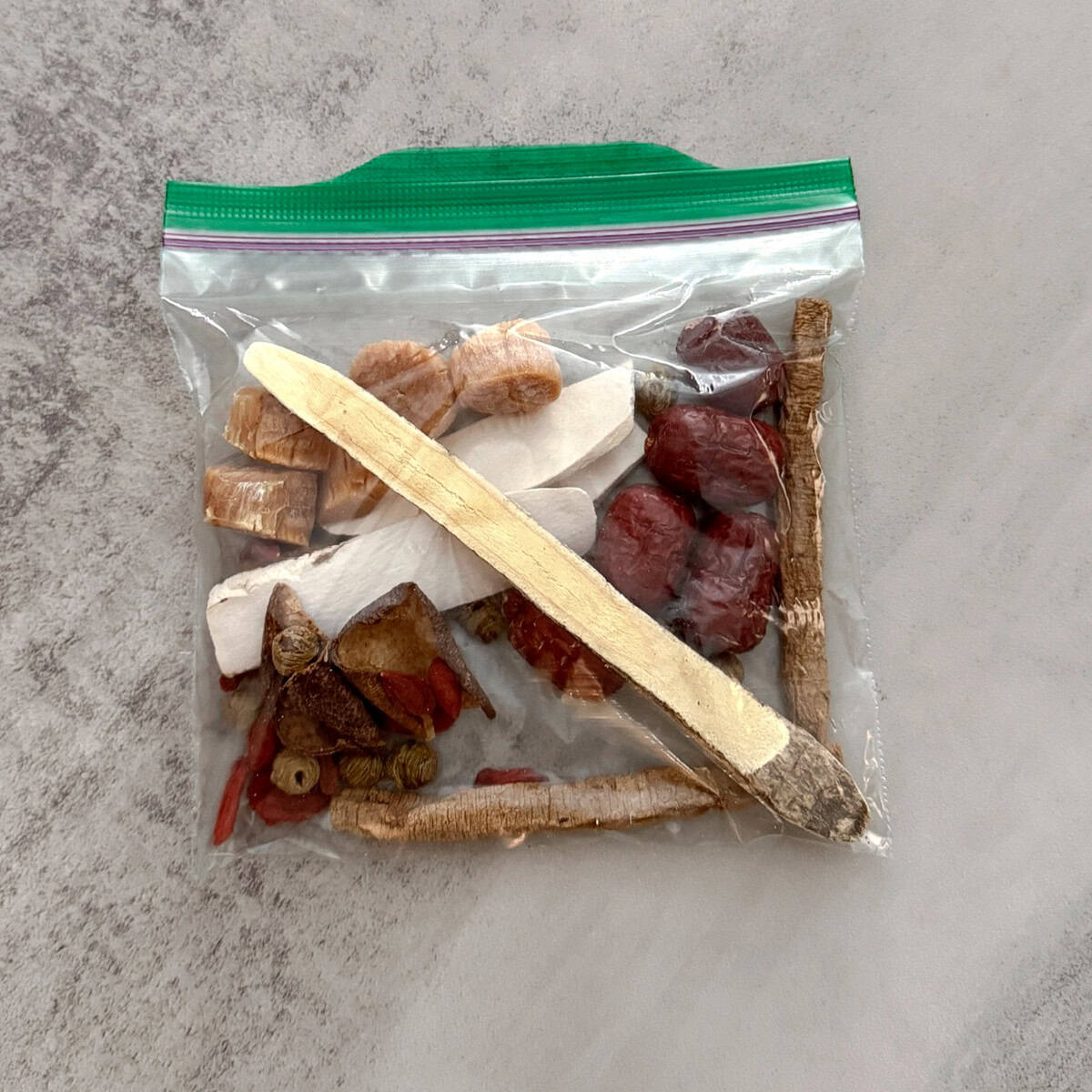
The best make-ahead is dry. Portion the herbs for several pots into bags or jars, and the next batch takes about a minute to assemble.
Variations
Lean pork. Add 200 grams of blanched lean pork (瘦肉) alongside the chicken for a sweeter broth, or use pork alone for 石斛瘦肉湯, a common everyday version.
American ginseng. Swap the codonopsis for American ginseng (花旗參), a classic Cantonese partner for dendrobium. TCM classes it as cool, so the pot shifts cooler and tastes more bitter-sweet.
Goji berries. Add a tablespoon in the last 10 minutes. Any longer and they go mushy and sour.
Regular chicken. A small free-range chicken or bone-in legs with the skin removed will work. The broth is fattier, so skim more.
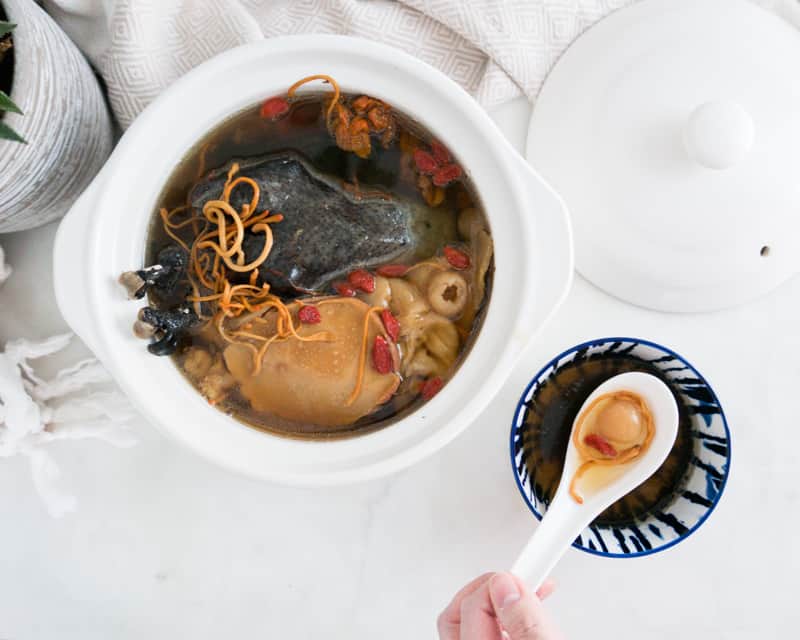
Dried Conch. Adds a rich savory depth to the broth while maximizing its Yin-nourishing and fluid-replenishing qualities. If you don't have conch, dried scallops works the same.
Which Silkie Chicken Soup Should You Make?
| Soup | Key ingredients | Method and time | Flavour and character |
|---|---|---|---|
| Dendrobium silkie chicken soup 淮山黨參石斛北芪紅棗烏雞湯 | Dendrobium, codonopsis, astragalus, Chinese yam, red dates | Simmer, 2 hours | Herbal and gently sweet. Warming qi tonics balanced by slightly cold dendrobium. |
| Chinese herbal silkie chicken soup 淮山紅棗杞子竹絲雞湯 | Chinese yam, red dates, goji, pork shank | Simmer, 2 hours | The mildest of the five. Sweet, clean and neutral. |
| Silkie chicken soup with lotus seeds and Job's tears 健脾烏雞淮山黃耆湯 | Chinese yam, lotus seeds, Job's tears, chrysanthemum, goji, red dates, a little astragalus | Simmer, 2 to 2.5 hours | Light and faintly floral, with cooler ingredients in the mix. |
| Chinese almonds silkie chicken soup 杏汁燉竹絲雞湯 | Southern and northern apricot kernels, pork shank, ginger | Simmer about 2 hours, with almond juice added near the end | Creamy, nutty and pale. The fewest ingredients. |
| Silkie chicken cordyceps soup with fish maw and conch 蟲草花花膠响螺煲烏雞湯 | Cordyceps flower, fish maw, conch, Chinese yam, goji, longan, lean pork | Double-boil, 3 hours, plus soaking the fish maw ahead | The richest and most savoury, with depth from the seafood. |
Frequently Asked Questions (FAQs)
Most questions about this soup come down to the herbs: what dendrobium tastes like, which ones you eat, and whether 北芪 and 黃芪 are the same thing. Here are the short answers, plus the traditional guidance on when to skip the pot.
Mild and faintly grassy-sweet if you use the coiled 鐵皮石斛. Most of what you taste is chicken, red dates and astragalus. The stick type, 金釵石斛, adds clear bitterness.
Eat the chicken, yam and red dates. Codonopsis is edible but fibrous. Astragalus and dendrobium stay woody, so leave them in the pot.
Yes. 北芪 (bak kei in Cantonese) is the name Cantonese shops and cooks use for astragalus root, and the term originally pointed to roots from northern China. English labels usually say astragalus or huang qi.
Yes. Use about 300 grams of fresh yam (鮮淮山), peel it wearing gloves because the sap can irritate skin, and add the chunks for the last 30 to 40 minutes. Fresh yam turns silky, while dried slices give a more herbal broth.
Cloudy broth usually means the pot boiled too hard or the chicken wasn't blanched. Bitterness usually traces back to 金釵石斛 or a heavy hand with it.
Traditional practice says to wait. Tonic soups are usually set aside during a cold, fever or sore throat and brought back afterwards. If you're unwell, see a doctor.
Anyone who is pregnant or breastfeeding, takes prescription medication (immunosuppressants and blood thinners in particular) or manages a health condition should ask a doctor, pharmacist or registered TCM practitioner before adding tonic herbs. The same goes for young children.
Related NOMSS Recipes
For the gentler starting point, make the Chinese herbal silkie chicken soup with yam, red dates and goji. If you'd like a lighter pot with the same bird, try the silkie chicken soup with lotus seeds and Job's tears.
Si Shen Tang 四神湯 uses Chinese yam in a four-herb soup with no tonic roots at all. On nights when two hours isn't happening, red date longan goji tea covers the warm-mug requirement.
For the seasonal reasoning behind easing into tonics, read the Start of Winter (Lidong) guide.
Have you tried this TCM soup recipe? Share your experience and any adaptations you've made in the comments below. For more traditional Chinese medicine recipes and health tips, subscribe to our newsletter and never miss a post!
I'd love to see how you went with my recipes! Leave a comment below or tag me on Instagram @INSTANOMSS #INSTANOMSS.
> Recipe Card
PrintDendrobium Silkie Chicken Soup 淮山黨參石斛北芪紅棗烏雞湯

Dendrobium Silkie Chicken Soup 淮山黨參石斛北芪紅棗烏雞湯 - A Cantonese slow-simmered silkie chicken soup with dendrobium, Chinese yam, codonopsis, astragalus and red dates, traditionally made in late autumn and winter.
- Prep Time: 15 mins
- Cook Time: 2 hours
- Total Time: 2 hours 15 minutes
- Yield: 4 persons 1x
- Category: Chinese, Soup
- Method: Boiling
- Cuisine: Chinese
Ingredients
- 1 whole silkie chicken 烏雞 (about 700 to 900 g), trimmed
- 30 g dried Chinese yam slices 淮山
- 20 g codonopsis root 黨參
- 15 g astragalus slices 北芪
- 10 g dendrobium 石斛 (coiled 鐵皮石斛 preferred)
- 6 red dates 紅棗, pitted
- 3 slices fresh ginger 薑
- 2.5 L cold water (2 L for Instant Pot)
- Salt, to taste
 Get Recipe Ingredients
 Instructions
- Rinse all dried herbs. Soak the dendrobium for 30 minutes and the yam, codonopsis and astragalus for 10 minutes, then drain.
- Trim the silkie chicken, removing the head, tail, loose fat and anything left in the cavity.
- Place the chicken in a pot of cold water, bring to a boil and blanch for 2 to 3 minutes. Drain and rinse.
- Add the chicken, herbs, red dates, ginger and 2.5 L cold water to a large pot. Bring to a full boil and skim.
- Reduce to low, partially cover and simmer for 2 hours.
- Season with salt and serve hot.
- Instant Pot: Use 2 L water. Cook on high pressure for 45 minutes with natural release, then season.
Equipment
 Buy Now →
 Notes
Astragalus and dendrobium stay woody and aren't eaten. Refrigerate for up to 3 days or freeze for up to 3 months.

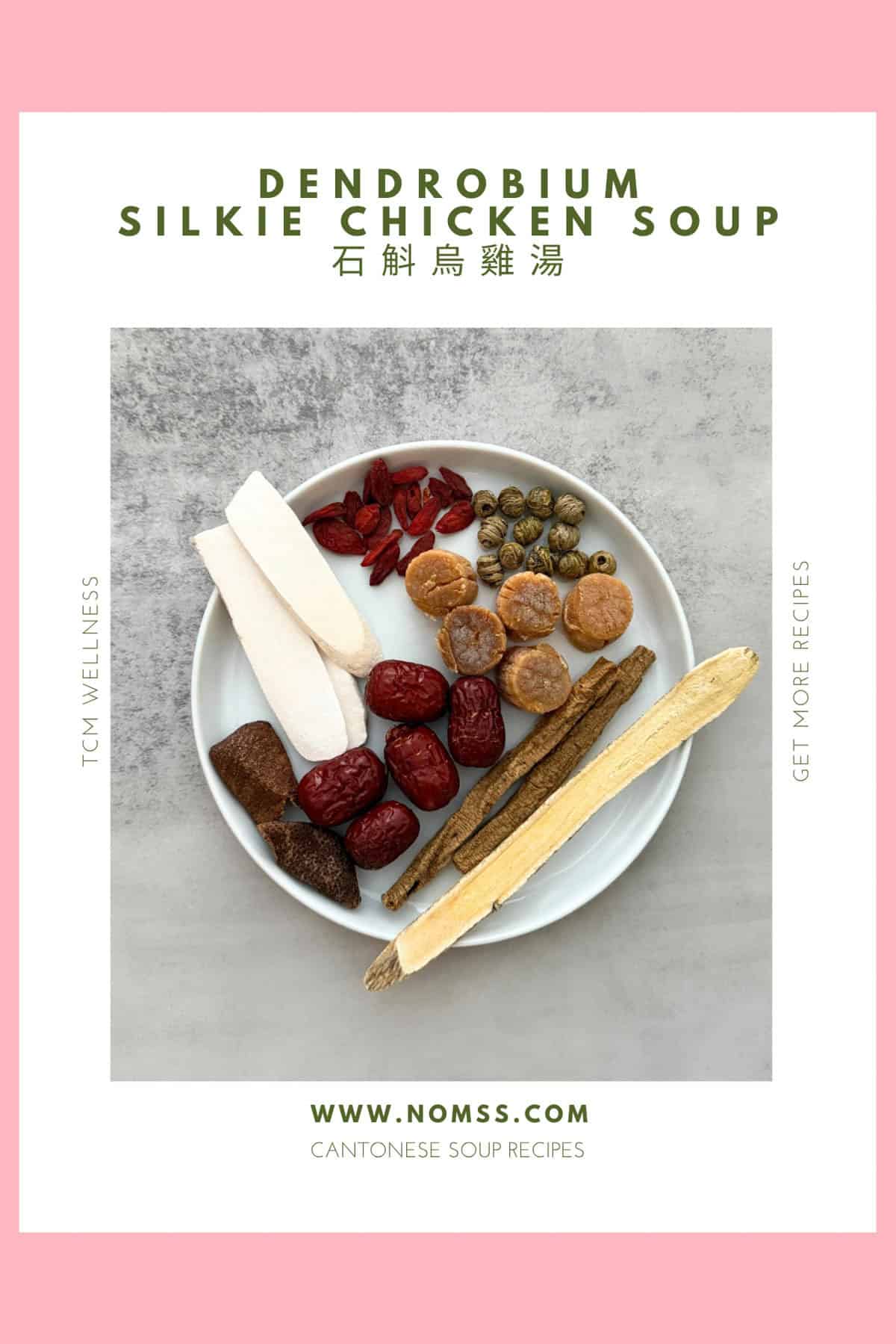
Pin the above image to your Chinese TCM Recipe Pinterest Board to bookmark this page. We are so excited to share our recipes with you!
More Chinese Recipes
Chinese Steamed Chicken With Shiitake Mushroom 冬菇蒸雞
Air Fryer BBQ Pork Char Siu 氣炸鍋蜜汁叉燒
Red Bean Soup (Instant Pot) 蓮子百合紅豆沙





Comment Below