
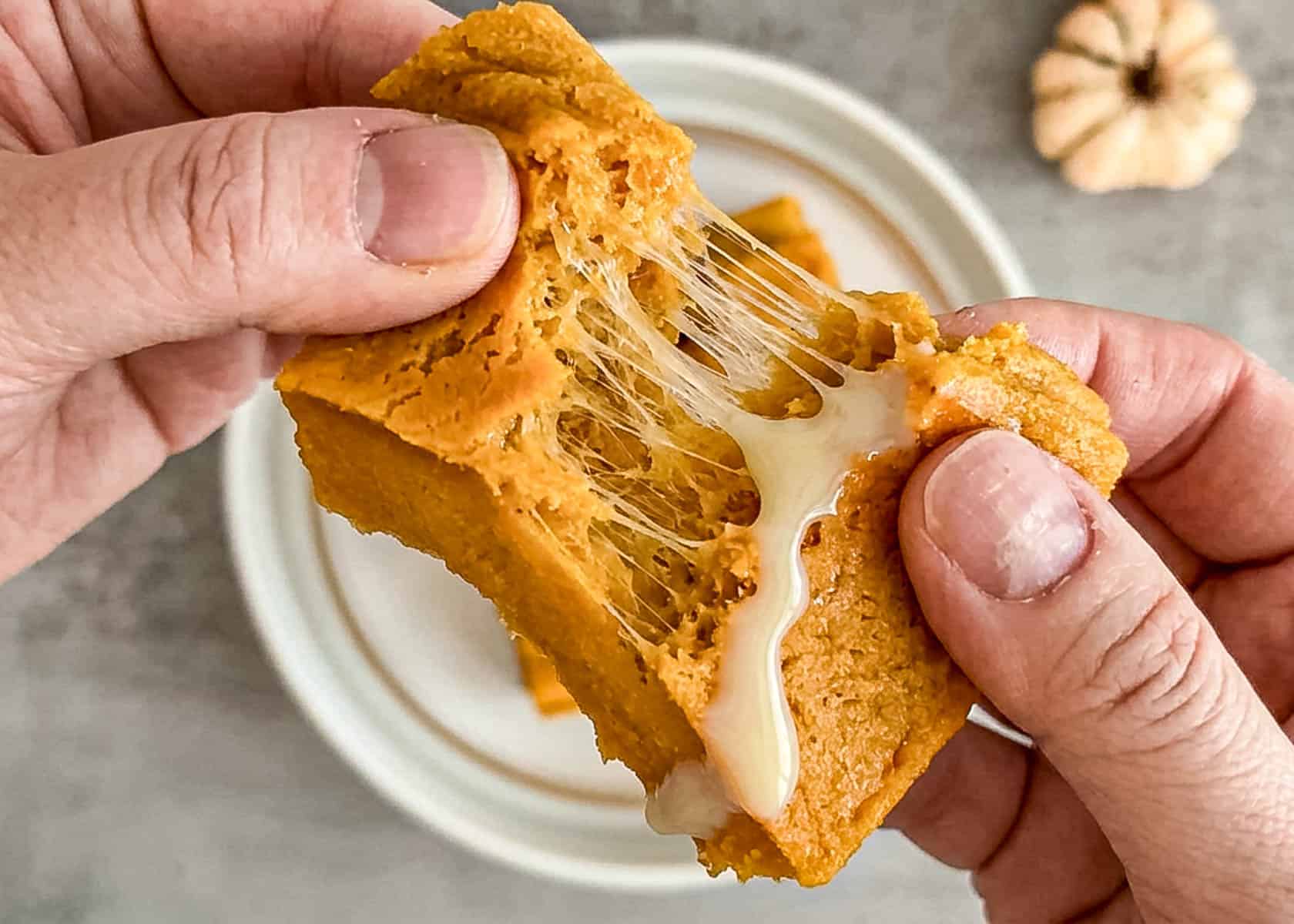
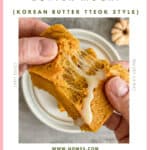
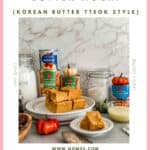
Pumpkin pie has a filling problem, and the problem is that it ends. This pumpkin pie butter mochi fixes that by turning the whole thing into chewy, custardy bars with crisp, buttery edges. It bakes in one 9×13 pan, slices cleanly once chilled, and disappears faster than you'd like.
If you've stood in line for Korean butter tteok this year, or watched someone on TikTok do it, you already know the texture. This is that same crackly-outside, bouncy-inside rice cake idea, made with pantry staples and a can of pumpkin.
> In This Post: Everything You Need For Pumpkin Butter Tteok
You'll learn how Hawaiian-style and Korean-style butter mochi share one basic batter, and why glutinous rice flour is the only flour that works here. You'll also get the doneness cues that separate a set centre from a gummy one. There's a short look at how pumpkin and glutinous rice are viewed in Chinese food therapy, plus storage tips, variations and FAQs.
Jump to:
- > In This Post: Everything You Need For Pumpkin Butter Tteok
- Butter Mochi Meets Butter Tteok
- Traditional Uses and TCM Properties
- Ingredient Notes and Sourcing
- Storage and Make-Ahead
- Variations
- Pumpkin Pie Butter Mochi Frequently Asked Questions (FAQs)
- > Recipe Card
- Pumpkin Pie Butter Mochi (Korean Butter Tteok Style)
Butter Mochi Meets Butter Tteok
Butter mochi grew up in Hawaii. It's a baked glutinous rice cake made with mochiko flour, butter, eggs, sugar and milk, and it shows up at potlucks the way lasagna does everywhere else. Pumpkin versions have become a familiar fall move, and for good reason.
Korean butter tteok (버터떡, beoteo-tteok) is the newer cousin. It went viral in Korea in early 2026, with bakeries in Seongsu and Hongdae selling out and the Korea Times calling it the next Dubai chewy cookie. Tteok (떡) just means rice cake, so the name is refreshingly literal.
The two share the same idea: glutinous rice flour, plenty of butter, and a hot oven that sets a crisp shell around a chewy middle. Korean shops usually bake smaller individual pieces for maximum crust, while butter mochi goes the sheet-pan route. This recipe sits in the middle, with a family-sized pan, tteok-level edges and a pumpkin pie personality on top.
Traditional Uses and TCM Properties
This is a dessert with a stick of butter in it, so let's not pretend it's medicine. Still, both main ingredients have a long history in Chinese food therapy. That's part of why a pumpkin and rice cake feels right as the weather turns.
In TCM, glutinous rice (糯米, nuò mǐ; lo mai in Cantonese) is traditionally considered sweet and warm. It's associated with the Spleen, Stomach and Lung, and it's long been used in cold-weather foods like nian gao and tang yuan. TCM practitioners traditionally caution that its stickiness makes it heavier to digest, so modest portions are the classic advice.
Pumpkin (南瓜, nán guā) is also traditionally classed as sweet and warm and linked to the Spleen and Stomach in Chinese food therapy. Warming spices like cinnamon and ginger, both standard in pumpkin pie spice, are traditionally used to add warmth to a dish. That combination lines up neatly with the shift into cooler weather, which our Start of Winter (Lidong) TCM Food Guide covers in detail.
From a modern nutrition standpoint, pumpkin purée contributes beta-carotene and fibre. The sugar and butter remain the sugar and butter.

Ingredient Notes and Sourcing
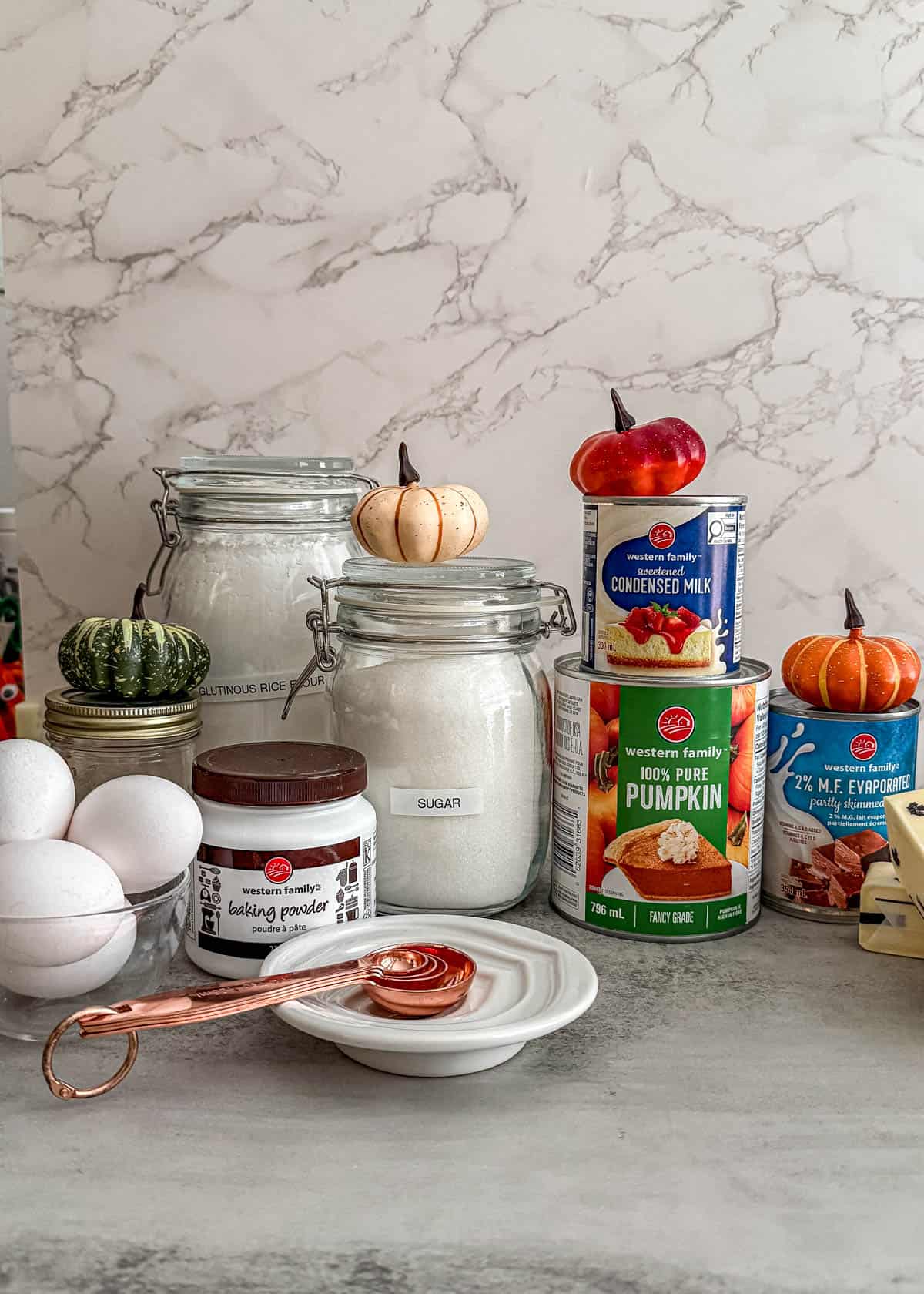
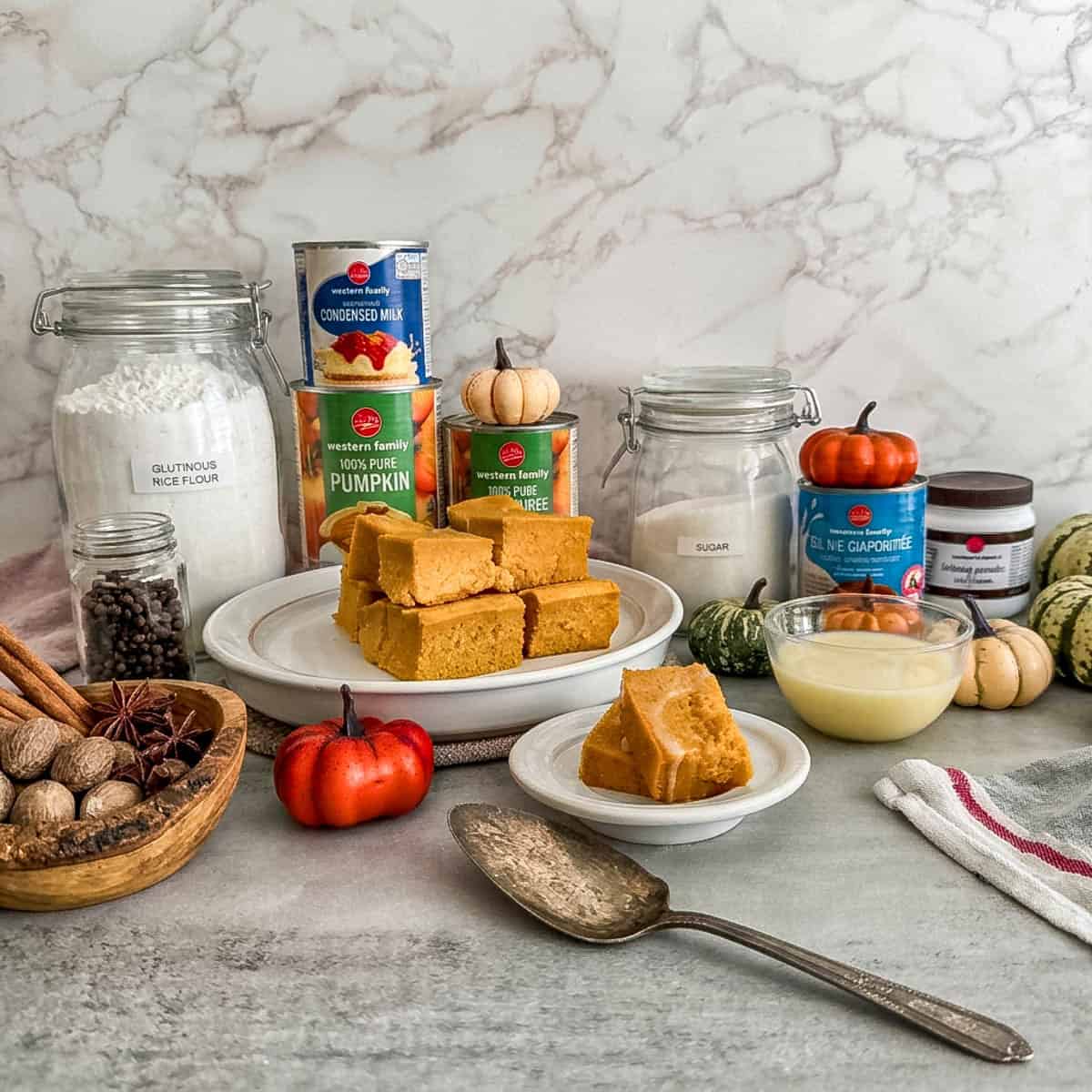
Glutinous rice flour is the backbone, and there's no substitute. Regular rice flour (粘米粉) gives you something dry and crumbly, and wheat flour gives you cake. Koda Farms Mochiko comes in a 16 oz (454 g) box, which is exactly what this recipe uses.
T&T carries Mochiko alongside Thai brands like Erawan in the green bag. If you use a bagged brand, check the weight on the label, since many come in sizes smaller than 454 g. You may need a second bag to make up the difference.
Pure pumpkin purée means plain pumpkin, not pumpkin pie filling. Pie filling is already sweetened and spiced, and it'll throw off the whole batter. Mainstream Canadian grocery stores stock pure pumpkin year-round, and Costco tends to carry multi-packs heading into holiday baking season.
You need 1 ¾ cups (414 mL), which is slightly more than a standard 398 mL Canadian can. Grab a larger 796 mL can or two smaller ones and measure. Leftover purée goes straight into our Air Fryer Pumpkin Spice Basque Burnt Cheesecake.
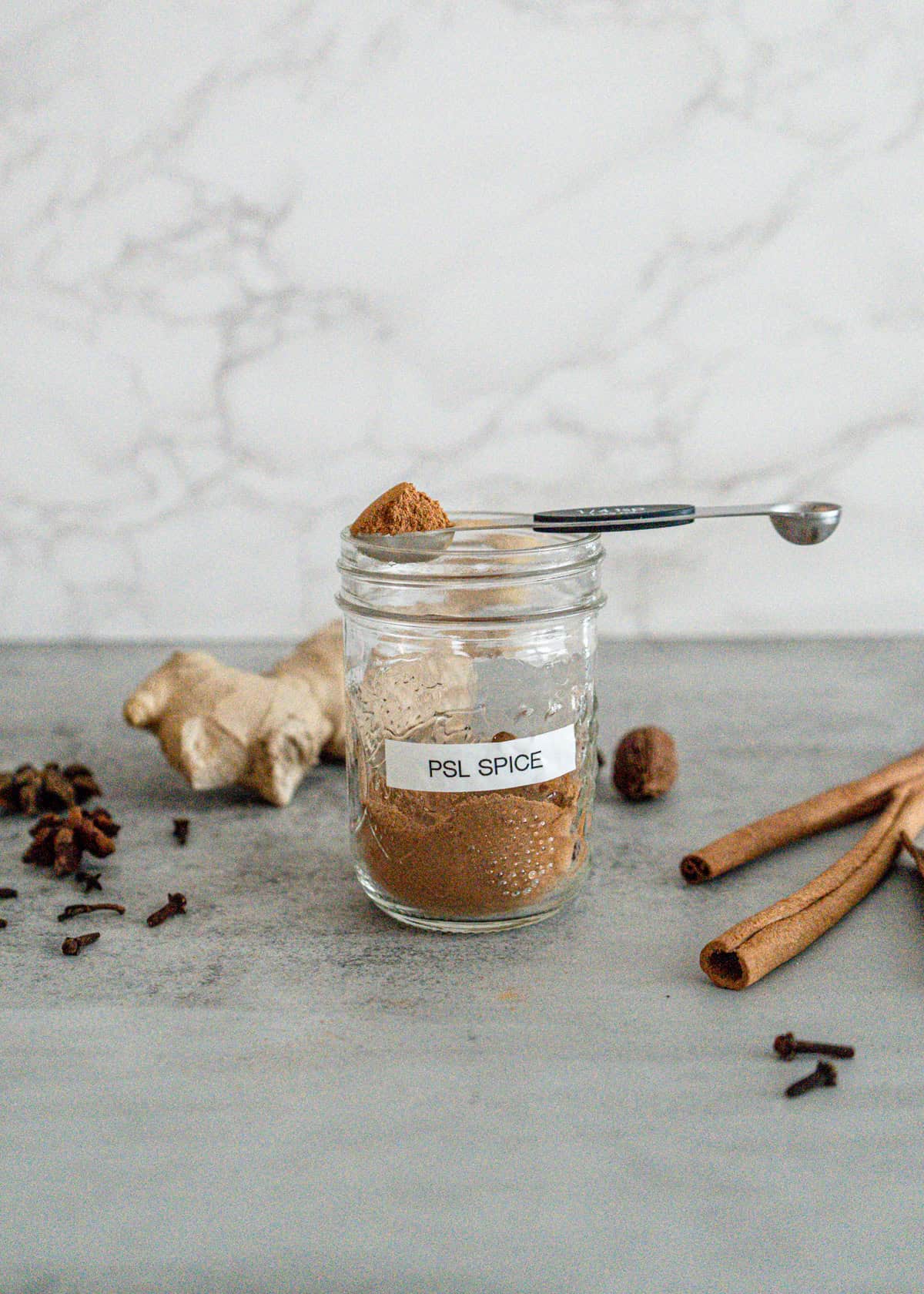
Evaporated milk adds richness without extra water, which helps the centre set. Pumpkin pie spice can be store-bought, or you can make your own with this Homemade Pumpkin Pie Spice Recipe Without Allspice.
Room-temperature eggs matter more than you'd think. Cold eggs hitting warm melted butter can make the butter seize into little flecks.
Most dry goods ingredients, tools, and supplies can be purchased at local Asian markets, Chinese grocery stores, or Amazon Online. Amazon Prime members receive free shipping and faster delivery times.
How to Make Pumpkin Pie Butter Mochi
Start with the pan. A metal 9×13 cake pan is the right tool because it conducts heat fast enough to crisp the edges, which is half the point of butter mochi. Glass and ceramic work but brown less, and silicone can leave you with a soft, under-set centre.
Whisk the dry ingredients first so the baking powder and pumpkin pie PSL spice spread evenly through the flour. Glutinous rice flour clumps easily, so break up any lumps now rather than chasing them later. In the second bowl, whisk the melted butter, eggs and sugar until glossy and fully combined.
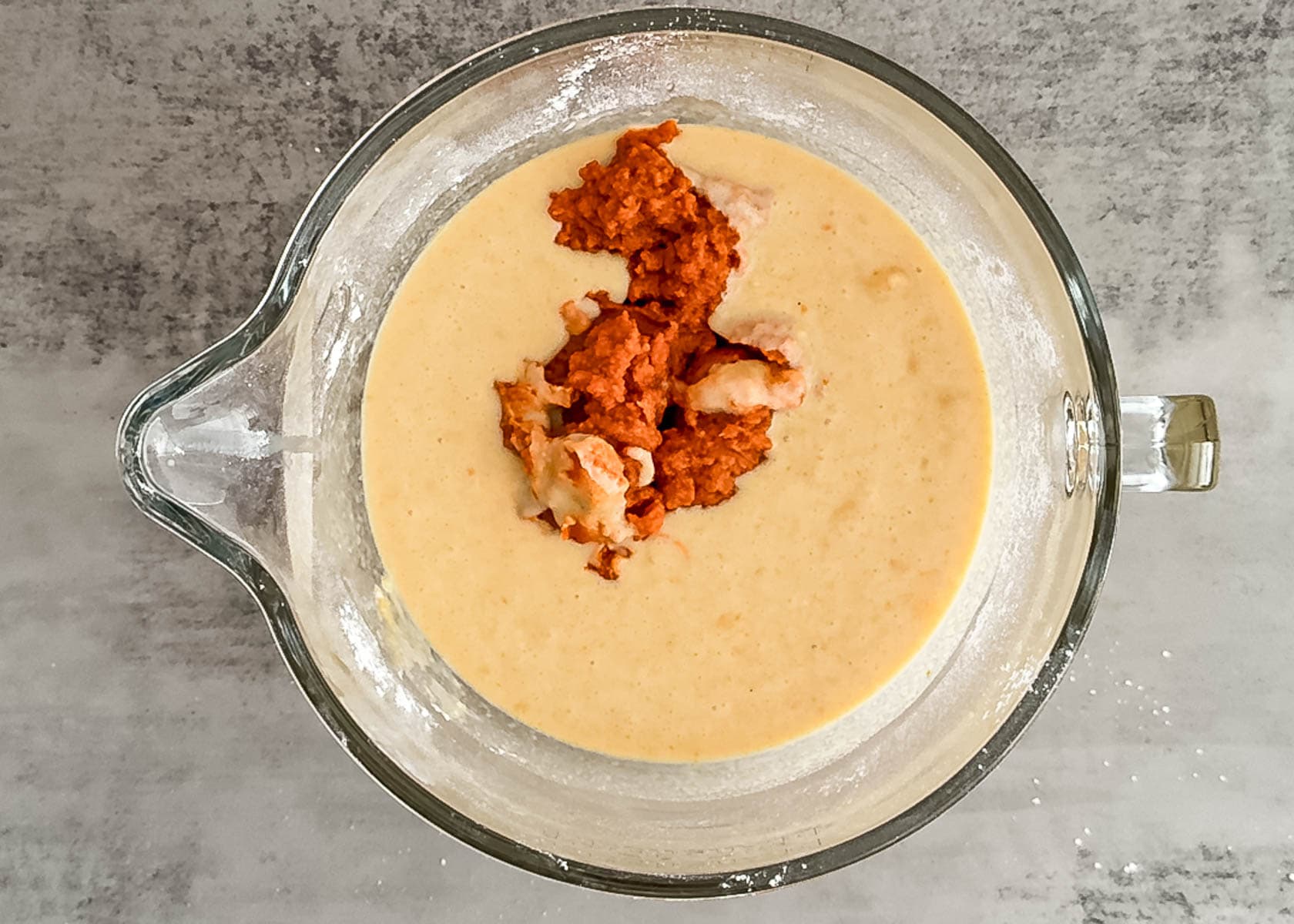
Fold the dry mix into the butter mixture only until it's about 75 percent combined. It'll look shaggy and thick, and that's fine. Then add the evaporated milk and measured pumpkin purée and whisk until the batter is completely smooth.
The finished batter should pour like a thick pancake batter, with no dry pockets at the bottom of the bowl. Scrape the bottom and sides once before pouring. Glutinous rice flour loves to hide there.
Bake until the top is deep golden, the edges have pulled away from the pan and look visibly crisp, and a toothpick in the centre comes out clean. Start checking at 45 minutes. Ovens vary, so if the centre still looks wet or jiggles like custard, give it more time in short intervals.
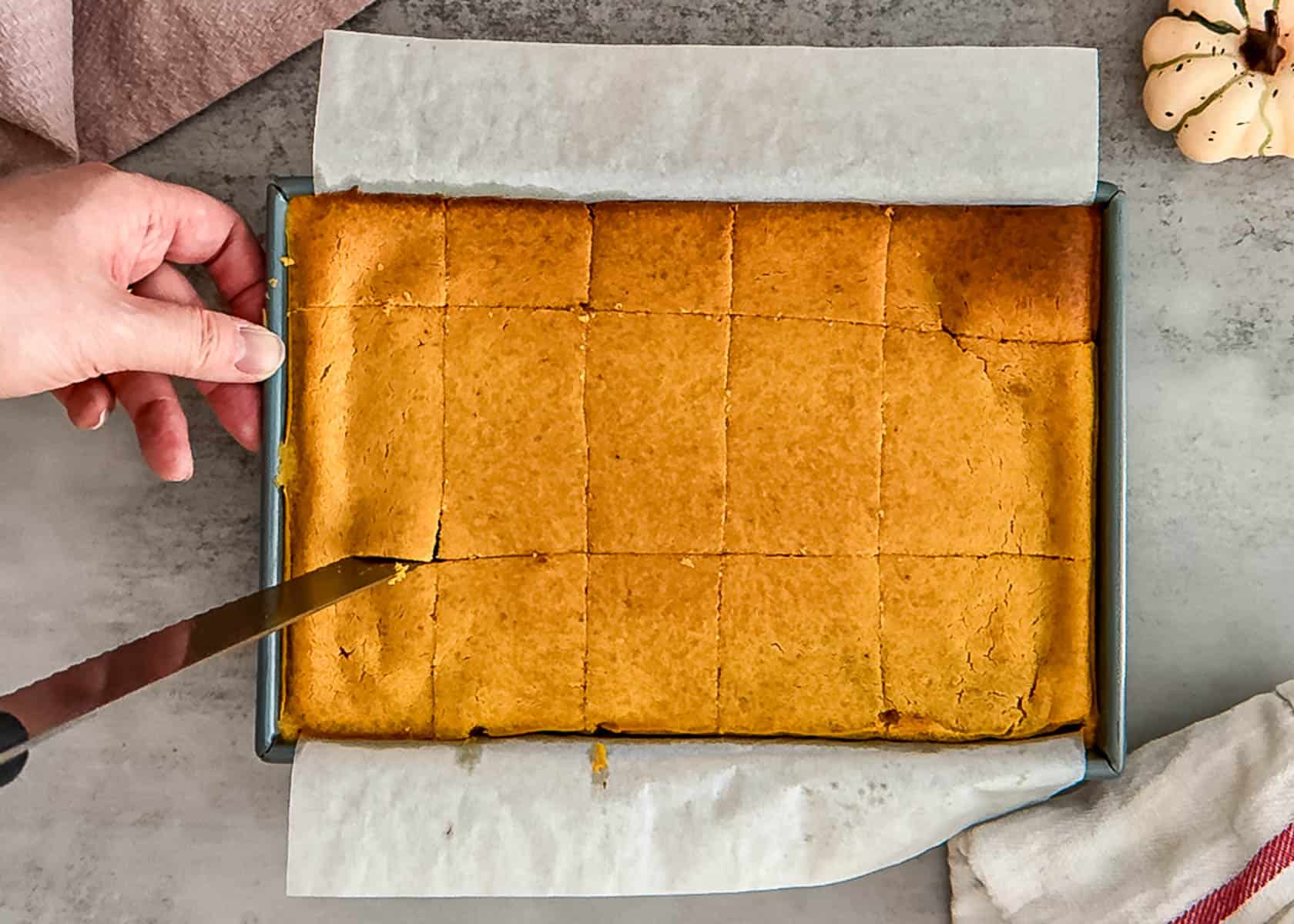
The hardest step is waiting. Butter mochi needs to cool completely and chill before slicing, or the knife drags and the bars smear. Use a plastic knife or a lightly oiled sharp knife for the cleanest cuts.
Storage and Make-Ahead
Because this contains eggs, dairy and pumpkin, treat it like pumpkin pie and keep it refrigerated. Food safety guidance for pumpkin pie is to refrigerate it and eat it within 3 to 4 days, and that's a sensible standard here too.
Butter mochi firms up in the fridge. A few seconds in the microwave brings back the soft, stretchy chew, and a quick turn in the air fryer re-crisps the edges.
For longer storage, wrap bars individually and freeze. Thaw in the fridge, then warm briefly before serving. This also makes it an easy make-ahead for Thanksgiving or a holiday dessert table.
Variations
Butter tteok style: Bake in a greased metal muffin tin or mini loaf pans for more crust per bite. Smaller portions bake much faster, so start checking early and go by the visual cues above.
Coconut milk version: Many Hawaiian butter mochi recipes use coconut milk instead of evaporated milk. Swapping it in gives a more tropical flavour and a slightly richer, softer bite.
Kabocha swap: Roasted, puréed kabocha squash works in place of canned pumpkin and tastes a little sweeter and nuttier. Fresh purée holds more water, so drain it in a sieve if it looks loose, then measure out 1 ¾ cups (414 mL).
Toppings: A sprinkle of toasted black sesame before baking looks great and adds crunch. It also gives the bars a nod to the Cantonese dessert table.
Pumpkin Pie Butter Mochi Frequently Asked Questions (FAQs)
Glutinous rice flour behaves nothing like regular flour, so a few questions come up every time. Here are the ones worth answering before you preheat.
Butter mochi is a Hawaiian baked rice cake made with glutinous rice flour, butter, eggs, sugar and milk. It has crisp edges and a chewy, custardy middle.
They're close relatives. Both rely on glutinous rice flour and butter, but Korean butter tteok is usually baked in smaller individual shapes for more crust, while butter mochi is typically a sheet-pan bar.
No. Regular rice flour doesn't have the starch structure that creates the chew, so the result turns dry and crumbly.
Yes, both are glutinous rice flour and both work. Many bagged brands come in packages smaller than 454 g, so check the weight and make up the difference.
A standard 398 mL Canadian can is a little short, and a larger can is too much, so measure out 1 ¾ cups (414 mL). A bit more pumpkin can leave the centre wetter and slower to set.
Glutinous rice flour contains no gluten despite the name, which refers to its sticky texture. Check your baking powder and spice blend labels if you're baking for someone with celiac disease.
It's usually underbaked or sliced while still warm. Bake until the centre no longer looks wet, then cool fully and chill before cutting.
Glass, ceramic and silicone pans don't brown as aggressively as metal. A light-coloured metal pan gives the best edge.
It's not recommended. Pie filling is pre-sweetened and spiced, so the bars end up too sweet and the texture can change.
Yes. Roast and purée it, then drain it in a sieve if it looks watery, since fresh purée holds more moisture than canned.
You can trim it modestly, but sugar affects browning and tenderness as well as sweetness. Large cuts tend to make the bars paler and denser.
Microwave a bar for a few seconds until it's soft and stretchy again. It firms up naturally when cold.
More Recipes with Glutinous Rice and Autumn Flavours
If the glutinous rice flour is already open, Black Sesame Tang Yuan is the natural next project, and it's a hands-on one the kids can help roll. Osmanthus Lotus Root Stuffed Glutinous Rice 桂花糯米藕 takes the same sticky rice in a more traditional direction.
For more pumpkin, the Air Fryer Pumpkin Spice Basque Burnt Cheesecake uses up the rest of that second can. For a warm, spoonable fall dessert, try Sweet Potato Tong Sui with Tremella and Ginger.
If you like a firm, sliceable Cantonese-style cake, Water Chestnut Cake 馬蹄糕 belongs in your rotation.
Have you tried this dessert recipe? Share your experience and any adaptations you've made in the comments below. For more traditional Chinese medicine recipes and health tips, subscribe to our newsletter and never miss a post!
I'd love to see how you went with my recipes! Leave a comment below or tag me on Instagram @INSTANOMSS #INSTANOMSS.
> Recipe Card
PrintPumpkin Pie Butter Mochi (Korean Butter Tteok Style)
Chewy, custardy pumpkin pie bars with crisp buttery edges, made with glutinous rice flour and inspired by Hawaiian butter mochi and Korean butter tteok.
- Prep Time: 15 mins
- Cook Time: 45 mins
- Total Time: 1 hour
- Yield: 4 persons 1x
- Category: Dessert
- Method: Baking
- Cuisine: American, Japanese
Ingredients
- ½ cup (1 stick / 115 g) unsalted butter, melted
- 1 cup (200 g) granulated sugar
- 4 large eggs, room temperature
- 2 tsp pumpkin pie spice
- 2 tsp baking powder
- ¼ tsp salt
- 454 g (16 oz / 1 box) glutinous rice flour (e.g., Mochiko flour)
- 1 can (354 mL) evaporated milk
- 1 ¾ cups (414 mL) pure pumpkin purée
 Get Recipe Ingredients
Instructions
- Preheat oven to 350°F (175°C).
- Line a 23×33 cm (9×13 inch) baking pan with parchment paper. Set aside.
- In a large mixing bowl, whisk together the glutinous rice flour, baking powder, pumpkin pie spice and salt. Set aside.
- In a separate large mixing bowl, whisk the melted butter, eggs and sugar until well combined.
- Combine the dry ingredients into the butter and egg mixture. Stir until about 75% combined.
- Add the evaporated milk and pumpkin purée. Mix well until fully combined, smooth and free of lumps.
- Pour the batter into the prepared baking pan.
- Bake for 45 minutes or until a toothpick inserted into the centre comes out clean.
- Allow to cool completely, then chill in the refrigerator for 1 to 2 hours.
- Slice into bars and serve.
Notes
- Pumpkin purée: Canadian cans are usually 398 mL, which is just short of what this recipe needs. Buy a larger 796 mL can or two 398 mL cans and measure out 1 ¾ cups (414 mL).
- Measurements: 16 dry ounces (weight) equals approximately 454 grams, whereas 16 fluid ounces equals 2 cups (approx. 475 mL).
- Melting butter: Melt butter in the microwave in 30-second intervals.
- Bakeware: Use a metal baking pan to help the edges crisp up properly. Silicone pans may make it hard for the centre to set.
- Gluten-free: Glutinous rice flour contains no gluten. Check baking powder and spice blend labels if baking for someone with celiac disease.
Nutrition
- Serving Size: 1 pan
- Calories: 1027
- Sugar: 60 g
- Sodium: 322.5 mg
- Fat: 31.7 g
- Carbohydrates: 167.4 g
- Fiber: 6.1 g
- Protein: 20.7 g
- Cholesterol: 247 mg

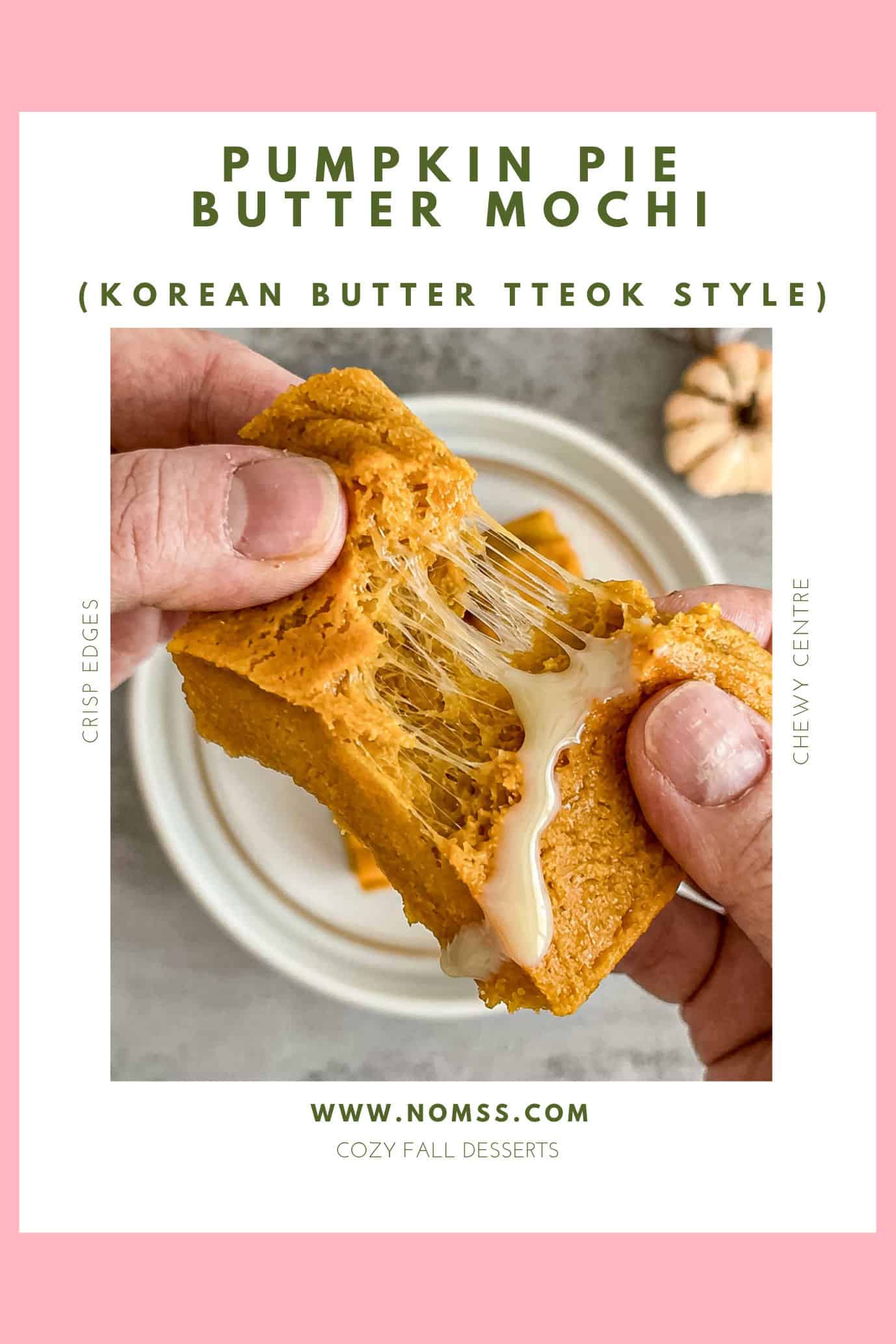
Pin the above image to your Tasty Dessert Recipe Pinterest Board to bookmark this page. We are so excited to share our recipes with you!
More Chinese Recipes
Chinese Steamed Chicken With Shiitake Mushroom 冬菇蒸雞
Air Fryer BBQ Pork Char Siu 氣炸鍋蜜汁叉燒
Red Bean Soup (Instant Pot) 蓮子百合紅豆沙









Comment Below